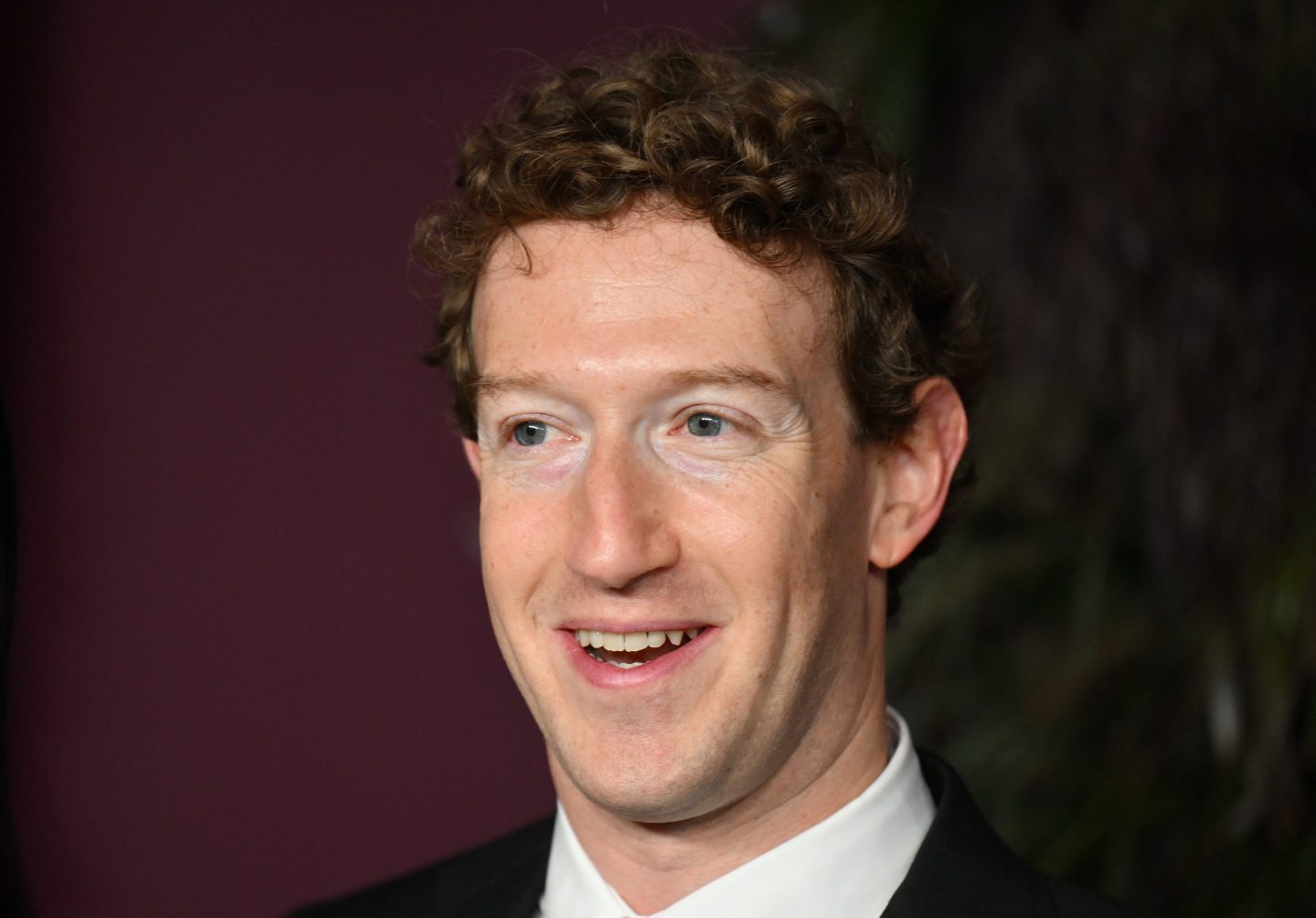
Mark Zuckerberg is going all-in on AI and STEM with his philanthropic efforts. Late last year, he and his wife, Dr. Priscilla Chan, announced they would shift the majority of the Chan Zuckerberg Institute to biomedical AI research. And late last month, the Meta founder and CEO pledged $50 million to Sacramento State University to fuel state-of-the-art STEM labs and an AI center.
California Gov. Gavin Newsom unveiled the gift on Jan. 28, tying it to a major redevelopment of three vacant state office buildings on Sacramento’s Capitol Mall into a downtown campus. The gift from Zuckerberg and Meta will fund abatement, demolition, and initial construction of the campus, enabling new student housing alongside new academic spaces, including STEM facilities and an AI center.
Meta’s donation also comes at the heels of an interesting corporate and financial dynamic in California: Billionaires may soon be subject to a one-time 5% tax on their wealth. Many billionaires, including Google cofounders Larry Page and Sergey Brin, Oracle cofounder Larry Ellison, PayPal cofounder Peter Thiel, and Craft Ventures’ David Sacks, have already moved their permanent residences out of state to avoid the tax.
Zuckerberg hasn’t made any public statements about the billionaires tax, and is instead doubling down on California investments and legacy.
“These investments will help strengthen our communities and support the next generation of leaders and innovators,” Zuckerberg said in a statement. The Meta CEO also owns a compound of 11 properties in Palo Alto’s Crescent Park neighborhood, valued at more than $110 million. Minutes from his home, Meta has its sprawling 57-acre headquarters campus and also more than 400,000 square feet of office space nearby in Menlo Park.
Newsom said Zuckerberg’s gift allows the Sacramento-based school to continue to build its talent pipeline for tech jobs.
The donation “[opens] doors for students to succeed and for our communities to prosper,” Newsom said. “Making sure students can actually afford to live where they learn is essential to that work.”
Zuckerberg’s philanthropic playbook
While this recent donation comes directly from Meta and Zuckerberg, it also fits into the playbook they recently rewrote. Launched in 2015 with a pledge to give away 99% of their fortune, the Chan Zuckerberg Initiative has recently refocused on science, AI, and biomedical research, shifting emphasis away from its initial education and social justice priorities (although they say they’ll continue making other local donations).
In 2025, Zuckerberg and Chan laid the groundwork to recalibrate their philanthropic organization toward AI-powered biomedical research, with a particular focus on their flagship Biohub network. Biohub, a growing network of biomedical research institutes, aims to “cure or prevent all disease,” according to Zuckerberg and Chan.
“I feel like the science work that we’ve done, the Biohub model in particular, has been the most impactful thing that we have done,” Zuckerberg said during an event at the Biohub Imaging Institute in Redwood City in November, according to the Associated Press. “So we want to really double down on that. Biohub is going to be the main focus of our philanthropy going forward.”
But refocusing their philanthropy brought about major changes. CZI recently laid off 70 staffers, primarily at the organization’s Redwood City headquarters in San Mateo, Calif.
The Sacramento AI center mirrors this playbook: infrastructure for training AI talent, akin to Biohub’s shared research tools, rather than one-off scholarships or smaller, incremental donations.
Meta’s shared AI obsession with CZI
Zuckerberg is using a similar playbook in both his business and philanthropic ventures. Meta is committed to spending between $115 billion and $135 billion on building “superintelligent” agents to meet user needs across feeds, ads, and commerce, and is also investing in its community to build talent pipelines to fill those roles, as evidenced by its most recent donation.
CZI is also going all-in on AI-focused research and outcomes, with Biohub similarly focused on “frontier AI” and “frontier biology,” using large-scale models for virtual cells, immune reprogramming, and disease prediction.
All of these efforts suggest Zuckerberg has framed 2026 as AI’s transformative year for work at both Meta and CZI.
“We are very excited about the decade ahead,” Zuckerberg and Chan wrote in the November blog post. “There will be many challenges, but we believe that achieving some of humanity’s long-term dreams will also come within reach.”