
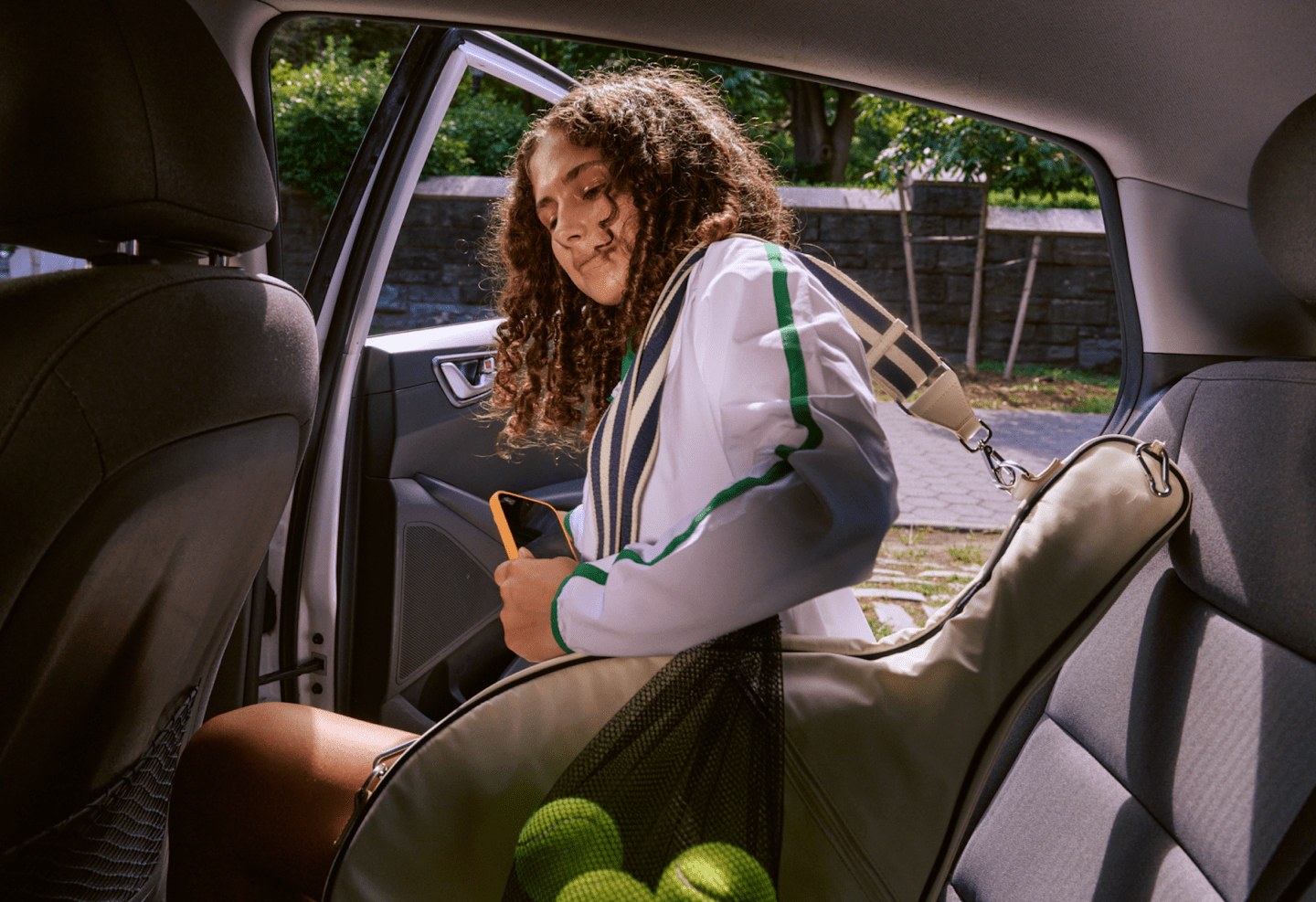
Lyft is introducing a feature that lets teenagers to use the rideshare app and addresses obstacles keeping Gen Alpha from getting out into the real world.
The Lyft Teen feature launched on Monday and allows teens 13 to 17 years old to request rides, while letting parents control their teens’ ability to hail a driver through their own app. The rides will require PIN verification, audio recording when given microphone access, Smart Trip Check-In for unusual route changes, as well as a live ride-tracking feature for parents. The teen profiles are available to Lyft users with verified accounts.
Lyft Teen is available in more than 200 major markets, including New York, Philadelphia, and Washington, D.C. The feature will expand throughout the year, according to the company.
The move is a reversal of Lyft’s previous policy, which required minors to have adult supervision when using the rideshare service.
Lyft Teen is meant to address the rising cost of cars and insurance for young drivers in addition to the parental workload of picking up and dropping off kids, according to CEO David Risher. But the feature also emerged from the reputation Gen Alpha (the generation born from 2010 to today) has acquired as being less independent as other generations were as teenagers.
“Teens want—like every teen ever—independence. They want to be able to go and do their own thing,” Risher told Fortune. “And parents want something that is reliable and safe and affordable, and that’s what we’re trying to design.”
Despite their desire of more independence, fewer teenagers are getting driver’s licenses. From 1983 to 2022, the share of 18-year-olds with driver’s licenses in the U.S. decreased from 80% to 60%, according to data from the Department of Transportation’s Federal Highway Administration. The number of 16-year-olds with licenses plummeted by more than a quarter. Even Uber CEO Dara Khosrowshahi admitted last year that his son, who is over 18, does not have a driver’s license.
“Uber’s freed him up,” Khosrowshahi said in an episode of the Decoder podcast.
Meanwhile, teens have fewer public transportation options due to a growing mobility gap, making it harder for young people to leave the house to go to a job or meet with friends, Risher suggested. Lyft pointed to a 2024 HopSkipDrive survey, which found 91% of school leaders reported a transportation system limited by bus driver shortages, with 60% saying they’ve had to cut or reduce bus routes.
Uber launched a similar teen accounts feature in 2023, which is now available in 50 countries across the globe, according to the company.
And last year, the rideshare rivals introduced features for senior users on their respective apps. After acquiring taxi app Freenow in July 2025, Lyft has expanded service into Europe and Canada.
At the same time, Waymo is growing in popularity among young people, having launched teen accounts in some areas over the summer. The robotaxi chauffeurs teens around Phoenix and Los Angeles without concerns of a driver becoming distracted or acting inappropriately.
Building Gen Alpha’s independence
Companies like Starbucks have similarly tried to serve younger generations starved of “third places” that are neither school, work, or home, leaning into teenagers’ and young adults’ need to get out of the house amid an ongoing loneliness epidemic. Risher said the introduction of Lyft Teen would help address the problem of teenagers endlessly scrolling on their phones in their rooms.
“The problems of 2026 are social isolation and too much screen time,” he said. “Frankly, parents that feel too stressed out to be able to kind of be their best parents. And this, we hope, is sort of a corrective push in another way.”
Risher recalled his own upbringing, when he worked multiple jobs in high school and college, first as a newspaper deliverer, where he woke up at 5:30 a.m. to drop off copies of the Washington Post, then a waiter and food service worker. His first car was a used Honda Accord.
“There’s something really important about that, this feeling of self-determination,” he explained. “I can tell you, if my mom had the option of, instead of buying her ex-boyfriend’s Honda Accord—and insuring it and all the rest—if she just said, ‘You know what, here’s Lyft,’ that would have been great for her, and frankly, great for me.”
Some Reddit users in the Lyft drivers Subreddit are less enthused about the idea of letting teenagers into their cars, with some claiming they’ve opted out of the feature. Risher said this group of Lyft drivers is “relatively small.”
He attributed the reluctance in part to past complications around driving teens, who were previously not allowed to hail a ride due to company policy. As a result, drivers sometimes canceled orders if they saw a teenager waiting for their car, making them feel as though they had wasted time.
Risher noted these drivers may be waiting to see how the feature works before opting in. Others may not want the liability of driving a teenager, for the same reason they might not want to have drunken passengers by taking a shift on a Saturday night.
“They’re independent contractors, and they’re absolutely free to make their own decisions about how they want to participate on this platform,” he said.