Good morning. Well, that was not exactly a thrilling game. At least the tech industry showed up with some entertaining ads. And Bad Bunny put on a memorable halftime show.
Now that football season is in the rear view mirror, it’s a good time to focus on what’s ahead. We’ve got you covered: Fortune’s Jordan Blum has a great primer about the nuclear energy industry, and how it’s poised to make a big comeback thanks to the insatiable energy needs of AI data centers and innovations in small modular reactors.
Today’s news below.
Alexei Oreskovic
@lexnfx
alexei.oreskovic@fortune.com
Want to send thoughts or suggestions to Fortune Tech? Drop a line here.
Anthropic's new model could deepen SaaS selloff
Just days after Anthropic triggered a nearly trillion-dollar selloff in enterprise software stocks with a minor update, the company debuted Claude Opus 4.6—an advanced AI model that could intensify investor anxiety.
Anthropic says the new model excels at sophisticated professional tasks and has a new feature that allows users to deploy autonomous AI agent ‘teams’, mimicking how human teams tackle complex projects.
Investors are worried that Claude's new capabilities and expanded context window could displace traditional SaaS vendors like Salesforce, Microsoft, and Workday. Analysts, however, largely pushed back on "SaaSapocalypse" predictions. Gartner said that Opus 4.6 was more of a disruptor for task-level work rather than a replacement for business applications.
OpenAI also piled on the pressure with its own coding assistant release Thursday, deepening concerns about AI displacing traditional business software. —Beatrice Nolan
Box CEO's bull case for Saas in an AI world
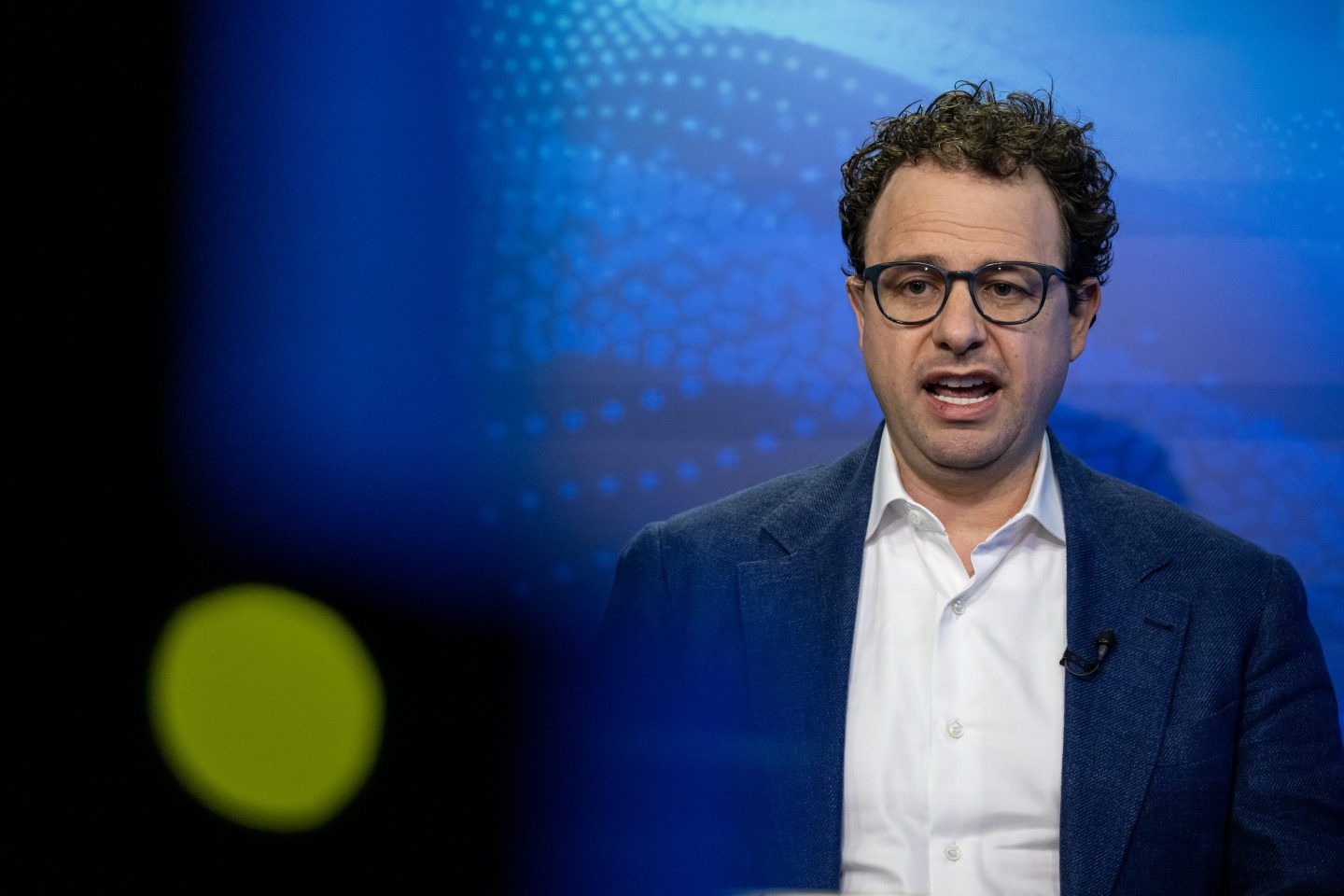
Just as the tech selloff was gaining steam last week, Box CEO Aaron Levie was interviewed at the Cisco AI Summit in San Francisco and asked about the narrative of AI killing SaaS. Levie, who is in the software-as-a-service business, acknowledged his obvious bias before giving a cogent 2-point argument for why the Saas business is not slated for extinction (even though he said software will become cheaper).
Levie's first point is that building home-grown ERP software for things like accounting, billing, and human resources is low on the list of priorities for most businesses. AI may make it easier to build it yourself, but it still requires time and attention better spent serving the customer.
"We all collectively have a fixed amount of resources in our organization, and our customer only pays us more if we can deliver more things that they want to buy and that better support their needs. Us vibe coding an ERP system is sort of not on that list of things our customers care about," he said.
Second, said Levie, as AI agents handle more and more tasks, they will require a "traffic cop" to keep the system running smoothly and step in when agents inevitably make mistakes. In a company where AI agents vastly outnumber human employees, "you now have 100 times more opportunities for value creation—or risk, if it’s not managed well," said Levie.
"That’s the power of software: We’ve codified our workflows and business processes into a system that will run the same way every single time. And that, I don't think, reduces in value even in a world of cheaper or more volume of software."—AO
Meta's Super Bowl play
Meta spent big bucks to promote its AI-enabled smart glasses during Sunday's Super Bowl. But the company was not just thinking about consumers in shelling out for the TV ads which feature ex-Seahawks player Marshawn Lynch, YouTuber Darren Watkins Jr. (also known as IShowSpeed) as well as director Spike Lee.
NBC has said that slots averaged about $8 million for 30 seconds this year, and that's only part of the overall cost of a splashy Super Bowl ad. There's the celebrity talent, popular music licensing, and production costs, all of which can add $5 million or more on top, said Kimberly Whitler, an associate professor of business administration at the University of Virginia’s Darden School of Business.
Whitler, who has studied Super Bowl advertising over the past 11 years, said Meta’s goal may not only be to boost sales of its smart glasses, which account for only 1% of Meta's overall revenue. “They’re not just communicating to consumers, they’re also communicating to investors who watch these ads,” said Whitler. “They’re reinforcing this kind of view that the company is very innovative.”
Investors are always looking for additional insight into the company’s future performance, and a Super Bowl ad can make a product feel more real than a press release or earnings-call mention, she said. —Marco Quiroz-Gutierrez
More tech
—Netflix co-CEO says Warner Bros. deal won’t hurt consumers: 'We are a one-click cancel.'
—Apple's budget iPhone refresh coming. Goodbye 16e, hello 17e.
—Block cutting up to 10% of staff. Hundreds of staffers affected.
—Anthropic’s newest model excels at finding security vulnerabilities—but raises fresh cybersecurity risks.
—Elon Musk warns U.S. is ‘1,000% going to go bankrupt’...unless AI and robotics save the economy.
—Section 230 is turning 30—and facing new legal challenges.