By the beginning of the next decade, AI will primarily become a space-based venture as the cost becomes much more advantageous to operate in orbit, according to SpaceX CEO Elon Musk.
In a lengthy, wide-ranging interview with podcaster Dwarkesh Patel and Stripe cofounder and president John Collison on Thursday, the tech billionaire made some of his signature bold predictions about how the AI revolution will play out.
Given the enormous energy needs of AI and limits on available land for placing massive arrays of solar panels—not to mention all the red tape—building new AI data centers will be much cheaper in orbit, where solar panels are five times more effective than on the ground.
“In 36 months, but probably closer to 30 months, the most economically compelling place to put AI will be space,” Musk said. “It will then get ridiculously better to be in space. The only place you can really scale is space. Once you start thinking in terms of what percentage of the sun’s power you are harnessing, you realize you have to go to space. You can’t scale very much on earth.”
The utility industry isn’t able currently to build power plants as rapidly as needed for AI, he added. On top of that, limits on manufacturing gas turbines and wind turbines fast enough represent another bottleneck.
Meanwhile, solar panels meant to be used in space are less costly than those designed for use on land because they don’t need as much glass or hardening to withstand various weather events, Musk explained. In addition, the cooling needed for data centers is less of an issue in space.
Considering the advantage space has over earth, he was asked where AI will be in five years.
“If you say five years from now, I think probably AI in space will be launching every year the sum total of all AI on earth,” Musk said. “Meaning, five years from now, my prediction is we will launch and be operating every year more AI in space than the cumulative total on earth.”
While he is infamous for setting incredibly ambitious targets on aggressive timelines, his next one was a whopper, even by his standards.
Musk said getting all that AI and solar capacity in space will require about 10,000 launches a year—or a launch in less than an hour every day. SpaceX is the most prolific rocket company and set a record last year with 165 orbital launches.
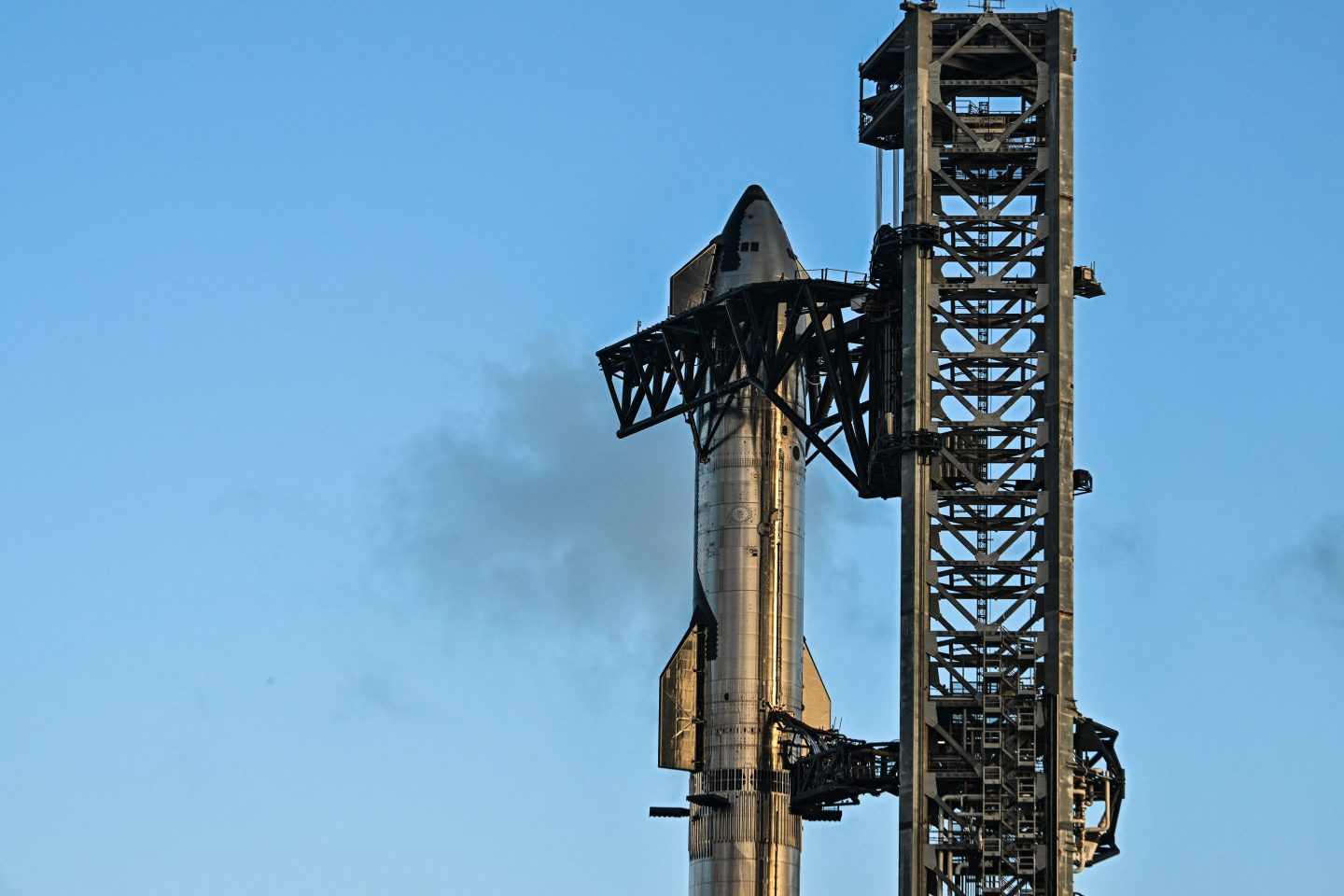
SpaceX could pull off a 10,000-per-year launch cadence with 20-30 Starship rockets, he added, though the company will make more than that, enabling perhaps 20,000-30,000 launches a year.
He pointed out the airline industry has much quicker throughput than that. The number of daily flights around the world tops 100,000.
Patel then asked if SpaceX will become an AI hyperscaler. “Hyper-hyper,” Musk replied. “If some of my predictions come true, SpaceX will launch more AI than the cumulative amount on Earth of everything else combined.”
It’s already working toward that goal. SpaceX in November launched a test satellite with an AI server from start-up Starcloud. And last month, SpaceX asked the FCC for permission to launch up to 1 million solar‑powered satellites designed as data centers.
Of course, there are other challenges associated with operating in space, such as protecting hardware from the sun’s radiation and transmitting astronomical amounts data from orbit to earth. SpaceX’s Starship rocket is also still in development. But Deutsche Bank said in a note last month the challenges of putting data centers in space are more about engineering than physics.
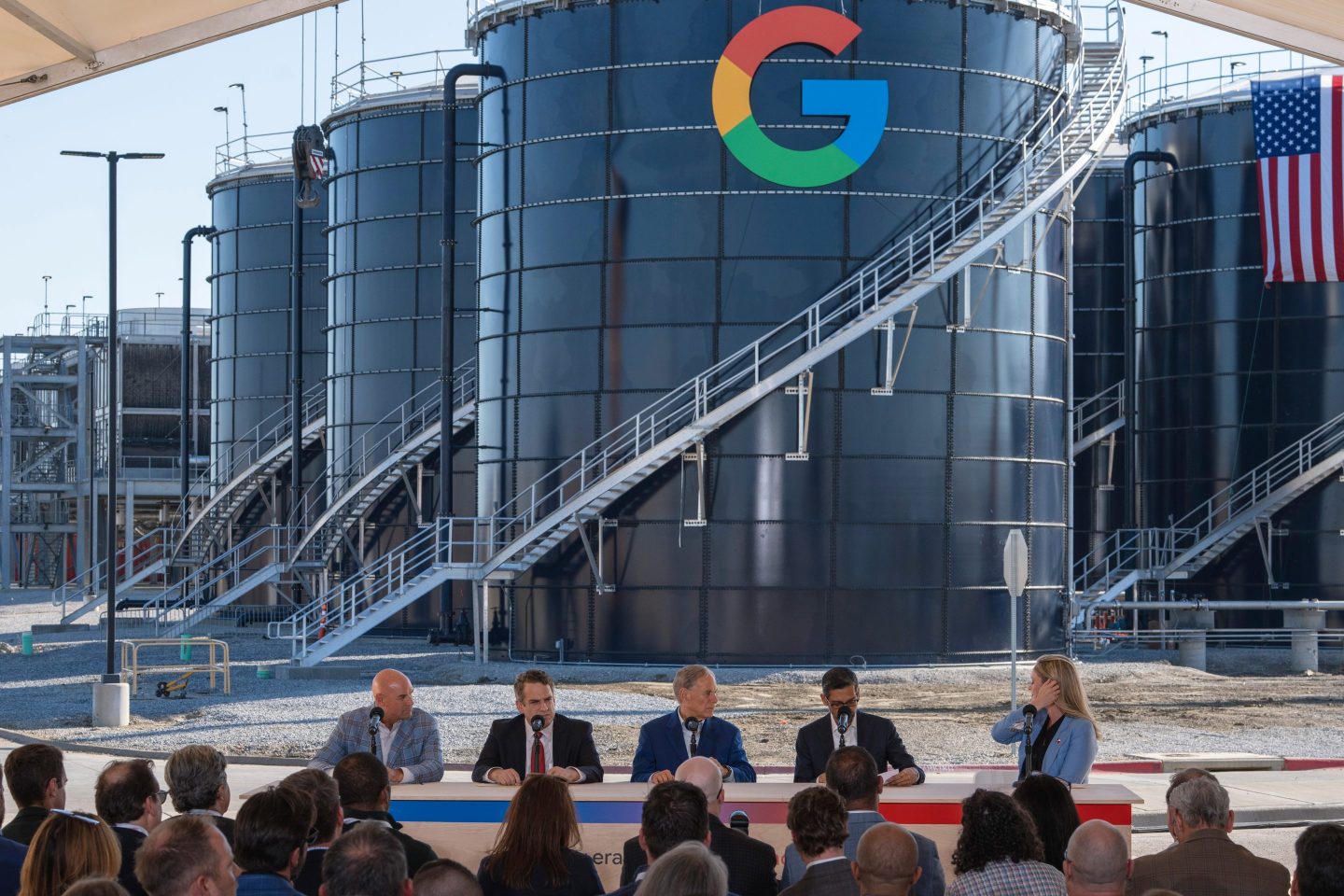
Today’s AI hyperscalers see the potential as well and are also looking to go to space. For example, Google’s Project Suncatcher looks to pair solar-powered satellites with AI computer chips, and a prototype could launch as soon as next year.
OpenAI CEO Sam Altman also considered buying rocket company Stoke Space to put data centers in orbit, the Wall Street Journal reported in December.
For its part, SpaceX is an AI company now, after its merger with Musk’s xAI. That’s as SpaceX is expected to go public this year, raising tens of billions of dollars. During the podcast interview, Musk said more money is available in public markets than private markets, possibly even 100 times more.
“I just repeatedly tackle the limiting factor,” he added. “Whatever the limiting factor is on speed, I’m going to tackle that. If capital is the limiting factor, then I’ll solve for capital. If it’s not the limiting factor, I’ll solve for something else.”