• Home
  • Latest
  • Fortune 500
  • Finance
  • Tech
  • Leadership
  • Lifestyle
  • Rankings
  • Multimedia
Economygeopolitics
Asia

BRICS could become a new pillar of global governance—if its rapid growth doesn’t erode its newfound clout

By
Brian Wong
Brian Wong
Down Arrow Button Icon
By
Brian Wong
Brian Wong
Down Arrow Button Icon
January 31, 2026, 6:00 PM ET
Brian Wong is an HKU-100 assistant professor and fellow at the Centre on Contemporary China and the World at the University of Hong Kong. 
 
The primary threat to BRICS isn’t Trump, NATO, or the West. Instead, it comes from within: That BRICS expands too quickly and becomes incohesive, and that it underdelivers on its promise to reform global governance.
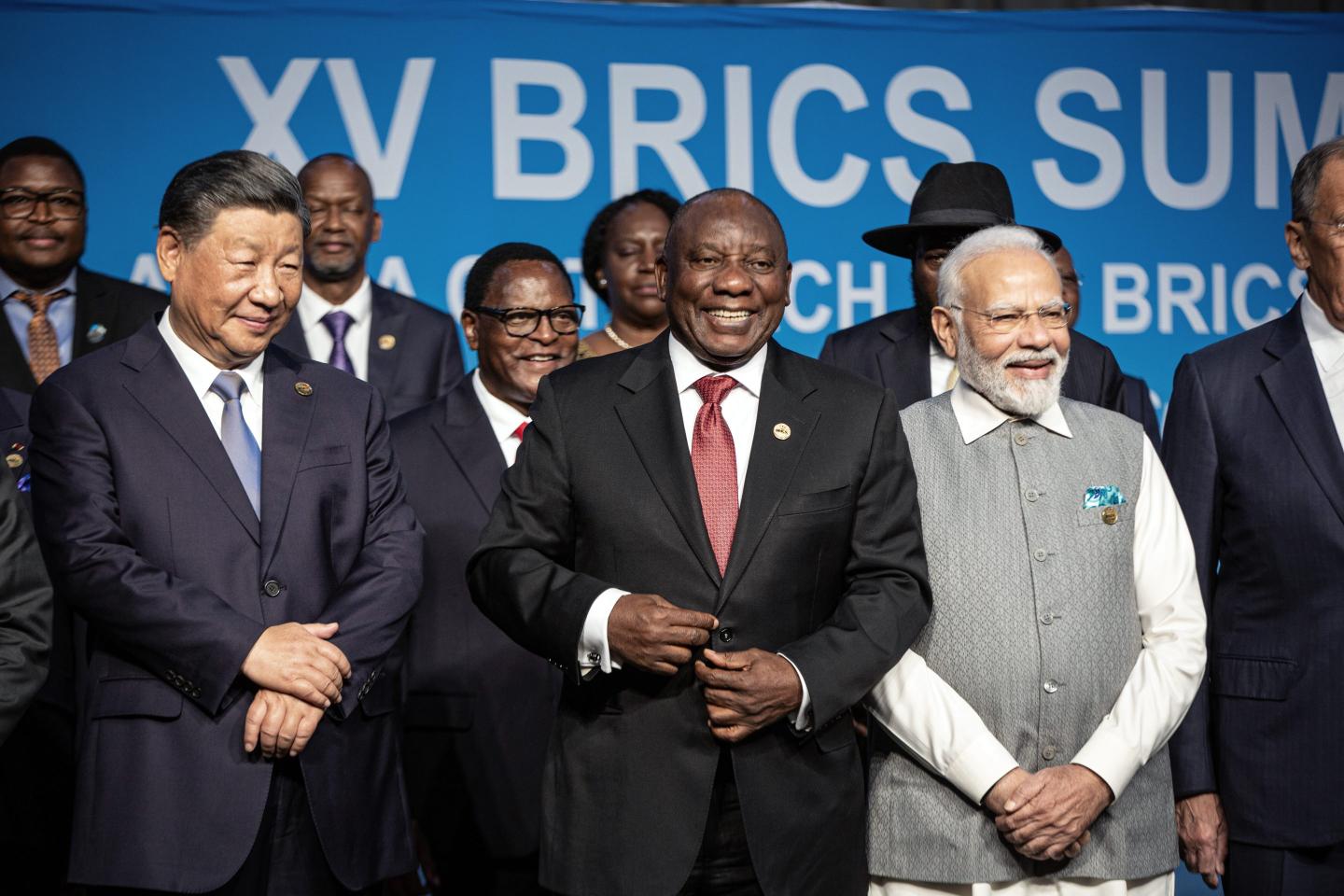
The primary threat to BRICS isn’t Trump, NATO, or the West. Instead, it comes from within: That BRICS expands too quickly and becomes incohesive, and that it underdelivers on its promise to reform global governance. Per-Anders Pettersson—Getty Images

BRICS has come a long way since Goldman Sachs economist Jim O’Neill thought it up in 2001. As of January, it now comprises ten countries: the original five of Brazil, Russia, India, China and South Africa, and five new additions in Egypt, Ethiopia, Indonesia, Iran, and the United Arab Emirates.

Recommended Video

As the postwar U.S.-led international order shows its cracks, it can be tempting to view BRICS as a potential pillar of a new world order. It has almost half of the world’s population, almost three-quarters of its rare earth minerals, and over a third of its crude oil.

In the eyes of its advocates, BRICS is the core of a new world order, where Western voices can no longer dictate the global agenda or serve as the only source of finance, technology, or expertise. It can serve as an avenue to find new markets, build new supply chains and hedge against a more protectionist White House.

BRICS is certainly spooking some in Washington. U.S. President Donald Trump has routinely threatened to impose 100% tariffs on BRICS+ countries if they move to develop their own currency. He’s also proposed 10% tariffs on countries that align themselves “with the anti-American policies of BRICS.” (Trump never followed through)

But the primary threat to BRICS isn’t Trump, NATO, or the West. Instead, it comes from within: That BRICS expands too quickly and becomes incohesive, and that it underdelivers on its promise to reform global governance.

Enlargement may look pretty on paper, but BRICS needs ground rules, enforcement, and even just a common message. The bloc must address some pressing internal issues if it’s going to maintain he strategic clout and momentum it’s gained over recent years.

First, it needs to manage deep internal rivalries, particularly China and India, its two largest members. The two have sought to set a floor under their relationship, since Chinese President Xi Jinping and Indian Prime Minister Narendra Modi’s meetings in Kazan, Russia and Tianjin, China. Yet the relationship is still fraught with tension regarding longstanding territorial dispute; the most recent flare-up happened after an Indian citizen born in Arunachal Pradesh, which China claims as its territory, was detained in Shanghai’s airport for 18 hours.

Second, BRICS needs to balance economic security with members’ political goals. Beijing may view BRICS as an effective way to expedite investments into projects in West Asia, Central Asia, and the Indian Ocean, yet India, long wary of the Belt and Road Initiative, is skeptical of this infrastructure expansion. Pakistan is keen to join the New Development Bank, the BRICS’s development finance institution. Yet with India as BRICS’s chair this year, it’s unlikely that Pakistan’s application will proceed smoothly, as New Delhi will be wary to endorse funding for its longtime rival.

Admittedly, BRICS was never meant to resolve all the disagreements between its members. Yet the organization has also missed several opportunities to genuinely advance cooperation between its members, outside of the structures set up by the West.

For example, the bloc established the Contingent Reserve Arrangement (CRA) to provide currency swaps during foreign-exchange shortages. Yet the CRA also stipulates that members must abide by IMF conditions if they want access to over 30% of total entitlements. Ironically, that pushed South Africa to opt for the more resourceful and flexible IMF over the CRA, when it needed to secure a controversial $4.3 billion loan in 2020.

In theory, BRICS’s flexibility should be an asset, allowing it to accept members from across the geopolitical spectrum. Yet without a way to coordinate governments, enforce regulations and punish compliance, the bloc is, fundamentally, toothless.

Without a clear remit or binding guidelines, these “teething problems” can snowball into something more substantial.

Optimists may hope that new members–like Indonesia, the world’s fourth most populous country and an emerging manufacturing and energy powerhouse–could broker relations between rival powers. But how willing will these “middle powers” be to untangle disagreements and strategic rivalries that have built over decades?

Then add the fact that many current and prospective BRICS nations–like Indonesia, India and the UAE–are constantly trying to court U.S. investment and bolster security partnerships. Brazil, which has butted heads with Washington since Trump started his second term yet faces a White House keen on doubling down on its strategic influence and leverage in Latin America, will be wary of committing fully to just one bloc.

And some members are beset by internal problems. If, under intense American pressure and the existing large-scale protests, Iran further destabilizes, this will certainly affect the passage of India- and China-bound oil through the Strait of Hormuz, epitomizing how one country’s problems can very quickly affect the entire group.

If BRICS is going to be more than just an acronym, members have to see themselves as partners in a collective enterprise. That, in turn, will come from developing and accepting common ground rules that can be enforced. Otherwise, BRICS’s unbridled enlargement could end up being its undoing.

The opinions expressed in Fortune.com commentary pieces are solely the views of their authors and do not necessarily reflect the opinions and beliefs of Fortune.

Subscribe to Fortune Gulf Brief. Every Tuesday, this new newsletter will deliver clear-eyed, authoritative intelligence on the deals, decisions, policies, and power shifts shaping one of the world’s most consequential regions, written for the people who need to act on it. Sign up here.
About the Author
By Brian Wong
See full bioRight Arrow Button Icon

Latest in Economy

Finance
Lorem ipsum dolor sit amet, consectetur adipiscing elit, sed do eiusmod tempor incididunt ut labore et dolore magna aliqua. Ut enim ad minim veniam
By Fortune Editors
October 20, 2025
Finance
Lorem ipsum dolor sit amet, consectetur adipiscing elit, sed do eiusmod tempor incididunt ut labore et dolore magna aliqua. Ut enim ad minim veniam
By Fortune Editors
October 20, 2025
Finance
Lorem ipsum dolor sit amet, consectetur adipiscing elit, sed do eiusmod tempor incididunt ut labore et dolore magna aliqua. Ut enim ad minim veniam
By Fortune Editors
October 20, 2025
Finance
Lorem ipsum dolor sit amet, consectetur adipiscing elit, sed do eiusmod tempor incididunt ut labore et dolore magna aliqua. Ut enim ad minim veniam
By Fortune Editors
October 20, 2025
Finance
Lorem ipsum dolor sit amet, consectetur adipiscing elit, sed do eiusmod tempor incididunt ut labore et dolore magna aliqua. Ut enim ad minim veniam
By Fortune Editors
October 20, 2025
Finance
Lorem ipsum dolor sit amet, consectetur adipiscing elit, sed do eiusmod tempor incididunt ut labore et dolore magna aliqua. Ut enim ad minim veniam
By Fortune Editors
October 20, 2025

Most Popular

Finance
Lorem ipsum dolor sit amet, consectetur adipiscing elit, sed do eiusmod tempor incididunt ut labore et dolore magna aliqua. Ut enim ad minim veniam
By Fortune Editors
October 20, 2025
Finance
Lorem ipsum dolor sit amet, consectetur adipiscing elit, sed do eiusmod tempor incididunt ut labore et dolore magna aliqua. Ut enim ad minim veniam
By Fortune Editors
October 20, 2025
Finance
Lorem ipsum dolor sit amet, consectetur adipiscing elit, sed do eiusmod tempor incididunt ut labore et dolore magna aliqua. Ut enim ad minim veniam
By Fortune Editors
October 20, 2025
Finance
Lorem ipsum dolor sit amet, consectetur adipiscing elit, sed do eiusmod tempor incididunt ut labore et dolore magna aliqua. Ut enim ad minim veniam
By Fortune Editors
October 20, 2025
Finance
Lorem ipsum dolor sit amet, consectetur adipiscing elit, sed do eiusmod tempor incididunt ut labore et dolore magna aliqua. Ut enim ad minim veniam
By Fortune Editors
October 20, 2025
Finance
Lorem ipsum dolor sit amet, consectetur adipiscing elit, sed do eiusmod tempor incididunt ut labore et dolore magna aliqua. Ut enim ad minim veniam
By Fortune Editors
October 20, 2025
Fortune Secondary Logo
Rankings
  • 100 Best Companies
  • Fortune 500
  • Global 500
  • Fortune 500 Europe
  • Most Powerful Women
  • World's Most Admired Companies
  • See All Rankings
  • Lists Calendar
Sections
  • Finance
  • Fortune Crypto
  • Features
  • Leadership
  • Health
  • Commentary
  • Success
  • Retail
  • Mpw
  • Tech
  • Lifestyle
  • CEO Initiative
  • Asia
  • Politics
  • Conferences
  • Europe
  • Newsletters
  • Personal Finance
  • Environment
  • Magazine
  • Education
Customer Support
  • Frequently Asked Questions
  • Customer Service Portal
  • Privacy Policy
  • Terms Of Use
  • Single Issues For Purchase
  • International Print
Commercial Services
  • Advertising
  • Fortune Brand Studio
  • Fortune Analytics
  • Fortune Conferences
  • Business Development
  • Group Subscriptions
About Us
  • About Us
  • Press Center
  • Work At Fortune
  • Terms And Conditions
  • Site Map
  • About Us
  • Press Center
  • Work At Fortune
  • Terms And Conditions
  • Site Map
  • Facebook icon
  • Twitter icon
  • LinkedIn icon
  • Instagram icon
  • Pinterest icon

Latest in Economy

Asia’s ultra-luxury Capella Hotels brand plans to double its portfolio by 2030, starting with Florence and Riyadh
Travel & LeisureHospitality
Asia’s ultra-luxury Capella Hotels brand plans to double its portfolio by 2030, starting with Florence and Riyadh
By Angelica AngMay 8, 2026
3 hours ago
Man driving and looking shocked.
Economygas prices
Driving less, canceling vacations, and tightening budgets: All the ways Americans are coping with soaring gas prices
By Tristan BoveMay 8, 2026
10 hours ago
kid on phone
Politicssmartphones and mobile devices
‘Close to zero’: Schools are spending tens of millions banning phones from classrooms, but test scores aren’t improving
By Jake AngeloMay 8, 2026
10 hours ago
Iran may have a higher tolerance for economic pain—but the pain is excruciating as regime reveals 100% inflation in just days on some items
EconomyIran
Iran may have a higher tolerance for economic pain—but the pain is excruciating as regime reveals 100% inflation in just days on some items
By Jason MaMay 8, 2026
11 hours ago
Ray Dalio: the ‘heart attack’ of America’s debt crisis is just the beginning of a ‘great turbulence’ that will reshape the country
Economynational debt
Ray Dalio: the ‘heart attack’ of America’s debt crisis is just the beginning of a ‘great turbulence’ that will reshape the country
By Nick LichtenbergMay 8, 2026
13 hours ago
Tired hispanic man in a professional suit feeling sad while waiting for the appointment of a job interview at a recruitment office
EconomyJobs
The job market is healing for everyone—except in the office
By Eva RoytburgMay 8, 2026
14 hours ago

Most Popular

California farmers must destroy 420,000 peach trees after Del Monte closes its canneries and cancels more than $550 million in long-term contracts
North America
California farmers must destroy 420,000 peach trees after Del Monte closes its canneries and cancels more than $550 million in long-term contracts
By Sasha RogelbergMay 7, 2026
1 day ago
'Blue dot fever' plagues musicians like Post Malone, Meghan Trainor, and Zayn as a growing list of artists cancel tours due to lagging ticket sales
Arts & Entertainment
'Blue dot fever' plagues musicians like Post Malone, Meghan Trainor, and Zayn as a growing list of artists cancel tours due to lagging ticket sales
By Dave Lozo and Morning BrewMay 7, 2026
1 day ago
A Michigan farm town voted down plans for a giant OpenAI-Oracle data center. Weeks later, construction began
Magazine
A Michigan farm town voted down plans for a giant OpenAI-Oracle data center. Weeks later, construction began
By Sharon GoldmanMay 6, 2026
3 days ago
U.S. Treasury will have to borrow $2 trillion this year just to continue functioning—more than $166 billion every month
Economy
U.S. Treasury will have to borrow $2 trillion this year just to continue functioning—more than $166 billion every month
By Eleanor PringleMay 7, 2026
2 days ago
Airbnb CEO Brian Chesky warns two types of people won’t survive the AI era: ‘pure people managers’ and workers who resist change
Success
Airbnb CEO Brian Chesky warns two types of people won’t survive the AI era: ‘pure people managers’ and workers who resist change
By Emma BurleighMay 7, 2026
2 days ago
Current price of oil as of May 8, 2026
Personal Finance
Current price of oil as of May 8, 2026
By Joseph HostetlerMay 8, 2026
16 hours ago

© 2026 Fortune Media IP Limited. All Rights Reserved. Use of this site constitutes acceptance of our Terms of Use and Privacy Policy | CA Notice at Collection and Privacy Notice | Do Not Sell/Share My Personal Information
FORTUNE is a trademark of Fortune Media IP Limited, registered in the U.S. and other countries. FORTUNE may receive compensation for some links to products and services on this website. Offers may be subject to change without notice.