Good morning. The planet’s business and political leaders are still in Davos, jawbonning about tariffs, AI, and the changing world order—along with some introspection about the perception and reputation of the annual confab itself.
Reputations matter. For proof, just look at Fortune’s latest World’s Most Admired Companies list, which is out today and ranks companies by the ratings they receive from their peers in the business community (more than 3,000 executives, directors, and analysts). Tech accounted for five of the top ten companies on this year’s list.
Apple, despite its many challenges in AI over the past year, remains at the top of the heap. It’s a testament to the durability of the business Apple built—and a reminder of how much it has to lose if it doesn’t get its act together on AI.
More news below.
Alexei Oreskovic
alexei.oreskovic@fortune.com
Want to send thoughts or suggestions to Fortune Tech? Drop a line here.
Netflix earnings can’t quell investors’ Warner Bros worries
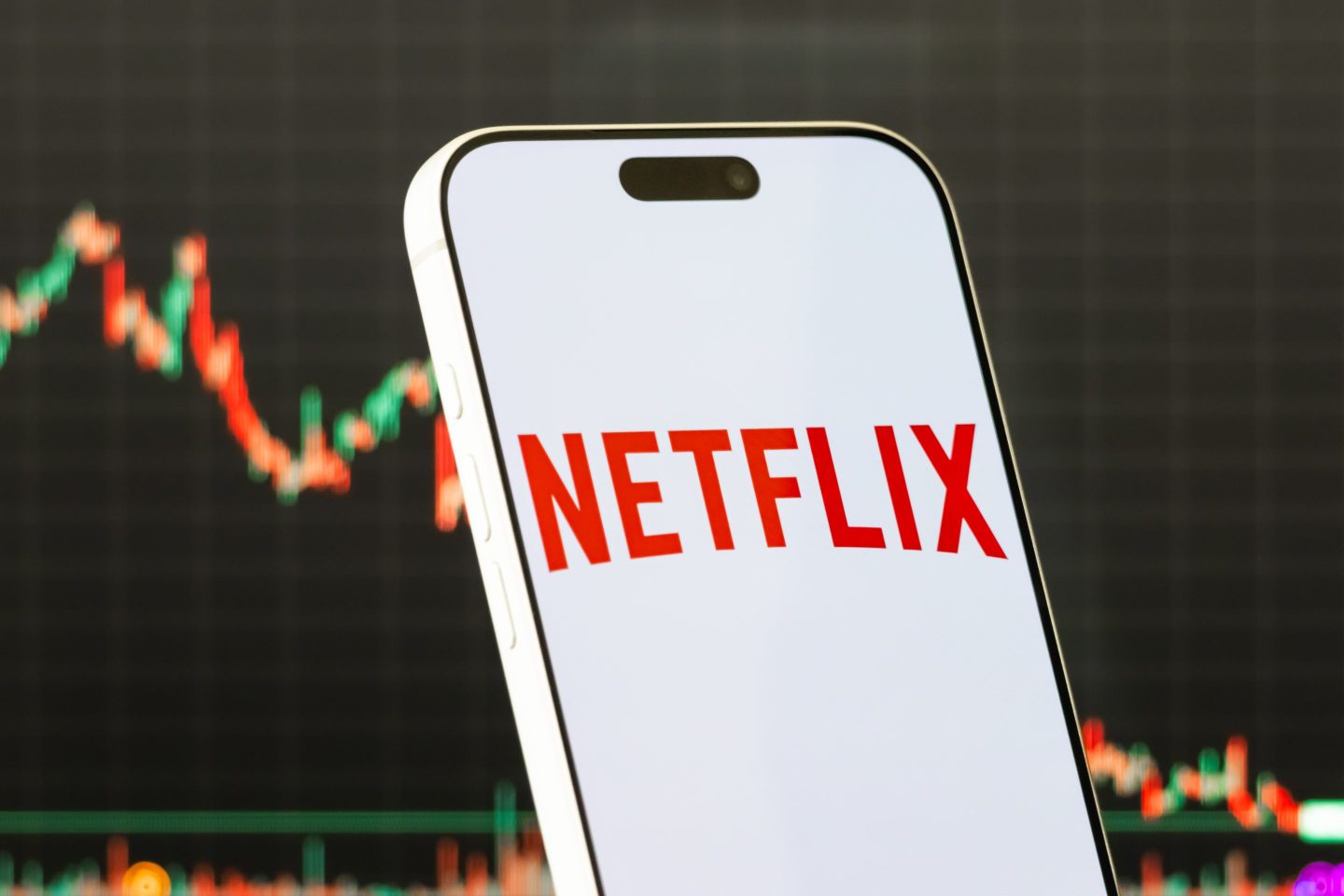
Netflix put on a nice show Tuesday when it delivered fourth-quarter financial results: The streaming giant beat EPS expectations by a penny, and said it now has 325 million paid subscribers and a worldwide total audience nearing 1 billion. For 2026, Netflix forecast revenue would be between $50.7 billion and $51.7 billion—right on target with Wall Street expectations.
Investors were more focused on another storyline however: the company's plans to acquire Warner Bros. Discovery in an all-cash deal that values the company at $83 billion. Netflix's stock, which was already down 15% since it announced the deal in early December, sank another 4.9% in after-hours trading on Tuesday.
Co-CEOs Ted Sarandos and Greg Peters did their best to present their case for the deal, using a What's-good-for-Netflix-is-good-for-America pitch.
“This is going to allow us to significantly expand our production capacity in the U.S. and to keep investing in original content in the long term, which means more opportunities for creative talent and more jobs,” Sarandos said.
Investors weren't swayed by the pitch. But the pitch may have been aimed at federal officials (and a certain resident of Pennsylvania Avenue), who will need to bless the deal.
Meta back in the antitrust crosshairs
Meta can’t get the antitrust monkey off its back.
The internet company won a huge victory in November when a federal judge ruled that it did not have a monopoly in social networking and that its acquisitions of Instagram and WhatsApp more than a decade ago did not violate antitrust laws.
But on Tuesday the U.S. Federal Trade Commission, which had brought the lawsuit against Meta, filed a notice that it’s appealing the ruling.
“The Trump-Vance FTC will continue fighting its historic case against Meta to ensure that competition can thrive across the country to the benefit of all Americans and U.S. businesses,” Daniel Guardera, the FTC’s Competition Director, said in a prepared statement.
Meta CEO Mark Zuckerberg was once a frequent target of President Trump, who even threatened in 2024 to have the tech founder jailed for life. But relations between the two men seemed to have improved in the past year as Zuck launched a very public Trump charm offensive. The FTC is clearly not charmed. Perhaps Trump will weigh in with his own thoughts during his trip to Davos...
OpenAI adding age ‘prediction’ to ChatGPT
ChatGPT-maker OpenAI said Tuesday that it’s rolling out a new feature to determine whether users are under 18 years of age.
The “age prediction system” uses a variety of signals, including the topics a user talks to the chatbot about and the time of day they use the product, to guess a user’s age. If it determines someone is under 18, ChatGPT will turn on extra safety settings.
Age verification is a big issue across the broader internet and tech industry, with companies such as Apple, Google, and Meta all facing longstanding criticism for not doing enough to protect minors from inappropriate or harmful content. But the issue has become all the more urgent as questions arise about the mental health effects of AI chatbots and young users. In August, the family of a teenager who died by suicide sued OpenAI and alleged that the chatbot “coached” their son in how to take his own life (OpenAI denies the allegations).
What happens if you’re an adult and OpenAI’s algorithms incorrectly flag you as a minor? You can verify your age with a government-issued ID.
More tech
—Thinking Machines departure drama. Cofounder says he was smeared after quitting.
—No ads planned for Google Gemini. So says Demis Hassabis.
—Satya Nadella takes on the AI bubble question. Look beyond the 'supply side.'
—Here comes Humans&. The 3-month-old AI supergroup is worth $4.88 billion.
—Trump clan's crypto bonanza. Digital assets added $1.4 billion to family wealth in the past year.
—Palantir CEO says AI ‘will destroy’ humanities jobs. The silver lining: vocational training.