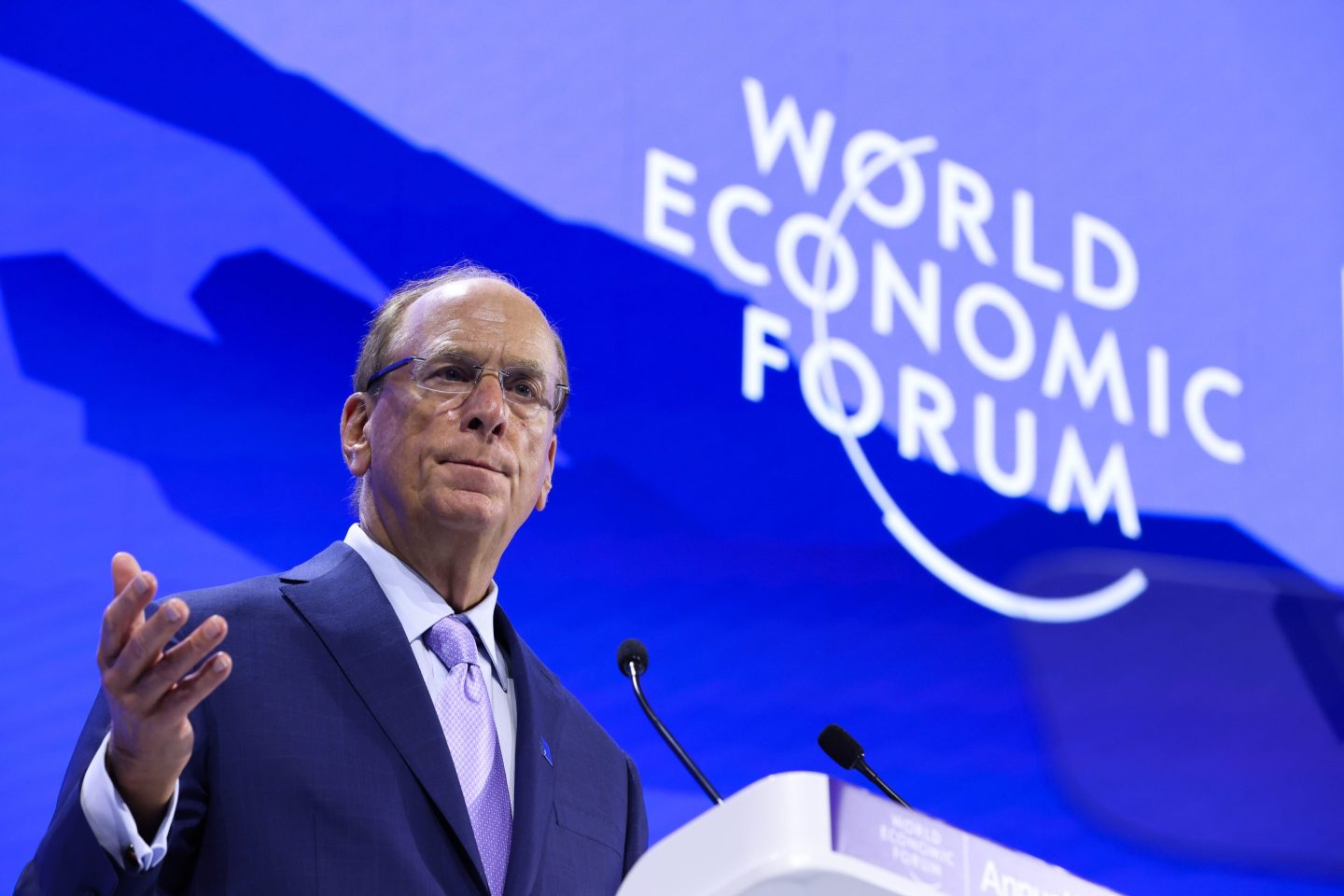
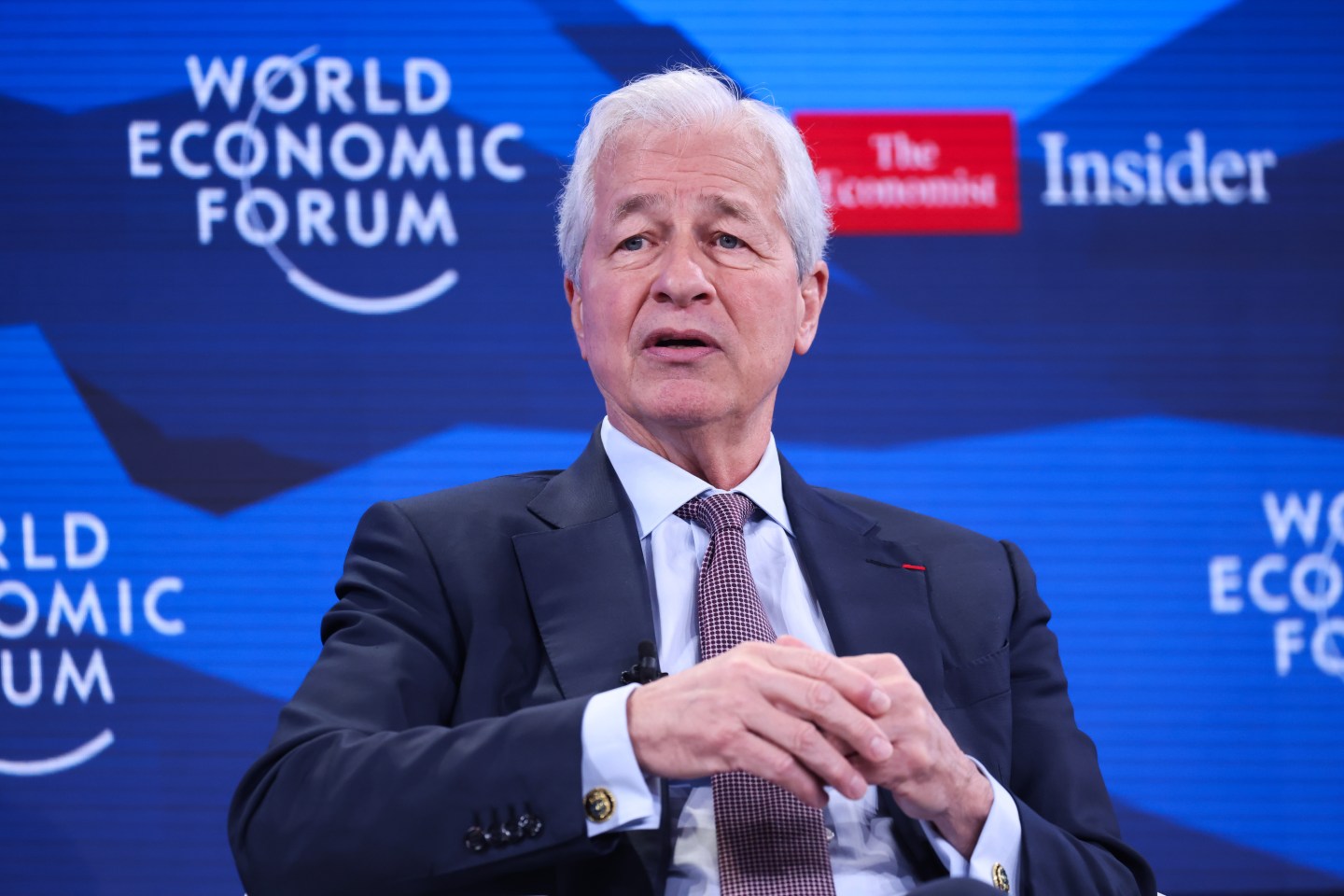
JPMorgan CEO Jamie Dimon is not a man known for mincing his words, and his appearance this year at the World Economic Forum in Davos today was no different. Dimon, a long-time advocate for policies that support America’s most disadvantaged communities, repeated a call to increase income tax credits—even if it meant taxing the rich more.
The Wall Street veteran himself said he’d be perfectly happy to pay more taxes if he knew the funds were going to land in the hands of people who needed it, as opposed to Washington’s coffers.
The 69-year-old banker said that while the U.S. economy is faring relatively well, consumers are living in a K-shaped economy. This describes the diverging fortunes of wealthy individuals and those on the lower end of the income spectrum: Those on the higher trajectory keep tracking up, while those on the lower end trend down.
Upper income earners are doing “far better,” said Dimon, “they got houses and stocks.” The lower-income side don’t have a rainy day fund, he added, with jobs getting harder to find and income growth stalling. One way to redress the balance, he said, is to double income tax credit.
He explained: “I would give people working more money as a negative tax … I’d get rid of the child requirement. You’re giving it to the people who actually use it to further their lives, spend in their communities, take care of their kids, as opposed to government dictating how you spend money on every little thing.”
Of course, there are two ways to pay for such a fiscal stimulus. One, which has been tried and tested by many administrations, is to simply write off the income the taxes would have generated for the government. This, argues Dimon, might be justified because the growth generated by consumer spending would offset the losses in taxes.
On the other hand, the U.S. is facing a significant federal deficit at the moment. For example, for the fiscal year of 2025, the government spent $7 trillion running the country and only raised $5.32 trillion in revenue from sources like taxes and import duties. This left a deficit of $1.78 trillion, which was promptly added onto the ever-accumulating national debt.
That national debt figure now exceeds $38 trillion, with the government spending some $276 billion in interest payments alone in the last three months of FY 2025. To further reduce revenue through tax cuts, as Dimon suggests, may therefore be a tough sell.
But even if you had to raise taxes a little bit, “that’s fine,” Dimon said. The problem is when taxes are increased and the man on the street sees no change in the world around them. “Who thinks that sending another trillion dollars to Washington DC will actually improve anything?” the CEO asked. “If you said raise taxes and directly give it to the people who need it? I’d do it.”
But “that’s not what happens,” the banker continued, claiming the funds are instead handed to interest groups and their “friends.” “Which is why the people consider it a swamp,” Dimon continued. “It’s kind of a swamp.”