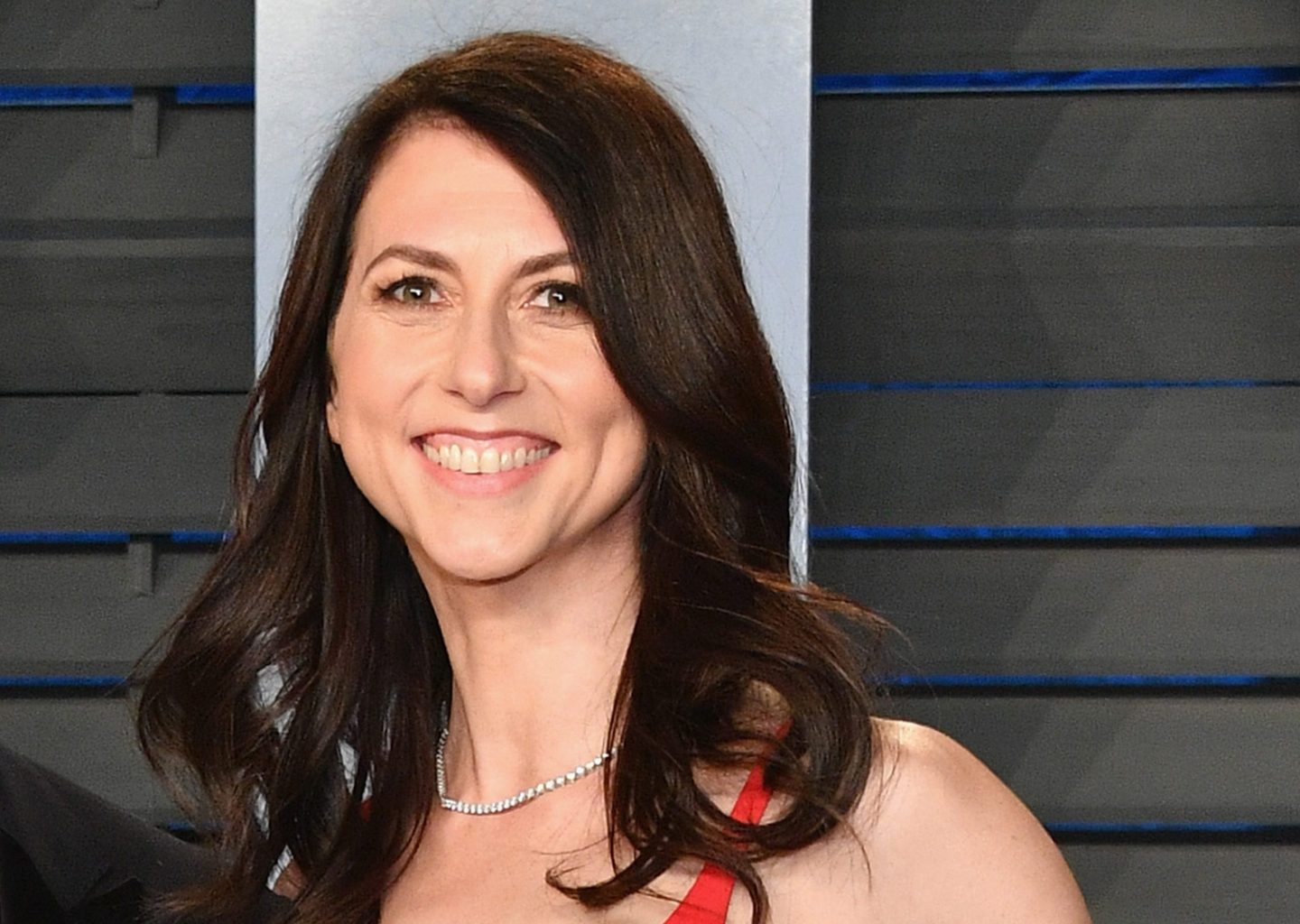
During the past few years, MacKenzie Scott has quietly been building her $26 billion philanthropic playbook. It’s largely included donations to organizations focused on DEI, education, social equity, environmental justice, housing, and food security.
But Scott has also helped organizations that’ve faced federal funding cuts from the Trump administration several times. Some of the key areas affected by proposed or enacted federal funding cuts include science and health research, education, environment and energy, public health and safety, community programs, and foreign aid.
Scott’s philanthropic organization, Yield Giving, has helped more than 2,700 organizations spanning nearly all of these areas, and some organizations have explicitly thanked the billionaire philanthropist for doing so. Her gifts are emerging as a safety net amid Washington’s pullback.
In 2025 alone, Scott donated more than $7 billion, making her one of the most generous donors by total dollars and by share of wealth given away: Her current net worth is about $31 billion, although her fortune will continue to be buoyed by the power of her Amazon shares she earned through her divorce settlement with her ex-husband and Amazon founder Jeff Bezos. Since 2020, she’s joined the ranks of the world’s most generous philanthropists, including Bill Gates, Melinda French Gates, Warren Buffett, and Michael and Susan Dell—although Scott has donated a greater share of her net worth, which is much lower than the others.
Still, her median grant size, around $5 million, according to Yield Giving data analyzed by Fortune, dwarfs that of the roughly $123,000 median grant from typical foundations, Phil Buchanan, president of the Center for Effective Philanthropy, told The New York Times. Meanwhile, Scott also typically provides unrestricted funds, meaning the beneficiaries can use them however they choose.
“She practices trust-based philanthropy,” Anne Marie Dougherty, CEO of the Bob Woodruff Foundation, told Fortune. Scott donated $15 million to the veteran-focused nonprofit organization in 2022, and made a subsequent $20 million donation last fall. With that initial gift, the foundation established a three-year plan to invest an additional 20% each year in programming.
“There were a couple things we did not do,” Dougherty said. “We did not establish an endowment, we did not hire a bunch of people, we did not buy real estate, open up an office, anything like that. We just increased our grant-making.”
Other organizations have also noted that Scott’s donation process is unique in that there’s no lengthy application process and limited reporting demands.
Three lifelines after federal cuts
Just this week, The Trevor Project, an LGBTQ+ youth crisis organization, announced it had received a $45 million donation from Scott after the Trump administration moved to strip LGBTQ-specific support from the 988 Suicide & Crisis Lifeline. This left a hole in specialized mental health services for queer and trans young people, but now Scott’s gift will help sustain tailored crisis intervention. It marks the single largest donation in The Trevor Project’s 27-year history.
“This historic donation from MacKenzie Scott comes at a time when The Trevor Project has never needed it more,” Jaymes Black, CEO of The Trevor Project, said in a statement shared with Fortune. “LGBTQ+ youth in the U.S. are facing a growing mental health crisis, and the resources they have for support continue to be politicized and jeopardized.”
In 2025, Scott also made a $60 million donation to the Center for Disaster Philanthropy, which landed just as the Trump administration moved to slash the budget of the Federal Emergency Management Agency (FEMA)—an organization Americans rely on for help during and after hurricanes, wildfires, tornadoes, and floods. It was a clear sign philanthropists like Scott are trying to fill the void left by Trump’s federal funding cuts.
“All sectors of society—public, private, and social—share responsibility for helping communities thrive after a disaster,” CDP president and CEO Patricia McIlreavy told Fortune. “Philanthropy plays a critical role in providing communities with resources to rebuild stronger, but it cannot—and should not—replace government and its essential responsibilities.”
The Trump administration has canceled or suspended key disaster mitigation grant programs and reduced federal disaster spending, shifting more financial and operational responsibility to state and local governments. For example, the Trump administration ended the Building Resilient Infrastructure and Communities (BRIC) grant program, which had promised billions of dollars to help state and local governments reduce disaster risk. President Donald Trump also previously suggested FEMA could eventually be dismantled or drastically reduced.
Another example of when Scott helped organizations facing federal government cuts from the Trump administration came in late 2025, when she donated $80 million to historically Black college Howard University, one of the school’s largest donations in its 158-year history.
The school said Scott’s gift came at an “opportune time,” helping the HBCU weather a federal government shutdown that delayed annual appropriations supporting student success, research, and hospital donations.
“This historic investment will not only help maintain our current momentum, but will help support essential student aid, advance infrastructure improvements, and build a reserve fund to further sustain operational continuity, student success, academic excellence, and research innovation,” Wayne A.I. Frederick, Howard interim president and president emeritus, said in a statement.