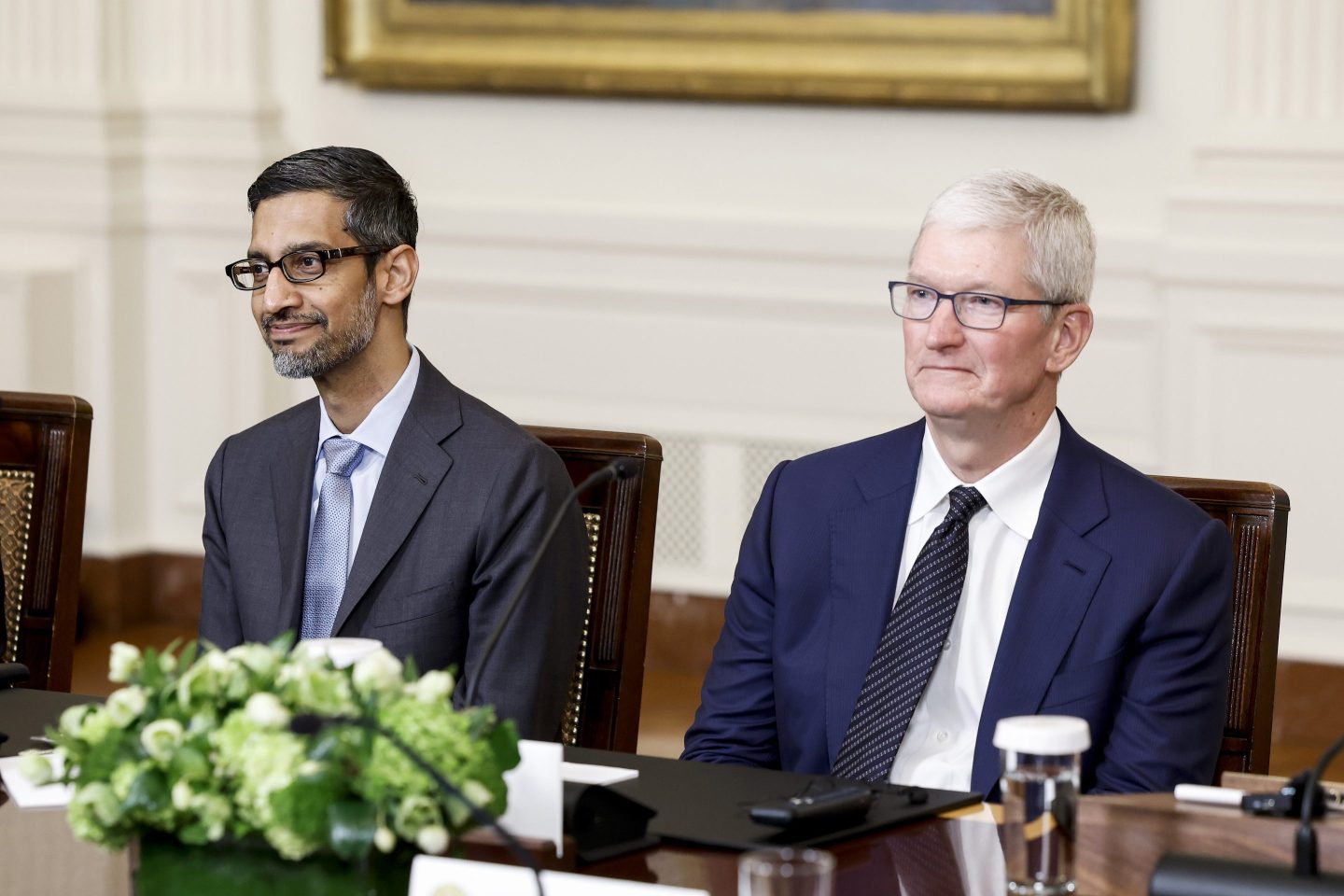
Apple and Google’s surprise AI partnership announcement on Monday sent shockwaves across the tech industry (and lifted Google’s market cap above $4 trillion). The two tech giants’ deal to infuse Google’s AI technology into Apple’s mobile software, including in an updated version of the Siri digital assistant, has major implications in the high-stakes battle to dominate AI and to own the platform that will define the next generation of computing.
While there are still many unanswered questions about the partnership, including the financial component and the duration of the deal, some key takeaways are already clear. Here’s why the deal is good news for Google, so-so news for Apple, and bad news for OpenAI.
The deal is further validation that Google has got its AI mojo back
When OpenAI debuted ChatGPT in November 2022, and throughout a good part of the next two years, many industry observers had their doubts about Google’s prospects in the changing landscape. The search giant at times appeared to be floundering as it raced to field models that could be as capable as OpenAI’ s ChatGPT and Anthropic’s Claude. Google endured several embarrassing product debuts, when its Bard chatbot and then its successor Gemini models got facts wrong, recommended glue as a pizza topping, and generated images of historically anachronistic Black Nazis.
But today, Google’s latest Gemini models (Gemini 3) are among the most capable on the market and gaining traction among both consumers and businesses. The company has also been attracting lots of customers to its Google Cloud, in part because of the power of its bespoke AI chips, called tensor processing units (or TPUs), which may offer cost and speed advantages over Nvidia’s graphics processing units (GPUs) for running AI models.
Apple’s statement on Monday that “after careful consideration” it had determined that Google’s AI technology “provides the most capable foundation for Apple Foundation Models” served as Gemini’s ultimate validation—particularly given that until now, OpenAI was Apple’s preferred technology provider for “Apple Intelligence” offerings. Analysts at Bank of America said the deal reinforced “Gemini’s position as a leading LLM for mobile devices” and should also help strengthen investor confidence in the durability of Google’s search distribution and long-term monetization.
Hamza Mudassir, who runs an AI agent startup and teaches strategy and policy at the University of Cambridge’s Judge School of Business, said Apple’s decision is likely about more than just Gemini’s technical capabilities. Apple does not allow partners to train on Apple user data, and Mudassir theorized that Apple may have concluded Google’s control over its ecosystem—such as owning its own cloud—could provide data privacy and intellectual property guarantees that perhaps OpenAI or Anthropic couldn’t match.
The deal also likely translates directly into revenue for Google. Although the financial details of the were not disclosed, a previous report from Bloomberg suggested Apple was paying Google about $1 billion a year for the right to use its tech.
The bigger prize for Google may be the foot-in-the-door the deal provides to Apple’s massive distribution channel: the approximately 1.5 billion iPhone users worldwide. With Gemini powering the new version of Siri, Google may get a share of any revenue those users generate through product discovery and purchases made through a Gemini-powered Siri. Eventually, it might potentially even lead to an arrangement that would see Gemini’s chatbot app pre-installed on iPhones.
For Apple, the implications of the deal are a bit more ambivalent
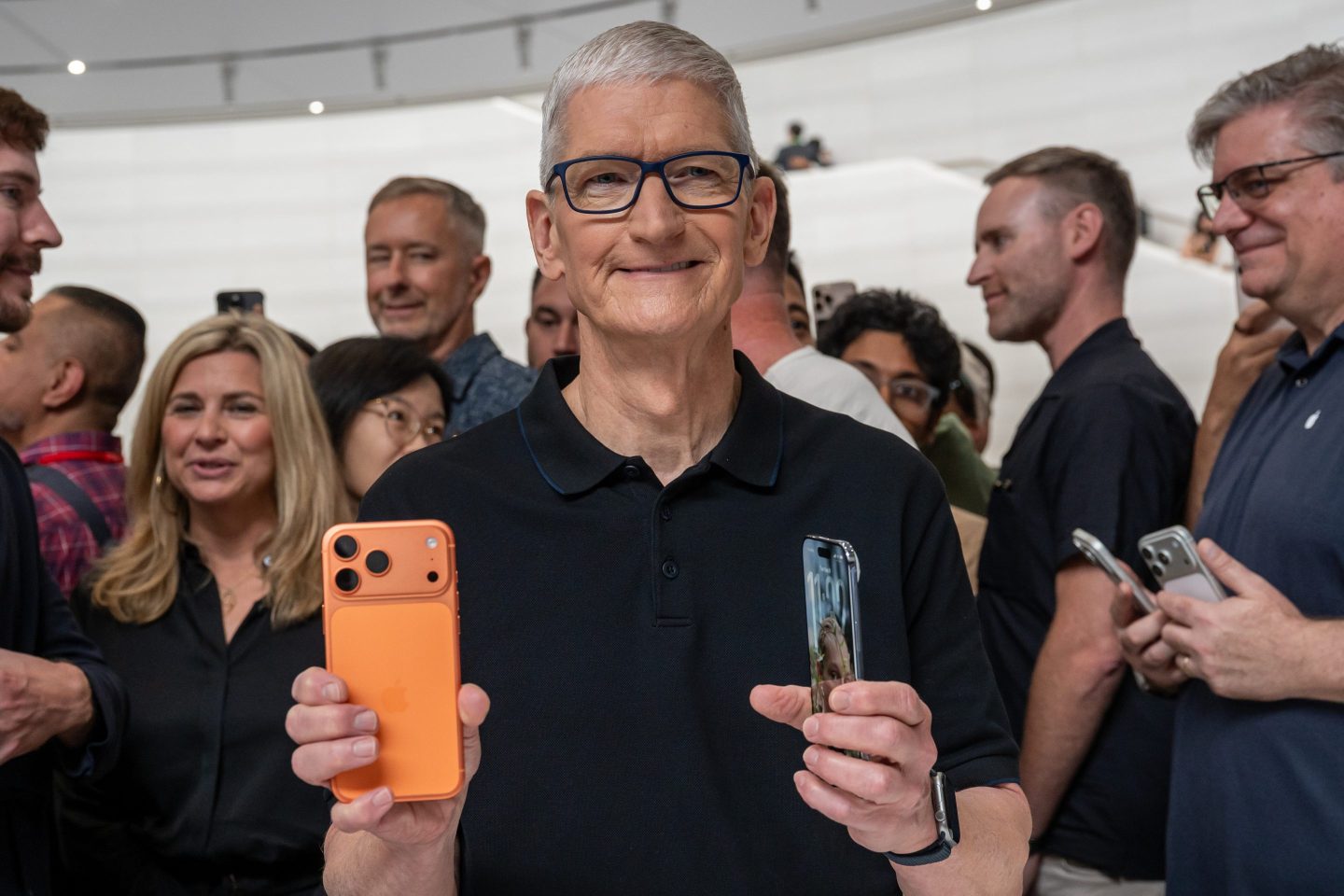
The iPhone maker will obviously benefit from giving users a much more capable Siri, as well as other AI features, at an attractive cost and while guaranteeing user privacy. Dan Ives, an equity analyst who covers Apple for Wedbush, said in a note the deal provided Apple with “a stepping stone to accelerate its AI strategy into 2026 and beyond.”
But Apple’s continuing need to rely on partners—first OpenAI and now Google—to deliver these AI features is a worrisome sign, suggesting that Apple, a champion of vertical integration, is still struggling to build its own LLM.
It’s a problem that has dogged the company since the beginning of the generative AI era: For months last year several Apple Intelligence features were delayed, and the long-awaited debut of an updated Siri has been pushed back numerous times. These delays have taken a toll on Apple’s reputation as a tech leader and angered customers, some of whom filed a class action lawsuit against the company after the AI features promoted in ads for the iPhone 16 weren’t initially available on the device.
When Apple CEO Tim Cook promised an updated version of Siri would be released in 2026, many assumed it would be powered by Apple’s own AI models. But apparently those models are not yet ready for prime time and the new Siri will be powered by Google instead.
Daniel Newman, an analyst at the Futurum Group, said that 2026 is a “make-or-break year” for Apple. “We have long said the company has the user base and distribution that allows it to be more patient in chasing new trends like AI, but this is a critical year for Apple,” Newman said.
Cook has shaken up the ranks, installing a new head of AI who previously worked at Google on Gemini. And, if the delays turn out to be related to Apple’s specific requirements around things like privacy, it may ultimately prove to have been worth the wait. Ideally, Apple would want an AI model that matches the capabilities of those from OpenAI, Anthropic, and Google but which is compact enough to run entirely on an iPhone, so that user data does not have to be transmitted to the cloud. It’s possible, said Mudassir, that Apple is grappling with technical limitations involving the amount of power these models consume and how much heat they generate. Partnering with Google buys Apple time to make breakthroughs in compression and architecture while also getting Wall Street “off its back,” he said.
Apple defenders note that the company is rarely a first mover in new technology—it was not the first to create an MP3 player, a smartphone, wireless earphones, or a smart watch, yet it came from behind to dominate many of those product categories with a combination of design innovation and savvy marketing. And Apple has a history of learning from partners for key technology, such as chips, before ultimately bringing these efforts in-house.
Or, in the case of internet search, Apple simply partnered with Google for the long-term, using the Google engine to handle search queries in its Safari browser. The fact that Apple never developed its own search engine has not hurt its growth. Could the same principle hold true for AI?
But the Apple-Google tie up is almost certainly bad news for OpenAI

While the Google partnership is not exclusive, meaning that Apple may continue to rely on OpenAI’s models for some of its Apple Intelligence features and OpenAI still has a chance to prove its models’ worth to Cupertino, Apple’s decision to go with Google is definitely a blow. At the very least, it solidifies the narrative that Google has not only caught up with OpenAI, but has now edged past it in having the best AI models in the market.
Deprived of built-in distribution through Apple’s customer base, OpenAI may find it harder to grow its own user base. The company currently boasts more than 800 million weekly users, but recent reports suggest that the rate of usage may be slowing. OpenAI CEO Sam Altman has noted that many people currently see ChatGPT as synonymous with AI. But that perception could fray if Apple users find delight in using Gemini through Siri and come to see Gemini as the better model.
.
Altman told reporters last month that he sees Apple as his company’s primary long-term rival. OpenAI is in the process of developing a new kind of AI device, with help from Apple’s former chief designer Jony Ive, that Altman hopes will rival the phone as the primary way consumers interface with AI assistants. That device may debut this year. As long as Apple was dependent on ChatGPT to power Siri, OpenAI had a good view into the capabilities its new device would be competing against. OpenAI is unlikely to have as much insight into Apple’s AI capabilities going forward, which may make it harder for the upstart to position its new device as an iPhone killer.
OpenAI has to hope its new device is a hit that may enable it to cement users into a closed ecosystem, not dissimilar to the one Apple has built around its hardware device and iOS software. This “walled garden” approach is one way to keep users from switching to rival products when they offer broadly similar capabilities. OpenAI will also have to hope its AI researchers achieve breakthroughs that give it a more decisive and long-lasting edge over Google. That might convince Apple to rely more heavily on OpenAI again in the future. Or, it could obviate the need for OpenAI to have distribution on Apple’s devices at all.