The artificial intelligence boom is no longer just a growth story, as one of Wall Street’s most prolific investors is sounding the alarm about how the tune could shift in 2026.
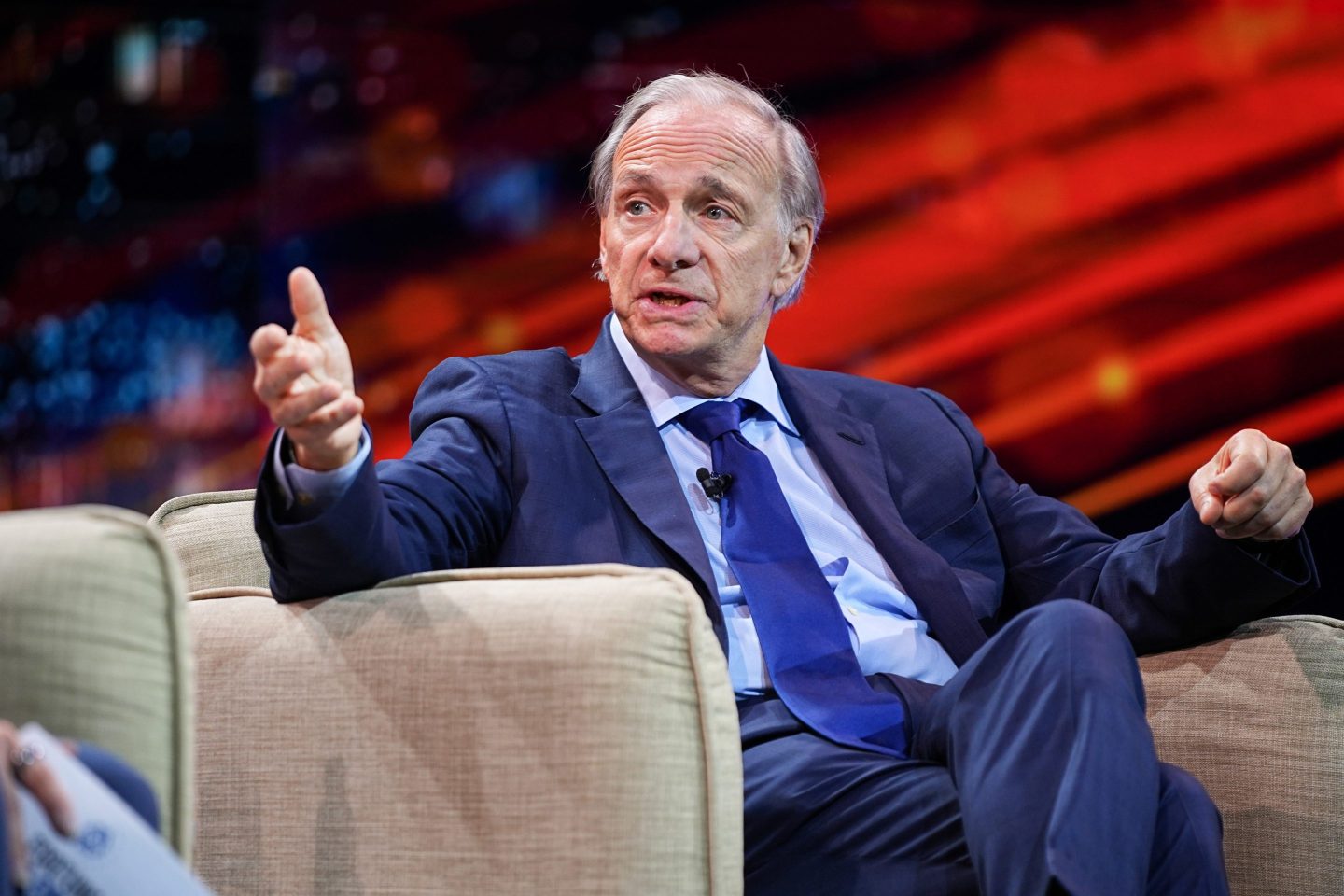
U.S. stocks surged last year, with the S&P 500 rising 16%, the third consecutive year of significant gains. Soaring technology stocks fueled much of that rise, powered by ongoing optimism about the future of AI. But this year, investors should brace for the possibility outperforming shares will collide with reality, billionaire hedge fund manager Ray Dalio warned on Monday.
“Obviously the AI boom that is now in the early stages of a bubble had a big effect on everything,” Dalio, founder of Bridgewater Associates, wrote in a 2025 retrospective on X.
While markets eventually posted a strong year, 2025 was not consistently a smooth ride for investors. In addition to market dips generated by the Trump administration’s tariff rollout, stocks were particularly sensitive to any warning signs from the AI camp. In August, the tech-heavy Nasdaq index fell 1.4% in a single morning after OpenAI CEO Sam Altman himself admitted an AI bubble was a possibility, and that investors as a whole might be “overexcited about AI.”
Much of the concern about an AI bubble has been focused on the technology’s rate of adoption, with one MIT study last year finding 95% of generative AI pilots at companies had so far failed to turn a profit. In a November interview with CNBC, Dalio did not deny the potentially transformative effects of AI, but maintained the currently soaring valuations of tech darlings could face a correction before companies figure out how to fully integrate AI.
In that interview, Dalio claimed he viewed the AI bubble as being at “about 80%” of the euphoria leading up to the 1929 stock market crash or the 2000 dot-com bubble.
In his X post on Monday, Dalio pointed to ongoing questions about the Federal Reserve’s monetary policy stance as big unknowns in 2026. With Fed chair Jerome Powell’s term expiring in May, President Donald Trump has stated his pick for Powell’s successor will be “someone who believes in lower interest rates, by a lot.” Dalio wrote the central bank’s “most likely” dovish stance in 2026 could continue propping up share prices and further inflate the AI bubble.
In his guidance for 2026, Dalio emphasized diversity as key, pointing out how gold ended 2025 as the “best performing major market.” The commodity, widely seen as a safe-haven asset for investors ahead of possible market corrections, posted stellar returns last year, breaking records alongside other precious metals including silver and platinum. Dalio noted how gold outperformed the S&P index by 47% last year, undercutting some of the perceived gains of the U.S. stock market.
Another factor Dalio emphasized was a weakened dollar in 2025. In one of its worst performances in years, the U.S. dollar declined 10% on the back of interest-rate cuts and uncertainty over trade policy. Dalio wrote an underperforming dollar could obscure some underlying weaknesses in markets.
“When one’s own currency goes down, it makes it look like the things measured in it went up. In other words, looking at the investment returns through the lens of a weak currency makes them look stronger than they really are,” he wrote.
Dalio pointed to various overseas stock markets that outperformed the U.S. through this lens, including Europe, China, the U.K. and Japan. Emerging markets posted the strongest returns last year, with the MSCI benchmark index rising 33%, double the S&P 500’s return. This is part of a larger trend of a shifting outlook in global capital, Dalio continued, which is no longer gravitationally bound to the U.S.
“There were big shifts in flows, values, and, in turn, wealth away from the U.S., and what is happening will probably lead to more rebalancing and diversifying,” he wrote.