• Home
  • Latest
  • Fortune 500
  • Finance
  • Tech
  • Leadership
  • Lifestyle
  • Rankings
  • Multimedia
Commentaryinvesting advice

I lead Goldman Sachs’ alternatives for wealth globally. Around the world, investors want to know more 

By
Kristin Olson
Kristin Olson
Down Arrow Button Icon
By
Kristin Olson
Kristin Olson
Down Arrow Button Icon
December 19, 2025, 9:05 AM ET

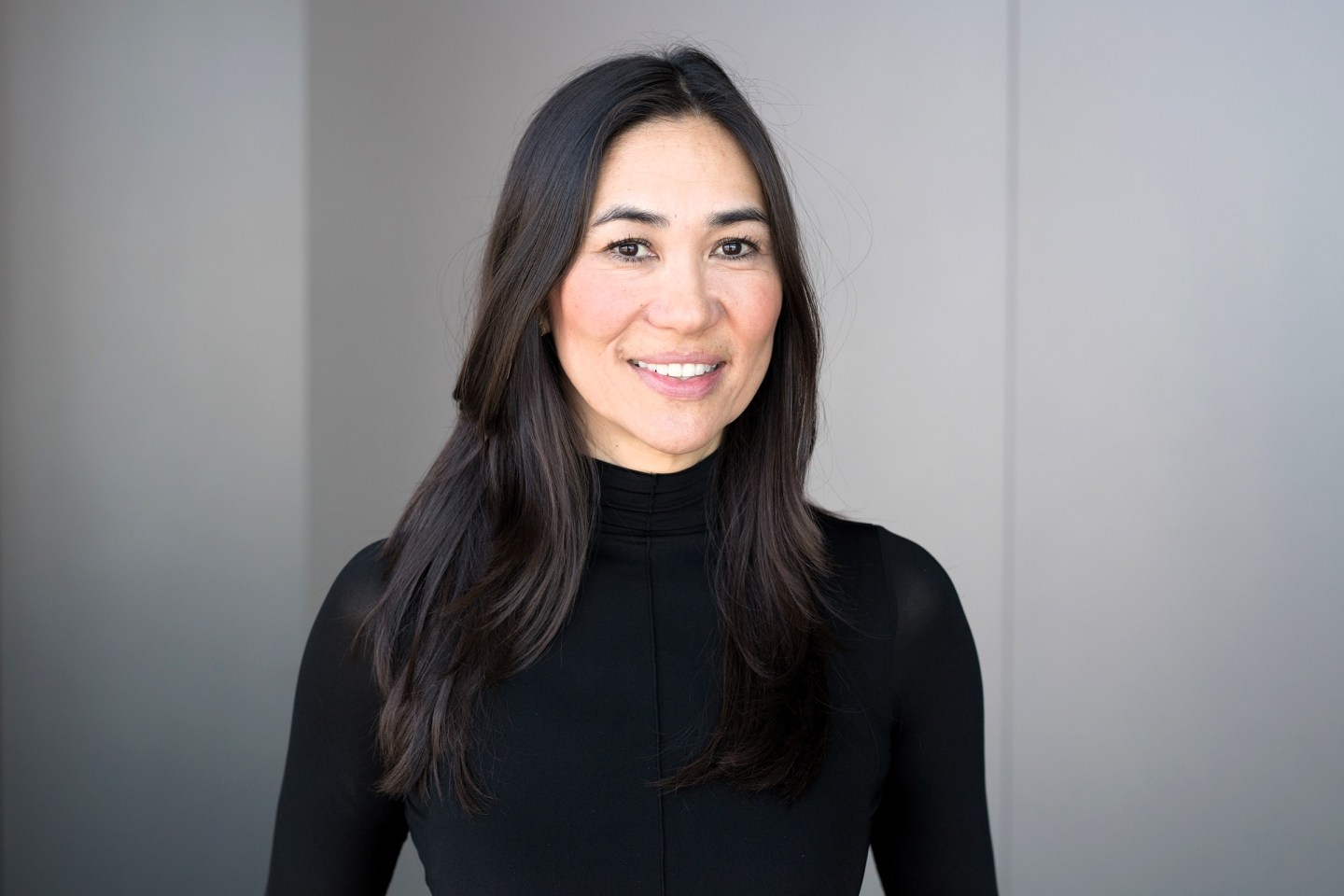
Kristin Olson is Goldman Sachs' global head of Alternatives for Wealth within Asset & Wealth Management. In her role, she oversees the global alternatives platform and alternatives product strategy across wealth client businesses. Kristin joined Goldman Sachs in 1998 as an analyst in the Financial Institutions Group in the Investment Banking Division. She was named managing director in 2008 and partner in 2014.

Kristin Olson
Kristin Olson is Goldman Sachs' global head of Alternatives for Wealth within Asset & Wealth Management.courtesy of Goldman Sachs

Access to alternative investments is expanding in ways that were almost unthinkable a decade ago. Evergreen funds and interval funds now offer individual investors exposure once limited to larger institutions. On the surface, that looks like progress: more tools to work with and more ways to build resilient portfolios.

Recommended Video

But when access expands this fast, complexity tends to follow. And that is exactly what investors face today.

Alternatives include private market investments that come with different liquidity, valuation methods, and drivers of return than public markets. They span a wide range of strategies including private credit, private equity, growth equity and venture capital, real estate, and infrastructure. “Secondary” investments, or the purchase of existing private market investment interests, are also growing in popularity. 

Investors are being offered more alternative strategies than ever, yet many still lack clarity about what these exposures are, what role they can play, and how much of their wealth they should allocate. Additionally, managers vary widely in how they source deals, assess risk, and build portfolios. Access has arrived but understanding and manager quality vary widely.

How investors navigate that combination will determine whether alternatives strengthen or complicate their long-term outcomes.

To understand how individuals are engaging with alternatives, Goldman Sachs surveyed more than 1,000 people with at least $1 million in investable assets. The results paint a picture of disciplined savers, some of whom are unsure about how to use alternatives.

These investors save consistently. Yet substantial portions of that accumulated wealth are not being put to work. Across respondents, roughly 20% of net worth sits in cash and many we surveyed called the cash in their portfolio “flexibility.” Some of this capital could support long-term goals more effectively by investing it.  

Expanding beyond public equity or fixed income allocations to private assets can provide additional benefits for these investors, in allocations that reflect their appetite for illiquidity. 

Risk perception of alternatives in our survey reflects confusion. More than half of respondents classify alternatives as “high risk,” and 35% say they do not understand the category well enough to evaluate it. Yet for households with more than $10 million, 80% report owning alternatives, and the leading reasons to increase allocations are performance and diversification.

Taken together, the survey points to a clear education gap. First, many investors are unclear on what alternatives are or how they behave. Second, many are not yet thinking about how much capital could shift from traditional allocations in their portfolio into well-chosen alternatives strategies. 

When Understanding Lags and Dispersion Widens

The survey highlights a tension at the center of today’s alternatives moment. Investors say that performance, risk, and fees matter most when evaluating strategies, yet many do not feel confident assessing managers on those dimensions. The challenge is not only unfamiliarity. As access to alternatives has expanded, so has the variety of structures, strategies, valuation approaches, and underwriting styles in the wealth channel. Choice has improved but so has the complexity investors must navigate.

That is why it is important to bring clarity to a space where strategies that look similar can behave very differently.

Turning access into durable results depends on selecting partners whose discipline, process, and infrastructure are equipped for the evolving demands of private markets.

Understanding the Alternatives Landscape

A good starting point is to stop thinking of “alternatives” as a single category. Private credit, private equity, real estate, infrastructure, and secondaries are all private in form, but the engines driving return and risk differ in each.

The first step is separating the underlying strategies across these asset classes and recognizing that they do not share the same risk–return profile, then understanding what drives outcomes in each:

  • Private credit depends on underwriting quality, sector mix, covenants, and the balance of vintages.
  • Private equity is driven by operational value creation, entry pricing, and specialization.
  • Real estate reflects rate sensitivity, lease structure, asset quality, and geographic exposure.
  • Infrastructure often provides long duration, contracted cash flows with different inflation and rate dynamics than traditional equities or bonds.
  • Secondaries require disciplined valuation and visibility into seasoned portfolios, especially when deployment pressure is high.

These differences make it clear why manager selection matters. The same label can mask very different underlying practices, risks, and return engines.

Turning Access into Durable Outcomes

Once investors have a clear map of the alternatives landscape, the real question is who they are trusting to manage these exposures? 

High quality alternatives managers tend to share a few characteristics

  • Deep origination networks that deliver steady, diversified deal flow. We look for managers with broad platforms across asset classes, and a sizable mix of draw-down and evergreen vehicles.
  • Underwriting standards and valuation discipline tested across different market environments. How the manager evaluates and structure risk and values assets over time differentiates performance.  The best managers stay disciplined in pricing and valuation when competition is high or flows are strong.
  • Disciplined portfolio construction that balances concentration, vintages, and risk factors.  We look for managers with consistent processes and valuation practices across their investment platform. 
  • Clear, credible liquidity structures aligned with investor behavior in both normal and stressed markets.  Liquidity terms and stress-scenario plans should be transparent and credible. We pay close attention to how strategies have behaved in stressed environments.
  • Robust operational infrastructure capable of supporting semi-liquid flows at scale.  Platforms should have invested in the systems to handle flows, reporting, and scale.
  • Governance and communication practices aligned with long-term capital, not short-term asset gathering. The best managers provide clear, consistent reporting so investors can understand what they own and how it is performing.

For investors who are curious about re-allocating a portion of their portfolio to alternatives, the combination of broader access, an education gap, and rising dispersion brings both opportunity and risk. Alternatives can now be incorporated thoughtfully and at scale, but outcomes vary widely. Choosing the right partner can increase the likelihood that an allocation compounds effectively and manages avoidable risk.

Access opens the door. Understanding and selection determine what comes through it.

The opinions expressed in Fortune.com commentary pieces are solely the views of their authors and do not necessarily reflect the opinions and beliefs of Fortune.

Join us at the Fortune Workplace Innovation Summit May 19–20, 2026, in Atlanta. The next era of workplace innovation is here—and the old playbook is being rewritten. At this exclusive, high-energy event, the world’s most innovative leaders will convene to explore how AI, humanity, and strategy converge to redefine, again, the future of work. Register now.
About the Author
By Kristin Olson
See full bioRight Arrow Button Icon

Latest in Commentary

Finance
Lorem ipsum dolor sit amet, consectetur adipiscing elit, sed do eiusmod tempor incididunt ut labore et dolore magna aliqua. Ut enim ad minim veniam
By Fortune Editors
October 20, 2025
Finance
Lorem ipsum dolor sit amet, consectetur adipiscing elit, sed do eiusmod tempor incididunt ut labore et dolore magna aliqua. Ut enim ad minim veniam
By Fortune Editors
October 20, 2025
Finance
Lorem ipsum dolor sit amet, consectetur adipiscing elit, sed do eiusmod tempor incididunt ut labore et dolore magna aliqua. Ut enim ad minim veniam
By Fortune Editors
October 20, 2025
Finance
Lorem ipsum dolor sit amet, consectetur adipiscing elit, sed do eiusmod tempor incididunt ut labore et dolore magna aliqua. Ut enim ad minim veniam
By Fortune Editors
October 20, 2025
Finance
Lorem ipsum dolor sit amet, consectetur adipiscing elit, sed do eiusmod tempor incididunt ut labore et dolore magna aliqua. Ut enim ad minim veniam
By Fortune Editors
October 20, 2025
Finance
Lorem ipsum dolor sit amet, consectetur adipiscing elit, sed do eiusmod tempor incididunt ut labore et dolore magna aliqua. Ut enim ad minim veniam
By Fortune Editors
October 20, 2025

Most Popular

Finance
Lorem ipsum dolor sit amet, consectetur adipiscing elit, sed do eiusmod tempor incididunt ut labore et dolore magna aliqua. Ut enim ad minim veniam
By Fortune Editors
October 20, 2025
Finance
Lorem ipsum dolor sit amet, consectetur adipiscing elit, sed do eiusmod tempor incididunt ut labore et dolore magna aliqua. Ut enim ad minim veniam
By Fortune Editors
October 20, 2025
Finance
Lorem ipsum dolor sit amet, consectetur adipiscing elit, sed do eiusmod tempor incididunt ut labore et dolore magna aliqua. Ut enim ad minim veniam
By Fortune Editors
October 20, 2025
Finance
Lorem ipsum dolor sit amet, consectetur adipiscing elit, sed do eiusmod tempor incididunt ut labore et dolore magna aliqua. Ut enim ad minim veniam
By Fortune Editors
October 20, 2025
Finance
Lorem ipsum dolor sit amet, consectetur adipiscing elit, sed do eiusmod tempor incididunt ut labore et dolore magna aliqua. Ut enim ad minim veniam
By Fortune Editors
October 20, 2025
Finance
Lorem ipsum dolor sit amet, consectetur adipiscing elit, sed do eiusmod tempor incididunt ut labore et dolore magna aliqua. Ut enim ad minim veniam
By Fortune Editors
October 20, 2025
Rankings
  • 100 Best Companies
  • Fortune 500
  • Global 500
  • Fortune 500 Europe
  • Most Powerful Women
  • Future 50
  • World’s Most Admired Companies
  • See All Rankings
Sections
  • Finance
  • Leadership
  • Success
  • Tech
  • Asia
  • Europe
  • Environment
  • Fortune Crypto
  • Health
  • Retail
  • Lifestyle
  • Politics
  • Newsletters
  • Magazine
  • Features
  • Commentary
  • Mpw
  • CEO Initiative
  • Conferences
  • Personal Finance
  • Education
Customer Support
  • Frequently Asked Questions
  • Customer Service Portal
  • Privacy Policy
  • Terms Of Use
  • Single Issues For Purchase
  • International Print
Commercial Services
  • Advertising
  • Fortune Brand Studio
  • Fortune Analytics
  • Fortune Conferences
  • Business Development
About Us
  • About Us
  • Editorial Calendar
  • Press Center
  • Work At Fortune
  • Diversity And Inclusion
  • Terms And Conditions
  • Site Map
  • Facebook icon
  • Twitter icon
  • LinkedIn icon
  • Instagram icon
  • Pinterest icon

Most Popular

placeholder alt text
Economy
Elon Musk warns the U.S. is '1,000% going to go bankrupt' unless AI and robotics save the economy from crushing debt
By Jason MaFebruary 7, 2026
2 days ago
placeholder alt text
Success
Gen Z Patriots quarterback Drake Maye still drives a 2015 pickup truck even after it broke down on the highway—despite his $37 million contract
By Sasha RogelbergFebruary 7, 2026
2 days ago
placeholder alt text
Economy
Russian officials are warning Putin that a financial crisis could arrive this summer, report says, while his war on Ukraine becomes too big to fail
By Jason MaFebruary 8, 2026
10 hours ago
placeholder alt text
Commentary
America marks its 250th birthday with a fading dream—the first time that younger generations will make less than their parents
By Mark Robert Rank and The ConversationFebruary 8, 2026
19 hours ago
placeholder alt text
Success
Even with $850 billion to his name, Elon Musk admits ‘money can’t buy happiness.’ But billionaire Mark Cuban says it’s not so simple
By Preston ForeFebruary 6, 2026
3 days ago
placeholder alt text
Future of Work
Anthropic cofounder says studying the humanities will be 'more important than ever' and reveals what the AI company looks for when hiring
By Jason MaFebruary 7, 2026
2 days ago

© 2026 Fortune Media IP Limited. All Rights Reserved. Use of this site constitutes acceptance of our Terms of Use and Privacy Policy | CA Notice at Collection and Privacy Notice | Do Not Sell/Share My Personal Information
FORTUNE is a trademark of Fortune Media IP Limited, registered in the U.S. and other countries. FORTUNE may receive compensation for some links to products and services on this website. Offers may be subject to change without notice.


Latest in Commentary

CommentaryHealth
Patient private capital is needed to help Asia plug its healthcare gaps
By Abrar MirFebruary 8, 2026
8 hours ago
nfl
CommentaryTV
The Super Bowl was made for TV and instant replay was made for visual AI. Here’s how it could be better and what it would look like
By Jason CorsoFebruary 8, 2026
17 hours ago
tipping
CommentaryTipping
I’m the chief growth officer at a payments app and I know how America really tips. Connecticut, I’m looking at you
By Ricardo CiciFebruary 8, 2026
18 hours ago
heacock
CommentaryLeadership
I’m a CEO who grew a ‘boring’ air filter business into a $260 million company, and AI is going to help blue-collar, everyday people just like me
By David HeacockFebruary 8, 2026
18 hours ago
broker
CommentaryRecession
We studied 70 countries’ economic data for the last 60 years and something big about market crashes changed 25 years ago
By Josh Ederington, Jenny Minier and The ConversationFebruary 8, 2026
19 hours ago
birthday
CommentaryAmerican Dream
America marks its 250th birthday with a fading dream—the first time that younger generations will make less than their parents
By Mark Robert Rank and The ConversationFebruary 8, 2026
19 hours ago