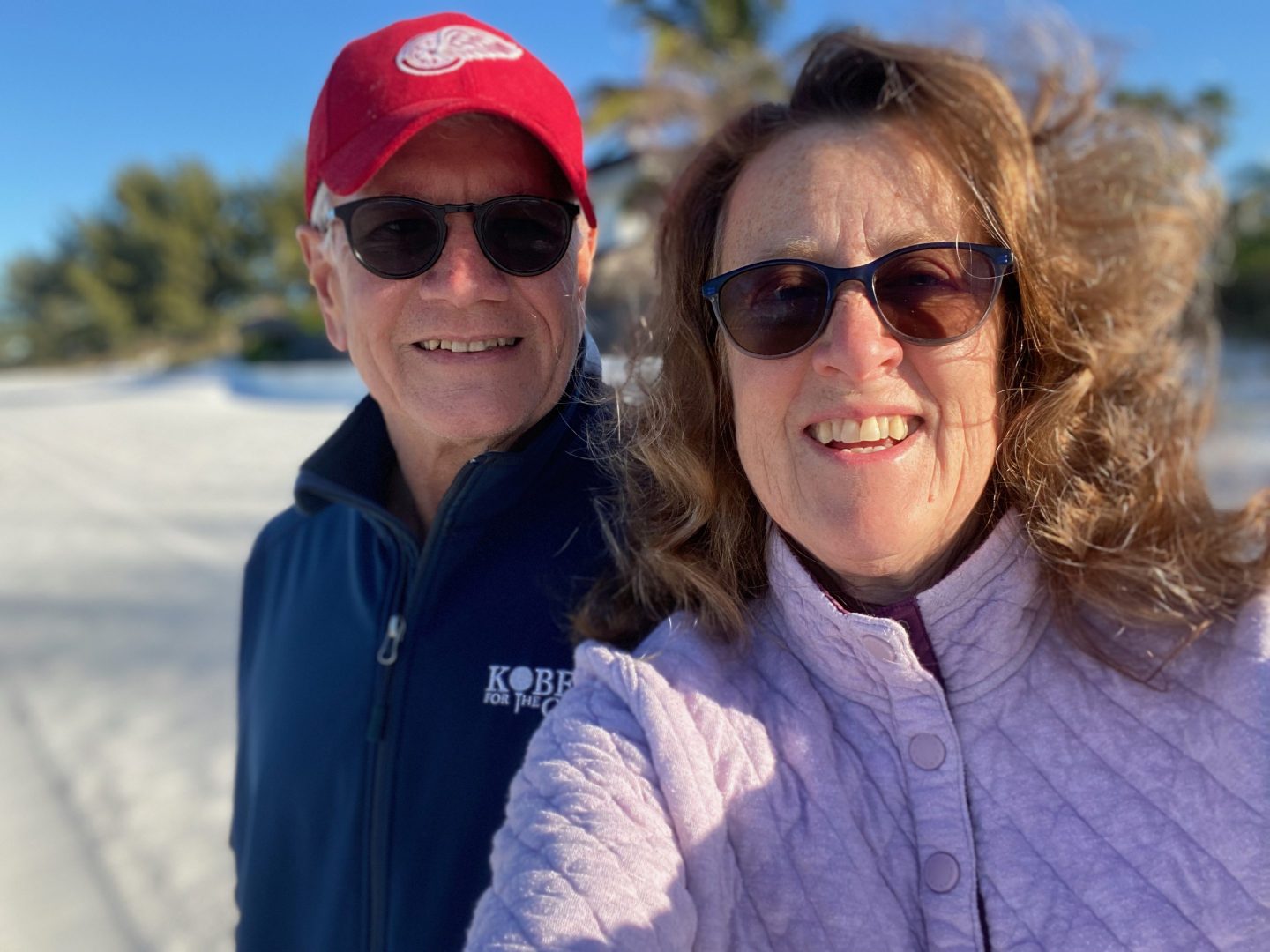
For Sue Decker, a conversation about custom paper clips proved the tipping point that compelled her to leave the big city and literally go back to the land.
“I was working as a producer at a marketing firm, and my client really wanted to make custom paper clips for an upcoming meeting of CEOs,” she says. “I remember thinking, ‘This work is not putting good things back into the world.’”
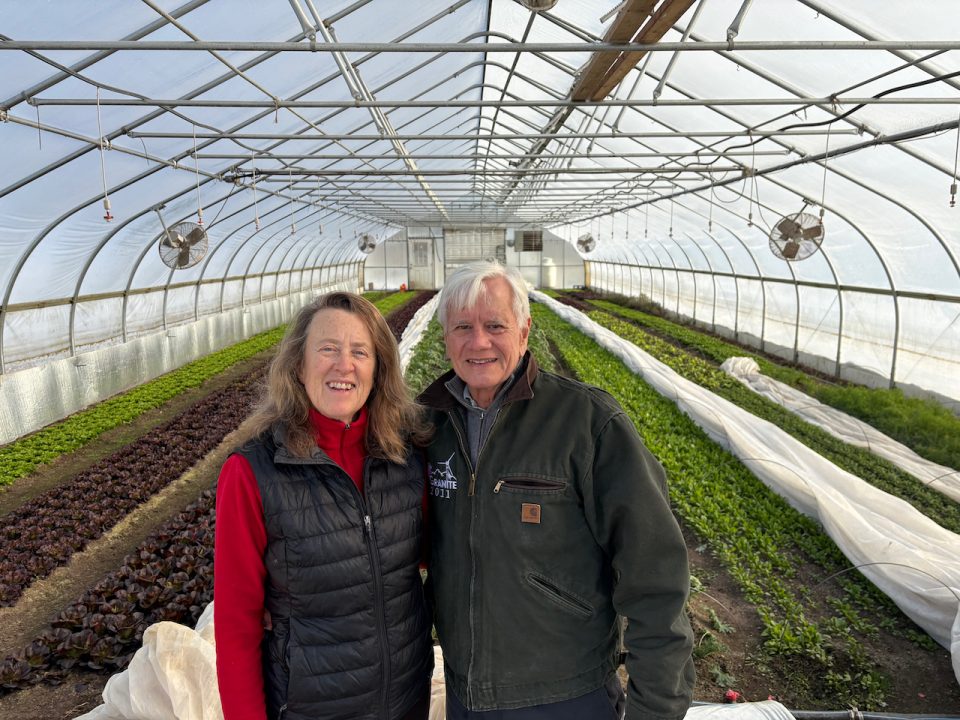
Sue and her husband, Mark Decker, founded Blue Star Farm in Stuyvesant, N.Y., in 2009. Located some 130 miles north of New York City in the Hudson Valley, the certified naturally grown (CNG) farm grows more than 130 varieties of vegetables and herbs, which it sells at local farmers’ markets and wholesale. Blue Star sold some 11,000 bags of lettuce mix and 10,800 pounds of peppers—its two top sellers—this year, and currently supplies some 20 wholesale clients.
Returning to roots
Farming and entrepreneurship are part of Sue’s DNA. Her great-grandfather and grandfather were dairy farmers in Pennsylvania’s Lehigh Valley, where she grew up surrounded by organic gardens and started her own egg business in fifth grade.
“I’d drag a bucket of hot water up to the chicken coop on winter mornings before school to make sure the girls had warm water, then I’d sell the eggs to my teachers and friends,” she recalls.
While she spent nearly two decades in New York City in roles spanning video, publishing, and design, farming was never far from her thoughts. As a board member of a community-supported agriculture (CSA) program in Park Slope, Brooklyn, she served as the farmer’s primary point of contact. She wrote a weekly newsletter for members with recipes for unusual fruits or vegetables that were included in deliveries.
“That experience and eating that food formed part of my impetus to try farming,” Sue says.
Keen to change direction following that fateful meeting, in 2004, Sue went to work full-time for Windflower Farm—the Park Slope CSA supplier—in upstate New York. When her employer left town temporarily to deal with a family matter, Sue reached out to Mark, whom she’d met while both worked at Forbes Media.
“Sue said she could really use a hand, and I agreed to come up,” he remembers. “We picked beans and tomatoes all day long, and that evening she told me she still had more work to do. On my drive back to Manhattan, I had one thought: ‘This is never going to work.’”
Meanwhile, with a year at Windflower under her belt, Sue moved on to Charlestown Farm in Phoenixville, Pa., to take on a management role and learn to operate farming equipment.
“They had a cultivating tractor and a main tillage tractor; we did a CSA and a farmers’ market, and we had a restaurant customer, so there were different market channels,” she recalls. “It was a wonderful experience.”
The owners also built a greenhouse to start winter farming—using cold-hardy plants and soil care to cultivate produce in cold-weather months.
“It was a trial by fire,” Sue says. “I had nothing to go on except books by people like Eliot Coleman, who’s been winter farming in Maine for decades.”
A new beginning
After Sue managed Charlestown for three years, she and Mark—who’d since warmed to the farming idea—decided “we wanted to have our own little plot of land,” she says.
Property in the nearby Lehigh Valley, where Sue grew up, was pricey, so they took a trip to the Hudson Valley and called a real estate agent “on a lark,” Mark recalls. When he showed them a house on a 10-acre spread surrounded by 75 acres of conserved land, they were hooked.
“We have all these open fields around us, a view of the Catskills, and the most beautiful sunsets,” Sue says. “It took us a while to figure out why so many cars would stop in front of our house.”
There was just one problem: Sue’s soil probe revealed the ground wasn’t especially conducive to vegetable farming.
“It was good to learn that upfront, because it forced me to find rentals close by that could be a lot more productive,” she says.
They closed on the house in December 2008, got married in January 2009, and moved in in March. When unusually heavy rainfall rendered that year a washout on the farming front, Sue got a job at Beth’s Farm Kitchen, a prominent jam and chutney maker nearby. That introduction to the local community led to the farm where Sue and Mark ultimately rented ground, five miles away in Kinderhook—“some of the best soil in New York State,” he says.
Sue started there with one test acre of winter squash in 2011, and ended up with 35 apple crates–“probably half of which went to the local farm pigs,” she recalls. “We learned that some squash are a lot more marketable than others.”
But the experiment introduced her to another farmer across the road “who was instrumental in helping me develop that land.” She also hired her first full-time employee that year, who’s been with her ever since.
They steadily expanded to three acres there, then five. Mark’s income from Forbes, where he continued to work as director of digital imaging until 2021, covered the mortgage and domestic costs, allowing them to reinvest the farm’s earnings in operations. They also made a key business decision.
Strategic vision
“We decided to do winter growing seriously, which meant working year-round,” Mark says. “On the other hand, you get high dollar for greens, there’s less competition, and you can keep your staff all year.”
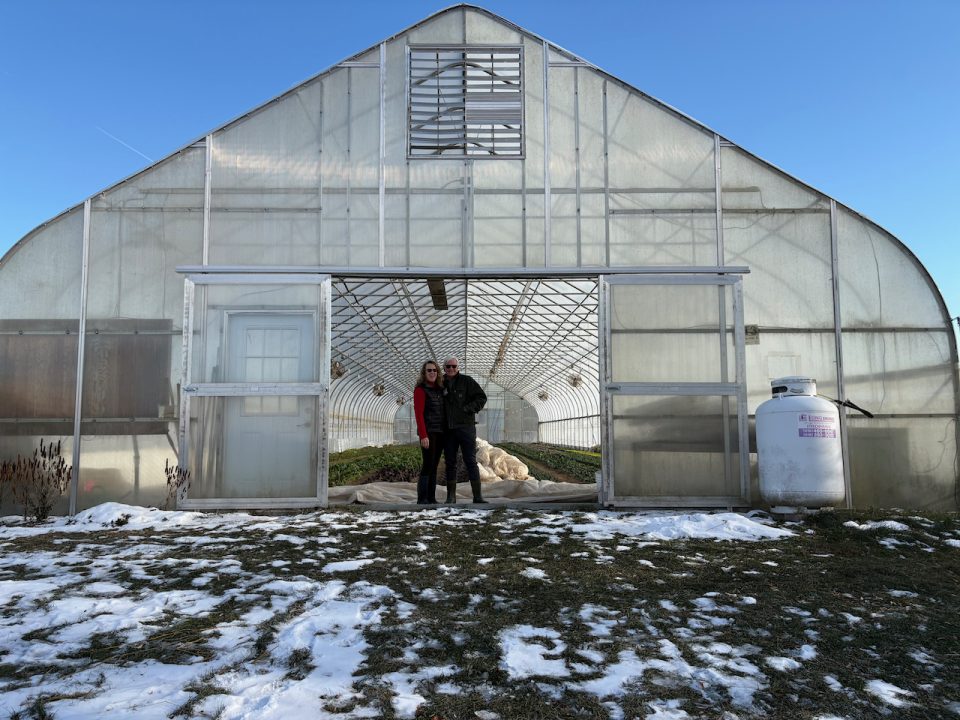
They’d already put up a small greenhouse on their property, and added a couple of larger ones that they got a good deal on from another local farm. They also started trying different premixed seeds specifically for winter growing. Salanova, a new line from Johnny’s Selected Seeds that was higher-yield, proved a winner.
“We were able to grow eight different kinds of lettuces that were really strong performers, and they carried us forward,” Sue says. “Flavor first is our primary directive—everything we do to feed the soil is about optimizing flavor.”
They began selling every Saturday at the Hudson Farmers’ Market—its primary retail channel that also introduced the farm to local restaurants—in 2011. It soon became one of the market’s anchor farms, an opportunity that proved invaluable during COVID.
“Consumer demand was off the charts—our retail sales increased 35% that year, even as our restaurant channel collapsed,” Sue recalls. “There were times when I wondered if I could keep up with it. We never returned to pre-COVID levels—it catapulted us to a new base to work from.”
Investing for the long run
Another turning point came in 2021, when their lease in Kinderhook, where they’d been farming five acres for 12 years, wasn’t renewed. They found another property just three miles down the road, but there was work to do.
“It was a huge undertaking—we had to convert old cow pastures to vegetable fields, construct a building to store equipment, and dig a pond since there was no water source,” Sue says. “The choice was to stay the same size and make the investment, or pull back to our home property and get really small—and I’m not good at small.”
They invested, in exchange for the right to farm there for seven years rent-free.
With business humming along and 11 greenhouses up and running, Sue and Mark are moving beyond vegetables and strawberries to other fruit. Their Asian pears are coming along nicely, and they recently bought their first fig tree. Along with the year-round Saturday market, Sue sends a weekly list to four stores and 16 restaurants that have been clients for years. Sales are evenly split between retail and wholesale.
“Sue is really known for her quality—I always say that other people’s firsts are Sue’s seconds,” says Mark. The farm’s seconds now fuel a line of preserves and condiments, which help bring customers to the market table every Saturday.
Advice for entrepreneurs
Their advice for other would-be farmers and entrepreneurs?
“Always invest in your employees—they’re your biggest asset,” says Sue, who currently employs three full-time and 10 to 11 seasonal workers. “It’s difficult to draw people to this work—it’s hard and requires skilled labor.”
Also, stretch your budget whenever you can.
“When you’re building something, go for the biggest and best components that you can afford, like the best tools and the biggest greenhouses,” she adds. “That investment will always benefit you in the long run.”