Oracle’s rapid descent from market darling to market warning sign is revealing something deeper about the AI boom, experts say: no matter how euphoric investors became over the last two years, the industry can’t outrun the laws of physics—or the realities of debt financing.
Shares of Oracle have plunged 45% from their September high and lost 14% this week after a messy earnings report revealed it spent $12 billion in quarterly capital expenditures, higher than the $8.25 billion expected by analysts.
Earnings guidance was also weak, and the company raised its forecast for fiscal 2026 capex by another $15 billion. The bulk of that is going into data centers dedicated to OpenAI, Oracle’s $300 billion partner in the AI cycle.
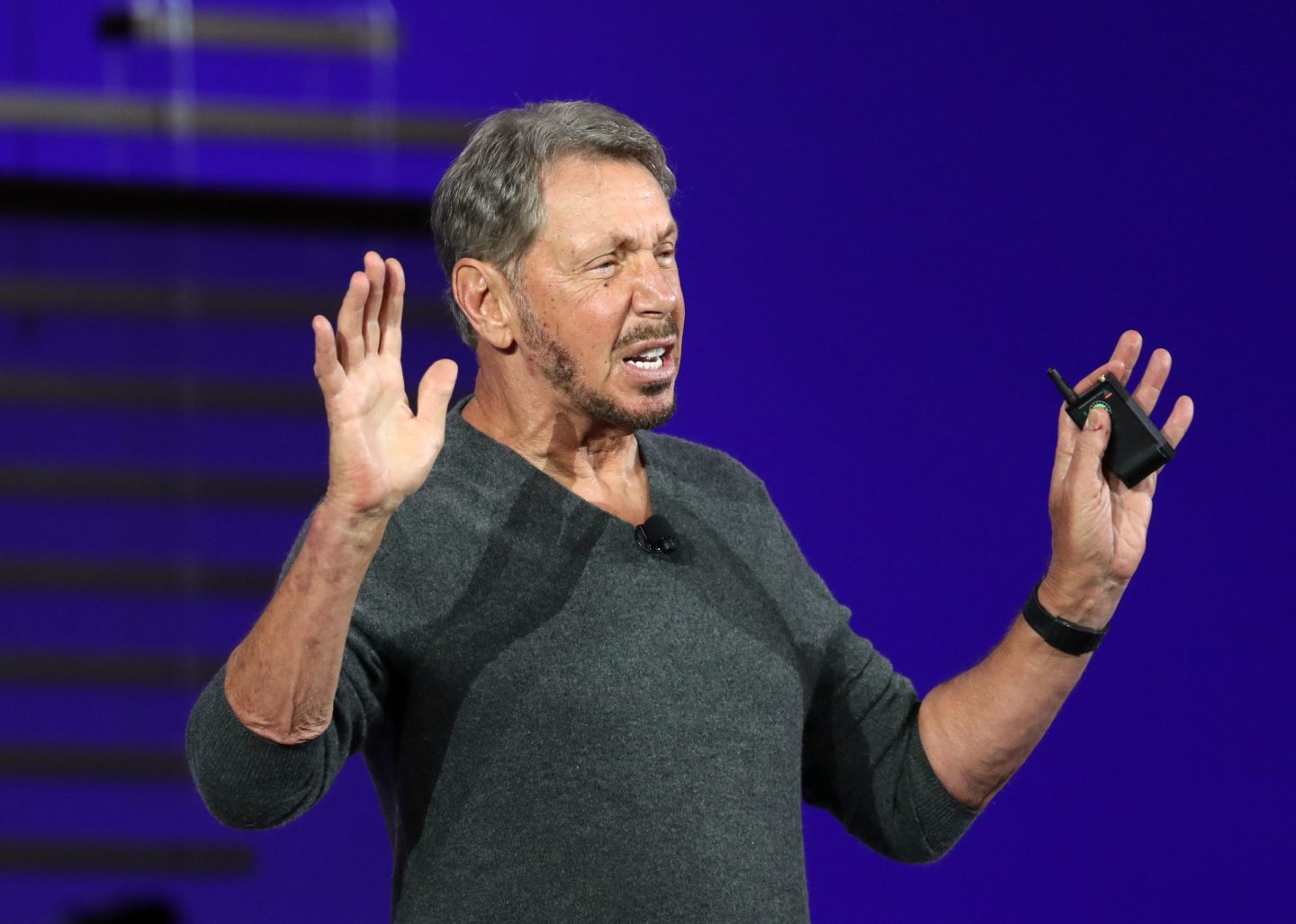
“We have ambitious achievable goals for capacity delivery worldwide,” Oracle co-CEO Clay Magouyrk said on an earnings call this week.
Investors worry how Oracle will pay for these massive outlays as its underlying revenue streams, cloud revenue and cloud-infrastructure sales, also fell short of Wall Street’s expectations. Analysts have described its AI buildout as debt-fueled, even though the company does not explicitly link specific debt to specific capital projects in its filings.
And by Friday, even the crown jewel of Oracle’s AI strategy—its OpenAI data centers—was showing cracks. Bloomberg disclosed that Oracle has pushed back completion of some U.S. data centers for OpenAI from 2027 to 2028 because of “labor and material shortages.”
“It’s perfectly plausible that they’re seeing labor and materials shortages,” said data-center researcher Jonathan Koomey, who has advised utilities and hyperscalers including IBM and AMD. In his view, the AI boom is running directly into the difference between digital speed and physical speed. “The world of bits moves fast. The world of atoms doesn’t. And data centers are where those two worlds collide.”
Although Bloomberg didn’t identify which specific facilities were being delayed, Koomer said one likely candidate is Project Jupiter, Oracle’s gargantuan data-center complex proposed for a remote stretch of New Mexico. Local reporting has described Jupiter as a $160 billion-plus mega-campus, one of the most ambitious AI infrastructure projects ever attempted and a core piece of Oracle’s commitment to provide compute to OpenAI.
Koomey describes an industry where capital can be deployed instantly, but the equipment that capital must buy cannot. The timelines for turbines, transformers, specialized cooling systems, and high-voltage gear have stretched into years, he explained. Large transformers can take four to five years to arrive. Industrial gas turbines, which companies increasingly rely on for building microgrids, can take six or seven.
Even if a company is willing to pay a premium, the factories that produce these components cannot magically expand overnight, and the manufacturing industry trained to install them is already stretched thin. AI companies may want to move at the pace of model releases, but the construction and utility sectors operate on a fundamentally different timeline.
Koomey made it clear that the physical constraints he describes apply to all hyperscalers, but Oracle worries investors in particular because it’s getting into the AI infrastructure game late and tying much of its capex to one customer, OpenAI.
“This happens every time there’s a massive shift in investment,” he said. “Eventually manufacturers catch up, but not right away. Reality intervenes.”
That friction becomes ever clearer once the financial limit enters the picture. While Oracle’s stock slide is dramatic, the bond-market reaction may be more important. Oracle’s bond yields blew out, with some newer notes that were once investment grade now trading like junk, as its credit-risk gauge hit the highest level since 2009. It signals that investors who lend to companies, historically the most sober observers of tech cycles, are beginning to reassess the risk of lending into the AI buildout.
For the past few decades, the norm for tech companies was to pay for growth with earnings. Now many of them, including Oracle, are turning to credit markets to fund their sprawling expansions. According to a Bank of Americaanalysis, the five biggest AI hyperscalers—Google, Meta, Amazon, Microsoft and Oracle—have collectively issued roughly $121 billion in bonds this year to fund AI data-center buildouts, a level of issuance far above historical averages and one that signals a major shift toward debt financing for infrastructure.
Oracle, however, has made some of the biggest deals out of the five, like its $18 billion September bond sale. Its total stack of debt is roughly $100 billion. The other four are also in stronger cash positions and have higher credit ratings (AA/A vs Oracle in BBB area), and are able to generate large positive free cash flow. So while Oracle isn’t the only tech giant tapping the debt markets for its AI outlays, its size, cash generation, and credit ratings make it one of the most leveraged.
Debt investors do not necessarily need blowout returns; they just need certainty that they will get their money back, with interest. If confidence wavers even a little, yields rise.
“This feels like the 1998 moment,” Anuj Kapur, CEO of CloudBees and a former tech executive during the dot-com era, told Axios. There’s enormous promise, but also enormous uncertainty about how quickly the returns show up.
Koomer saw a simple throughline.
“You have a disconnect between the tech people who have lots of money and are used to moving super fast, and the people who make the equipment and build the facilities, who need years to scale up their manufacturing,” he said.