• Home
  • Latest
  • Fortune 500
  • Finance
  • Tech
  • Leadership
  • Lifestyle
  • Rankings
  • Multimedia

Trendingnow

1

Markets tumble worldwide as Fed resets expectations: $400 billion wiped off SpaceX stock

2

After forcing workers back to the office, Goldman Sachs and JPMorgan Chase are now letting their staff work remotely—but only for the World Cup

3

Former U.S. Secret Service agent says bringing your authentic self to work stifles teamwork: 'You don’t get high performers, you get sloppiness'

1

Markets tumble worldwide as Fed resets expectations: $400 billion wiped off SpaceX stock

2

After forcing workers back to the office, Goldman Sachs and JPMorgan Chase are now letting their staff work remotely—but only for the World Cup

3

Former U.S. Secret Service agent says bringing your authentic self to work stifles teamwork: 'You don’t get high performers, you get sloppiness'
CommentaryElections

Morality matters, even to Cuomo voters

By
Gita Johar
Gita Johar
Down Arrow Button Icon
By
Gita Johar
Gita Johar
Down Arrow Button Icon
November 20, 2025, 8:00 AM ET

Gita Johar is Meyer Feldberg Professor of Business, Columbia Business School.

Andrew Cuomo
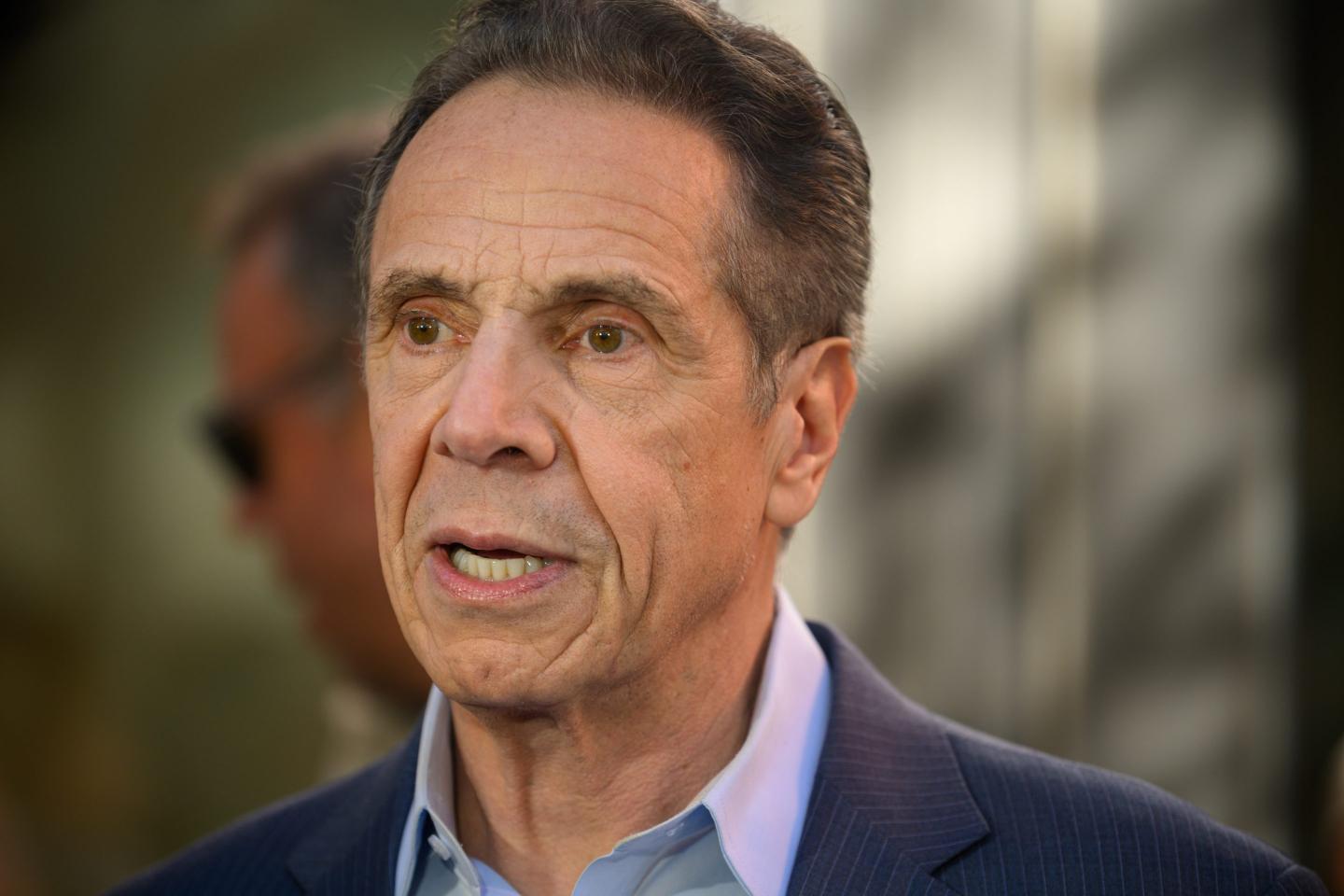
Former New York Gov. Andrew Cuomo at The High School of Art and Design on November 4, 2025 in New York City. Alexi J. Rosenfeld/Getty Images
Add Fortune on Google for similar content.

In the latest New York City elections, integrity was a hot topic. When Zohran Mamdani told Andrew Cuomo “What I don’t have in experience, I make up for in integrity. And what you don’t have in integrity, you could never make up for in experience,” he was echoing what many voters instinctively felt. Politicians, and people, can compensate for other types of weaknesses, but they cannot do so for morality. Even if they do overlook moral weaknesses, voters feel torn about their choice and are dissatisfied. In the recent New York city mayoral elections, when voters picked Andrew Cuomo over Zohran Mamdani, they traded off morality for experience, or any number of other traits they believed Cuomo had and Mamdani lacked. Yet, they felt dissatisfied with their choice. 

Recommended Video

A doctoral student at Columbia, Joseph Lee, and I surveyed 368 voters in the New York City Mayoral election over a period of multiple days starting with early voting and ending the day of the election, as they were leaving the voting booth in Manhattan. Among those we spoke with, 237 voted for Mamdani, 124 for Cuomo, and seven for Sliwa. We asked them how satisfied they were with their choice on a scale of 1 – 7.  Mamdani voters reported high satisfaction, averaging about 6 out of 7, while Cuomo voters were less satisfied, averaging about 4.5. We also asked how hard it was to make their decision on the same scale. Both groups found it fairly easy, but Cuomo voters reported slightly more difficulty (around 3) compared with Mamdani voters (about 2.4).

We find this same pattern over and over again in studies we have been conducting over the past year. In our experiments, we asked people to choose between two fictional candidates who were equally strong overall. The only difference between the two candidates is that one candidate is low on morality and high on another trait such as economic competence, and another candidate is high on morality and low on the other trait. Thus, participants are forced to trade off between morality and a different trait when making their choice. Respondents tend to overwhelmingly pick the moral candidate with only one-third picking the other candidate. This group of one-third respondents who pick the less moral candidate lean Republican. Yet even though they pick the less moral candidate of their own volition, they report being less satisfied with their choice. We don’t observe this effect when respondents are forced to make trade-offs between traits other than morality. 

Why does morality and integrity matter so much to voters? For many, it is a core part of who they are. Compromising on morality does not sit well with them, and they are therefore dissatisfied. Another possible explanation is that voters believe people are capable of personal growth on any number of traits; they can learn over time to be diplomatic and can learn economic competence on the job. However, they may believe that morality is a trait that doesn’t change over time and that makes it unique. People are either moral or they are not, and if you elect a morally reprehensible candidate you are stuck with an immoral politician in office. A final possibility is that voters believe they can rely on a moral candidate to make decisions that adhere to their moral principles. There is comfort in that certainty. With an immoral candidate, it’s unclear what guides their decision making.

Choosing a less moral candidate often leaves voters feeling less satisfied, even when they consciously decide to prioritize other traits. This pattern isn’t limited to one election. It shows up repeatedly and has real consequences. Dissatisfaction and regret are negative emotions that can wear voters down over time. If they keep compromising on integrity, the act of voting can start to feel uncomfortable or even aversive. Over time, that lingering unease can discourage participation and contribute to widespread disengagement from the democratic process. 

The Cuomo–Mamdani race illustrates this dynamic clearly. Many voters viewed Cuomo as offering greater experience and administrative competence, while Mamdani was perceived as the more morally principled option. Whether or not those perceptions were accurate is less important than the fact that voters felt they had to trade one value for the other, when they were voting for Cuomo. Our research shows that this kind of compromise on morality reliably lowers voters’ satisfaction, even if voters believe they chose the “stronger” candidate on policy.

Voters, you will soon face this dilemma again in upcoming state and national elections. Our findings serve as a warning. To preserve your own wellbeing, think carefully about how your choices will make you feel before casting your vote! 

The opinions expressed in Fortune.com commentary pieces are solely the views of their authors and do not necessarily reflect the opinions and beliefs of Fortune.

About the Author
By Gita Johar
See full bioRight Arrow Button Icon
Add Fortune on Google for similar content.

Latest in Commentary

Finance
Lorem ipsum dolor sit amet, consectetur adipiscing elit, sed do eiusmod tempor incididunt ut labore et dolore magna aliqua. Ut enim ad minim veniam
By Fortune Editors
October 20, 2025
Finance
Lorem ipsum dolor sit amet, consectetur adipiscing elit, sed do eiusmod tempor incididunt ut labore et dolore magna aliqua. Ut enim ad minim veniam
By Fortune Editors
October 20, 2025
Finance
Lorem ipsum dolor sit amet, consectetur adipiscing elit, sed do eiusmod tempor incididunt ut labore et dolore magna aliqua. Ut enim ad minim veniam
By Fortune Editors
October 20, 2025
Finance
Lorem ipsum dolor sit amet, consectetur adipiscing elit, sed do eiusmod tempor incididunt ut labore et dolore magna aliqua. Ut enim ad minim veniam
By Fortune Editors
October 20, 2025
Finance
Lorem ipsum dolor sit amet, consectetur adipiscing elit, sed do eiusmod tempor incididunt ut labore et dolore magna aliqua. Ut enim ad minim veniam
By Fortune Editors
October 20, 2025
Finance
Lorem ipsum dolor sit amet, consectetur adipiscing elit, sed do eiusmod tempor incididunt ut labore et dolore magna aliqua. Ut enim ad minim veniam
By Fortune Editors
October 20, 2025

Most Popular

Finance
Lorem ipsum dolor sit amet, consectetur adipiscing elit, sed do eiusmod tempor incididunt ut labore et dolore magna aliqua. Ut enim ad minim veniam
By Fortune Editors
October 20, 2025
Finance
Lorem ipsum dolor sit amet, consectetur adipiscing elit, sed do eiusmod tempor incididunt ut labore et dolore magna aliqua. Ut enim ad minim veniam
By Fortune Editors
October 20, 2025
Finance
Lorem ipsum dolor sit amet, consectetur adipiscing elit, sed do eiusmod tempor incididunt ut labore et dolore magna aliqua. Ut enim ad minim veniam
By Fortune Editors
October 20, 2025
Finance
Lorem ipsum dolor sit amet, consectetur adipiscing elit, sed do eiusmod tempor incididunt ut labore et dolore magna aliqua. Ut enim ad minim veniam
By Fortune Editors
October 20, 2025
Finance
Lorem ipsum dolor sit amet, consectetur adipiscing elit, sed do eiusmod tempor incididunt ut labore et dolore magna aliqua. Ut enim ad minim veniam
By Fortune Editors
October 20, 2025
Finance
Lorem ipsum dolor sit amet, consectetur adipiscing elit, sed do eiusmod tempor incididunt ut labore et dolore magna aliqua. Ut enim ad minim veniam
By Fortune Editors
October 20, 2025
Fortune Secondary Logo
Rankings
  • 100 Best Companies
  • Fortune 500
  • Global 500
  • Fortune 500 Europe
  • Most Powerful Women
  • World's Most Admired Companies
  • See All Rankings
  • Lists Calendar
Sections
  • Finance
  • Fortune Crypto
  • Features
  • Leadership
  • Health
  • Commentary
  • Success
  • Retail
  • Mpw
  • Tech
  • Lifestyle
  • CEO Initiative
  • Asia
  • Politics
  • Conferences
  • Europe
  • Newsletters
  • Personal Finance
  • Environment
  • Magazine
  • Education
Customer Support
  • Frequently Asked Questions
  • Customer Service Portal
  • Privacy Policy
  • Terms Of Use
  • Single Issues For Purchase
  • International Print
Commercial Services
  • Advertising
  • Fortune Brand Studio
  • Fortune Analytics
  • Fortune Conferences
  • Business Development
  • Group Subscriptions
About Us
  • About Us
  • Press Center
  • Work At Fortune
  • Terms And Conditions
  • Site Map
  • About Us
  • Press Center
  • Work At Fortune
  • Terms And Conditions
  • Site Map
  • Facebook icon
  • Twitter icon
  • LinkedIn icon
  • Instagram icon
  • Pinterest icon

Latest in Commentary

sb
Commentaryclimate change
The climate policy triangle: why leaders can no longer choose between growth, security and sustainability
By Sebastian BuckupJune 23, 2026
4 hours ago
brett
CommentaryManagement
Middle managers aren’t going extinct—they’re evolving into something more powerful
By Brett HurtJune 23, 2026
13 hours ago
ravi
CommentaryAI agents
Yale School of Management: surveillance pricing is just the beginning. AI agents will be the real test of corporate trust
By Ravi Dhar and Jon IwataJune 23, 2026
14 hours ago
elon
CommentaryElon Musk
Elon Musk’s trillion dollars aren’t real — and that’s the point
By Douglas P. McCormickJune 23, 2026
14 hours ago
gen z
CommentaryCareers
Gen Z: if you want to succeed at work, you need to start friction-maxxing
By Michelle SobelJune 23, 2026
15 hours ago
rp
CommentaryLaw
Cooley CEO: Big Law won’t survive if it treats AI as just an efficiency tool
By Rachel ProffittJune 23, 2026
15 hours ago

Most Popular

Markets tumble worldwide as Fed resets expectations: $400 billion wiped off SpaceX stock
Banking
Markets tumble worldwide as Fed resets expectations: $400 billion wiped off SpaceX stock
By Jim EdwardsJune 23, 2026
16 hours ago
After forcing workers back to the office, Goldman Sachs and JPMorgan Chase are now letting their staff work remotely—but only for the World Cup
Success
After forcing workers back to the office, Goldman Sachs and JPMorgan Chase are now letting their staff work remotely—but only for the World Cup
By Orianna Rosa RoyleJune 23, 2026
14 hours ago
Former U.S. Secret Service agent says bringing your authentic self to work stifles teamwork: 'You don’t get high performers, you get sloppiness'
Success
Former U.S. Secret Service agent says bringing your authentic self to work stifles teamwork: 'You don’t get high performers, you get sloppiness'
By Sydney LakeJune 21, 2026
3 days ago
Current price of oil as of June 22, 2026
Personal Finance
Current price of oil as of June 22, 2026
By Joseph HostetlerJune 22, 2026
2 days ago
Meet the 2 men putting New York's $300 billion pension fund in play for the first time in 20 years
Investing
Meet the 2 men putting New York's $300 billion pension fund in play for the first time in 20 years
By Nick LichtenbergJune 22, 2026
1 day ago
By 7 a.m., Bank of America’s CEO has already read 5 newspapers, his email inbox, and hit the gym—he says if you’re late to meetings, you’re ‘selfish’
Success
By 7 a.m., Bank of America’s CEO has already read 5 newspapers, his email inbox, and hit the gym—he says if you’re late to meetings, you’re ‘selfish’
By Preston ForeJune 22, 2026
1 day ago

© 2026 Fortune Media IP Limited. All Rights Reserved. Use of this site constitutes acceptance of our Terms of Use and Privacy Policy | CA Notice at Collection and Privacy Notice | Do Not Sell/Share My Personal Information
FORTUNE is a trademark of Fortune Media IP Limited, registered in the U.S. and other countries. FORTUNE may receive compensation for some links to products and services on this website. Offers may be subject to change without notice.