
• Home
  • Latest
  • Fortune 500
  • Finance
  • Tech
  • Leadership
  • Lifestyle
  • Rankings
  • Multimedia

Trendingnow

1

Now worth $200 million, Sarah Jessica Parker credits being ‘one of eight kids that struggled financially’ for her hunger, ambition, and work ethic

2

MacKenzie Scott alone accounted for one-third of America's $19.2 billion in megagifts last year

3

Amazon's record Prime Day masks a darker truth: Americans are spending more and getting less

1

Now worth $200 million, Sarah Jessica Parker credits being ‘one of eight kids that struggled financially’ for her hunger, ambition, and work ethic

2

MacKenzie Scott alone accounted for one-third of America's $19.2 billion in megagifts last year

3

Amazon's record Prime Day masks a darker truth: Americans are spending more and getting less
EconomyEconomics

Economist behind K-shaped economy sees a ‘sea of despair’ for the bottom 90% and a ‘crisis of confidence’ in the American dream

Sasha Rogelberg
By
Sasha Rogelberg
Sasha Rogelberg
Reporter
Down Arrow Button Icon
Sasha Rogelberg
By
Sasha Rogelberg
Sasha Rogelberg
Reporter
Down Arrow Button Icon
November 13, 2025, 12:42 PM ET
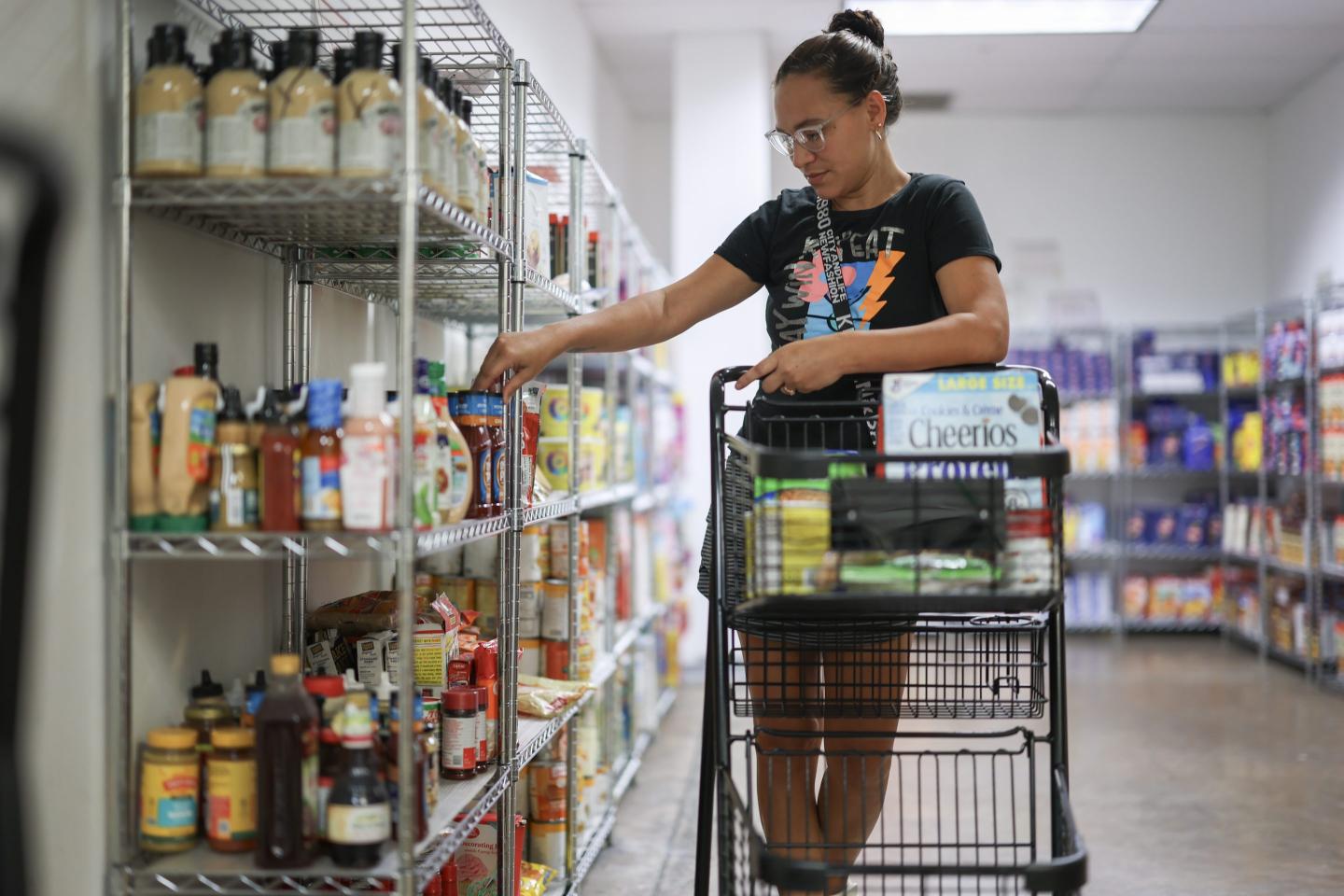
A woman looks down at a shelf of food while leaning on a grocery cart.
Lower-income Americans are in a "sea of despair" as they perceive economic conditions getting worse for them, economist Peter Atwater said.Joe Raedle—Getty Images
Add Fortune on Google for similar content.

Peter Atwater, adjunct professor of economics at William & Mary and president of Financial Insyghts, knows a thing or two about the K-shaped economy. Anonymous Twitter user “Ivan the K” introduced the idea of a “K recovering” following the pandemic, a gloomy outlook where some elements of life before COVID would recover, while some will not. Atwater popularized it.

Recommended Video

Atwater credits Ivan the K for the coining the term, but said he was the first to run with it, publishing a series of pieces in 2020 about the growing gap between the haves and have-nots: White-collar employees could work remotely while blue-collar workers were outside the work-from-home bubble. While the tech industry more quickly recovered, the pandemic pummeled lower-income workers, such as service workers who were either laid off or deemed essential, leaving them stuck in their jobs.

Today, the term K-shaped economy has been on the lips of many economists as mounting data illustrates a growing divide between the spending and wages of higher- and lower-income Americans, resembling the two diverging lines of the letter K. But as the self-proclaimed populizer of the term, Atwater said experts have overlooked one key factor when talking about these parting fortunes that could result in seismic consequences.

“They’re missing the feelings aspect to it,” Atwater told Fortune. “They’re missing what motivates us to act isn’t the economy, but our feelings about the economy. 

“What we have today is a small group of individuals who feel intense certainty paired with relentless power control—and on the other, it is a sea of despair,” he continued. “And that’s the piece that never gets talked about.”

Quantitative economic indicators clearly paint the picture of a growing wealth gap: Data from the Federal Reserve Bank of Atlanta shows wage growth for the lowest-quartile income Americans has fallen to its lowest in about a decade, while wage growth for the highest income Americans is growing the fastest of any income group. Meanwhile subprime loans are on the rise, indicating growing financial strain for many Americans, according to a recent Transunion report—and so, too, are super prime loans taken out by Americans with high credit scores. Even the stock market is K-shaped, said Apollo chief economist Torsten Slok, who argued since the beginning of the year, earnings expectations have ballooned for the Magnificent Seven but deflated for the rest of the S&P 493.

Atwater, who studies how confidence impacts decision-making, argues it’s just as important to be paying attention to how consumers are interpreting these data points, as these feelings are also K-shaped. Last month, consumer sentiment toward the economy saw a split, with low-income Americans feeling much less confident about the economy compared to higher earners, according to data from the University of Michigan’s Survey of Consumers. That’s a different picture from 2022, when the stock market decline pushed down sentiment for both the top-third and bottom-third of income levels. Even in April following the announcement of Liberation Day tariffs, Americans across all income levels reported less confidence about the health of the economy.

Why do feelings matter?

These split sentiments risk driving two wildly different sets of behaviors, both of which make the economy more vulnerable, Atwater argues. 

“We need to feel that things are predictable, so that there’s a level of certainty, and we need to have an element of control,” he said. “Knowing that the road is straight ahead is great, but if you don’t know how to drive the car, you’re not going to feel confident behind the wheel.”

Economic vulnerability has always existed for lower-income Americans, Atwater said, but when those vulnerabilities begin to feel stacked, many may feel powerless. Those people respond with what the economist calls the “Five F’s”: “fight, flight, freeze, follow and f-ck it.”

“At the bottom, this mindset develops where they recognize that they may never win, but that doesn’t mean, ‘I can’t help you lose,’” Atwater said.

Blue-collars workers or pencil-pushing white-collar workers may begin not only to pull back on spending, as retail CEOs are beginning to observe, but they may also begin to sabotage the workplace, Atwell said. Korn Ferry managing consultant Stacy DeCesaro told Fortune earlier this year this era of “job hugging” in a low-hire, low-fire labor market may breed workplace resentment as employees feel stuck. This can lead to disengagement, a loss of productivity, and a redux of the Great Resignation.

Meanwhile the top half of the K is likely to engage in equally risky behaviors, Atwater warned: “People are blind to risk when we’re overconfident and when we are invulnerable.”

Not only is a wealth effect driving wealthier Americans to invest more in the stock market—particularly in AI, even as concerns of a bubble grow—but the perceptions of having wealth feel permanent to high-income earners today, Atwater said. According to calculations by Edward Nathan Wolff, an economics professor at New York University, the top 20% of America’s wealthiest households own nearly 93% of all stock. Since ChatGPT’s November 2022 debut, stocks of AI-related companies made up about three-quarters of S&P 500 returns.

“Economists like to say and market people like to say that the stock market isn’t the economy,” Atwater said. “But I think it’s safe to say at this point, the economy is the stock market.”

While some like Claudia Sahm, chief economist at New Century Advisors and a former Federal Reserve economist, warned a K-shaped economy creates more vulnerability in the case of something like a bubble burst, Atwater sees the implications as political, as well. These tensions between the haves and have-nots will continue to escalate, particularly if lower-income Americans feel betrayed by the wealthier class continuing to grow richer. Atwater cited a 2011 study from the New England Complex Systems Institute linking social unrest in North African and the Middle East during the Arab Spring to rising global food prices, and he suggested lower-income Americans would continue to grow more scrutinous of those at the top.

“This is a crisis of confidence,” Atwater said. “Sadly, those who are in the best position to address it seem at best indifferent, and that does not go unnoticed by those at the bottom.”

Subscribe to Fortune Gulf Brief. Every Tuesday, this new newsletter delivers clear-eyed, authoritative intelligence on the deals, decisions, policies, and power shifts shaping one of the world’s most consequential regions, written for the people who need to act on it. Sign up here.
About the Author
Sasha Rogelberg
By Sasha RogelbergReporter
LinkedIn iconTwitter icon

Sasha Rogelberg is a reporter and former editorial fellow on the news desk at Fortune, covering retail and the intersection of business and popular culture.

See full bioRight Arrow Button Icon
Add Fortune on Google for similar content.

Latest in Economy

Finance
Lorem ipsum dolor sit amet, consectetur adipiscing elit, sed do eiusmod tempor incididunt ut labore et dolore magna aliqua. Ut enim ad minim veniam
By Fortune Editors
October 20, 2025
Finance
Lorem ipsum dolor sit amet, consectetur adipiscing elit, sed do eiusmod tempor incididunt ut labore et dolore magna aliqua. Ut enim ad minim veniam
By Fortune Editors
October 20, 2025
Finance
Lorem ipsum dolor sit amet, consectetur adipiscing elit, sed do eiusmod tempor incididunt ut labore et dolore magna aliqua. Ut enim ad minim veniam
By Fortune Editors
October 20, 2025
Finance
Lorem ipsum dolor sit amet, consectetur adipiscing elit, sed do eiusmod tempor incididunt ut labore et dolore magna aliqua. Ut enim ad minim veniam
By Fortune Editors
October 20, 2025
Finance
Lorem ipsum dolor sit amet, consectetur adipiscing elit, sed do eiusmod tempor incididunt ut labore et dolore magna aliqua. Ut enim ad minim veniam
By Fortune Editors
October 20, 2025
Finance
Lorem ipsum dolor sit amet, consectetur adipiscing elit, sed do eiusmod tempor incididunt ut labore et dolore magna aliqua. Ut enim ad minim veniam
By Fortune Editors
October 20, 2025

Most Popular

Finance
Lorem ipsum dolor sit amet, consectetur adipiscing elit, sed do eiusmod tempor incididunt ut labore et dolore magna aliqua. Ut enim ad minim veniam
By Fortune Editors
October 20, 2025
Finance
Lorem ipsum dolor sit amet, consectetur adipiscing elit, sed do eiusmod tempor incididunt ut labore et dolore magna aliqua. Ut enim ad minim veniam
By Fortune Editors
October 20, 2025
Finance
Lorem ipsum dolor sit amet, consectetur adipiscing elit, sed do eiusmod tempor incididunt ut labore et dolore magna aliqua. Ut enim ad minim veniam
By Fortune Editors
October 20, 2025
Finance
Lorem ipsum dolor sit amet, consectetur adipiscing elit, sed do eiusmod tempor incididunt ut labore et dolore magna aliqua. Ut enim ad minim veniam
By Fortune Editors
October 20, 2025
Finance
Lorem ipsum dolor sit amet, consectetur adipiscing elit, sed do eiusmod tempor incididunt ut labore et dolore magna aliqua. Ut enim ad minim veniam
By Fortune Editors
October 20, 2025
Finance
Lorem ipsum dolor sit amet, consectetur adipiscing elit, sed do eiusmod tempor incididunt ut labore et dolore magna aliqua. Ut enim ad minim veniam
By Fortune Editors
October 20, 2025
Fortune Secondary Logo
Rankings
  • 100 Best Companies
  • Fortune 500
  • Global 500
  • Fortune 500 Europe
  • Most Powerful Women
  • World's Most Admired Companies
  • See All Rankings
  • Lists Calendar
Sections
  • Finance
  • Fortune Crypto
  • Features
  • Leadership
  • Health
  • Commentary
  • Success
  • Retail
  • Mpw
  • Tech
  • Lifestyle
  • CEO Initiative
  • Asia
  • Politics
  • Conferences
  • Europe
  • Newsletters
  • Personal Finance
  • Environment
  • Magazine
  • Education
Customer Support
  • Frequently Asked Questions
  • Customer Service Portal
  • Privacy Policy
  • Terms Of Use
  • Single Issues For Purchase
  • International Print
Commercial Services
  • Advertising
  • Fortune Brand Studio
  • Fortune Analytics
  • Fortune Conferences
  • Business Development
  • Group Subscriptions
About Us
  • About Us
  • Press Center
  • Work At Fortune
  • Terms And Conditions
  • Site Map
  • About Us
  • Press Center
  • Work At Fortune
  • Terms And Conditions
  • Site Map
  • Facebook icon
  • Twitter icon
  • LinkedIn icon
  • Instagram icon
  • Pinterest icon

Latest in Economy

ll
Economysummer
Deviled eggs, seltzer and a burger you can’t quit: The GLP-1 crowd is (halfway) reinventing the American BBQ
By Nick LichtenbergJune 25, 2026
3 hours ago
l
EnvironmentFrance
The hottest day in French history was so bad the Louvre and Eiffel Tower had to close early
By Samuel Petrequin and The Associated PressJune 25, 2026
4 hours ago
Current price of Bitcoin for June 25, 2026
Personal FinanceCryptocurrency
Current price of Bitcoin for June 25, 2026
By Joseph HostetlerJune 25, 2026
4 hours ago
Current price of oil as of June 25, 2026
Personal FinanceOil
Current price of oil as of June 25, 2026
By Joseph HostetlerJune 25, 2026
4 hours ago
A college graduate in regalia rests his chin in his hand.
Future of WorkGen Z
Gen Z graduates are blaming AI for their unemployment woes when they should be looking somewhere else
By Sasha RogelbergJune 25, 2026
10 hours ago
Maybank Singapore CEO Alvin Lee looks to tap the silver economy and cross-border flows to grow his business
BankingSingapore
Maybank Singapore CEO Alvin Lee looks to tap the silver economy and cross-border flows to grow his business
By Angelica AngJune 25, 2026
10 hours ago

Most Popular

Now worth $200 million, Sarah Jessica Parker credits being ‘one of eight kids that struggled financially’ for her hunger, ambition, and work ethic
Success
Now worth $200 million, Sarah Jessica Parker credits being ‘one of eight kids that struggled financially’ for her hunger, ambition, and work ethic
By Orianna Rosa RoyleJune 24, 2026
1 day ago
MacKenzie Scott alone accounted for one-third of America's $19.2 billion in megagifts last year
Success
MacKenzie Scott alone accounted for one-third of America's $19.2 billion in megagifts last year
By Sydney LakeJune 25, 2026
10 hours ago
Amazon's record Prime Day masks a darker truth: Americans are spending more and getting less
Retail
Amazon's record Prime Day masks a darker truth: Americans are spending more and getting less
By Nick LichtenbergJune 24, 2026
1 day ago
Ray Dalio just finished a 10-day trip to China. He says global leaders know America ‘doesn’t have what it takes to fight to maintain its empire’
Asia
Ray Dalio just finished a 10-day trip to China. He says global leaders know America ‘doesn’t have what it takes to fight to maintain its empire’
By Nick LichtenbergJune 24, 2026
1 day ago
After forcing workers back to the office, Goldman Sachs and JPMorgan Chase are now letting their staff work remotely—but only for the World Cup
Success
After forcing workers back to the office, Goldman Sachs and JPMorgan Chase are now letting their staff work remotely—but only for the World Cup
By Orianna Rosa RoyleJune 23, 2026
2 days ago
Trump’s international student crackdown kicked off a domino effect that could shave nearly $500 billion off the economy
Economy
Trump’s international student crackdown kicked off a domino effect that could shave nearly $500 billion off the economy
By Tristan BoveJune 24, 2026
23 hours ago

© 2026 Fortune Media IP Limited. All Rights Reserved. Use of this site constitutes acceptance of our Terms of Use and Privacy Policy | CA Notice at Collection and Privacy Notice | Do Not Sell/Share My Personal Information
FORTUNE is a trademark of Fortune Media IP Limited, registered in the U.S. and other countries. FORTUNE may receive compensation for some links to products and services on this website. Offers may be subject to change without notice.