• Home
  • Latest
  • Fortune 500
  • Finance
  • Tech
  • Leadership
  • Lifestyle
  • Rankings
  • Multimedia
EconomyAgriculture

America’s cattle chief rips into Trump’s Argentine beef bailout, saying it ‘does nothing to lower grocery store prices’

Sasha Rogelberg
By
Sasha Rogelberg
Sasha Rogelberg
Reporter
Down Arrow Button Icon
Sasha Rogelberg
By
Sasha Rogelberg
Sasha Rogelberg
Reporter
Down Arrow Button Icon
October 21, 2025, 1:00 PM ET
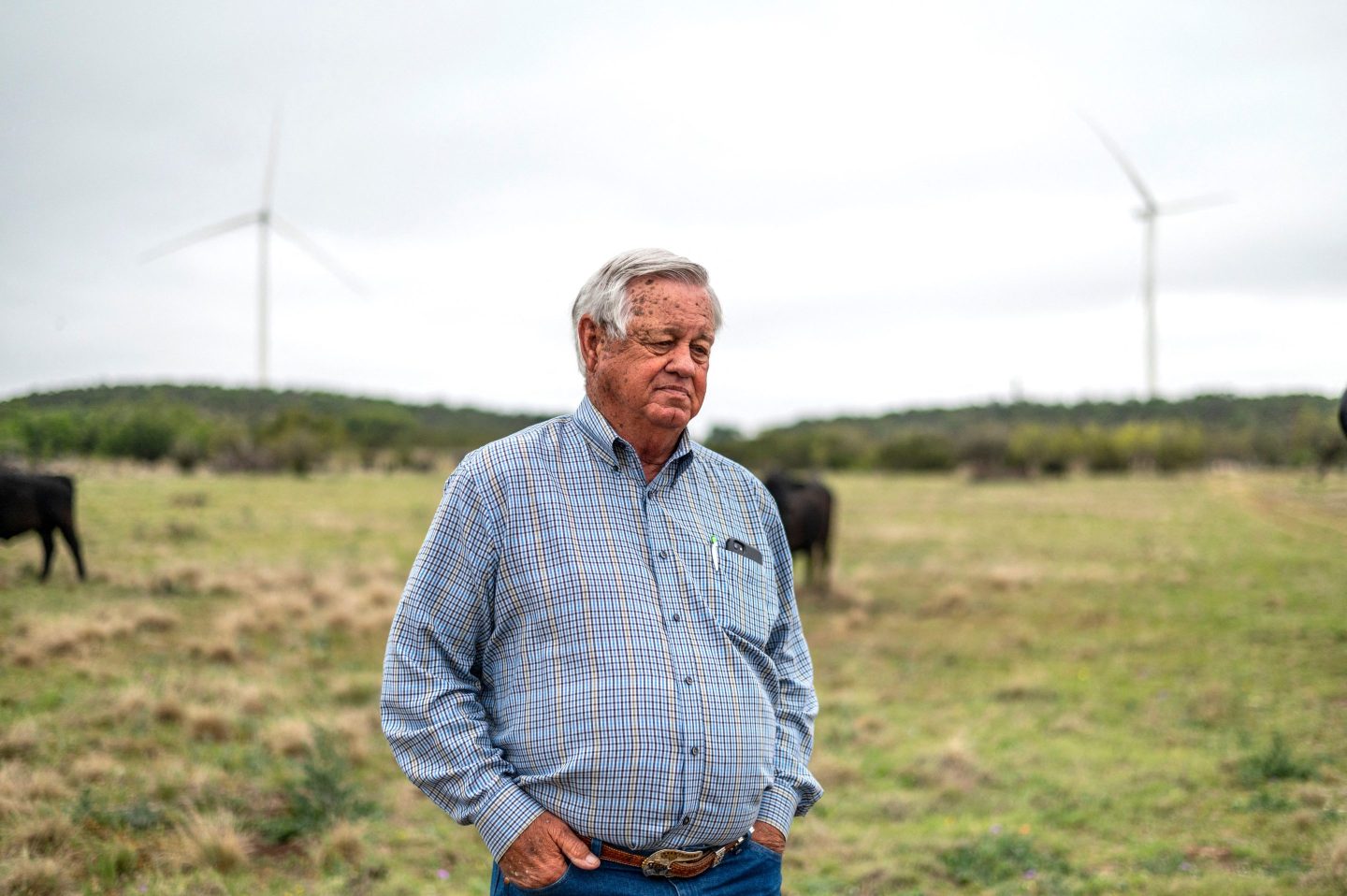
A man in a blue collared shirt stands in a cattle field. He is frowning and looking down.
Cattle ranchers want President Donald Trump out of global livestock markets.SERGIO FLORES/AFP—Getty Images

President Donald Trump’s tightening ties with Argentina have continued to vex rural American farmers, who have warned increased aid to the South American country will jeopardize the domestic agricultural economy. First, there was news of a $20 billion swap line arranged by Treasury Secretary Scott Bessent. Then there was revelation that Argentina was selling soybeans to China, which had cut U.S. imports to zero. Now, the Argentine cattle question is in open play.

Recommended Video

Trump proposed on Sunday that the U.S. could purchase beef from Argentina as a way to bring down prices for American consumers. Beef costs have ballooned as much as 12% in the past year. The suggestion was met with exasperation from U.S. cattle ranchers, who argued the move would disrupt the free market and introduce unnecessary risk factors to domestic beef supply.

“This plan only creates chaos at a critical time of the year for American cattle producers, while doing nothing to lower grocery store prices,” National Cattlemen’s Beef Association CEO Colin Woodall said in a statement on Monday. 

Woodall added that Argentina has a “deeply unbalanced trade relationship” with the U.S., selling more than $800 million of the product compared to the U.S., compared to the U.S. selling just over $7 million of American beef to Argentina. He also expressed concern over Argentina’s history with foot-and-mouth disease, a highly contagious virus impacting cloven-hooved animals, which he warned could “decimate” U.S. livestock production.

Trump’s proposal is part of a recent effort to strengthen relations with Argentina and longtime political ally and Argentinian President Javier Milei, a chainsaw-wielding leader known for both taming the country’s hyperinflation, but also navigating several corruption scandals. Argentina’s central bank confirmed on Monday a currency stabilization agreement with the U.S., which will see a $20 billion transfusion from the U.S. Treasury Department to the Argentine central bank.

“Argentina is fighting for its life,” Trump said on Sunday. “Nothing is benefiting Argentina.”

The U.S. Treasury Department did not respond to Fortune’s request for comment.

Rural America’s grievances

A potential intervention with Argentina would come just as the U.S. cattle industry was beginning to recover from a dismal 2024, in which it saw its smallest herd since 1951, a result of severe droughts withering pastures and hiking up livestock feed costs. U.S. beef imports have also shrunk due to a ban on Mexican beef in an effort to prevent the spread of screwworm, a flesh-eating parasite found in cattle across the border.

Still, the industry is vital to domestic farming. In 2024, cattle production made up about 22% of the $515 billion in agricultural commodity cash receipts in the U.S., according to the U.S. Department of Agriculture.

Cattle ranchers join the chorus of soybean farmers, who have been outspoken about the impact Trump’s ties with Argentina have on the soybean industry.  Amid proposals to offer financial assistance to Argentina last month, the South American country also dropped several export taxes as an effort to stabilize its economy—including its soybean tax. As a result, China, which previously purchased about a quarter U.S.’s soybean exports, ordered several cargoes of the crop. China has not ordered U.S. soybeans since May.

“The frustration is overwhelming,” the American Soybean Association (ASA) President Caleb Ragland said in a statement last month. “The farm economy is suffering while our competitors supplant the United States in the biggest soybean import market in the world.”

The cattle industry’s unique needs

While soybean farmers have advocated for a trade deal with China to regain strength in the global market, cattle ranchers have a simpler demand.

“They’re not asking for anything,” Derrell Peel, a professor of agribusiness specializing in livestock at Oklahoma State University, told Fortune. “Basically, they just want everybody to get out of the market and let it do what it does.”

Cattle ranchers are well-equipped to deal with dwindling herd sizes, which are a part of about a decade-long cycle of a natural swelling and contracting of livestock populations as result of cattles’ biological life cycle, Peel said. While severe droughts have made this period of liquidation more acute than previous cycles, the industry is used to having free trade to move through the supply contraction.

The industry is already relying on an influx of beef imports, with the USDA projecting import volumes to peak in 2025 at 4.4 billion pounds, while production hits a projected low in 2027 of 24.8 pounds. Disruptions to this well-documented and long-navigated cycle is tantamount to market manipulation, according to Peel.

“Anything that would jeopardize the opportunity here to replenish financially, recover from the last adversities, as well as plan ahead for the next turn to this thing, is naturally going to cause a negative reaction on the part of producers,” he said.

Moreover, Peel said, Argentina represents only about 2% of U.S. beef imports, meaning leaning on the country for imports would do very little to increase U.S. beef supply, particularly compared to big importers like Australia and Brazil. 

While high beef prices have helped cattle ranchers stay afloat in this liquidation period, U.S. beef supply has also been impacted by Trump’s tariff policy, particularly his 40% tax on Brazilian exports that have further tightened U.S. import supplies, pushing beef prices up. Beyond snubbing U.S. soybean farmers, China has also stopped purchasing beef from U.S. cattle ranchers because of steep levies, Peel said. China is the industry’s third-largest export market.

“We’re effectively out of that market now, largely,” Peel said. “So that’s an impact. It’s been kind of massive.”


The Fortune 500 Innovation Forum will convene Fortune 500 executives, U.S. policy officials, top founders, and thought leaders to help define what’s next for the American economy, Nov. 16-17 in Detroit. Apply here.
About the Author
Sasha Rogelberg
By Sasha RogelbergReporter
LinkedIn iconTwitter icon

Sasha Rogelberg is a reporter and former editorial fellow on the news desk at Fortune, covering retail and the intersection of business and popular culture.

See full bioRight Arrow Button Icon

Latest in Economy

Finance
Lorem ipsum dolor sit amet, consectetur adipiscing elit, sed do eiusmod tempor incididunt ut labore et dolore magna aliqua. Ut enim ad minim veniam
By Fortune Editors
October 20, 2025
Finance
Lorem ipsum dolor sit amet, consectetur adipiscing elit, sed do eiusmod tempor incididunt ut labore et dolore magna aliqua. Ut enim ad minim veniam
By Fortune Editors
October 20, 2025
Finance
Lorem ipsum dolor sit amet, consectetur adipiscing elit, sed do eiusmod tempor incididunt ut labore et dolore magna aliqua. Ut enim ad minim veniam
By Fortune Editors
October 20, 2025
Finance
Lorem ipsum dolor sit amet, consectetur adipiscing elit, sed do eiusmod tempor incididunt ut labore et dolore magna aliqua. Ut enim ad minim veniam
By Fortune Editors
October 20, 2025
Finance
Lorem ipsum dolor sit amet, consectetur adipiscing elit, sed do eiusmod tempor incididunt ut labore et dolore magna aliqua. Ut enim ad minim veniam
By Fortune Editors
October 20, 2025
Finance
Lorem ipsum dolor sit amet, consectetur adipiscing elit, sed do eiusmod tempor incididunt ut labore et dolore magna aliqua. Ut enim ad minim veniam
By Fortune Editors
October 20, 2025

Most Popular

Finance
Lorem ipsum dolor sit amet, consectetur adipiscing elit, sed do eiusmod tempor incididunt ut labore et dolore magna aliqua. Ut enim ad minim veniam
By Fortune Editors
October 20, 2025
Finance
Lorem ipsum dolor sit amet, consectetur adipiscing elit, sed do eiusmod tempor incididunt ut labore et dolore magna aliqua. Ut enim ad minim veniam
By Fortune Editors
October 20, 2025
Finance
Lorem ipsum dolor sit amet, consectetur adipiscing elit, sed do eiusmod tempor incididunt ut labore et dolore magna aliqua. Ut enim ad minim veniam
By Fortune Editors
October 20, 2025
Finance
Lorem ipsum dolor sit amet, consectetur adipiscing elit, sed do eiusmod tempor incididunt ut labore et dolore magna aliqua. Ut enim ad minim veniam
By Fortune Editors
October 20, 2025
Finance
Lorem ipsum dolor sit amet, consectetur adipiscing elit, sed do eiusmod tempor incididunt ut labore et dolore magna aliqua. Ut enim ad minim veniam
By Fortune Editors
October 20, 2025
Finance
Lorem ipsum dolor sit amet, consectetur adipiscing elit, sed do eiusmod tempor incididunt ut labore et dolore magna aliqua. Ut enim ad minim veniam
By Fortune Editors
October 20, 2025
Fortune Secondary Logo
Rankings
  • 100 Best Companies
  • Fortune 500
  • Global 500
  • Fortune 500 Europe
  • Most Powerful Women
  • Future 50
  • World’s Most Admired Companies
  • See All Rankings
Sections
  • Finance
  • Fortune Crypto
  • Features
  • Leadership
  • Health
  • Commentary
  • Success
  • Retail
  • Mpw
  • Tech
  • Lifestyle
  • CEO Initiative
  • Asia
  • Politics
  • Conferences
  • Europe
  • Newsletters
  • Personal Finance
  • Environment
  • Magazine
  • Education
Customer Support
  • Frequently Asked Questions
  • Customer Service Portal
  • Privacy Policy
  • Terms Of Use
  • Single Issues For Purchase
  • International Print
Commercial Services
  • Advertising
  • Fortune Brand Studio
  • Fortune Analytics
  • Fortune Conferences
  • Business Development
  • Group Subscriptions
About Us
  • About Us
  • Editorial Calendar
  • Press Center
  • Work At Fortune
  • Diversity And Inclusion
  • Terms And Conditions
  • Site Map
  • About Us
  • Editorial Calendar
  • Press Center
  • Work At Fortune
  • Diversity And Inclusion
  • Terms And Conditions
  • Site Map
  • Facebook icon
  • Twitter icon
  • LinkedIn icon
  • Instagram icon
  • Pinterest icon

Latest in Economy

Working woman standing outside office happy
SuccessCareers
Surgeons, airline pilots, and software developers are becoming the hottest roles for female representation—and most jobs pay over $100,000
By Emma BurleighMarch 25, 2026
30 minutes ago
worker
EconomyProductivity
Workers around the world are scared. A massive new survey shows just how much
By Nick LichtenbergMarch 25, 2026
3 hours ago
Larry Fink, chief executive officer of BlackRock Inc., during BlackRock's 2026 Infrastructure Summit in Washington, DC, US, on Wednesday, March 11, 2026.
EconomyIran
Larry Fink says the Iran war ends in one of two extremes: Abundance, growth, and oil at $40 a barrel—or global recession and years of oil at $150
By Eleanor PringleMarch 25, 2026
4 hours ago
EnergyMarkets
On Iran, Trump is open to a deal but he also has ‘a fist, waiting to punch you in the [expletive] face,’ White House insider says
By Jim EdwardsMarch 25, 2026
4 hours ago
broker
EconomyRecession
Goldman raises recession odds to 30% on higher inflation, lower GDP outlook as oil prices surge
By Nick LichtenbergMarch 25, 2026
7 hours ago
shinkarovsky
Future of WorkJobs
The job market is so bad that ‘reverse recruiters’ are charging $1,500 a month just to help people look for jobs
By Jake AngeloMarch 25, 2026
8 hours ago

Most Popular

Magazine
The youngest-ever female CEO of a Fortune 500 company is fighting Trump's cuts to keep Medicaid strong
By Fortune EditorsMarch 24, 2026
1 day ago
Commentary
The Treasury just declared the U.S. insolvent. The media missed it
By Fortune EditorsMarch 23, 2026
2 days ago
Success
Palantir’s billionaire CEO says only two kinds of people will succeed in the AI era: trade workers — ‘or you’re neurodivergent’
By Fortune EditorsMarch 24, 2026
24 hours ago
Energy
Nobel laureate Paul Krugman calls it 'treason': $580 million in suspicious oil futures traded minutes before Trump's Iran reversal
By Fortune EditorsMarch 24, 2026
21 hours ago
Economy
It took 200 years for national debt to hit $1 trillion. Annual interest alone now exceeds that—a 'crushing legacy we must reverse,' says budget chair
By Fortune EditorsMarch 23, 2026
2 days ago
Personal Finance
Current price of oil as of March 24, 2026
By Fortune EditorsMarch 24, 2026
1 day ago

© 2026 Fortune Media IP Limited. All Rights Reserved. Use of this site constitutes acceptance of our Terms of Use and Privacy Policy | CA Notice at Collection and Privacy Notice | Do Not Sell/Share My Personal Information
FORTUNE is a trademark of Fortune Media IP Limited, registered in the U.S. and other countries. FORTUNE may receive compensation for some links to products and services on this website. Offers may be subject to change without notice.