• Home
  • Latest
  • Fortune 500
  • Finance
  • Tech
  • Leadership
  • Lifestyle
  • Rankings
  • Multimedia
CommentaryHousing

America’s real estate is aging in place, just like its population. Investors and CEOs can’t ignore it

By
Amachie Ackah
Amachie Ackah
Down Arrow Button Icon
By
Amachie Ackah
Amachie Ackah
Down Arrow Button Icon
October 10, 2025, 10:00 AM ET

Amachie Ackah is the Co-Founder and Managing Partner of Clay Cove Capital, a private equity firm focused on investing in real estate that empowers lower-middle market companies to scale.

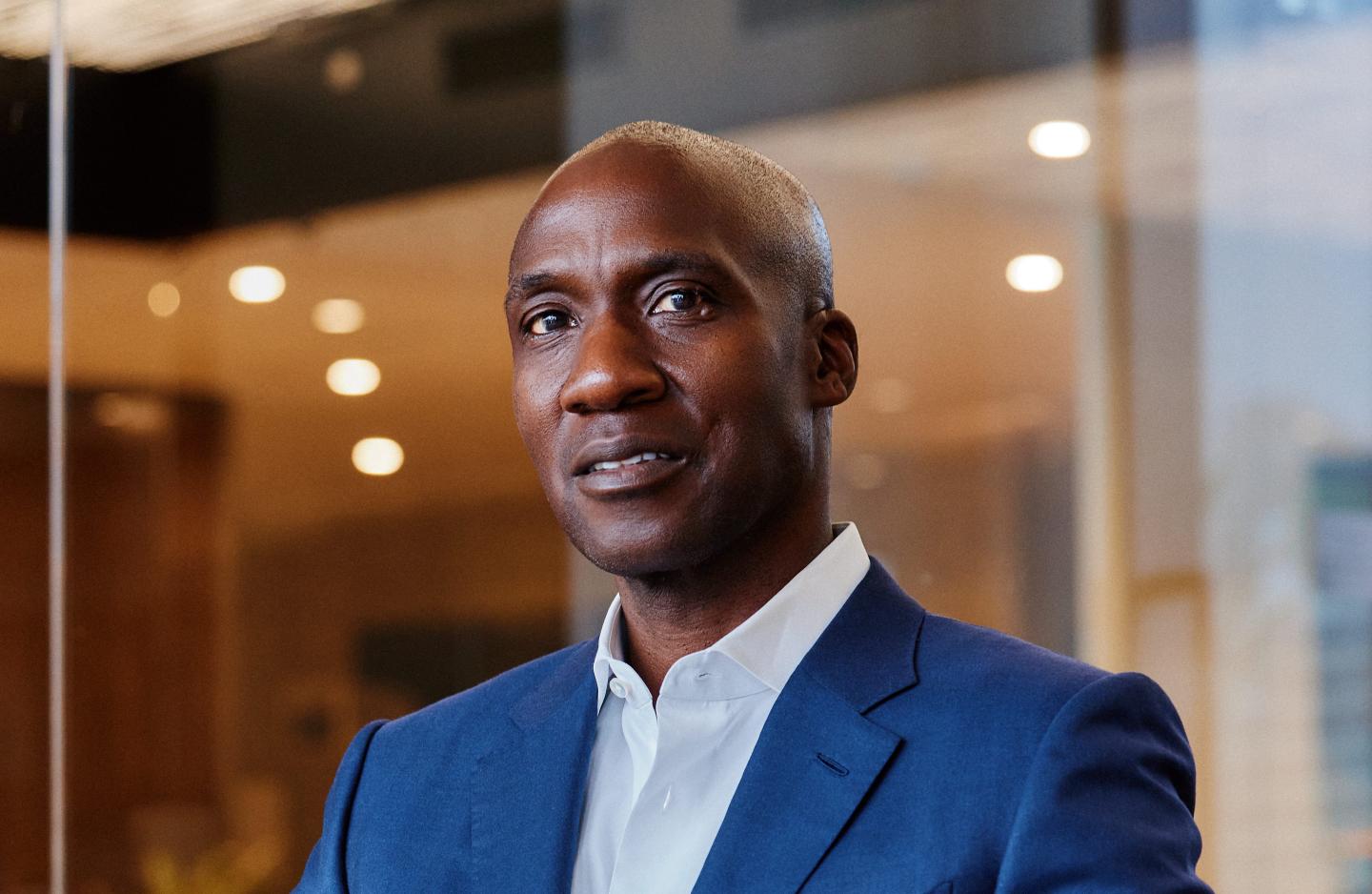
Amachie Ackah is the Co-Founder and Managing Partner of Clay Cove Capital
Amachie Ackah is the Co-Founder and Managing Partner of Clay Cove Capital.courtesy of Clay Cove Capital

Growing up in King of Prussia, Pennsylvania, I often visited my grandparents in West Philadelphia. One community felt vibrant, while the other tired and left behind. West Philly’s neglected housing and retail had been underinvested in. Many properties no longer served their residents. They were obsolete.

Recommended Video

Fast forward to today, and America’s real estate is “aging in place” much like its population. The generational wealth transition and the wave of retirements have long been expected as the baby boomers pass on their $80 trillion of net worth. But something unexpected has happened along the way—the housing market froze and older owners stayed where they were or downgraded to compete with younger generations for “starter homes” that were also perfect for retired grandparents to be close to their families. As birth rates slow and not enough people are being born to sustain growth, commercial real estate is also stuck in place, unable to meet modern needs.

For the first time in decades, we are faced with buildings that no longer create value for the businesses and people using them. A warehouse that is too small for robotics, an office that fails to attract top talent, or an apartment without adequate digital infrastructure all fall into this category. This is obsolescence. For business leaders and investors, this is not a niche concern in real estate. These assets either help people and companies compete or quietly drain productivity and capital.

While headlines fixate on interest rates, the deeper risk is the vast stock of outdated buildings that no longer fit modern life. With capital markets normalizing, investors can no longer rely on cheap debt to mask underperformance. Buildings either create value, or they do not.

Demographics and demand are rewriting the rules

The forces driving America’s real-estate obsolescence are as demographic as they are financial. U.S. birth rates are at historic lows and an average of 11,000 Americans retire daily. The boomer generation is wealthier and more active than any before, and spends heavily on experiences. Millennials and Gen Z devote more than half of their discretionary spending to experiences rather than goods. These long-term trends need to be a focus of the real estate industry.

Technology amplifies the shift. Remote work untethered households and businesses from geography, turning real estate from a supply-driven business into a demand-driven one. People now choose spaces that improve their quality of life and work, not just where they’re forced to be. Properties that fail to deliver are left behind, no matter how well located.

For investors, that means office space that once supported culture and collaboration can now undermine talent strategy, or warehouses that once drove efficiency can now slow supply chains. The stakes have shifted from square footage to competitiveness.

Office assets, often located in central business districts that were once bustling, are a timely example. According to CBRE, 23.3 million square feet of U.S. office space is slated for demolition or conversion in 2025, while only 12.7 million square feet is under construction. For the first time in decades, inventory will shrink, underscoring the scale of the challenge.

Obsolescence across asset classes

The effects of these changing demographics are visible everywhere. Industrial warehouses once built with low ceilings and narrow bays now constrain e-commerce distribution, where robotics and scale define efficiency. Numerous retail chains, once built on predictable foot traffic, are shuttering, while the same footprints are being reimagined for new service-driven uses.

Flexible work has reduced business travel, but it has also expanded demand for alternative accommodations. Retired baby boomers, along with their millennial-led families, are seeking out RV parks and campgrounds to share leisure experiences. At the same time, apartments without digital infrastructure or secure package facilities quickly lose relevance as groceries and package services increasingly arrive on demand.

The common thread: usefulness, not location, now defines value. Physical assets tied to supply chains, workforces, and customers can either adapt to these generational shifts, or quietly erode competitiveness.

A new investment playbook

For decades, real estate investing was like stock trading: buy, hold, and sell. All of this was based on an unchallenged trust that prices would continuously rise in an era sustained by cheap money and low rates.

Today, borrowing is happening again. Commercial real estate lending rose 26% in the past year, but loans are now priced in a market where on the a 10-year Treasury yield is above of about 4.05%. In this environment, debt by itself no longer guarantees returns.

Forward-looking investors are already repositioning assets. We’re seeing value in redeploying obsolete properties into essential operating businesses. Industrial warehouses with 20-foot clear heights, unsuitable for modern robotics-driven distribution, can be repositioned into more relevant uses such as climate-controlled storage. Buildings that once seemed like fixed costs must now must be managed as active tools of business strategy, capable of adapting as customer needs and business models evolve.

Similarly, the wave of former CVS, RiteAid, and Walgreens closures shows how quickly prized assets can become obsolete. Once considered safe bets for steady rent, many now sit vacant. Yet their size, parking, and prime locations make them ideal for conversion into early childhood education centers, a growing need for millennial families.

These examples show that strong returns no longer come from financial engineering or passive buy-and-hold strategies. They come from operational execution, transforming obsolete buildings into businesses that serve the evolving needs of Baby Boomers to millennials to Gen Z and beyond.

A turning point for investors

For investors—and for CEOs—the lesson is direct: America’s real estate can either age into obsolescence and freeze capital in empty shells, or be renewed into platforms that drive growth. The winners will treat real estate as an operating business, not a commodity, generating returns by creating useful places that meet evolving generational needs and deliver lasting value.

The opinions expressed in Fortune.com commentary pieces are solely the views of their authors and do not necessarily reflect the opinions and beliefs of Fortune.

Join us at the Fortune Workplace Innovation Summit May 19–20, 2026, in Atlanta. The next era of workplace innovation is here—and the old playbook is being rewritten. At this exclusive, high-energy event, the world’s most innovative leaders will convene to explore how AI, humanity, and strategy converge to redefine, again, the future of work. Register now.
About the Author
By Amachie Ackah
See full bioRight Arrow Button Icon

Latest in Commentary

Finance
Lorem ipsum dolor sit amet, consectetur adipiscing elit, sed do eiusmod tempor incididunt ut labore et dolore magna aliqua. Ut enim ad minim veniam
By Fortune Editors
October 20, 2025
Finance
Lorem ipsum dolor sit amet, consectetur adipiscing elit, sed do eiusmod tempor incididunt ut labore et dolore magna aliqua. Ut enim ad minim veniam
By Fortune Editors
October 20, 2025
Finance
Lorem ipsum dolor sit amet, consectetur adipiscing elit, sed do eiusmod tempor incididunt ut labore et dolore magna aliqua. Ut enim ad minim veniam
By Fortune Editors
October 20, 2025
Finance
Lorem ipsum dolor sit amet, consectetur adipiscing elit, sed do eiusmod tempor incididunt ut labore et dolore magna aliqua. Ut enim ad minim veniam
By Fortune Editors
October 20, 2025
Finance
Lorem ipsum dolor sit amet, consectetur adipiscing elit, sed do eiusmod tempor incididunt ut labore et dolore magna aliqua. Ut enim ad minim veniam
By Fortune Editors
October 20, 2025
Finance
Lorem ipsum dolor sit amet, consectetur adipiscing elit, sed do eiusmod tempor incididunt ut labore et dolore magna aliqua. Ut enim ad minim veniam
By Fortune Editors
October 20, 2025

Most Popular

Finance
Lorem ipsum dolor sit amet, consectetur adipiscing elit, sed do eiusmod tempor incididunt ut labore et dolore magna aliqua. Ut enim ad minim veniam
By Fortune Editors
October 20, 2025
Finance
Lorem ipsum dolor sit amet, consectetur adipiscing elit, sed do eiusmod tempor incididunt ut labore et dolore magna aliqua. Ut enim ad minim veniam
By Fortune Editors
October 20, 2025
Finance
Lorem ipsum dolor sit amet, consectetur adipiscing elit, sed do eiusmod tempor incididunt ut labore et dolore magna aliqua. Ut enim ad minim veniam
By Fortune Editors
October 20, 2025
Finance
Lorem ipsum dolor sit amet, consectetur adipiscing elit, sed do eiusmod tempor incididunt ut labore et dolore magna aliqua. Ut enim ad minim veniam
By Fortune Editors
October 20, 2025
Finance
Lorem ipsum dolor sit amet, consectetur adipiscing elit, sed do eiusmod tempor incididunt ut labore et dolore magna aliqua. Ut enim ad minim veniam
By Fortune Editors
October 20, 2025
Finance
Lorem ipsum dolor sit amet, consectetur adipiscing elit, sed do eiusmod tempor incididunt ut labore et dolore magna aliqua. Ut enim ad minim veniam
By Fortune Editors
October 20, 2025
Fortune Secondary Logo
Rankings
  • 100 Best Companies
  • Fortune 500
  • Global 500
  • Fortune 500 Europe
  • Most Powerful Women
  • World's Most Admired Companies
  • See All Rankings
  • Lists Calendar
Sections
  • Finance
  • Fortune Crypto
  • Features
  • Leadership
  • Health
  • Commentary
  • Success
  • Retail
  • Mpw
  • Tech
  • Lifestyle
  • CEO Initiative
  • Asia
  • Politics
  • Conferences
  • Europe
  • Newsletters
  • Personal Finance
  • Environment
  • Magazine
  • Education
Customer Support
  • Frequently Asked Questions
  • Customer Service Portal
  • Privacy Policy
  • Terms Of Use
  • Single Issues For Purchase
  • International Print
Commercial Services
  • Advertising
  • Fortune Brand Studio
  • Fortune Analytics
  • Fortune Conferences
  • Business Development
  • Group Subscriptions
About Us
  • About Us
  • Press Center
  • Work At Fortune
  • Terms And Conditions
  • Site Map
  • About Us
  • Press Center
  • Work At Fortune
  • Terms And Conditions
  • Site Map
  • Facebook icon
  • Twitter icon
  • LinkedIn icon
  • Instagram icon
  • Pinterest icon

Latest in Commentary

joaquin
Commentary250 Years of Innovation
Johnson & Johnson CEO: America’s innovation advantage starts with health 
By Joaquin DuatoMay 9, 2026
10 hours ago
reed
CommentaryRetirement
Tim Cook and Reed Hastings just showed every CEO how to leave gracefully
By Paul HardartMay 9, 2026
12 hours ago
golf
Commentarybooks
How playing golf alone can make you better at your job
By Gary BelskyMay 8, 2026
1 day ago
naomi
Commentarymental health
Naomi Osaka: the things I didn’t do to succeed
By Naomi OsakaMay 8, 2026
1 day ago
amanda
Commentarybatteries
Why energy storage is moving beyond the capex debate
By Amanda SimonianMay 7, 2026
2 days ago
trump
CommentaryMedicare
Auto-enrollment in Medicare Advantage isn’t a nudge. It’s a trap
By Brian KeyserMay 7, 2026
2 days ago

Most Popular

California farmers must destroy 420,000 peach trees after Del Monte closes its canneries and cancels more than $550 million in long-term contracts
North America
California farmers must destroy 420,000 peach trees after Del Monte closes its canneries and cancels more than $550 million in long-term contracts
By Sasha RogelbergMay 7, 2026
2 days ago
A Michigan farm town voted down plans for a giant OpenAI-Oracle data center. Weeks later, construction began
Magazine
A Michigan farm town voted down plans for a giant OpenAI-Oracle data center. Weeks later, construction began
By Sharon GoldmanMay 6, 2026
4 days ago
The CEO of Maersk, which ships 14% of everything you buy, said the Iran war is adding $500 million in monthly costs it's trying not to pass down
Energy
The CEO of Maersk, which ships 14% of everything you buy, said the Iran war is adding $500 million in monthly costs it's trying not to pass down
By Sasha RogelbergMay 8, 2026
1 day ago
Current price of oil as of May 8, 2026
Personal Finance
Current price of oil as of May 8, 2026
By Joseph HostetlerMay 8, 2026
1 day ago
'Blue dot fever' plagues musicians like Post Malone, Meghan Trainor, and Zayn as a growing list of artists cancel tours due to lagging ticket sales
Arts & Entertainment
'Blue dot fever' plagues musicians like Post Malone, Meghan Trainor, and Zayn as a growing list of artists cancel tours due to lagging ticket sales
By Dave Lozo and Morning BrewMay 7, 2026
2 days ago
You're probably safe from the Hantavirus outbreak, but here's what you absolutely must not do, experts say
Politics
You're probably safe from the Hantavirus outbreak, but here's what you absolutely must not do, experts say
By Catherina GioinoMay 8, 2026
1 day ago

© 2026 Fortune Media IP Limited. All Rights Reserved. Use of this site constitutes acceptance of our Terms of Use and Privacy Policy | CA Notice at Collection and Privacy Notice | Do Not Sell/Share My Personal Information
FORTUNE is a trademark of Fortune Media IP Limited, registered in the U.S. and other countries. FORTUNE may receive compensation for some links to products and services on this website. Offers may be subject to change without notice.