• Home
  • Latest
  • Fortune 500
  • Finance
  • Tech
  • Leadership
  • Lifestyle
  • Rankings
  • Multimedia

Trendingnow

1

Now worth $200 million, Sarah Jessica Parker credits being ‘one of eight kids that struggled financially’ for her hunger, ambition, and work ethic

2

The Pentagon said Iran War costs $29 billion, but the real cost is closer to $200 billion—and counting

3

After forcing workers back to the office, Goldman Sachs and JPMorgan Chase are now letting their staff work remotely—but only for the World Cup

1

Now worth $200 million, Sarah Jessica Parker credits being ‘one of eight kids that struggled financially’ for her hunger, ambition, and work ethic

2

The Pentagon said Iran War costs $29 billion, but the real cost is closer to $200 billion—and counting

3

After forcing workers back to the office, Goldman Sachs and JPMorgan Chase are now letting their staff work remotely—but only for the World Cup
TechAutos

Trump’s chip tariff threat sparks pushback from auto industry to tech

By
Michael Shepard
Michael Shepard
and
Bloomberg
Bloomberg
Down Arrow Button Icon
By
Michael Shepard
Michael Shepard
and
Bloomberg
Bloomberg
Down Arrow Button Icon
June 24, 2025, 1:40 PM ET
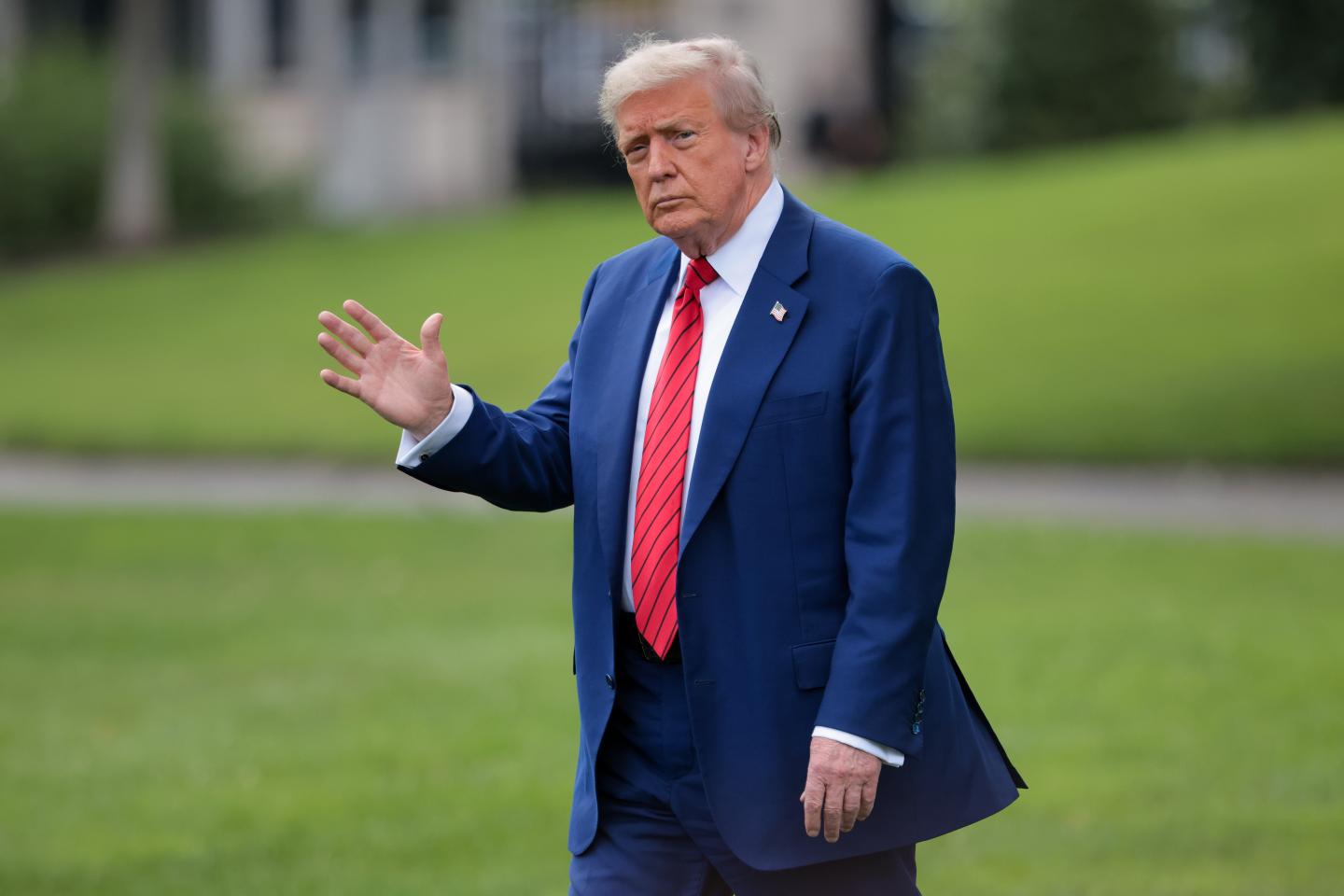
The possible levy of up to 25% has united rivals like Tesla, General Motors, and Ford in voicing reservations.
The possible levy of up to 25% has united rivals like Tesla, General Motors, and Ford in voicing reservations.Kayla Bartkowski/Getty Images
Add Fortune on Google for similar content.

Blowback to President Donald Trump’s idea of tariffs on imported semiconductors is proving to be broad and deep, stretching from auto companies and boat makers to the technology industry and crypto enthusiasts, according to a review of more than 150 public comments on the proposal.

Recommended Video

The possible levy of up to 25% has united rivals like Tesla Inc., General Motors Co. and Ford Motor Co. in voicing reservations. It’s brought together industry lobbies from the Crypto Council for Innovation to the National Marine Manufacturers Association. Even Taiwan and the People’s Republic of China are finding common cause, along with predictable parts of the tech sector including chipmakers and wireless providers. 

The reason is that chips are now in almost everything: refrigerators and microwaves, tire pressure sensors and navigation systems, electronic bidets and sonar equipment and, of course, smartphones and computers. Tariffs threaten to snarl supply lines and jack up costs for consumers.

“There’s a large mismatch between the amount of chips we use in this country in various products and the supply created here in the US,” JoAnne Feeney, a partner and portfolio manager at Advisors Capital Management, said in an interview. “Putting a tax on those imports will simply raise the cost, and that’s not a good thing for consumers.”

Case in point is the marine association, which warns the impact would be felt by more than 1,300 manufacturers who face higher expenses for essentials like propulsion technology, engines and GPS systems. 

“These systems are not optional luxuries — they are fundamental to safety, function and performance,” the association said. “Many components have no U.S. equivalent or are only available from highly concentrated suppliers overseas.”

The boating sector’s concerns were among comments from 154 stakeholders submitted to a Commerce Department review of whether to slap tariffs on chips as part of Trump’s campaign to redraw global supply lines and boost domestic manufacturing. Predictable tech sources weighed in, including chipmakers Taiwan Semiconductor Manufacturing Co. and Intel Corp. But feedback also landed from a wide spectrum of sectors, along with trading partners like Japan and Brazil.

The companies, trade groups and individuals who commented on the chips investigation largely signaled support for the president’s vision of deepening the U.S. manufacturing base and expanding the American workforce. Yet most expressed concern over the potential consequences and urged making any levies that emerge as targeted as possible.

Taken together, the filings point to unease across a range of industries about the economic fallout from targeting chips. Trump has so far brushed off many of those concerns and cited plans by a range of companies to invest in the U.S., including Taiwan-based TSMC’s decision to boost its commitment to building plants near Phoenix.

White House spokesman Kush Desai said Trump remains committed to reshoring manufacturing critical to U.S. national security. “While the Commerce Department completes its Section 232 investigation, the administration is expanding domestic critical mineral production, slashing regulations, and pushing pro-growth policies,” Desai said in a statement. The Commerce Department didn’t respond to a request for comment.

In its submission, TSMC highlighted plans for six advanced semiconductor fabs and two packaging facilities along with a research center as part of a $165 billion investment in Arizona that’s expected to create thousands of jobs. Yet the company warned import levies would make it harder to deliver those projects on schedule, while slowing U.S. efforts to expand domestic production of chips for 5G wireless, artificial intelligence and autonomous driving.

“Additional tariffs or other restrictive measures on semiconductors could reduce the profitability of leading U.S. companies by limiting sourcing options, driving up production costs, and reducing product demand,” TSMC’s Arizona subsidiary wrote. 

In its filing, Tesla urged coordination between government and industry to minimize uncertainty that could upset supply chains, citing its ties to Asia, Europe and Africa. “These partnerships allow us to focus on increasing U.S. dominance in advanced manufacturing,” the company wrote. “Impacts to these inputs for which there is insufficient domestic availability will put a strain on resources during a key moment in the global artificial intelligence race.”

Chipmaker Intel cautioned that trading partners could respond with protective measures that exclude American products. Intel is seeking to reverse years of struggle by spending more than $100 billion to expand its domestic manufacturing, and the company called on the administration to spare US-made wafers as well as any chips made abroad using American technology.

A common concern aired by TSMC, Intel and others in the semiconductor industry centered on the risk that chipmaking equipment produced by foreign suppliers like ASML Holding NV would get hit with import taxes. A single extreme ultraviolet lithography machine from Netherlands-based ASML, the world’s sole provider of the most advanced chipmaking gear, can cost nearly $400 million. Adding tariffs would significantly boost the cost of equipping new U.S. facilities.

ASML submitted feedback to the Commerce Department — but its filing was marked “business confidential” and unavailable for public review. In its comments, Intel urged exempting such machines, noting that “the primary cost driver for semiconductor fabs, accounting for two-thirds of total construction expenses, is equipment and machinery.”

Replacing semiconductors produced abroad with domestic output would be very difficult, Feeney said. 

“It takes years to create the industrial infrastructure to make creating a semiconductor fabrication facility even possible,” she said. “At a time we’re trying to build up an AI infrastructure of data centers, the last thing you want to do is put a substantial tariff on the most important input into those data centers.”

Major U.S. trading partners, already stung by Trump’s so-called reciprocal tariffs, objected to the idea of targeting chips, after seeing the auto sector along with steel and aluminum imports hit with levies. Taiwan, which produces nearly 90% of the world’s most advanced semiconductors, highlighted the complementary role of TSMC foundries that churn out wafers for leading American chip designers Nvidia Corp. and Advanced Micro Devices Inc.

Tariffs on semiconductors or related products from the island “would severely impair Taiwan’s ability to meet the demands of the U.S. semiconductor industry in a timely manner,” the Taiwanese government said in its filing. “This would drive up costs for U.S. companies, raise end-product prices, reduce profitability and revenue, and ultimately weaken the capacity of U.S. firms to invest in R&D and innovation.”

About the Authors
By Michael Shepard
See full bioRight Arrow Button Icon
By Bloomberg
See full bioRight Arrow Button Icon
Add Fortune on Google for similar content.

Latest in Tech

Finance
Lorem ipsum dolor sit amet, consectetur adipiscing elit, sed do eiusmod tempor incididunt ut labore et dolore magna aliqua. Ut enim ad minim veniam
By Fortune Editors
October 20, 2025
Finance
Lorem ipsum dolor sit amet, consectetur adipiscing elit, sed do eiusmod tempor incididunt ut labore et dolore magna aliqua. Ut enim ad minim veniam
By Fortune Editors
October 20, 2025
Finance
Lorem ipsum dolor sit amet, consectetur adipiscing elit, sed do eiusmod tempor incididunt ut labore et dolore magna aliqua. Ut enim ad minim veniam
By Fortune Editors
October 20, 2025
Finance
Lorem ipsum dolor sit amet, consectetur adipiscing elit, sed do eiusmod tempor incididunt ut labore et dolore magna aliqua. Ut enim ad minim veniam
By Fortune Editors
October 20, 2025
Finance
Lorem ipsum dolor sit amet, consectetur adipiscing elit, sed do eiusmod tempor incididunt ut labore et dolore magna aliqua. Ut enim ad minim veniam
By Fortune Editors
October 20, 2025
Finance
Lorem ipsum dolor sit amet, consectetur adipiscing elit, sed do eiusmod tempor incididunt ut labore et dolore magna aliqua. Ut enim ad minim veniam
By Fortune Editors
October 20, 2025

Most Popular

Finance
Lorem ipsum dolor sit amet, consectetur adipiscing elit, sed do eiusmod tempor incididunt ut labore et dolore magna aliqua. Ut enim ad minim veniam
By Fortune Editors
October 20, 2025
Finance
Lorem ipsum dolor sit amet, consectetur adipiscing elit, sed do eiusmod tempor incididunt ut labore et dolore magna aliqua. Ut enim ad minim veniam
By Fortune Editors
October 20, 2025
Finance
Lorem ipsum dolor sit amet, consectetur adipiscing elit, sed do eiusmod tempor incididunt ut labore et dolore magna aliqua. Ut enim ad minim veniam
By Fortune Editors
October 20, 2025
Finance
Lorem ipsum dolor sit amet, consectetur adipiscing elit, sed do eiusmod tempor incididunt ut labore et dolore magna aliqua. Ut enim ad minim veniam
By Fortune Editors
October 20, 2025
Finance
Lorem ipsum dolor sit amet, consectetur adipiscing elit, sed do eiusmod tempor incididunt ut labore et dolore magna aliqua. Ut enim ad minim veniam
By Fortune Editors
October 20, 2025
Finance
Lorem ipsum dolor sit amet, consectetur adipiscing elit, sed do eiusmod tempor incididunt ut labore et dolore magna aliqua. Ut enim ad minim veniam
By Fortune Editors
October 20, 2025
Fortune Secondary Logo
Rankings
  • 100 Best Companies
  • Fortune 500
  • Global 500
  • Fortune 500 Europe
  • Most Powerful Women
  • World's Most Admired Companies
  • See All Rankings
  • Lists Calendar
Sections
  • Finance
  • Fortune Crypto
  • Features
  • Leadership
  • Health
  • Commentary
  • Success
  • Retail
  • Mpw
  • Tech
  • Lifestyle
  • CEO Initiative
  • Asia
  • Politics
  • Conferences
  • Europe
  • Newsletters
  • Personal Finance
  • Environment
  • Magazine
  • Education
Customer Support
  • Frequently Asked Questions
  • Customer Service Portal
  • Privacy Policy
  • Terms Of Use
  • Single Issues For Purchase
  • International Print
Commercial Services
  • Advertising
  • Fortune Brand Studio
  • Fortune Analytics
  • Fortune Conferences
  • Business Development
  • Group Subscriptions
About Us
  • About Us
  • Press Center
  • Work At Fortune
  • Terms And Conditions
  • Site Map
  • About Us
  • Press Center
  • Work At Fortune
  • Terms And Conditions
  • Site Map
  • Facebook icon
  • Twitter icon
  • LinkedIn icon
  • Instagram icon
  • Pinterest icon

Latest in Tech

Man in a suit and tie
InvestingAmazon
Bill Ackman, David Tepper, and other billionaire fund managers are quietly piling into Amazon
By Amanda GerutJune 25, 2026
2 hours ago
A college graduate in regalia rests his chin in his hand.
Future of WorkGen Z
Gen Z graduates are blaming AI for their unemployment woes when they should be looking somewhere else
By Sasha RogelbergJune 25, 2026
2 hours ago
Getting past the pilot: Why so many AI test projects have trouble scaling
SuccessBrainstorm Tech
Getting past the pilot: Why so many AI test projects have trouble scaling
By Alexei OreskovicJune 24, 2026
11 hours ago
‘Godmother of AI’ and tech entrepreneurs draw investors by pivoting from chatbots to ‘world models’ saying AI has to read the room, not just books
AIRobots
‘Godmother of AI’ and tech entrepreneurs draw investors by pivoting from chatbots to ‘world models’ saying AI has to read the room, not just books
By The Associated PressJune 24, 2026
12 hours ago
‘We are in agony’: Today Show host Savannah Guthrie begs public for help as reports surface her missing 84-year-old mom might be dead
North AmericaMedia
‘We are in agony’: Today Show host Savannah Guthrie begs public for help as reports surface her missing 84-year-old mom might be dead
By The Associated PressJune 24, 2026
12 hours ago
Asia’s defense boom is rewiring the global arms supply chain
Commentaryarms, weapons, and defense
Asia’s defense boom is rewiring the global arms supply chain
By Chris OberoiJune 24, 2026
12 hours ago

Most Popular

Now worth $200 million, Sarah Jessica Parker credits being ‘one of eight kids that struggled financially’ for her hunger, ambition, and work ethic
Success
Now worth $200 million, Sarah Jessica Parker credits being ‘one of eight kids that struggled financially’ for her hunger, ambition, and work ethic
By Orianna Rosa RoyleJune 24, 2026
1 day ago
The Pentagon said Iran War costs $29 billion, but the real cost is closer to $200 billion—and counting
Economy
The Pentagon said Iran War costs $29 billion, but the real cost is closer to $200 billion—and counting
By Jacqueline MunisJune 24, 2026
1 day ago
After forcing workers back to the office, Goldman Sachs and JPMorgan Chase are now letting their staff work remotely—but only for the World Cup
Success
After forcing workers back to the office, Goldman Sachs and JPMorgan Chase are now letting their staff work remotely—but only for the World Cup
By Orianna Rosa RoyleJune 23, 2026
2 days ago
Amazon's record Prime Day masks a darker truth: Americans are spending more and getting less
Retail
Amazon's record Prime Day masks a darker truth: Americans are spending more and getting less
By Nick LichtenbergJune 24, 2026
18 hours ago
Ray Dalio just finished a 10-day trip to China. He says global leaders know America ‘doesn’t have what it takes to fight to maintain its empire’
Asia
Ray Dalio just finished a 10-day trip to China. He says global leaders know America ‘doesn’t have what it takes to fight to maintain its empire’
By Nick LichtenbergJune 24, 2026
20 hours ago
Trump’s international student crackdown kicked off a domino effect that could shave nearly $500 billion off the economy
Economy
Trump’s international student crackdown kicked off a domino effect that could shave nearly $500 billion off the economy
By Tristan BoveJune 24, 2026
15 hours ago

© 2026 Fortune Media IP Limited. All Rights Reserved. Use of this site constitutes acceptance of our Terms of Use and Privacy Policy | CA Notice at Collection and Privacy Notice | Do Not Sell/Share My Personal Information
FORTUNE is a trademark of Fortune Media IP Limited, registered in the U.S. and other countries. FORTUNE may receive compensation for some links to products and services on this website. Offers may be subject to change without notice.