
Tony Illes was riding high for four years as a full-time delivery driver for several apps. By his count, he made 10,000 deliveries, a good living in the gig economy. Just weeks ago, it all came to a screeching halt when he suddenly found himself waiting six hours for a single Uber Eats delivery request.
“Demand was dead,” the 30-year-old Illes told Fortune.
Shortly afterward, he launched Tony Delivers, a service where Illes brings hungry Seattleites in his Beacon Hill neighborhood food deliveries on his e-bike or e-scooter. Every order in a 1.5-mile diameter costs $5, no matter what customers order.
“I feel more capable than just sitting around waiting for some app to deliver you the goods…I can go get it myself,” he said.
Now Illes’s full-time job, Tony Delivers added some consistency to his volatile gig work. He did not share sales figures with Fortune, but he said the business is successful and getting “better every single day.” Why did this longtime gig worker have to go into business for himself, though?
City Hall plays a part in this story—and a minimum wage ordinance that was designed to help gig workers.
The long waits between orders only began after Jan. 13, 2024, when Seattle enacted an ordinance that boosted the minimum wage for delivery-app drivers. While the ordinance was meant to protect gig workers who rely on the income they earn from making deliveries plus tips, app-based companies didn’t just absorb those costs. Instead, they rolled them into the fees customers pay for service, and if you talk to them and drivers like Illes, there was a catastrophic drop-off in business.
Steven Marchese, director of the Seattle Office of Labor Standards, said the law was “an important step forward,” but delivery app executives felt differently. To offset increased operating costs in the city, delivery apps including Uber Eats and DoorDash implemented additional fees to cover deliveries and platform costs. As a result, DoorDash calculated, fewer customers used the delivery apps, leaving drivers waiting around.
“People are upset, they’re hurt; their wallets are hurting,” Illes said. “They’re having to make much different consumer decisions.”
Driving away demand
At 30, Illes is in the same position as a growing number of Gen Zers and millennials who have turned to gig work to make a living. Bank of America found that as of August 2023, 4.3% of millennials earned income from gig work, double the percentage of six years ago. Overall, the Seattle minimum wage ordinance estimated that the city is home to about 40,000 app-based workers.
Classified for tax purposes as 1099 workers, app-based delivery drivers are not guaranteed the same protections as full-time, W2 employees, such as health insurance or minimum wage. These differences have prompted workers to organize. Gig workers’ efforts recently culminated in a Valentine’s Day strike across the U.S., U.K., and Canada, with thousands of Uber, Lyft, and DoorDash drivers refusing to take orders on one of the busiest delivery days of the year.
Marchese said these actions have encouraged the city to do right by their workers. It’s why Seattle, among other cities such as New York and Minneapolis, have pushed to pass ordinances that protect these workers and set minimum wages. But app-delivery companies have countered that laws claiming to protect workers are actually leaving the drivers vulnerable.
The fallout was swift and brutal. After the ordinance was enacted last month, DoorDash implemented a $4.99 regulatory fee, and Uber Eats similarly introduced a $5 local operating fee. Instacart set its default tip option to $0.
In the two weeks following the law’s implementation, Seattle businesses missed out on $1 million in revenue, according to a Tuesday DoorDash blog post, which also claimed that there were 30,000 fewer delivery requests on the DoorDash Marketplace. Drivers waited three times longer on average to receive order requests on the app. Uber told Fortune that its drivers are waiting up to 30% longer, and Instacart reported similar issues.
Some restaurants are backing app companies’ claims. Local Indian spot Spice Waala saw a 30% year-over-year decline in app orders, which make up 30% of the restaurant’s business, co-owner Uttam Mukherjee told GeekWire.
“I’m frustrated with the fact that we now have to bear the brunt of all of this,” he said. Seattle’s experience may be infuriating to drivers and restaurant owners, but it’s fascinating to economists, who have debated the pros and cons of a higher minimum wage for years.
The minimum wage wars
The Seattle ordinance, originally passed in May 2022, outlines minimum compensation amounts for app-based delivery workers. Per the ordinance, companies will either pay workers a minimum, per-minute wage of $0.44 combined with a minimum per-mile wage of $0.74, or a minimum per-offer amount of $5. The ordinance requires app companies to pay whichever value is greater. These amounts are to be adjusted for annual inflation rates and standard mileage rate adjustments. As a result, delivery drivers in Seattle will now earn at least $26.40 per hour before tips. The ordinance also requires apps to provide increased transparency about their payment records and receipts, and gives workers the right to turn away delivery requests without being penalized.
This effort is one of many the city has taken to support gig workers in the past decade, starting in 2018, when Seattle passed the Domestic Workers Ordinance to extend minimum wage protections to all domestic workers, regardless of employee status. Pandemic-era ordinances provided premium pay and paid sick time for gig workers, but they were suspended in 2022 after the COVID-19 public health emergency ended.
“It’s been a policy goal of the city, through all the labor standards that we’ve got, to establish baseline protections for all workers, so that we can ensure that this is a fair economy for all workers,” Marchese told Fortune.
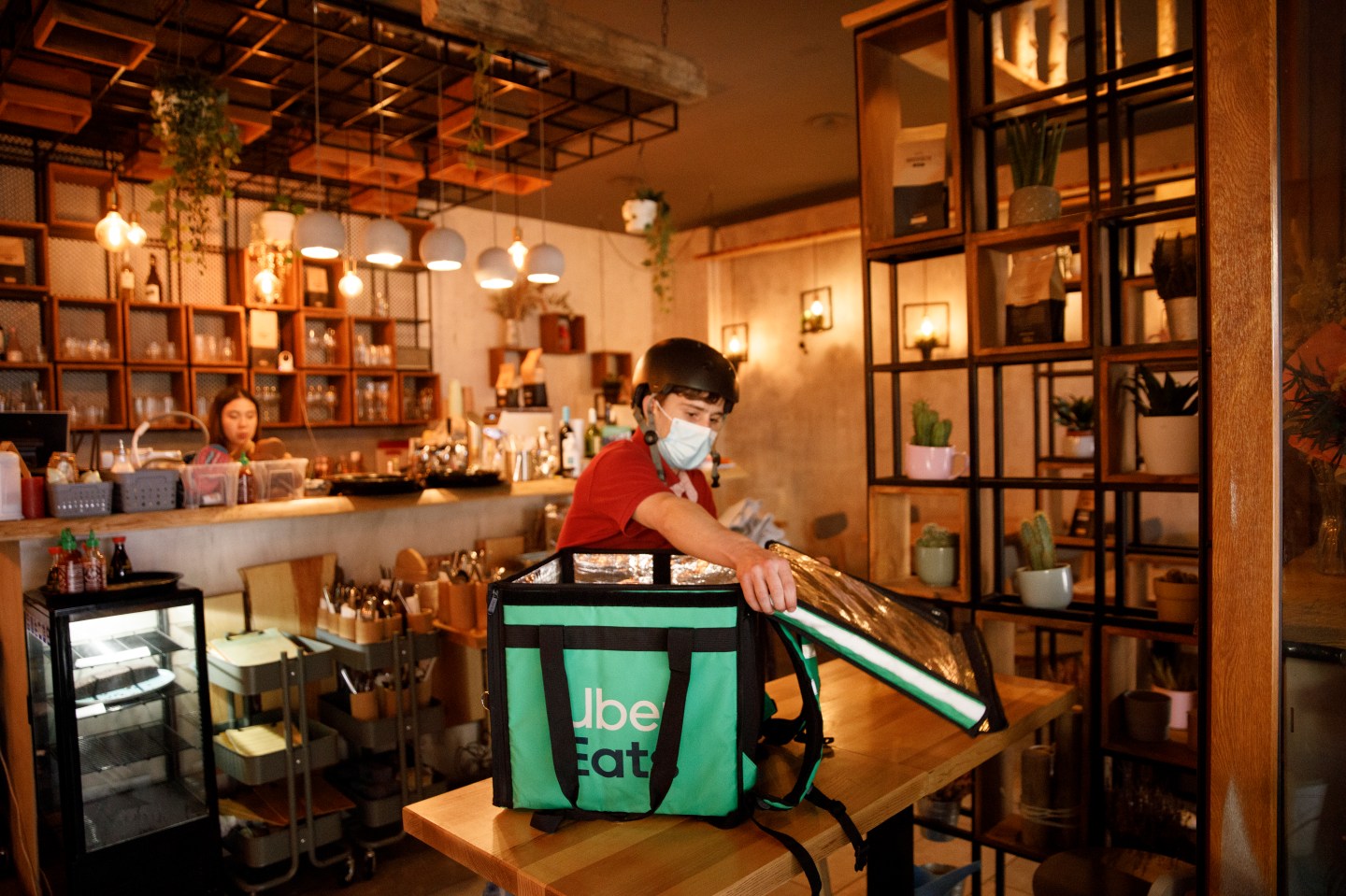
Politicians and labor organizers have been locked in a long-running debate on increasing the minimum wage, which hasn’t changed on the federal level since 2009. Because of the lack of movement, state and local legislators have taken matters into their own hands, leading to wages that wildly differ across regions based on cost of living and political leanings. While minimum wage in Georgia and Wyoming is $5.15 (though employers have to abide by the federal requirement), Washington has the highest minimum wage of $16.28. Seattle’s is even higher at $19.97.
Seattle has experienced its fair share of gig-work-related turmoil in recent years. In August, DoorDash agreed to a $1.6 million settlement with the City of Seattle for allegedly violating the city’s paid sick time ordinance. Uber Eats reached a $3.3 million settlement with Seattle in October 2022 over an alleged violation of the Gig Worker Premium Pay Ordinance.
But app-based delivery companies have continued to push back against these policies. They are calling the minimum wage ordinance a threat to both local businesses and drivers.
“The burden of this kind of overregulation is almost guaranteed to impact everyone in Seattle who uses these services, including the customers and small businesses who rely on it and the delivery workers that lose out on earning opportunities,” an Uber spokesperson told Fortune.
Where are fee hikes coming from?
Other app-delivery workers know who to blame for these demand woes: not the government trying to increase their standard of living, but their (not-full-time) employers.
“The thing that pissed me off is they [tried] to move the conflict between the driver and the customers,” Wei Lin, a Gopuff driver and member of delivery drivers union Working Washington, told Fortune. “It was a company’s decision to make a fee. Seattle never said, ‘Oh, just increase the fee on the customer so you can have money to pay the drivers.’”
The pushback on the ordinance is just one grievance Lin has toward the app-delivery companies. Lin said he’s had six pay cuts since beginning his time as a food-delivery driver in 2020, despite city protections in place. He’s not alone: Delivery drivers lost up to 15% of their income from the apps in 2023.
“I’m just an expendable product for the company,” Lin said. “They don’t actually treat us fairly.”
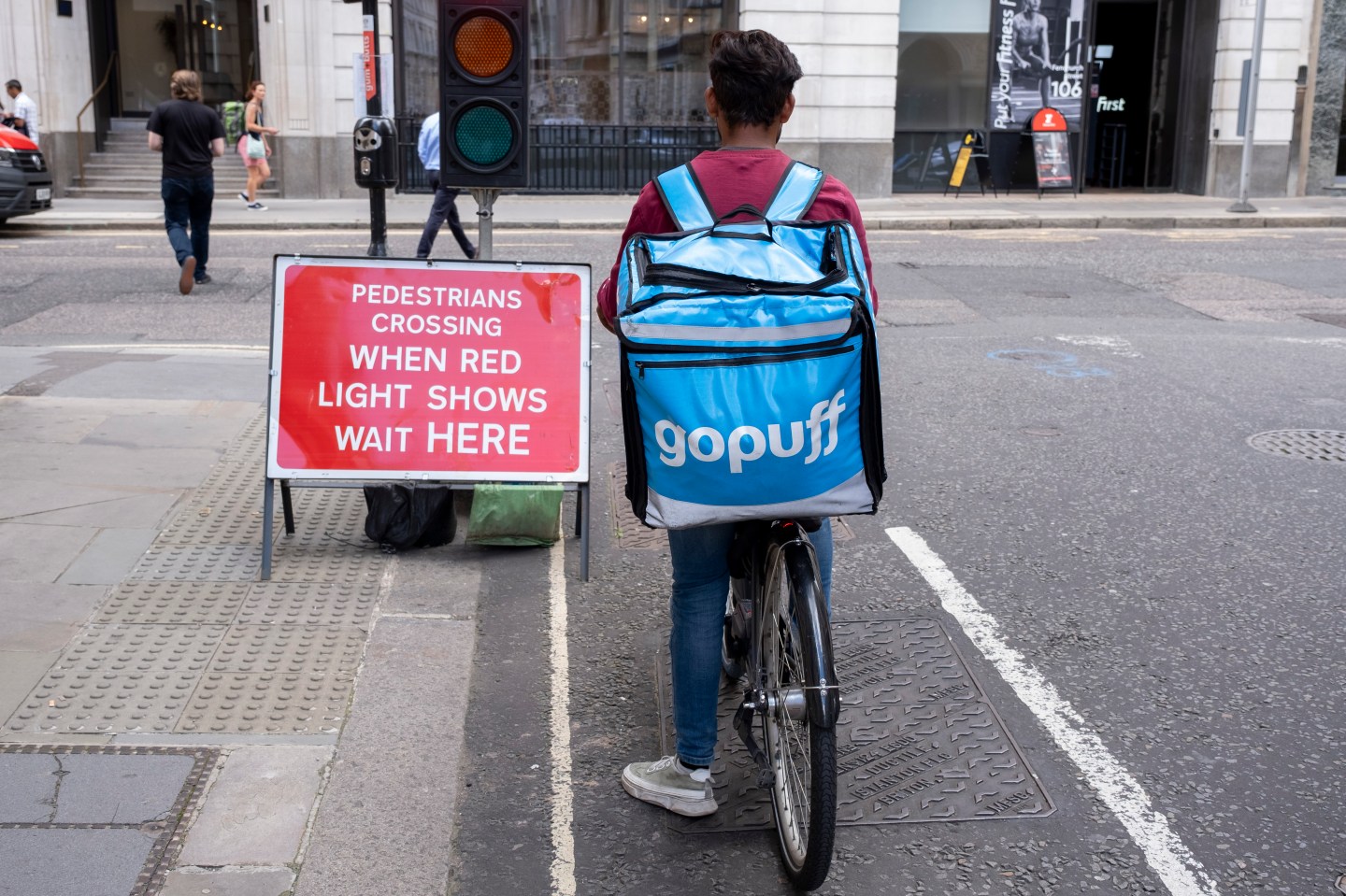
Public app-delivery companies are feeling the squeeze, too, as they race to become profitable. Uber only just had its first profitable year in 2023, while Lyft’s strong fourth-quarter earnings indicate it is on its way to the same. DoorDash continues to grow its users, but still reported bigger-than-expected fourth-quarter losses.
Adding fees to account for the increased operating costs in Seattle is justifiable, Marchese said, but there’s a lack of transparency about how various companies—each with different fees and policies—are calculating how to offset operating costs.
The city doesn’t know if the ordinance is costing the companies more money than before or how much it might be, Marchese said. “That’s all information that’s within their control or knowledge.”
City officials are meeting with app companies and shareholders to draft legislation to increase transparency among them.
Apps’ lack of transparency is exactly what Illes is capitalizing on to build his business. The ethos behind Tony Delivers is the opposite of the apps, Illes said. There’s full transparency in his business because there’s little to hide: no fees to calculate or rates to apply. Illes’s philosophy—as indicated by the catchphrase on his website, “Oh yup…my homie Tone got me”—is to build trust with customers in a competitive gig economy.
“At the end of the day, it just comes down to one simple thing: price point,” Illes said. “And if the price point is similar, you’re gonna pick the guy that cares.”
If you’re a gig worker or minimum wage worker and want to share your story with Sasha, contact her at sasha.rogelberg@fortune.com.