
• Home
  • Latest
  • Fortune 500
  • Finance
  • Tech
  • Leadership
  • Lifestyle
  • Rankings
  • Multimedia

Trendingnow

1

Surging Treasury yields expose a brutal truth: America has no margin for error on its $39 trillion debt

2

As CEO of the $96 billion Sam’s Club, Latriece Watkins is testing her mettle at the warehouse retailer that produced CEOs for Walmart, Target, and Walgreens

3

Current price of oil as of May 29, 2026

1

Surging Treasury yields expose a brutal truth: America has no margin for error on its $39 trillion debt

2

As CEO of the $96 billion Sam’s Club, Latriece Watkins is testing her mettle at the warehouse retailer that produced CEOs for Walmart, Target, and Walgreens

3

Current price of oil as of May 29, 2026
MagazineSemiconductors

The chip industry’s dirty little secret: It’s very dirty

Michal Lev-Ram
By
Michal Lev-Ram
Michal Lev-Ram
Special Correspondent
Down Arrow Button Icon
Michal Lev-Ram
By
Michal Lev-Ram
Michal Lev-Ram
Special Correspondent
Down Arrow Button Icon
January 29, 2024, 6:00 AM ET
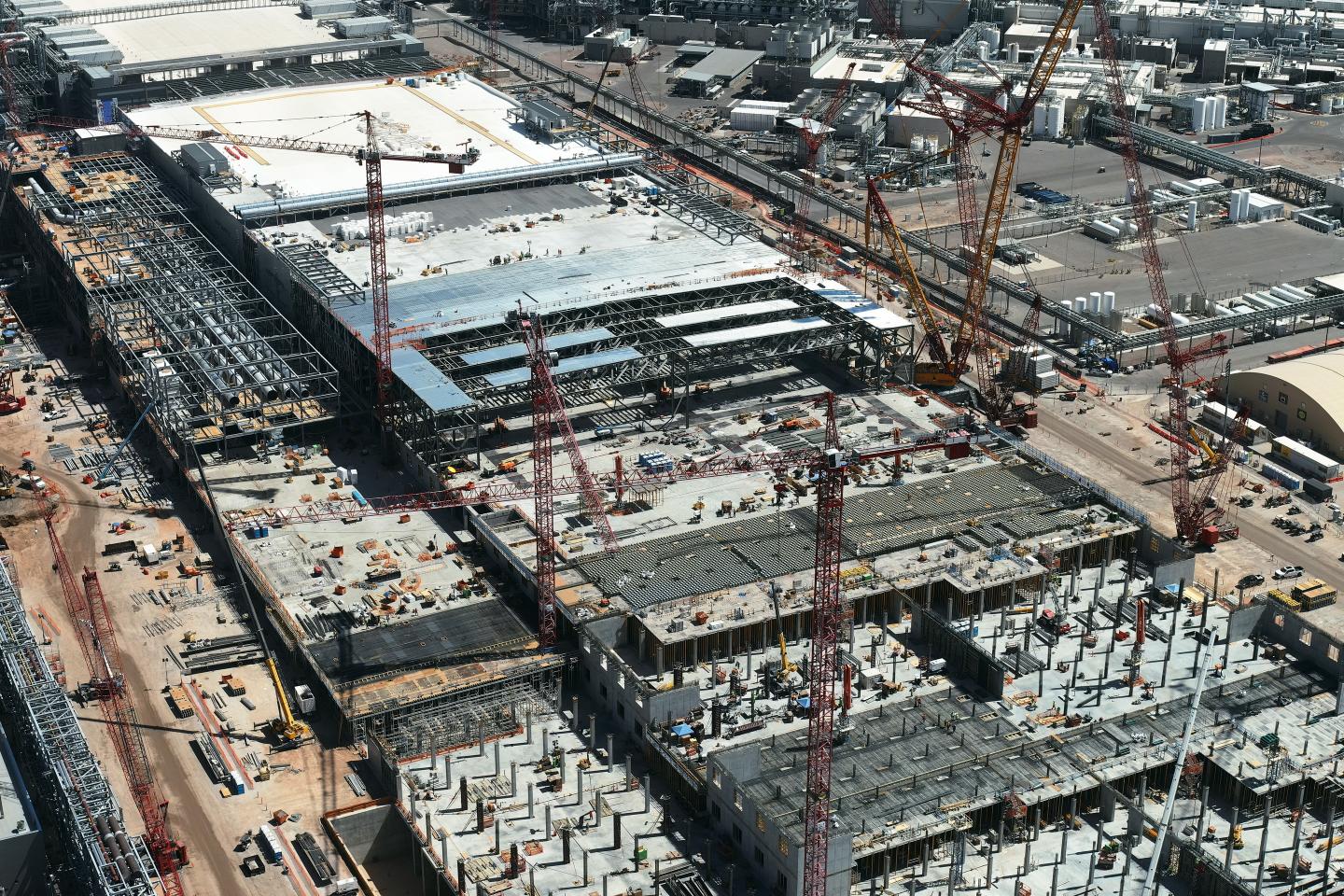
Intel is building two new chip plants near Phoenix, part of an industrywide building spree across the U.S.
Intel is building two new chip plants near Phoenix, part of an industrywide building spree across the U.S.Courtesy of Intel Corporation

On Sept. 24, 2021, Intel broke ground on two new computer chip factories in Chandler, Ariz., just one of many such projects companies are racing to complete across the country to fuel a seemingly bottomless demand for semiconductors. Amid the backdrop of dirt, steel, and bulldozers, Intel CEO Pat Gelsinger stood at a podium to address the crowd gathered to mark the occasion. “Isn’t this awesome?” he said, gesturing to the massive construction site behind him. “If this doesn’t get you excited, check your pulse.”

Recommended Video

Intel’s plans for its campus near Phoenix are indeed remarkable: The chip giant is pouring $20 billion into the project, and says the new factories, or fabs, will create thousands of jobs, not to mention significantly boost its domestic capacity to churn out semiconductors used in products like personal computers and data center servers. But there’s another, less celebratory side to the recent boom in chip manufacturing—not just Intel’s, and not just in Arizona. Critics worry that the new plants could exacerbate the growing climate crisis, spoil the environment with chemicals, and suck aquifers dry. Here’s why: While semiconductor chips are made in “clean rooms,” manufacturing them is in fact quite dirty.

Producing the fingernail-size building blocks of electronics is an intricate and energy-intensive process. To that end, large fabs can use as much as 100 megawatt-hours of power hourly, more than what oil refineries or automotive plants consume, according to energy management provider Schneider Electric. Each semiconductor factory can also consume more than 1 million gallons of water daily, in addition to producing thousands of tons of chemical waste annually. 

What’s more, the challenges of mitigating these environmental hazards could soon become even harder. New technology used for making high-end chips requires even more energy and therefore is an even greater potential source of carbon emissions. And despite the industry’s progress on making chipmaking cleaner, plenty of work remains. 

To be sure, onshoring chip production has many upsides, including bolstering supply chains and even making the U.S. safer—one of the federal government’s stated reasons for implementing the CHIPS and Science Act, signed by President Biden in 2022. The legislation authorized nearly $53 billion in subsidies and tax credits to incentivize semiconductor companies to invest more in domestic research and manufacturing. So far, it appears to be working. 

Since the CHIPS Act was enacted, a number of chipmakers have committed billions of dollars to building new plants. In addition to its new factories in Arizona, Intel has broken ground on fabs in Ohio. Meanwhile, Taiwanese chipmaker TSMC, which makes most of Nvidia’s processors, is also expanding in Arizona with a $40 billion build-out, reportedly among the largest foreign investments in U.S. history. And memory chip manufacturer Micron has plans for a massive plant in Boise, where the company is based. 

1 million

Gallons of water used by a chip factory daily. Source: Intel

It’s no surprise that the industry has rallied behind the CHIPS Act. (Who wouldn’t, with $53 billion in financial incentives?) But again, all of this expansion comes at a cost. And Intel and its rivals now find themselves having to come together to develop cleaner manufacturing. After all, they have a lot riding on their ability to both take advantage of the government’s financial incentives and achieve the ambitious sustainability goals they have set for their companies. Intel, for example, has committed to reach net-zero emissions for its own operations by 2040. 

That’s why in November 2022, just a few months after the CHIPS Act was signed, the semiconductor industry formed a new group with 60 founding members that aims to accelerate the reduction of greenhouse gas emissions. 

“We can’t do it alone,” says Todd Brady, Intel’s chief sustainability officer. Brady joined the company 28 years ago, and he says that while today’s challenges require the backing and collaboration of the entire industry, Intel has been making headway on more sustainable manufacturing practices for decades. 

According to Brady, the company’s carbon emissions peaked in 2006, and have since been declining because of a growing reliance on renewables. Globally, Intel now gets 93% of its electricity from “clean” sources such as solar and wind.

Still, those energy demands are huge. A 2020 paper titled Chasing Carbon: The Elusive Environmental Footprint of Computing found that chip manufacturing was responsible for the majority of the carbon output of a consumer electronic device, rather than usage over its entire life cycle. And the process could get even more energy-intensive.

“The newer fabs for the most advanced [chip] designs will come with even heavier electricity demands,” researcher and paper coauthor Carole-Jean Wu tells Fortune in an interview. 

100

Megawatt-hours consumed by large chip plants hourly. Source: Schneider Electric

Intel and its rivals have plenty of reasons to keep reducing their carbon footprint, and not just because of their ambitious goals. While most new and existing semiconductor hubs in the U.S. welcome their investments, local communities and organizations worry about the environmental impact. 

Use of water is of particular concern, especially in parts of the country like Arizona where it’s not exactly plentiful. Chips must be rinsed with ultrapure water during the manufacturing process, in addition to water being used to cool equipment, as in data centers.

But here, too, companies like Intel have made progress, with a growing percentage of water used being recycled after cleaning. Intel says it has already reached “net-positive water” in the U.S. and India and will hit this same goal in all countries by 2030, even with the new sites and the increased water use they require. To fully meet its goal, the company is also working with nonprofits. Those projects, such as helping local communities use water more efficiently, offset water lost in manufacturing, mostly due to evaporation.

Much work still needs to be done to come up with greener chemistry in chipmaking, as several types of chemicals that harm the environment are currently used and then pumped into the atmosphere. At Intel’s Arizona campus, where the new facilities are still unfinished, the company already emits about two tons of hazardous air pollutants quarterly. 

Intel’s Brady says this is one area in which a concerted effort by the whole industry could make a difference, in order to come up with alternatives to harmful chemicals. This, he says, is the dirtiest part of chipmaking. And the CHIPS Act, with all of its incentives to build bigger and faster, is making it more critical for chipmakers to act, including reducing the use of chemicals that contribute to greenhouse gases. After all, while onshoring chip production creates jobs at home, it also brings the pollution closer. 

“We set our 2040 goals knowing we’re going to be expanding,” says Brady. “It’s going to be a lot of work.”

This article appears in the February/March 2024 issue of Fortune.

The Fortune 500 Innovation Forum will convene Fortune 500 executives, U.S. policy officials, top founders, and thought leaders to help define what’s next for the American economy, Nov. 16-17 in Detroit. Apply here.
About the Author
Michal Lev-Ram
By Michal Lev-RamSpecial Correspondent
Twitter icon

Michal Lev-Ram is a special correspondent covering the technology and entertainment sectors for Fortune, writing analysis and longform reporting.

See full bioRight Arrow Button Icon

Latest from the Magazine

Finance
Lorem ipsum dolor sit amet, consectetur adipiscing elit, sed do eiusmod tempor incididunt ut labore et dolore magna aliqua. Ut enim ad minim veniam
By Fortune Editors
October 20, 2025
Finance
Lorem ipsum dolor sit amet, consectetur adipiscing elit, sed do eiusmod tempor incididunt ut labore et dolore magna aliqua. Ut enim ad minim veniam
By Fortune Editors
October 20, 2025
Finance
Lorem ipsum dolor sit amet, consectetur adipiscing elit, sed do eiusmod tempor incididunt ut labore et dolore magna aliqua. Ut enim ad minim veniam
By Fortune Editors
October 20, 2025
Finance
Lorem ipsum dolor sit amet, consectetur adipiscing elit, sed do eiusmod tempor incididunt ut labore et dolore magna aliqua. Ut enim ad minim veniam
By Fortune Editors
October 20, 2025
Finance
Lorem ipsum dolor sit amet, consectetur adipiscing elit, sed do eiusmod tempor incididunt ut labore et dolore magna aliqua. Ut enim ad minim veniam
By Fortune Editors
October 20, 2025
Finance
Lorem ipsum dolor sit amet, consectetur adipiscing elit, sed do eiusmod tempor incididunt ut labore et dolore magna aliqua. Ut enim ad minim veniam
By Fortune Editors
October 20, 2025

Most Popular

Finance
Lorem ipsum dolor sit amet, consectetur adipiscing elit, sed do eiusmod tempor incididunt ut labore et dolore magna aliqua. Ut enim ad minim veniam
By Fortune Editors
October 20, 2025
Finance
Lorem ipsum dolor sit amet, consectetur adipiscing elit, sed do eiusmod tempor incididunt ut labore et dolore magna aliqua. Ut enim ad minim veniam
By Fortune Editors
October 20, 2025
Finance
Lorem ipsum dolor sit amet, consectetur adipiscing elit, sed do eiusmod tempor incididunt ut labore et dolore magna aliqua. Ut enim ad minim veniam
By Fortune Editors
October 20, 2025
Finance
Lorem ipsum dolor sit amet, consectetur adipiscing elit, sed do eiusmod tempor incididunt ut labore et dolore magna aliqua. Ut enim ad minim veniam
By Fortune Editors
October 20, 2025
Finance
Lorem ipsum dolor sit amet, consectetur adipiscing elit, sed do eiusmod tempor incididunt ut labore et dolore magna aliqua. Ut enim ad minim veniam
By Fortune Editors
October 20, 2025
Finance
Lorem ipsum dolor sit amet, consectetur adipiscing elit, sed do eiusmod tempor incididunt ut labore et dolore magna aliqua. Ut enim ad minim veniam
By Fortune Editors
October 20, 2025
Fortune Secondary Logo
Rankings
  • 100 Best Companies
  • Fortune 500
  • Global 500
  • Fortune 500 Europe
  • Most Powerful Women
  • World's Most Admired Companies
  • See All Rankings
  • Lists Calendar
Sections
  • Finance
  • Fortune Crypto
  • Features
  • Leadership
  • Health
  • Commentary
  • Success
  • Retail
  • Mpw
  • Tech
  • Lifestyle
  • CEO Initiative
  • Asia
  • Politics
  • Conferences
  • Europe
  • Newsletters
  • Personal Finance
  • Environment
  • Magazine
  • Education
Customer Support
  • Frequently Asked Questions
  • Customer Service Portal
  • Privacy Policy
  • Terms Of Use
  • Single Issues For Purchase
  • International Print
Commercial Services
  • Advertising
  • Fortune Brand Studio
  • Fortune Analytics
  • Fortune Conferences
  • Business Development
  • Group Subscriptions
About Us
  • About Us
  • Press Center
  • Work At Fortune
  • Terms And Conditions
  • Site Map
  • About Us
  • Press Center
  • Work At Fortune
  • Terms And Conditions
  • Site Map
  • Facebook icon
  • Twitter icon
  • LinkedIn icon
  • Instagram icon
  • Pinterest icon

Latest from the Magazine

Citi’s 5-year comeback: How CEO Jane Fraser turned the bank’s chronic underperformance into decade-high revenue
MagazineCitigroup
Citi’s 5-year comeback: How CEO Jane Fraser turned the bank’s chronic underperformance into decade-high revenue
By Claire ZillmanMay 27, 2026
4 days ago
Why Meta hired Dina Powell McCormick to help sell its vision for AI in Washington and on Wall Street
MagazineMeta
Why Meta hired Dina Powell McCormick to help sell its vision for AI in Washington and on Wall Street
By Ellie AustinMay 27, 2026
4 days ago
As CEO of the $96 billion Sam’s Club, Latriece Watkins is testing her mettle at the warehouse retailer that produced CEOs for Walmart, Target, and Walgreens
MagazineSam's Club
As CEO of the $96 billion Sam’s Club, Latriece Watkins is testing her mettle at the warehouse retailer that produced CEOs for Walmart, Target, and Walgreens
By Emma HinchliffeMay 27, 2026
4 days ago
Inside the ultra-luxury eco-adventure industry turning conservation into a status symbol
MagazineLuxury
Inside the ultra-luxury eco-adventure industry turning conservation into a status symbol
By Adam EraceMay 24, 2026
7 days ago
Microsoft lost its way in the AI race. Can Copilot get it back on course?
MagazineMicrosoft
Microsoft lost its way in the AI race. Can Copilot get it back on course?
By Jeremy KahnMay 21, 2026
10 days ago
Why the AI field’s biggest names are betting billions on ‘world models’
MagazineAutomation
Why the AI field’s biggest names are betting billions on ‘world models’
By Sharon GoldmanMay 20, 2026
11 days ago

Most Popular

Surging Treasury yields expose a brutal truth: America has no margin for error on its $39 trillion debt
Economy
Surging Treasury yields expose a brutal truth: America has no margin for error on its $39 trillion debt
By Shawn TullyMay 30, 2026
20 hours ago
As CEO of the $96 billion Sam’s Club, Latriece Watkins is testing her mettle at the warehouse retailer that produced CEOs for Walmart, Target, and Walgreens
Magazine
As CEO of the $96 billion Sam’s Club, Latriece Watkins is testing her mettle at the warehouse retailer that produced CEOs for Walmart, Target, and Walgreens
By Emma HinchliffeMay 27, 2026
4 days ago
Current price of oil as of May 29, 2026
Personal Finance
Current price of oil as of May 29, 2026
By Joseph HostetlerMay 29, 2026
2 days ago
Gen Z is rejecting $200 dates and choosing 'solo-maxxing'—and dating apps are taking a hit
Economy
Gen Z is rejecting $200 dates and choosing 'solo-maxxing'—and dating apps are taking a hit
By Sydney LakeMay 30, 2026
16 hours ago
As AI slashes white-collar jobs, Salesforce CEO Marc Benioff says almost no one is being hired—except in sales
Success
As AI slashes white-collar jobs, Salesforce CEO Marc Benioff says almost no one is being hired—except in sales
By Emma BurleighMay 28, 2026
2 days ago
A billionaire and an A-list actor found refuge in a 37-home Florida neighborhood with armed guards—proof that privacy is now the ultimate luxury
Real Estate
A billionaire and an A-list actor found refuge in a 37-home Florida neighborhood with armed guards—proof that privacy is now the ultimate luxury
By Marco Quiroz-GutierrezMay 25, 2026
6 days ago

© 2026 Fortune Media IP Limited. All Rights Reserved. Use of this site constitutes acceptance of our Terms of Use and Privacy Policy | CA Notice at Collection and Privacy Notice | Do Not Sell/Share My Personal Information
FORTUNE is a trademark of Fortune Media IP Limited, registered in the U.S. and other countries. FORTUNE may receive compensation for some links to products and services on this website. Offers may be subject to change without notice.