• Home
  • Latest
  • Fortune 500
  • Finance
  • Tech
  • Leadership
  • Lifestyle
  • Rankings
  • Multimedia
EnvironmentUnited Nations

The U.N. has made 5 big promises over 30 years of climate talks—here’s a look at how they’ve turned out

By
Sibi Arasu
Sibi Arasu
and
The Associated Press
Down Arrow Button Icon
By
Sibi Arasu
Sibi Arasu
and
The Associated Press
Down Arrow Button Icon
December 12, 2023, 11:37 AM ET
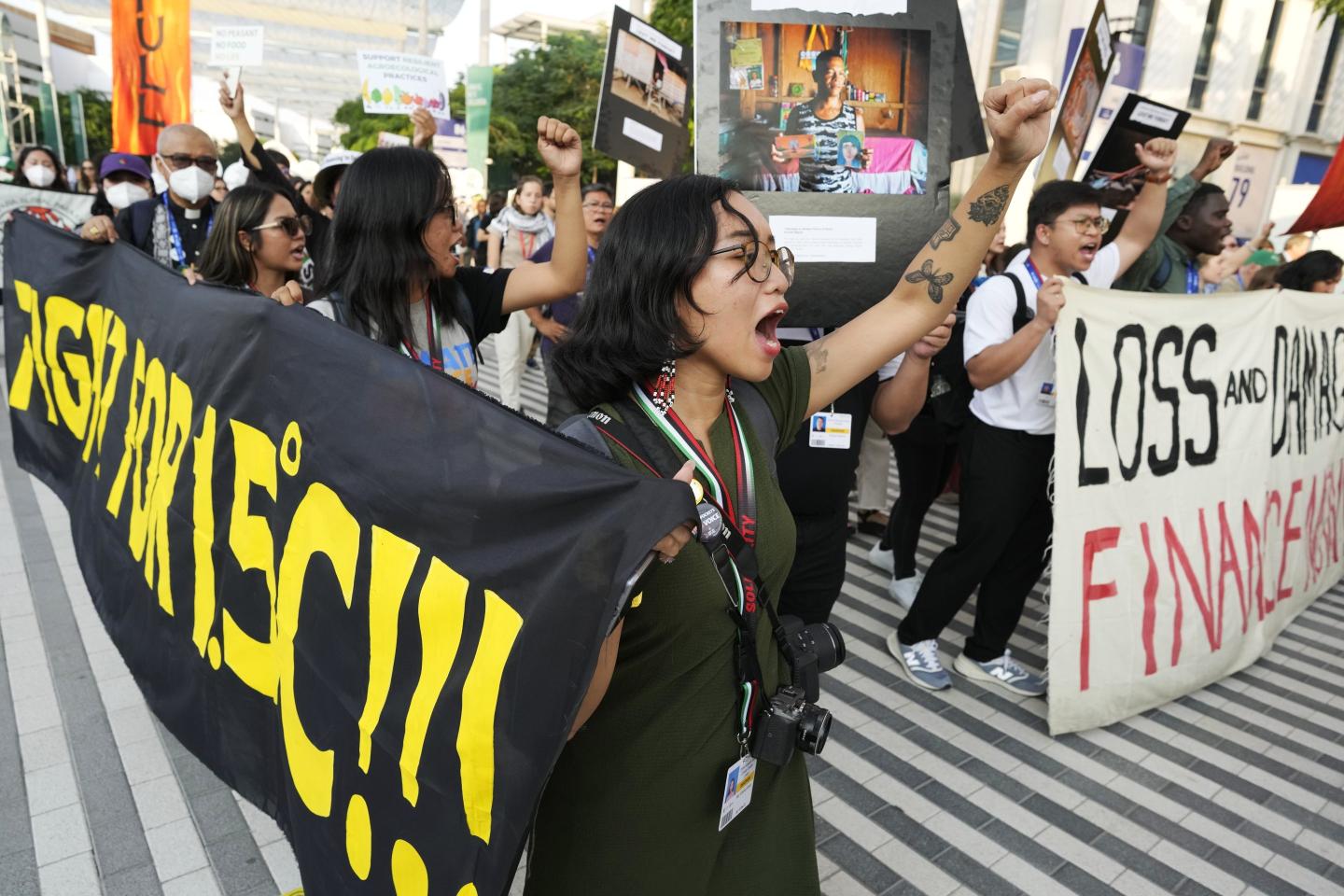
Climate activists marching
Activists demonstrate for climate justice and a ceasefire at the COP28 U.N. Climate Summit, Dec. 9, 2023, in Dubai, United Arab Emirates.AP Photo/Peter Dejong, File

When United Nations climate talks wrap up at some point this week in Dubai, big promises will likely be made about how the world is going to combat climate change, caused by the burning of fossil fuels like oil, gas and coal.

Recommended Video

Negotiators are debating how fast fossil fuels should be reduced and how a major transition to green energy would be paid for, raising the possibility of a historic agreement.

Previous summits have ended with funds established to help developing countries transition to green energies, pledges to slash pollution and promises to keep people most vulnerable at the center of policy discussions.

But have countries stuck to their word?

Ahead of whatever decisions come from this year’s negotiations, here is a look at five big promises from nearly 30 years of talks, and what’s happened since.

Emissions cuts in Kyoto

The third climate summit took place in Kyoto, Japan, in 1997 — one of the warmest years recorded in the 20th century.

Known as the Kyoto Protocol, the agreement asked 41 high-emitting countries across the world and the European Union to cut their emissions by a little more than 5% compared to 1990 levels. Emissions cuts can come from many places, from deploying green energies like wind and solar that don’t produce emissions to making things that do, like vehicles with combustible engines, run more cleanly.

Despite the agreement to cut emissions, it was only in 2005 that countries agreed to finally act on the Kyoto Protocol. The United States and China — the two highest emitters both then and now — didn’t sign the agreement.

In terms of sticking to the promises made, Kyoto wasn’t successful. Emissions have increased dramatically since then. At the time, 1997 was the hottest year on record since pre-industrial times. 1998 broke that record, as have more than a dozen years since then.

But Kyoto is still considered a landmark moment in the fight against climate change because it was first time so many countries recognized the problem and pledged to act on it.

Copenhagen’s climate clash

By the time the 2009 conference in Denmark came around, the world was capping off its warmest decade on record — which has since been broken.

The summit is widely regarded as a failure for the impasse between developed and developing countries on slashing emissions and whether poorer nations could use fossil fuels to grow their economies. Still, it did see one major pledge: money for countries to transition to clean energy.

Rich countries promised to channel $100 billion a year to developing countries for green technologies by 2020. But they didn’t reach $100 billion by the start of the 2020s, drawing criticism from developing states and environmentalists alike.

In 2022, the Organization of Economic Cooperation and Development said rich countries might have finally met and even exceeded the $100 billion goal. But Oxfam, a group focused on anti-poverty efforts, said it’s likely that 70% of the funds were in the form of loans that actually increased the debt crisis in developing countries.

And as climate change worsens, experts say the funds promised are not enough. Research published by climate economist Nicholas Stern found that developing countries likely need $2 trillion for climate action every year by 2030.

The Paris Agreement

It wasn’t until 2015 that a global pact to fight climate change was adopted by nearly 200 nations, which called on the world to collectively slash greenhouse gases. But they decided it would be non-binding, so countries that didn’t comply couldn’t be sanctioned.

The Paris Agreement is widely considered the single biggest U.N. achievement in efforts to confront climate change. It was agreed upon exactly eight years ago on Dec. 12 to a standing ovation at the plenary. Nations agreed to keep warming “well below” 2 degrees Celsius (3.8 degrees Fahrenheit) since pre-industrial times, and ideally no higher than 1.5 degrees Celsius (2.7 degrees Fahrenheit).

Paris’ legacy continues, with the goal of limiting warming to 1.5 degrees still central to climate discussions. Scientists agree that the 1.5 threshold needs to be upheld because every tenth of a degree of warming brings even more disastrous consequences, in the form of extreme weather events, for an already hot planet. The world hasn’t exceeded the limit set in the Paris agreement — it has warmed around 1.1 or 1.2 degrees Celsius (2 to 2.2 degrees Fahrenheit) since the early 1800s — but is currently well on its way there, unless drastic emissions cuts are made quickly.

Glasgow and coal

Six years after Paris, global warming had hit such a critical point that negotiators were looking to recommit to the goal of capping warming to the levels agreed in 2015.

Average temperatures were already 1.1 degrees Celsius (1.9 degrees Fahrenheit) higher than pre-industrial times.

The Glasgow summit was postponed until 2021 as the world was emerging from the COVID-19 pandemic. It included mass protests headlined by climate activist Greta Thunberg, who helped lead a global movement of youth activists to demand more action from leaders.

After last-minute disagreements over the language of the final document, countries agreed to “phase-down” coal, less strong than the original idea of a “phase-out.” India and China, two heavily coal-reliant emerging economies, pushed to water the language down.

The burning of coal is responsible for more emissions than any other fossil fuel, approximately 40% of global carbon dioxide emissions. Burning of oil and gas are also major sources of emissions.

So far, countries have failed to deliver on the Glasgow deal. Emissions from coal have slightly increased and major coal-using countries have yet to begin moving away from the dirtiest of fossil fuels.

India is a case in point. It’s dependent on coal for more than 70% of power generation, and plans a major expansion of coal-based power generation capacity over the next 16 months.

Loss and damage in Sharm El-Sheikh

At last year’s climate talks in the Egyptian resort town of Sharm el-Sheikh, countries for the first time agreed to create a fund to help poorer nations recover from the impacts of climate change.

Coming a few months after devastating flooding in Pakistan that killed nearly 2,000 people and caused losses of over $3.2 trillion, COP27 delegates decided to set up the loss and damage fund so that destroyed homes, flooded land and lost income from crops damaged by climate change would compensated.

After disagreements around what the fund should look like, the fund was formally created on the first day of this year’s talks in Dubai. Over $700 million has already been pledged. The pledges — and the amounts the countries choose to commit — are voluntary.

Climate experts say the pledges are just a fraction of the billions of dollars needed, as climate-driven weather extremes such as cyclones, rising sea levels, floods and droughts are increasing as temperatures rise.

___

EDITOR’S NOTE: This article is part of a series produced under the India Climate Journalism Program, a collaboration between The Associated Press, the Stanley Center for Peace and Security and the Press Trust of India.

___

Associated Press climate and environmental coverage receives support from several private foundations. See more about AP’s climate initiative here. The AP is solely responsible for all content.

Subscribe to Fortune Gulf Brief. Every Tuesday, this new newsletter will deliver clear-eyed, authoritative intelligence on the deals, decisions, policies, and power shifts shaping one of the world’s most consequential regions, written for the people who need to act on it. Sign up here.
About the Authors
By Sibi Arasu
See full bioRight Arrow Button Icon
By The Associated Press
See full bioRight Arrow Button Icon

Latest in Environment

Finance
Lorem ipsum dolor sit amet, consectetur adipiscing elit, sed do eiusmod tempor incididunt ut labore et dolore magna aliqua. Ut enim ad minim veniam
By Fortune Editors
October 20, 2025
Finance
Lorem ipsum dolor sit amet, consectetur adipiscing elit, sed do eiusmod tempor incididunt ut labore et dolore magna aliqua. Ut enim ad minim veniam
By Fortune Editors
October 20, 2025
Finance
Lorem ipsum dolor sit amet, consectetur adipiscing elit, sed do eiusmod tempor incididunt ut labore et dolore magna aliqua. Ut enim ad minim veniam
By Fortune Editors
October 20, 2025
Finance
Lorem ipsum dolor sit amet, consectetur adipiscing elit, sed do eiusmod tempor incididunt ut labore et dolore magna aliqua. Ut enim ad minim veniam
By Fortune Editors
October 20, 2025
Finance
Lorem ipsum dolor sit amet, consectetur adipiscing elit, sed do eiusmod tempor incididunt ut labore et dolore magna aliqua. Ut enim ad minim veniam
By Fortune Editors
October 20, 2025
Finance
Lorem ipsum dolor sit amet, consectetur adipiscing elit, sed do eiusmod tempor incididunt ut labore et dolore magna aliqua. Ut enim ad minim veniam
By Fortune Editors
October 20, 2025

Most Popular

Finance
Lorem ipsum dolor sit amet, consectetur adipiscing elit, sed do eiusmod tempor incididunt ut labore et dolore magna aliqua. Ut enim ad minim veniam
By Fortune Editors
October 20, 2025
Finance
Lorem ipsum dolor sit amet, consectetur adipiscing elit, sed do eiusmod tempor incididunt ut labore et dolore magna aliqua. Ut enim ad minim veniam
By Fortune Editors
October 20, 2025
Finance
Lorem ipsum dolor sit amet, consectetur adipiscing elit, sed do eiusmod tempor incididunt ut labore et dolore magna aliqua. Ut enim ad minim veniam
By Fortune Editors
October 20, 2025
Finance
Lorem ipsum dolor sit amet, consectetur adipiscing elit, sed do eiusmod tempor incididunt ut labore et dolore magna aliqua. Ut enim ad minim veniam
By Fortune Editors
October 20, 2025
Finance
Lorem ipsum dolor sit amet, consectetur adipiscing elit, sed do eiusmod tempor incididunt ut labore et dolore magna aliqua. Ut enim ad minim veniam
By Fortune Editors
October 20, 2025
Finance
Lorem ipsum dolor sit amet, consectetur adipiscing elit, sed do eiusmod tempor incididunt ut labore et dolore magna aliqua. Ut enim ad minim veniam
By Fortune Editors
October 20, 2025
Fortune Secondary Logo
Rankings
  • 100 Best Companies
  • Fortune 500
  • Global 500
  • Fortune 500 Europe
  • Most Powerful Women
  • World's Most Admired Companies
  • See All Rankings
  • Lists Calendar
Sections
  • Finance
  • Fortune Crypto
  • Features
  • Leadership
  • Health
  • Commentary
  • Success
  • Retail
  • Mpw
  • Tech
  • Lifestyle
  • CEO Initiative
  • Asia
  • Politics
  • Conferences
  • Europe
  • Newsletters
  • Personal Finance
  • Environment
  • Magazine
  • Education
Customer Support
  • Frequently Asked Questions
  • Customer Service Portal
  • Privacy Policy
  • Terms Of Use
  • Single Issues For Purchase
  • International Print
Commercial Services
  • Advertising
  • Fortune Brand Studio
  • Fortune Analytics
  • Fortune Conferences
  • Business Development
  • Group Subscriptions
About Us
  • About Us
  • Press Center
  • Work At Fortune
  • Terms And Conditions
  • Site Map
  • About Us
  • Press Center
  • Work At Fortune
  • Terms And Conditions
  • Site Map
  • Facebook icon
  • Twitter icon
  • LinkedIn icon
  • Instagram icon
  • Pinterest icon

Latest in Environment

A large oil-exporting hub will be built in the deepwater Gulf of Mexico amid the Iran war—but only because Japan and the White House are paying for it
Energycrude oil
A large oil-exporting hub will be built in the deepwater Gulf of Mexico amid the Iran war—but only because Japan and the White House are paying for it
By Jordan BlumMay 8, 2026
2 days ago
An almond farmer inspects a fruit on a tree.
North AmericaAgriculture
California farmers must destroy 420,000 peach trees after Del Monte closes its canneries and cancels more than $550 million in long-term contracts
By Sasha RogelbergMay 7, 2026
2 days ago
bears
EnvironmentAlaska
Judge allows Alaska wildlife agents to resume shooting bears from helicopters to protect recovering caribou herd
By Becky Bohrer and The Associated PressMay 7, 2026
2 days ago
Debris from the White House East Wing demolition was dumped at a nearby public golf course and contains toxic metals, National Park report finds
PoliticsWhite House
Debris from the White House East Wing demolition was dumped at a nearby public golf course and contains toxic metals, National Park report finds
By Sasha RogelbergMay 7, 2026
3 days ago
ben
CommentaryFood and drink
Magnum owns Ben & Jerry’s. Now it’s destroying what made the brand worth buying
By David Bronner, Michael Bronner and Ryan GellertMay 7, 2026
3 days ago
At 75, Ted Turner told Fortune he gave himself 5 more years. He got 12—and spent them warning the world was ending
C-SuiteMedia
At 75, Ted Turner told Fortune he gave himself 5 more years. He got 12—and spent them warning the world was ending
By Ashley LutzMay 6, 2026
3 days ago

Most Popular

California farmers must destroy 420,000 peach trees after Del Monte closes its canneries and cancels more than $550 million in long-term contracts
North America
California farmers must destroy 420,000 peach trees after Del Monte closes its canneries and cancels more than $550 million in long-term contracts
By Sasha RogelbergMay 7, 2026
2 days ago
A Michigan farm town voted down plans for a giant OpenAI-Oracle data center. Weeks later, construction began
Magazine
A Michigan farm town voted down plans for a giant OpenAI-Oracle data center. Weeks later, construction began
By Sharon GoldmanMay 6, 2026
4 days ago
The CEO of Maersk, which ships 14% of everything you buy, said the Iran war is adding $500 million in monthly costs it's trying not to pass down
Energy
The CEO of Maersk, which ships 14% of everything you buy, said the Iran war is adding $500 million in monthly costs it's trying not to pass down
By Sasha RogelbergMay 8, 2026
1 day ago
Current price of oil as of May 8, 2026
Personal Finance
Current price of oil as of May 8, 2026
By Joseph HostetlerMay 8, 2026
1 day ago
'Blue dot fever' plagues musicians like Post Malone, Meghan Trainor, and Zayn as a growing list of artists cancel tours due to lagging ticket sales
Arts & Entertainment
'Blue dot fever' plagues musicians like Post Malone, Meghan Trainor, and Zayn as a growing list of artists cancel tours due to lagging ticket sales
By Dave Lozo and Morning BrewMay 7, 2026
2 days ago
You're probably safe from the Hantavirus outbreak, but here's what you absolutely must not do, experts say
Politics
You're probably safe from the Hantavirus outbreak, but here's what you absolutely must not do, experts say
By Catherina GioinoMay 8, 2026
1 day ago

© 2026 Fortune Media IP Limited. All Rights Reserved. Use of this site constitutes acceptance of our Terms of Use and Privacy Policy | CA Notice at Collection and Privacy Notice | Do Not Sell/Share My Personal Information
FORTUNE is a trademark of Fortune Media IP Limited, registered in the U.S. and other countries. FORTUNE may receive compensation for some links to products and services on this website. Offers may be subject to change without notice.