• Home
  • Latest
  • Fortune 500
  • Finance
  • Tech
  • Leadership
  • Lifestyle
  • Rankings
  • Multimedia

Trendingnow

1

After forcing workers back to the office, Goldman Sachs and JPMorgan Chase are now letting their staff work remotely—but only for the World Cup

2

The Pentagon said Iran War costs $29 billion, but the real cost is closer to $200 billion—and counting

3

Current price of oil as of June 23, 2026

1

After forcing workers back to the office, Goldman Sachs and JPMorgan Chase are now letting their staff work remotely—but only for the World Cup

2

The Pentagon said Iran War costs $29 billion, but the real cost is closer to $200 billion—and counting

3

Current price of oil as of June 23, 2026
Commentaryclimate change

Here’s the climate movement’s biggest mistake since the 1970s, according to the climate scientist who won the Nobel Prize alongside Al Gore

By
David Schimel
David Schimel
Down Arrow Button Icon
By
David Schimel
David Schimel
Down Arrow Button Icon
October 23, 2023, 12:30 PM ET
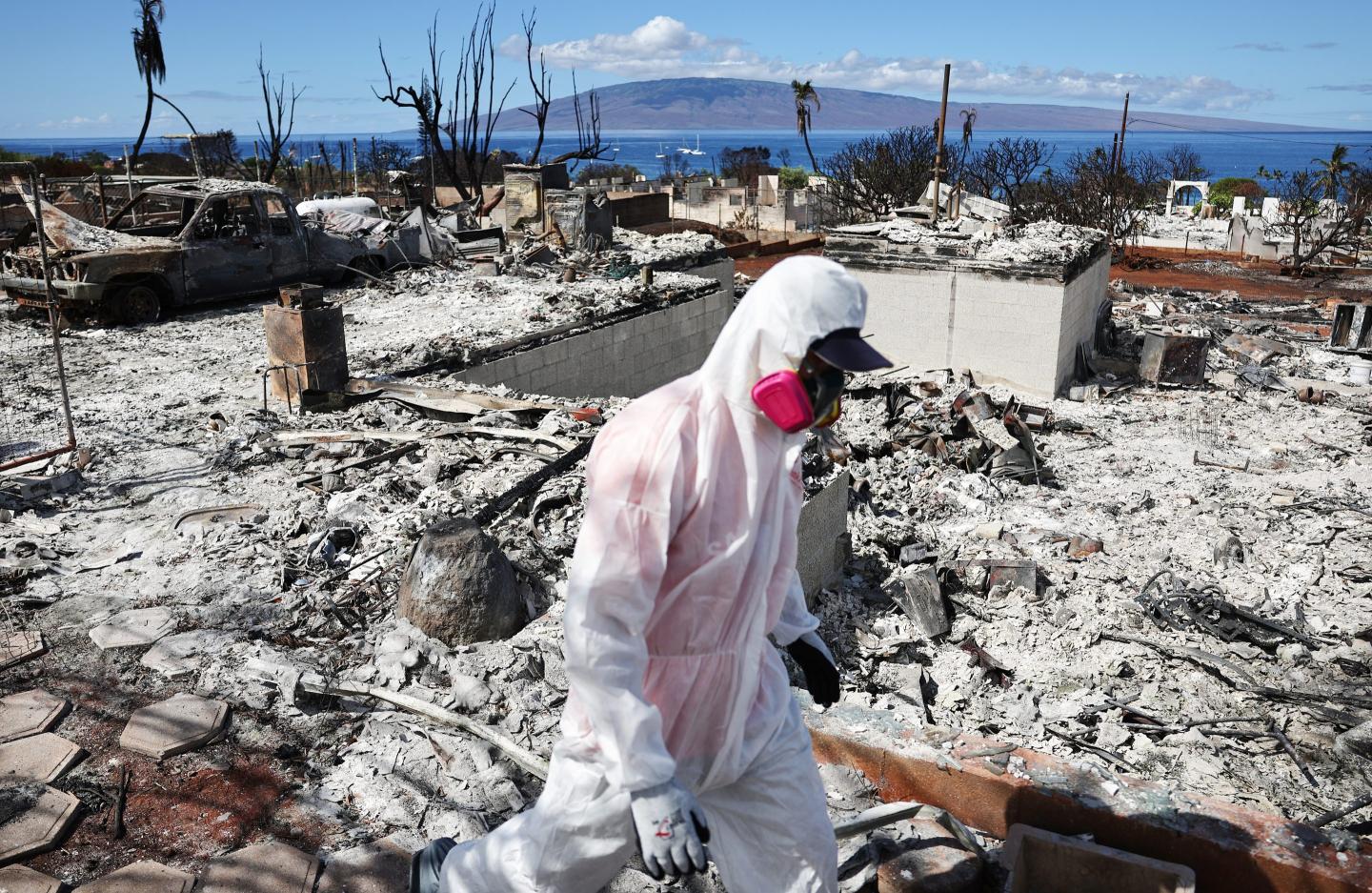
A volunteer searches for family heirlooms on Maui
The deadliest wildfire in modern U.S. history killed at least 98 people in Maui and destroyed more than 2,000 buildings.Mario Tama—Getty Images
Add Fortune on Google for similar content.

The world is finally waking up to climate change not as a slow increase in temperatures but as a cascading series of devastating events, occurring not just with more frequency but also with ever more extreme effects. Numerous regions have experienced entirely new types of weather. The world is palpably different—and not in a good way.

Decades of living in denial have left us both unprepared for these conditions and facing the far more difficult tasks of adaptation to the new climate and decarbonization. Had we started when it first became clear in the 1970s that climate change was a scientific reality, our work would have mostly consisted of mitigation.

Amid the devastation of 2023, which may shatter records not only for the hottest summer but also for the hottest year on record, it is hard to imagine the casual rejection of well-substantiated warnings. But that’s precisely what happened.

Looking back 50 years, it was challenging to project the rate of increase in greenhouse gas concentrations because we could not forecast future economic activity better than economists and Wall Street analysts. Correcting for the projections of emissions, one can see that the correlation of global mean temperature to greenhouse gas concentrations that climate scientists warned of was about right.

Climate models have been quite accurate in projecting the response of global mean temperature to changes in greenhouse gases, primarily carbon dioxide, but also methane, nitrous oxide, and other gases produced both naturally and due to human activities.

However, despite the rigor and breadth of the science, these dire conclusions have been consistently challenged, delaying or forgoing opportunities to curtail climate change and adapt to it.

I have some experience here: I was the convening lead author of the scientific community’s climate change report awarded the 2007 Nobel Prize alongside Al Gore’s An Inconvenient Truth. Scientists have consistently warned about temperature rise, and humanity has reacted—as Gore noted in An Inconvenient Truth—like frogs in a quickly heating pot of water, unmoved as the temperature rises toward a boil. As it turns out, that proverb is a myth: Frogs are smart enough to jump out of a pot of heating water. I’m not sure what that says about humanity.

The delay, while maddening, has provided us with critical new information to plot a path to safety. Damages from climate change, mostly due to extremes, are growing far faster than projected. In other words, adaptation is going to be more expensive than we thought. At the same time—although sophisticated models have in the past projected high costs of shifting to new energy sources (i.e., mitigation)—the cost of new clean energy is dropping faster than projected.

In short, damage costs are rising rapidly and green energy costs are dropping quickly.

We still have time—barely. Meeting the twin challenges of decarbonization and adaptation, the planet’s warming of 1.5 to 3 degrees above industrial-era norms will test our ingenuity and technological creativity.

One of our signal failures, decades ago, was to accept the false choice pitting climate change mitigation against economic growth. We have to reset the terms of the debate:

At Entelligent (a climate data firm I cofounded in hopes we could bend this curve), we analyze both physical risks (the damage done when the climate warms) and transition risks (the cost and benefit to publicly traded companies when they lower dependence on fossil fuels). We can see the trends clearly in our statistical analysis: A world invested in a productive climate transition will be a wealthier world.

The idea of climate action leading to a wealthier world is worth emphasizing. We can’t force global action, but three critical ideas must move to the top of our agenda:

  • We must publicly acknowledge and accept that damages from climate extremes are more costly than anticipated and harder to adapt to than the cost of mitigation would have been.
  • Nations must make good on the sustainability and climate-friendly provisions of the 2015 Paris Accord, which will lead to a world that’s wealthier than a world with unmitigated climate change.
  • There must be widespread support for cleaner technologies. There’s been a rapid decrease in the cost of renewables. There have also been significant advances in carbon-reducing smart-grid infrastructure and, slowly but surely, carbon-capture technology.

Despite our harsh reality, there are still opportunities to keep moving in the right direction.

Yes, the impact of climate change on regional weather systems has intensified our direct experience, if not universal understanding, of the consequences of climate change with its major impact on health, infrastructure, jobs, the economy, and day-to-day life.

By limiting the expensive, GDP-crushing impacts of ever-worsening catastrophes and encouraging the wealth creation that climate innovation will spur around the world, we can generate economic growth.

The extremes we are now experiencing appear to have gotten society’s attention. While it’s frustrating to not have been heard, given the need to play catch-up, we must use this new energy to improve our responses and make more sustainable choices.

David Schimel, a 2007 Nobel Prize laureate alongside Al Gore, is chairman and cofounder of climate data analytics company Entelligent. He is also a senior research scientist at the NASA Jet Propulsion Laboratory, where he leads research focused on carbon-cycle climate interactions.

More must-read commentary published by Fortune:

  • Return-to-office mandates: Why tax breaks are not a reason for companies in states such as Texas, Utah, and New Jersey to force employees back
  • Freakonomics author: ‘Objections to data science in K-12 education make no sense’
  • Why boomers are catching up with AI faster than Gen Zers, according to Microsoft’s modern work lead
  • The growing case for doing less: How harmless cancers are being overdiagnosed in America

The opinions expressed in Fortune.com commentary pieces are solely the views of their authors and do not necessarily reflect the opinions and beliefs of Fortune.

About the Author
By David Schimel
See full bioRight Arrow Button Icon
Add Fortune on Google for similar content.

Latest in Commentary

Finance
Lorem ipsum dolor sit amet, consectetur adipiscing elit, sed do eiusmod tempor incididunt ut labore et dolore magna aliqua. Ut enim ad minim veniam
By Fortune Editors
October 20, 2025
Finance
Lorem ipsum dolor sit amet, consectetur adipiscing elit, sed do eiusmod tempor incididunt ut labore et dolore magna aliqua. Ut enim ad minim veniam
By Fortune Editors
October 20, 2025
Finance
Lorem ipsum dolor sit amet, consectetur adipiscing elit, sed do eiusmod tempor incididunt ut labore et dolore magna aliqua. Ut enim ad minim veniam
By Fortune Editors
October 20, 2025
Finance
Lorem ipsum dolor sit amet, consectetur adipiscing elit, sed do eiusmod tempor incididunt ut labore et dolore magna aliqua. Ut enim ad minim veniam
By Fortune Editors
October 20, 2025
Finance
Lorem ipsum dolor sit amet, consectetur adipiscing elit, sed do eiusmod tempor incididunt ut labore et dolore magna aliqua. Ut enim ad minim veniam
By Fortune Editors
October 20, 2025
Finance
Lorem ipsum dolor sit amet, consectetur adipiscing elit, sed do eiusmod tempor incididunt ut labore et dolore magna aliqua. Ut enim ad minim veniam
By Fortune Editors
October 20, 2025

Most Popular

Finance
Lorem ipsum dolor sit amet, consectetur adipiscing elit, sed do eiusmod tempor incididunt ut labore et dolore magna aliqua. Ut enim ad minim veniam
By Fortune Editors
October 20, 2025
Finance
Lorem ipsum dolor sit amet, consectetur adipiscing elit, sed do eiusmod tempor incididunt ut labore et dolore magna aliqua. Ut enim ad minim veniam
By Fortune Editors
October 20, 2025
Finance
Lorem ipsum dolor sit amet, consectetur adipiscing elit, sed do eiusmod tempor incididunt ut labore et dolore magna aliqua. Ut enim ad minim veniam
By Fortune Editors
October 20, 2025
Finance
Lorem ipsum dolor sit amet, consectetur adipiscing elit, sed do eiusmod tempor incididunt ut labore et dolore magna aliqua. Ut enim ad minim veniam
By Fortune Editors
October 20, 2025
Finance
Lorem ipsum dolor sit amet, consectetur adipiscing elit, sed do eiusmod tempor incididunt ut labore et dolore magna aliqua. Ut enim ad minim veniam
By Fortune Editors
October 20, 2025
Finance
Lorem ipsum dolor sit amet, consectetur adipiscing elit, sed do eiusmod tempor incididunt ut labore et dolore magna aliqua. Ut enim ad minim veniam
By Fortune Editors
October 20, 2025
Fortune Secondary Logo
Rankings
  • 100 Best Companies
  • Fortune 500
  • Global 500
  • Fortune 500 Europe
  • Most Powerful Women
  • World's Most Admired Companies
  • See All Rankings
  • Lists Calendar
Sections
  • Finance
  • Fortune Crypto
  • Features
  • Leadership
  • Health
  • Commentary
  • Success
  • Retail
  • Mpw
  • Tech
  • Lifestyle
  • CEO Initiative
  • Asia
  • Politics
  • Conferences
  • Europe
  • Newsletters
  • Personal Finance
  • Environment
  • Magazine
  • Education
Customer Support
  • Frequently Asked Questions
  • Customer Service Portal
  • Privacy Policy
  • Terms Of Use
  • Single Issues For Purchase
  • International Print
Commercial Services
  • Advertising
  • Fortune Brand Studio
  • Fortune Analytics
  • Fortune Conferences
  • Business Development
  • Group Subscriptions
About Us
  • About Us
  • Press Center
  • Work At Fortune
  • Terms And Conditions
  • Site Map
  • About Us
  • Press Center
  • Work At Fortune
  • Terms And Conditions
  • Site Map
  • Facebook icon
  • Twitter icon
  • LinkedIn icon
  • Instagram icon
  • Pinterest icon

Latest in Commentary

steve
Commentary250 Years of Innovation
Steve Case: America was built by entrepreneurs. Here’s how we keep that edge for the next 250 years
By Steve CaseJune 24, 2026
7 hours ago
t
CommentaryWhite House
Trump mistakes the bully pulpit for bullying leadership — history’s villains were never heroes
By Jeffrey Sonnenfeld and Steven TianJune 24, 2026
8 hours ago
mg
CommentaryHealth
The ‘tech neck’ time bomb: why 43 million young Americans could cripple U.S. health care within a generation
By Michael GerlingJune 24, 2026
8 hours ago
sb
Commentaryclimate change
The climate policy triangle: why leaders can no longer choose between growth, security and sustainability
By Sebastian BuckupJune 23, 2026
22 hours ago
brett
CommentaryManagement
Middle managers aren’t going extinct—they’re evolving into something more powerful
By Brett HurtJune 23, 2026
1 day ago
ravi
CommentaryAI agents
Yale School of Management: surveillance pricing is just the beginning. AI agents will be the real test of corporate trust
By Ravi Dhar and Jon IwataJune 23, 2026
1 day ago

Most Popular

After forcing workers back to the office, Goldman Sachs and JPMorgan Chase are now letting their staff work remotely—but only for the World Cup
Success
After forcing workers back to the office, Goldman Sachs and JPMorgan Chase are now letting their staff work remotely—but only for the World Cup
By Orianna Rosa RoyleJune 23, 2026
1 day ago
The Pentagon said Iran War costs $29 billion, but the real cost is closer to $200 billion—and counting
Economy
The Pentagon said Iran War costs $29 billion, but the real cost is closer to $200 billion—and counting
By Jacqueline MunisJune 24, 2026
13 hours ago
Current price of oil as of June 23, 2026
Personal Finance
Current price of oil as of June 23, 2026
By Joseph HostetlerJune 23, 2026
1 day ago
Current price of gold as of June 23, 2026
Personal Finance
Current price of gold as of June 23, 2026
By Danny BakstJune 23, 2026
1 day ago
Texas and Charlotte used to build huge McMansions—now they're copying the California design tricks they once mocked
Real Estate
Texas and Charlotte used to build huge McMansions—now they're copying the California design tricks they once mocked
By Sydney LakeJune 22, 2026
2 days ago
Markets tumble worldwide as Fed resets expectations: $400 billion wiped off SpaceX stock
Banking
Markets tumble worldwide as Fed resets expectations: $400 billion wiped off SpaceX stock
By Jim EdwardsJune 23, 2026
1 day ago

© 2026 Fortune Media IP Limited. All Rights Reserved. Use of this site constitutes acceptance of our Terms of Use and Privacy Policy | CA Notice at Collection and Privacy Notice | Do Not Sell/Share My Personal Information
FORTUNE is a trademark of Fortune Media IP Limited, registered in the U.S. and other countries. FORTUNE may receive compensation for some links to products and services on this website. Offers may be subject to change without notice.