• Home
  • Latest
  • Fortune 500
  • Finance
  • Tech
  • Leadership
  • Lifestyle
  • Rankings
  • Multimedia
CommentaryCapitalism

Transactional thinking can only take humanity so far. It’s time to revive the ‘covenantal capitalism’ that gave us modern democracy

By
Michael Eisenberg
Michael Eisenberg
Down Arrow Button Icon
By
Michael Eisenberg
Michael Eisenberg
Down Arrow Button Icon
May 4, 2023, 10:43 AM ET
Michael Eisenberg is a general partner at Aleph.
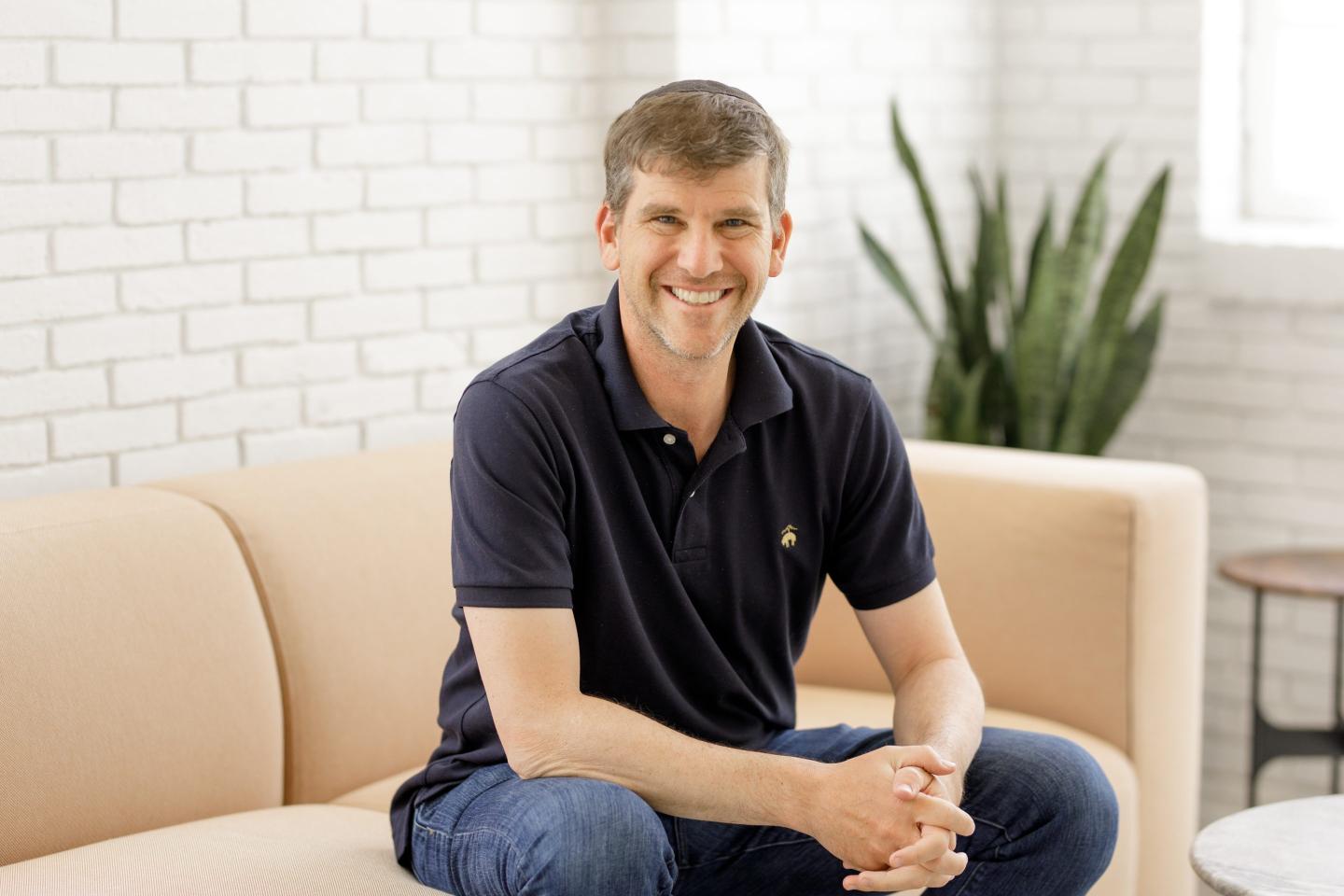
Michael Eisenberg is a general partner at Aleph.Courtesy of Michael Eisenberg

It’s only natural to focus on our individual interests and to rely on a transactional approach: to act only in immediate self-interest and assume others will do the same. Much of our current capitalist system relies on this idea. But the truth is that contractual thinking can only take us so far–and in true moments of disaster, it can lead to ruin. Conversely, covenantal thinking can keep us all afloat.

The great moralist and philosopher, the late Chief Rabbi of the United Kingdom Rabbi Lord Jonathan Sacks powerfully explained the difference between a contract and a covenant.

“In a contract, two or more people come together, each pursuing their self-interest, to make a mutually advantageous exchange. In a covenant, two or more people, each respecting the dignity and integrity of the other, come together in a bond of loyalty and trust to do together what neither can achieve alone. It isn’t an exchange; it’s a moral commitment. It is more like a marriage than a commercial transaction. Contracts are about interests; covenants are about identity. Contracts benefit; covenants transform. Contracts are about Me and You; covenants are about Us,” Sacks wrote.

Recently, I was discussing this concept of covenantal capitalism with a group of Harvard students. I asked a student named Jess from a small town in New Zealand whether there was a local bakery in her neighborhood, and she said yes, but explained the bakery had closed down during the pandemic and hadn’t reopened. I asked what happened. She said, “Well, people weren’t going out of their homes, the bakery had some supply chain issues and their customer base dwindled.” I asked her if she missed the bakery and, wistfully, she said yes.

I told her about our neighborhood bakery in Jerusalem, which faced similar challenges during the pandemic. However, there was one meaningful difference in our community: Dozens of families banded together and pre-purchased tens if not hundreds of thousands of dollars of baked goods so the bakery could get through the pandemic and we could benefit from the bakery after the pandemic was over.

This bakery is a staple in our neighborhood. The owners are our brothers and sisters. Before every Passover when the bakery closes its doors for the holiday, my wife bakes cheesecake brownies for them as a sign of mutuality. The people–we, us–had a covenant with the bakery, our neighbors, and our community. As a result of our approach, the bakery survived and we all reaped the benefits together. And, when inflation hit, they were slower to raise prices than everyone else. When we have family events, they turn up with food.

That’s one small example, but it shows how a shift towards covenantal capitalism is possible–and how that shift can provide good results for everyone involved. Whether we’re talking about consumer goods, small businesses like neighborhood bakeries, or something as large and complex as banking and the financial sector, it’s easy to understand how an agreement between people and businesses to support one another in challenging times can deepen relationships and make economic progress more expansive and durable. Over time, it may even be more profitable.

After all, covenants are designed for the long term. They grow the pie rather than redistribute it. They are inclusive rather than exclusive. They assume predictability of response and responsibility because the people who engage in them are bound by a bedrock of common norms. The covenant further assumes that if we work together and trust each other, we can build something bigger than ourselves.

The notion that capitalism should be based on a covenantal foundation is not entirely new. Adam Smith’s brewer and baker, working in their own self-interest to propel the economy, were part of a Protestant community infrastructure. Writing about the great philosopher and writer on America, Alexis de Tocqueville, political science scholar Barbara Allen pointed out that America was founded on a covenant.

“The principles of covenant ultimately provided the institutional and conceptual foundation of constitutional government, making America’s federal democracy less vulnerable to possessive individualism and democratic despotism,” Allen noted in Alexis de Tocqueville on the Covenantal Tradition of American Federal Democracy.

For many people, a covenant may sound religious in nature. And while religious thinking and politics may not mix well, faith and business are certainly inextricably linked. In fact, the biblical exhortation about brotherhood–“you must uphold him (your brother),” (Leviticus 25”35)–is commanded in the covenantal context of ensuring economic prosperity. In practice, banks, currencies, investment, and growth require the bonds, commitment, and trust that a covenant provides.

If we want to maintain our institutions, we need to recommit to a communal and national set of covenants based on fundamental shared values. We must be willing to invest capital, time, and effort–and to trust others to do the same. We need to go back to first principles–and create a covenantal capitalism that works for everyone.

Michael Eisenberg is a general partner at Aleph and the author of The Tree of Life and Prosperity: 21st Century Business Principles from the Book of Genesis.

The opinions expressed in Fortune.com commentary pieces are solely the views of their authors and do not necessarily reflect the opinions and beliefs of Fortune.

More must-read commentary published by Fortune:

  • IBM CEO: ‘Today’s workforce should prepare to work hand in hand with A.I.’
  • Is it smart to be a ‘stupid genius’ like Elon Musk?
  • Credit scoring is pseudoscience–and it perpetuates the consequences of slavery and segregation
  • America’s ‘disease burden’ is getting heavier by the day–and it’s unevenly distributed across states
Join us at the Fortune Workplace Innovation Summit May 19–20, 2026, in Atlanta. The next era of workplace innovation is here—and the old playbook is being rewritten. At this exclusive, high-energy event, the world’s most innovative leaders will convene to explore how AI, humanity, and strategy converge to redefine, again, the future of work. Register now.
About the Author
By Michael Eisenberg
See full bioRight Arrow Button Icon

Latest in Commentary

Finance
Lorem ipsum dolor sit amet, consectetur adipiscing elit, sed do eiusmod tempor incididunt ut labore et dolore magna aliqua. Ut enim ad minim veniam
By Fortune Editors
October 20, 2025
Finance
Lorem ipsum dolor sit amet, consectetur adipiscing elit, sed do eiusmod tempor incididunt ut labore et dolore magna aliqua. Ut enim ad minim veniam
By Fortune Editors
October 20, 2025
Finance
Lorem ipsum dolor sit amet, consectetur adipiscing elit, sed do eiusmod tempor incididunt ut labore et dolore magna aliqua. Ut enim ad minim veniam
By Fortune Editors
October 20, 2025
Finance
Lorem ipsum dolor sit amet, consectetur adipiscing elit, sed do eiusmod tempor incididunt ut labore et dolore magna aliqua. Ut enim ad minim veniam
By Fortune Editors
October 20, 2025
Finance
Lorem ipsum dolor sit amet, consectetur adipiscing elit, sed do eiusmod tempor incididunt ut labore et dolore magna aliqua. Ut enim ad minim veniam
By Fortune Editors
October 20, 2025
Finance
Lorem ipsum dolor sit amet, consectetur adipiscing elit, sed do eiusmod tempor incididunt ut labore et dolore magna aliqua. Ut enim ad minim veniam
By Fortune Editors
October 20, 2025

Most Popular

Finance
Lorem ipsum dolor sit amet, consectetur adipiscing elit, sed do eiusmod tempor incididunt ut labore et dolore magna aliqua. Ut enim ad minim veniam
By Fortune Editors
October 20, 2025
Finance
Lorem ipsum dolor sit amet, consectetur adipiscing elit, sed do eiusmod tempor incididunt ut labore et dolore magna aliqua. Ut enim ad minim veniam
By Fortune Editors
October 20, 2025
Finance
Lorem ipsum dolor sit amet, consectetur adipiscing elit, sed do eiusmod tempor incididunt ut labore et dolore magna aliqua. Ut enim ad minim veniam
By Fortune Editors
October 20, 2025
Finance
Lorem ipsum dolor sit amet, consectetur adipiscing elit, sed do eiusmod tempor incididunt ut labore et dolore magna aliqua. Ut enim ad minim veniam
By Fortune Editors
October 20, 2025
Finance
Lorem ipsum dolor sit amet, consectetur adipiscing elit, sed do eiusmod tempor incididunt ut labore et dolore magna aliqua. Ut enim ad minim veniam
By Fortune Editors
October 20, 2025
Finance
Lorem ipsum dolor sit amet, consectetur adipiscing elit, sed do eiusmod tempor incididunt ut labore et dolore magna aliqua. Ut enim ad minim veniam
By Fortune Editors
October 20, 2025
Fortune Secondary Logo
Rankings
  • 100 Best Companies
  • Fortune 500
  • Global 500
  • Fortune 500 Europe
  • Most Powerful Women
  • World's Most Admired Companies
  • See All Rankings
  • Lists Calendar
Sections
  • Finance
  • Fortune Crypto
  • Features
  • Leadership
  • Health
  • Commentary
  • Success
  • Retail
  • Mpw
  • Tech
  • Lifestyle
  • CEO Initiative
  • Asia
  • Politics
  • Conferences
  • Europe
  • Newsletters
  • Personal Finance
  • Environment
  • Magazine
  • Education
Customer Support
  • Frequently Asked Questions
  • Customer Service Portal
  • Privacy Policy
  • Terms Of Use
  • Single Issues For Purchase
  • International Print
Commercial Services
  • Advertising
  • Fortune Brand Studio
  • Fortune Analytics
  • Fortune Conferences
  • Business Development
  • Group Subscriptions
About Us
  • About Us
  • Press Center
  • Work At Fortune
  • Terms And Conditions
  • Site Map
  • About Us
  • Press Center
  • Work At Fortune
  • Terms And Conditions
  • Site Map
  • Facebook icon
  • Twitter icon
  • LinkedIn icon
  • Instagram icon
  • Pinterest icon

Latest in Commentary

turner
CommentaryMedia
Ted Turner built the original infinite scroll. The attention economy is running on his playbook 
By Nick LichtenbergMay 12, 2026
8 hours ago
klein
CommentarySoftware
SAP CEO: the AI race is being fought in the wrong place 
By Christian KleinMay 12, 2026
14 hours ago
longevity
CommentaryLongevity
Your employees are going to live to 100. Is your benefits package ready?
By Kate Winget and Anthea Tjuanakis CoxMay 12, 2026
15 hours ago
AI strategy
CommentaryStrategy
Your company already has an AI strategy. You just didn’t choose it
By Tomas Chamorro-Premuzic, Tami Rosen and Darko LovricMay 12, 2026
16 hours ago
drew
CommentaryDefense
I helped build the Pentagon’s AI transformation. Corporate America is making every mistake we almost made
By Drew CukorMay 11, 2026
2 days ago
250
Commentary250 Years of Innovation
America’s true innovation advantage: we don’t just invent technologies — we reinvent how innovation works
By David H. HsuMay 11, 2026
2 days ago

Most Popular

Forget U.S. debt, China's total borrowing is in 'a league of its own'—much worse and deteriorating faster, analyst says
Economy
Forget U.S. debt, China's total borrowing is in 'a league of its own'—much worse and deteriorating faster, analyst says
By Jason MaMay 11, 2026
1 day ago
The Bezos family just donated $100 million to help achieve one of Mayor Zohran Mamdani’s top campaign promises
Politics
The Bezos family just donated $100 million to help achieve one of Mayor Zohran Mamdani’s top campaign promises
By Jake AngeloMay 12, 2026
7 hours ago
U.S. hotels are calling the World Cup a 'non-event' and 80% warn bookings are falling short of expectations, report finds
North America
U.S. hotels are calling the World Cup a 'non-event' and 80% warn bookings are falling short of expectations, report finds
By Sasha RogelbergMay 12, 2026
19 hours ago
Microsoft’s CFO admits she joined the tech giant without even knowing her salary—and then missed her first day of work
Success
Microsoft’s CFO admits she joined the tech giant without even knowing her salary—and then missed her first day of work
By Preston ForeMay 11, 2026
1 day ago
OpenAI CEO Sam Altman says Gen Z and millennials are using ChatGPT like a 'life advisor'—but college students might be one step ahead
Tech
OpenAI CEO Sam Altman says Gen Z and millennials are using ChatGPT like a 'life advisor'—but college students might be one step ahead
By Sydney LakeMay 10, 2026
3 days ago
Trump Mobile quietly rewrote its fine print to say the gold Trump phone may never be made, a year after taking $100 deposits
North America
Trump Mobile quietly rewrote its fine print to say the gold Trump phone may never be made, a year after taking $100 deposits
By Marco Quiroz-GutierrezMay 11, 2026
1 day ago

© 2026 Fortune Media IP Limited. All Rights Reserved. Use of this site constitutes acceptance of our Terms of Use and Privacy Policy | CA Notice at Collection and Privacy Notice | Do Not Sell/Share My Personal Information
FORTUNE is a trademark of Fortune Media IP Limited, registered in the U.S. and other countries. FORTUNE may receive compensation for some links to products and services on this website. Offers may be subject to change without notice.