• Home
  • Latest
  • Fortune 500
  • Finance
  • Tech
  • Leadership
  • Lifestyle
  • Rankings
  • Multimedia
Commentary

Curtains for conglomerates: Will smaller companies drive bigger returns?

By
Simon Mainwaring
Simon Mainwaring
Down Arrow Button Icon
By
Simon Mainwaring
Simon Mainwaring
Down Arrow Button Icon
December 2, 2021, 12:36 PM ET
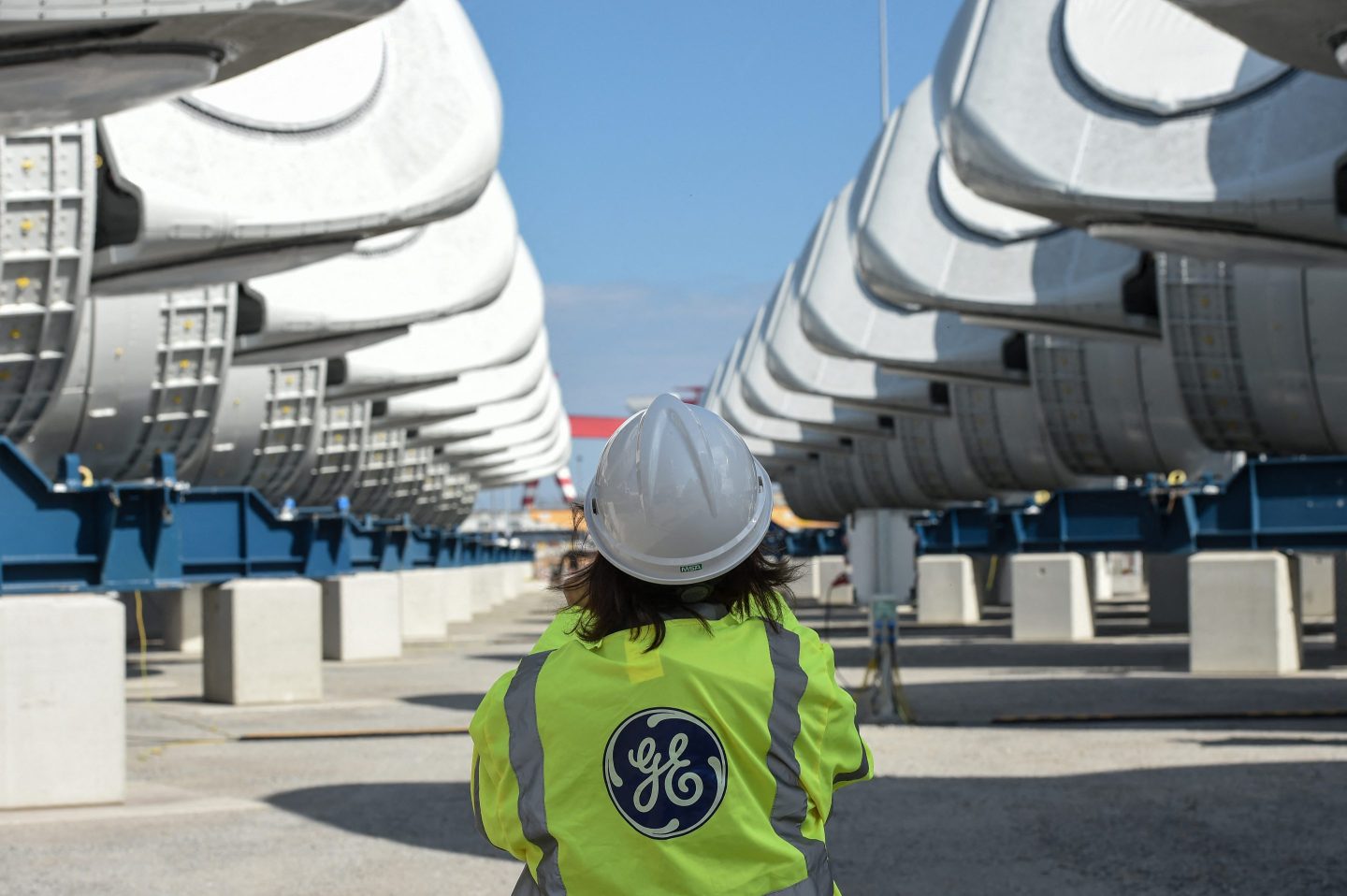
Johnson & Johnson and GE are only the latest in a long list of corporate behemoths who have decided to break up their operations into distinct units.
Johnson & Johnson and GE are only the latest in a long list of corporate behemoths who have decided to break up their operations into distinct units.SEBASTIEN SALOM-GOMIS—Getty Images

In November, GE announced it would break up into three divisions, Johnson & Johnson decoupled its consumer business from its pharmaceutical and medical devices business, and Japan’s Toshiba spun off its energy infrastructure and electronic devices.

These three business behemoths are the latest in a convoy of conglomerates separating into smaller units over the past few years. GE was especially notable because, since its founding in 1892, it represented the epitome of corporate ambition. Wall Street cheered, mainly because the company’s shares have consistently underperformed for more than 20 years, especially since the financial meltdown of 2008.

Many market watchers are wondering: Is this the end of the industry juggernaut model? Can a company keep its fingers in multiple pies, and still stay viable? Did GE, for example, facing mounting losses, just throw in the towel? Or was the move more strategic?

Capital financing, resources, and personnel may well be optimized by distinguishing each line of business, with commensurate higher profits. The idea is that the collective bottom lines of the divorced entities will surpass what the original company could ever produce. The same is often true of conglomerates downsizing.

Amazon is a prime example in that its cloud services business, Amazon Web Services, could prove far more profitable and boast greatly increased valuation multiples if the company was to break up. This was true at Donaher Corp, Siemens, United Technologies, and Dupont over the past five years.

The market over the next few years will decide whether these most recent breakups were wise—and whether they will spell the end of the “corporate giant”.

From my standpoint as a business purpose and ethics thinker, I’m most interested in what this means for the hundreds of thousands of employees of these new entities.

Typically, I consult on internal culture and brand community architecture after an enterprise acquires another company and must therefore blend their purposes, cultures, and communications into a unified and effective whole. Think of how global giant Unilever’s portfolio integrated several purposeful brands (Seventh Generation, Ben & Jerry’s, Breyer’s, Hellmann’s, etc.) into a synergistic whole whose culture and attitude toward purpose, sustainability, and impact differed in subtle but substantive ways from each of those acquisitions.

In Unilever’s case, the children of the enterprise helped the parent company further its expansive sustainability strategies and initiatives, even vowing to divest itself of its unsustainable assets as it saw its largest growth deriving from the sustainable brands in its portfolio.

But here we have the opposite challenge. GE, for example, must reiterate its core purpose–To rise to the challenge of being a world that works–and its mission–To invent the next industrial era, to build, move, power, and cure the world–as drivers of its reorganization, lest the offshoots become too splintered from those purposeful intentions.

Before the practical breakup occurs, GE must communicate effectively to all its internal stakeholders what the split-up means for them, and how (honestly) they might be affected positively or negatively. It must listen to their concerns and understand wholly why GE people choose to work for GE.

Then it must put together a concrete action plan to reorient the internal cultures of the three distinct companies spawned by the split. Will they have subtly (or radically) different purposes, values, and cultures? Or will the overall GE enterprise still strongly inform the novel functions, expertise, and talents at each company? Ideally, the healthcare, aviation, and energy teams would express their own corresponding purposes both informed by, and strengthening, the overall enterprise purpose.

Meanwhile, investors should be on the lookout for the flight of key leadership and talent, as well as the speed and efficiency of the transition. The new companies should be on the lookout for more suitable investors and talent, based on the authentic expression of their revised purpose and values.

The companies themselves must further preempt problems with pre-launch and launch plans for each company to manage expectations of employees, customers, and investors, including the long-term ambition of each company. Again, I’d urge leadership to listen and co-create such foundational strategies with its internal constituents.

Will brand equity and reputation for GE dilute? Will competitors poach J&J talent? Will Toshiba lose ground? No one knows. But it is certain that a lack of adequate culture-building specific to each company will have dire consequences for all. However, done right, these dramatic moves could usher in the next great chapter in these corporations’ storied histories.

Simon Mainwaring is the founder & CEO of We First, a strategic consultancy for purpose-driven brands, and author of the Wall Street Journal bestseller LEAD WITH WE: The Business Revolution That Will Save Our Future. He’s a member of the Steering Committee of Sustainable Brands, the Forbes Business Council, and a fellow of the Royal Society of Arts. His book We First was a New York Times bestseller. He hosts the Lead With We podcast.

More must-read commentary published by Fortune:

  • We can’t walk blindly into the metaverse
  • Millennials and Gen Z are a growing force in investing. The market needs to catch up
  • Don’t let them tell you inflation is good for the poor. It’s not
  • Rise of the (fast food) robots: How labor shortages are accelerating automation
  • Why the U.K. doesn’t have its own Oprah

Subscribe to Fortune Daily to get essential business stories straight to your inbox each morning.
About the Author
By Simon Mainwaring
See full bioRight Arrow Button Icon

Latest in Commentary

Finance
Lorem ipsum dolor sit amet, consectetur adipiscing elit, sed do eiusmod tempor incididunt ut labore et dolore magna aliqua. Ut enim ad minim veniam
By Fortune Editors
October 20, 2025
Finance
Lorem ipsum dolor sit amet, consectetur adipiscing elit, sed do eiusmod tempor incididunt ut labore et dolore magna aliqua. Ut enim ad minim veniam
By Fortune Editors
October 20, 2025
Finance
Lorem ipsum dolor sit amet, consectetur adipiscing elit, sed do eiusmod tempor incididunt ut labore et dolore magna aliqua. Ut enim ad minim veniam
By Fortune Editors
October 20, 2025
Finance
Lorem ipsum dolor sit amet, consectetur adipiscing elit, sed do eiusmod tempor incididunt ut labore et dolore magna aliqua. Ut enim ad minim veniam
By Fortune Editors
October 20, 2025
Finance
Lorem ipsum dolor sit amet, consectetur adipiscing elit, sed do eiusmod tempor incididunt ut labore et dolore magna aliqua. Ut enim ad minim veniam
By Fortune Editors
October 20, 2025
Finance
Lorem ipsum dolor sit amet, consectetur adipiscing elit, sed do eiusmod tempor incididunt ut labore et dolore magna aliqua. Ut enim ad minim veniam
By Fortune Editors
October 20, 2025

Most Popular

Finance
Lorem ipsum dolor sit amet, consectetur adipiscing elit, sed do eiusmod tempor incididunt ut labore et dolore magna aliqua. Ut enim ad minim veniam
By Fortune Editors
October 20, 2025
Finance
Lorem ipsum dolor sit amet, consectetur adipiscing elit, sed do eiusmod tempor incididunt ut labore et dolore magna aliqua. Ut enim ad minim veniam
By Fortune Editors
October 20, 2025
Finance
Lorem ipsum dolor sit amet, consectetur adipiscing elit, sed do eiusmod tempor incididunt ut labore et dolore magna aliqua. Ut enim ad minim veniam
By Fortune Editors
October 20, 2025
Finance
Lorem ipsum dolor sit amet, consectetur adipiscing elit, sed do eiusmod tempor incididunt ut labore et dolore magna aliqua. Ut enim ad minim veniam
By Fortune Editors
October 20, 2025
Finance
Lorem ipsum dolor sit amet, consectetur adipiscing elit, sed do eiusmod tempor incididunt ut labore et dolore magna aliqua. Ut enim ad minim veniam
By Fortune Editors
October 20, 2025
Finance
Lorem ipsum dolor sit amet, consectetur adipiscing elit, sed do eiusmod tempor incididunt ut labore et dolore magna aliqua. Ut enim ad minim veniam
By Fortune Editors
October 20, 2025
Rankings
  • 100 Best Companies
  • Fortune 500
  • Global 500
  • Fortune 500 Europe
  • Most Powerful Women
  • Future 50
  • World’s Most Admired Companies
  • See All Rankings
Sections
  • Finance
  • Leadership
  • Success
  • Tech
  • Asia
  • Europe
  • Environment
  • Fortune Crypto
  • Health
  • Retail
  • Lifestyle
  • Politics
  • Newsletters
  • Magazine
  • Features
  • Commentary
  • Mpw
  • CEO Initiative
  • Conferences
  • Personal Finance
  • Education
Customer Support
  • Frequently Asked Questions
  • Customer Service Portal
  • Privacy Policy
  • Terms Of Use
  • Single Issues For Purchase
  • International Print
Commercial Services
  • Advertising
  • Fortune Brand Studio
  • Fortune Analytics
  • Fortune Conferences
  • Business Development
About Us
  • About Us
  • Editorial Calendar
  • Press Center
  • Work At Fortune
  • Diversity And Inclusion
  • Terms And Conditions
  • Site Map
  • Facebook icon
  • Twitter icon
  • LinkedIn icon
  • Instagram icon
  • Pinterest icon

Most Popular

placeholder alt text
Politics
Peter Thiel warns the Antichrist and apocalypse are linked to the ‘end of modernity’ currently happening—and cites Greta Thunberg as a driving example
By Nick LichtenbergFebruary 4, 2026
1 day ago
placeholder alt text
Success
After decades in the music industry, Pharrell Williams admits he never stops working: ‘If you do what you love everyday, you’ll get paid for free'
By Emma BurleighFebruary 3, 2026
2 days ago
placeholder alt text
Investing
Ray Dalio warns the world is ‘on the brink’ of a capital war of weaponizing money—and gold is the best way for people to protect themselves
By Sasha RogelbergFebruary 4, 2026
1 day ago
placeholder alt text
Investing
Tech stocks go into free fall as it dawns on traders that AI has the ability to cut revenues across the board
By Jim EdwardsFebruary 4, 2026
2 days ago
placeholder alt text
Crypto
Bitcoin demand in Nancy Guthrie disappearance shows how crypto is becoming a more frequent feature of physical crimes
By Carlos GarciaFebruary 4, 2026
1 day ago
placeholder alt text
Economy
Trump may have shot himself in the foot at the Fed, as Powell could stay on while Miran resigns from White House post
By Eleanor PringleFebruary 4, 2026
1 day ago

© 2026 Fortune Media IP Limited. All Rights Reserved. Use of this site constitutes acceptance of our Terms of Use and Privacy Policy | CA Notice at Collection and Privacy Notice | Do Not Sell/Share My Personal Information
FORTUNE is a trademark of Fortune Media IP Limited, registered in the U.S. and other countries. FORTUNE may receive compensation for some links to products and services on this website. Offers may be subject to change without notice.


Latest in Commentary

desantis
CommentaryLeadership
Understanding corporate leaders’ muted Minnesota response: the example of Disney, Florida and conservative retaliation
By Alessandro Piazza and The ConversationFebruary 5, 2026
10 hours ago
grace
CommentaryRobotics
I’m a 25-year-old founder who loves robots but too many humanoids are militant and creepy-looking. Things need to change—just look at Elon Musk
By Grace BrownFebruary 5, 2026
13 hours ago
sam wolf
Commentaryactivist investing
Activist investors are more dangerous to CEOs than ever. Here are 3 ways to safeguard your leadership
By Sam WolfFebruary 5, 2026
14 hours ago
warsh
CommentaryFederal Reserve
Kevin Warsh’s Fed criticisms make sense, but he’s got a ‘cleanest dirty shirt’ problem. Here’s the triple dilemma he faces
By Daniel J. ArbessFebruary 5, 2026
14 hours ago
disney
CommentaryDisney
Disney’s new D’Amaro-land:  a dream team succession saga comes to life
By Jeffrey Sonnenfeld and Stephen HenriquesFebruary 4, 2026
1 day ago
minnesota
CommentaryMinnesota
I’ve studied nonviolent resistance in war zones for 20 years and Minnesota reminds me of Colombia, the Philippines and Syria
By Oliver Kaplan and The ConversationFebruary 3, 2026
2 days ago