

• Home
  • Latest
  • Fortune 500
  • Finance
  • Tech
  • Leadership
  • Lifestyle
  • Rankings
  • Multimedia
Environmentclimate change

Keeping tabs on climate promises: 2050 is closer than it appears

Geoff Colvin
By
Geoff Colvin
Geoff Colvin
Senior Editor-at-Large
Down Arrow Button Icon
Geoff Colvin
By
Geoff Colvin
Geoff Colvin
Senior Editor-at-Large
Down Arrow Button Icon
June 22, 2021, 3:01 PM ET
A Shell petroleum refinery off Bukom island in Singapore on June 14, 2021.
A Shell petroleum refinery off Bukom island in Singapore on June 14, 2021. Roslan Rahman—AFP/Getty Images

This story is part of The Path to Zero, a series of special reports on how business can lead the fight against climate change. This quarter’s stories go in depth on sustainability in supply chains.

With just 28 and a half years to go, many companies that have pledged to reach net-zero carbon emissions by 2050 are running out of time. 

It’s hard to believe. In a world that produced multiple effective COVID-19 vaccines in 10 months rather than the usual 10 years, what scientific challenge is beyond a concerted effort with almost three decades of runway? 

Yet when it comes to carbon emissions, the challenges are unique for each company—Nestlé, Dell Technologies, British Airways, Cemex, Royal Dutch Shell, and the many others that have made 2050 pledges must all find their own paths to net zero. And for each company, getting from here to there requires more than technology. It also demands innovative finance, operations, lobbying, and negotiating with suppliers and customers in an ever-shifting global economy. For some companies, 28 and a half years may not be enough.

To see why the challenges are so formidable, consider the two major issues that will be decisive in judging whether any business can keep its climate promises. One is how realistically it defines its goals. The other is how it achieves its results.

The first issue is crucial. At the least ambitious level of accounting for emissions, known as scope 1, a company measures only the carbon emissions in the operations under its own control. At scope 2, the company also accounts for emissions from the energy it buys, mainly electricity. At the most ambitious level, scope 3, the company includes the emissions upstream in its supply chain and downstream resulting from the use of its products—and typically that’s where most of the emissions are. “At Microsoft we expect to emit 16 million metric tons of carbon this year,” president Brad Smith wrote in a 2020 blog post. “Of this total, about 100,000 are scope 1 emissions, and about 4 million are scope 2 emissions. The remaining 12 million tons all fall into scope 3.”

No wonder that “a lot of organizations are not looking at scope 3,” says John Sterman, an MIT professor who researches environmental sustainability. But those organizations are not being realistic, in his view. “There’s a long, long way to go in terms of people facing up to the actual carbon footprint of their business,” he says. 

The good news is that, at least on the upstream side, companies can significantly reduce scope 3 emissions by using “readily available and affordable levers, such as circularity, efficiency, and renewable power,” says a new report from the World Economic Forum. The researchers find that in the eight supply chains that account for over half of global emissions—food and construction account for 35%—“even with zero supply chain emissions, end-consumer costs would go up by 1% to 4% at the most in the medium term.”
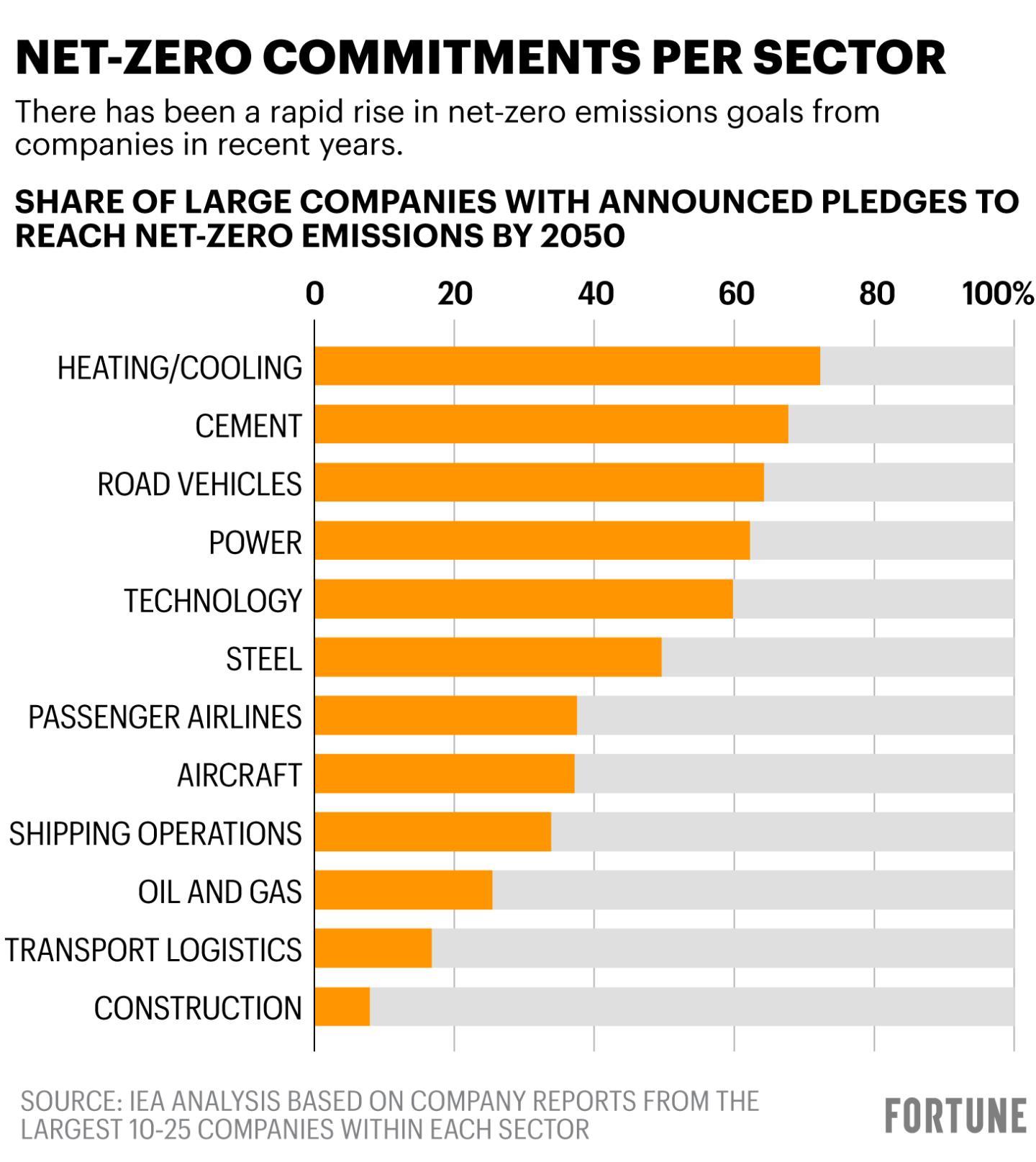
The tougher problem is downstream, where customers use a company’s products. The clearest example is oil and gas producers; the emissions from customers using their products overwhelm the emissions from producing them. Should the companies be responsible for emissions from the world’s cars, trucks, and planes? 

Most of the industry has long said no, but mainstream opinion is moving against them. Last month Chevron shareholders approved a resolution calling on the company to reduce its scope 3 emissions. That same day, a Dutch court ordered Shell to cut CO2 emissions 45% from their 2019 level by 2030, explicitly including emissions from “the suppliers and customers of the group.”

By contrast, BP—a distinct outlier in the industry—is trying to get ahead of prevailing opinion. Last year CEO Bernard Looney said that by 2030 BP would voluntarily cut oil and gas production 40% from 2019 levels while increasing investment in renewable energy, biofuels, hydrogen, and carbon capture and storage technology.

This raises the second big issue for companies making net-zero pledges: how they intend to keep their promises. The obvious way is to reduce emissions directly at all three scope levels. But there’s another way, which is to buy carbon offsets from projects that reduce emissions, for example by funding a solar power plant. That’s the “net” in net zero. 
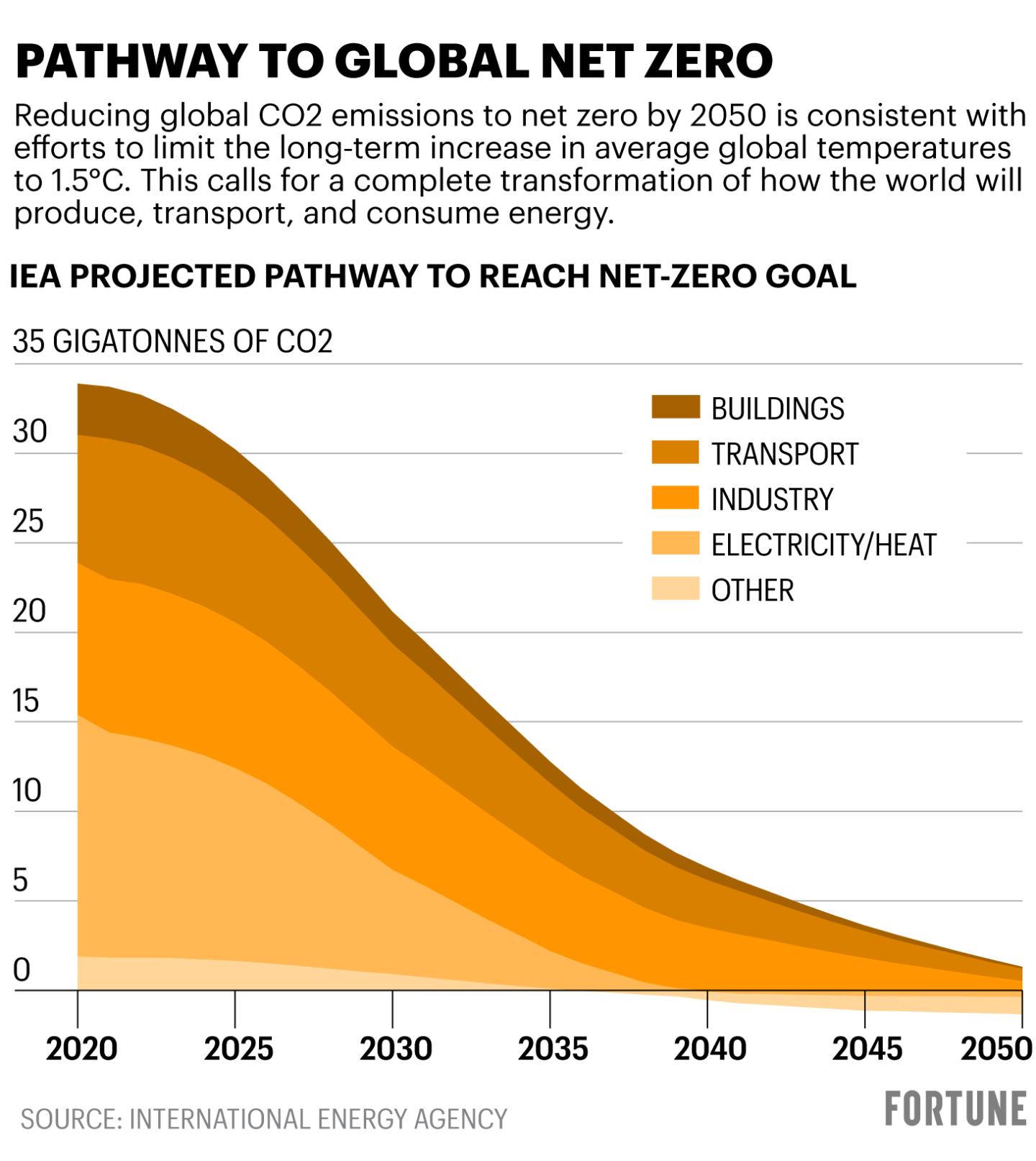
Trouble is, carbon offsets don’t always offset carbon. Builders of that solar power plant may sell carbon offsets, but if the builders would have built the plant anyway as solar power increasingly competes with conventional sources, then the offsets haven’t accomplished anything. They possess value only if a project wouldn’t have happened without them, which is often difficult for an outsider to discern. 

More broadly, offsets are only a temporary solution at best. “The reality is, there’s no way to meet the emissions reduction targets we have to meet if you don’t cut the emissions from burning of fossil fuels as quickly and as cheaply as possible,” says Sterman. Offsets play “an important role,” especially for companies like airlines that can’t significantly reduce emissions in the near term, says Ben Ratner, a lawyer and former McKinsey consultant who leads work on business energy transition at the Environmental Defense Fund. “But no company should use them as a delay tactic or a complete solution.” Constituents are paying attention. More than 1,000 Google employees signed a 2019 letter demanding the company cut its greenhouse gas emissions to zero by 2030, even though it had been carbon neutral, largely through the use of offsets, since 2007.

Companies that have made significant emissions reduction pledges face a stressful future, at least if they’re sincere about keeping their promises; the temptation to scale back targets can be powerful if progress seems too difficult or expensive. They can’t know for sure how they will reach their goals. As Microsoft acknowledged last year, achieving net-zero emissions will require “new technology that doesn’t exist today.” 

The danger is that a distant deadline will dampen the sense of urgency. Maybe those companies making 2050 pledges shouldn’t think they’ve got 28 and a half years. They should think instead they’ve got 1,500 weeks, and they’ll need to make progress in every one of them. 

More must-read stories from Fortune:

  • 20.9% of the world has received a COVID vaccine. See how your country is doing
  • The psychology behind why some leaders are resisting a hybrid work model
  • Plaid, Visa, and the best fintech deal that never happened
  • Price surge for steel will continue into 2022, predicts UBS
  • 2021’s Fortune 500

Subscribe to Fortune Daily to get essential business stories straight to your inbox each morning.

About the Author
Geoff Colvin
By Geoff ColvinSenior Editor-at-Large
LinkedIn iconTwitter icon

Geoff Colvin is a senior editor-at-large at Fortune, covering leadership, globalization, wealth creation, the infotech revolution, and related issues.

See full bioRight Arrow Button Icon

Latest in Environment

Finance
Lorem ipsum dolor sit amet, consectetur adipiscing elit, sed do eiusmod tempor incididunt ut labore et dolore magna aliqua. Ut enim ad minim veniam
By Fortune Editors
October 20, 2025
Finance
Lorem ipsum dolor sit amet, consectetur adipiscing elit, sed do eiusmod tempor incididunt ut labore et dolore magna aliqua. Ut enim ad minim veniam
By Fortune Editors
October 20, 2025
Finance
Lorem ipsum dolor sit amet, consectetur adipiscing elit, sed do eiusmod tempor incididunt ut labore et dolore magna aliqua. Ut enim ad minim veniam
By Fortune Editors
October 20, 2025
Finance
Lorem ipsum dolor sit amet, consectetur adipiscing elit, sed do eiusmod tempor incididunt ut labore et dolore magna aliqua. Ut enim ad minim veniam
By Fortune Editors
October 20, 2025
Finance
Lorem ipsum dolor sit amet, consectetur adipiscing elit, sed do eiusmod tempor incididunt ut labore et dolore magna aliqua. Ut enim ad minim veniam
By Fortune Editors
October 20, 2025
Finance
Lorem ipsum dolor sit amet, consectetur adipiscing elit, sed do eiusmod tempor incididunt ut labore et dolore magna aliqua. Ut enim ad minim veniam
By Fortune Editors
October 20, 2025

Most Popular

Finance
Lorem ipsum dolor sit amet, consectetur adipiscing elit, sed do eiusmod tempor incididunt ut labore et dolore magna aliqua. Ut enim ad minim veniam
By Fortune Editors
October 20, 2025
Finance
Lorem ipsum dolor sit amet, consectetur adipiscing elit, sed do eiusmod tempor incididunt ut labore et dolore magna aliqua. Ut enim ad minim veniam
By Fortune Editors
October 20, 2025
Finance
Lorem ipsum dolor sit amet, consectetur adipiscing elit, sed do eiusmod tempor incididunt ut labore et dolore magna aliqua. Ut enim ad minim veniam
By Fortune Editors
October 20, 2025
Finance
Lorem ipsum dolor sit amet, consectetur adipiscing elit, sed do eiusmod tempor incididunt ut labore et dolore magna aliqua. Ut enim ad minim veniam
By Fortune Editors
October 20, 2025
Finance
Lorem ipsum dolor sit amet, consectetur adipiscing elit, sed do eiusmod tempor incididunt ut labore et dolore magna aliqua. Ut enim ad minim veniam
By Fortune Editors
October 20, 2025
Finance
Lorem ipsum dolor sit amet, consectetur adipiscing elit, sed do eiusmod tempor incididunt ut labore et dolore magna aliqua. Ut enim ad minim veniam
By Fortune Editors
October 20, 2025
Fortune Secondary Logo
Rankings
  • 100 Best Companies
  • Fortune 500
  • Global 500
  • Fortune 500 Europe
  • Most Powerful Women
  • World's Most Admired Companies
  • See All Rankings
  • Lists Calendar
Sections
  • Finance
  • Fortune Crypto
  • Features
  • Leadership
  • Health
  • Commentary
  • Success
  • Retail
  • Mpw
  • Tech
  • Lifestyle
  • CEO Initiative
  • Asia
  • Politics
  • Conferences
  • Europe
  • Newsletters
  • Personal Finance
  • Environment
  • Magazine
  • Education
Customer Support
  • Frequently Asked Questions
  • Customer Service Portal
  • Privacy Policy
  • Terms Of Use
  • Single Issues For Purchase
  • International Print
Commercial Services
  • Advertising
  • Fortune Brand Studio
  • Fortune Analytics
  • Fortune Conferences
  • Business Development
  • Group Subscriptions
About Us
  • About Us
  • Press Center
  • Work At Fortune
  • Terms And Conditions
  • Site Map
  • About Us
  • Press Center
  • Work At Fortune
  • Terms And Conditions
  • Site Map
  • Facebook icon
  • Twitter icon
  • LinkedIn icon
  • Instagram icon
  • Pinterest icon

Latest in Environment

A large oil-exporting hub will be built in the deepwater Gulf of Mexico amid the Iran war—but only because Japan and the White House are paying for it
Energycrude oil
A large oil-exporting hub will be built in the deepwater Gulf of Mexico amid the Iran war—but only because Japan and the White House are paying for it
By Jordan BlumMay 8, 2026
2 days ago
An almond farmer inspects a fruit on a tree.
North AmericaAgriculture
California farmers must destroy 420,000 peach trees after Del Monte closes its canneries and cancels more than $550 million in long-term contracts
By Sasha RogelbergMay 7, 2026
2 days ago
bears
EnvironmentAlaska
Judge allows Alaska wildlife agents to resume shooting bears from helicopters to protect recovering caribou herd
By Becky Bohrer and The Associated PressMay 7, 2026
2 days ago
Debris from the White House East Wing demolition was dumped at a nearby public golf course and contains toxic metals, National Park report finds
PoliticsWhite House
Debris from the White House East Wing demolition was dumped at a nearby public golf course and contains toxic metals, National Park report finds
By Sasha RogelbergMay 7, 2026
3 days ago
ben
CommentaryFood and drink
Magnum owns Ben & Jerry’s. Now it’s destroying what made the brand worth buying
By David Bronner, Michael Bronner and Ryan GellertMay 7, 2026
3 days ago
At 75, Ted Turner told Fortune he gave himself 5 more years. He got 12—and spent them warning the world was ending
C-SuiteMedia
At 75, Ted Turner told Fortune he gave himself 5 more years. He got 12—and spent them warning the world was ending
By Ashley LutzMay 6, 2026
3 days ago

Most Popular

Ted Cruz says the quiet part out loud: Trump accounts are Social Security personal accounts as GOP senator reveals 'dirty little secret'
Politics
Ted Cruz says the quiet part out loud: Trump accounts are Social Security personal accounts as GOP senator reveals 'dirty little secret'
By Jason MaMay 9, 2026
7 hours ago
'Employers are increasingly turning to degree and GPA' in hiring: Recruiters retreat from ‘talent is everywhere,’ double down on top colleges
Future of Work
'Employers are increasingly turning to degree and GPA' in hiring: Recruiters retreat from ‘talent is everywhere,’ double down on top colleges
By Jake AngeloMay 9, 2026
11 hours ago
A Michigan farm town voted down plans for a giant OpenAI-Oracle data center. Weeks later, construction began
Magazine
A Michigan farm town voted down plans for a giant OpenAI-Oracle data center. Weeks later, construction began
By Sharon GoldmanMay 6, 2026
4 days ago
California farmers must destroy 420,000 peach trees after Del Monte closes its canneries and cancels more than $550 million in long-term contracts
North America
California farmers must destroy 420,000 peach trees after Del Monte closes its canneries and cancels more than $550 million in long-term contracts
By Sasha RogelbergMay 7, 2026
2 days ago
You're probably safe from the Hantavirus outbreak, but here's what you absolutely must not do, experts say
Politics
You're probably safe from the Hantavirus outbreak, but here's what you absolutely must not do, experts say
By Catherina GioinoMay 8, 2026
1 day ago
The CEO of Maersk, which ships 14% of everything you buy, said the Iran war is adding $500 million in monthly costs it's trying not to pass down
Energy
The CEO of Maersk, which ships 14% of everything you buy, said the Iran war is adding $500 million in monthly costs it's trying not to pass down
By Sasha RogelbergMay 8, 2026
1 day ago

© 2026 Fortune Media IP Limited. All Rights Reserved. Use of this site constitutes acceptance of our Terms of Use and Privacy Policy | CA Notice at Collection and Privacy Notice | Do Not Sell/Share My Personal Information
FORTUNE is a trademark of Fortune Media IP Limited, registered in the U.S. and other countries. FORTUNE may receive compensation for some links to products and services on this website. Offers may be subject to change without notice.