• Home
  • Latest
  • Fortune 500
  • Finance
  • Tech
  • Leadership
  • Lifestyle
  • Rankings
  • Multimedia
CommentaryCorporate Activism

Politicians empowered the very corporate activism they now face in Georgia

By
Tom C.W. Lin
Tom C.W. Lin
Down Arrow Button Icon
By
Tom C.W. Lin
Tom C.W. Lin
Down Arrow Button Icon
April 10, 2021, 7:00 AM ET
Delta planes on the tarmac at Hartsfield-Jackson Atlanta International Airport.
Delta planes on the tarmac at Hartsfield-Jackson Atlanta International Airport.Jeff Greenberg—Education Images/Universal Images Group/Getty Images

Georgia is on our minds. It has been on the minds of many politicians, executives, and citizens since the passage of a controversial election law that made it harder for many Georgians to vote. The ensuing response that followed from businesses like Delta Air Lines and Coca-Cola denouncing the new law has arguably caused as much controversy as the law itself. 

Lost in the cacophony of boycotts, counter-boycotts, pronouncements, and denouncements is the fact that the seeds of the corporate response to the Georgia election law were planted years ago. The corporate social activism happening in Georgia, and across America last summer for racial justice, can be traced back to decades of legal and political maneuverings to give businesses a greater role in government and politics. It is the result of decades of moves to privatize government services and solicit corporate political contributions.

The corporate-political Pandora’s box that was unlocked is now coming back to haunt those who worked so hard to pry it open in the first place. 

Ironically, some of the politicians who are complaining most loudly about businesses acting like “a woke parallel government” are the very politicians who worked so tirelessly for years through litigation, lobbying, and legislation to welcome businesses into the political arena. 

Those tireless efforts hit watershed points with the Supreme Court cases Citizens United and Hobby Lobby, in 2010 and 2014, respectively. With its holdings in those two cases, the Supreme Court effectively gave businesses the power to use corporate funds and resources to engage in political advocacy and social activism like never before. 

In the immediate years after those decisions, businesses used their newly aggrandized political influence to further push for lower taxes and less regulation. However, because the law gave corporations such great liberty and deference to engage in social and political advocacy, it was only natural that over time activists would try to leverage corporate powers for their interests. 

More recently, in a deft act of political jiujitsu, many progressives have increasingly leveraged the resources and influence of businesses to their advantage on some of the most contentious social fights of our time on issues like gun violence, racial justice, LGBTQ rights, and now voting rights. 

To be sure, many people are turning to the private sector for help on social and political challenges because they feel like the public sector has turned on them. Too often, sensible ideas and solutions backed by popular support go nowhere or do not even get a fair hearing in hyper-partisan chambers of power. 

People are looking to businesses for help, not because businesses are paragons of virtue and fairness, but because they possess power and are responsive. Businesses respond to the concerns of their customers, investors, employees, and communities in ways that our political institutions seem unwilling or unable to these days. A recent Edelman study revealed that businesses were the only institutions trusted and seen as competent and ethical by a majority of Americans.

Many businesses have embraced their role as good responsible corporate citizens. But, understandably, this new corporate social activism has made many people uncomfortable, fearing that the divisiveness of politics will spill over into the marketplace. 

If political leaders seriously want to end this new wave of corporate social activism, there are two simple but not easy steps that they can take to stem the rising tide. 

One, if they are truly wary of corporate influence in government, then they should reduce corporate influence in government. To start, they should stop the deluge of corporate political contributions. Politicians should stop seeking and accepting them. 

Two, politicians can help make our political institutions work better. To start, let people vote, listen to them, and pass sensible laws. People will be less inclined to leverage corporations to amplify their voices if they feel like they are being heard by their political institutions. 

Until these steps are pursued in earnest, the corporate response and fallout in Georgia will be the new, complicated normal for business and politics. 

Tom C.W. Lin is a law professor at Temple University and the author of the forthcoming book The Capitalist and the Activist: Corporate Social Activism and the New Business of Change.


About the Author
By Tom C.W. Lin
See full bioRight Arrow Button Icon

Latest in Commentary

Finance
Lorem ipsum dolor sit amet, consectetur adipiscing elit, sed do eiusmod tempor incididunt ut labore et dolore magna aliqua. Ut enim ad minim veniam
By Fortune Editors
October 20, 2025
Finance
Lorem ipsum dolor sit amet, consectetur adipiscing elit, sed do eiusmod tempor incididunt ut labore et dolore magna aliqua. Ut enim ad minim veniam
By Fortune Editors
October 20, 2025
Finance
Lorem ipsum dolor sit amet, consectetur adipiscing elit, sed do eiusmod tempor incididunt ut labore et dolore magna aliqua. Ut enim ad minim veniam
By Fortune Editors
October 20, 2025
Finance
Lorem ipsum dolor sit amet, consectetur adipiscing elit, sed do eiusmod tempor incididunt ut labore et dolore magna aliqua. Ut enim ad minim veniam
By Fortune Editors
October 20, 2025
Finance
Lorem ipsum dolor sit amet, consectetur adipiscing elit, sed do eiusmod tempor incididunt ut labore et dolore magna aliqua. Ut enim ad minim veniam
By Fortune Editors
October 20, 2025
Finance
Lorem ipsum dolor sit amet, consectetur adipiscing elit, sed do eiusmod tempor incididunt ut labore et dolore magna aliqua. Ut enim ad minim veniam
By Fortune Editors
October 20, 2025

Most Popular

Finance
Lorem ipsum dolor sit amet, consectetur adipiscing elit, sed do eiusmod tempor incididunt ut labore et dolore magna aliqua. Ut enim ad minim veniam
By Fortune Editors
October 20, 2025
Finance
Lorem ipsum dolor sit amet, consectetur adipiscing elit, sed do eiusmod tempor incididunt ut labore et dolore magna aliqua. Ut enim ad minim veniam
By Fortune Editors
October 20, 2025
Finance
Lorem ipsum dolor sit amet, consectetur adipiscing elit, sed do eiusmod tempor incididunt ut labore et dolore magna aliqua. Ut enim ad minim veniam
By Fortune Editors
October 20, 2025
Finance
Lorem ipsum dolor sit amet, consectetur adipiscing elit, sed do eiusmod tempor incididunt ut labore et dolore magna aliqua. Ut enim ad minim veniam
By Fortune Editors
October 20, 2025
Finance
Lorem ipsum dolor sit amet, consectetur adipiscing elit, sed do eiusmod tempor incididunt ut labore et dolore magna aliqua. Ut enim ad minim veniam
By Fortune Editors
October 20, 2025
Finance
Lorem ipsum dolor sit amet, consectetur adipiscing elit, sed do eiusmod tempor incididunt ut labore et dolore magna aliqua. Ut enim ad minim veniam
By Fortune Editors
October 20, 2025
Rankings
  • 100 Best Companies
  • Fortune 500
  • Global 500
  • Fortune 500 Europe
  • Most Powerful Women
  • Future 50
  • World’s Most Admired Companies
  • See All Rankings
Sections
  • Finance
  • Leadership
  • Success
  • Tech
  • Asia
  • Europe
  • Environment
  • Fortune Crypto
  • Health
  • Retail
  • Lifestyle
  • Politics
  • Newsletters
  • Magazine
  • Features
  • Commentary
  • Mpw
  • CEO Initiative
  • Conferences
  • Personal Finance
  • Education
Customer Support
  • Frequently Asked Questions
  • Customer Service Portal
  • Privacy Policy
  • Terms Of Use
  • Single Issues For Purchase
  • International Print
Commercial Services
  • Advertising
  • Fortune Brand Studio
  • Fortune Analytics
  • Fortune Conferences
  • Business Development
About Us
  • About Us
  • Editorial Calendar
  • Press Center
  • Work At Fortune
  • Diversity And Inclusion
  • Terms And Conditions
  • Site Map
  • Facebook icon
  • Twitter icon
  • LinkedIn icon
  • Instagram icon
  • Pinterest icon

Most Popular

placeholder alt text
Economy
Trump may have shot himself in the foot at the Fed, as Powell could stay on while Miran resigns from White House post
By Eleanor PringleFebruary 4, 2026
1 day ago
placeholder alt text
Politics
Peter Thiel warns the Antichrist and apocalypse are linked to the ‘end of modernity’ currently happening—and cites Greta Thunberg as a driving example
By Nick LichtenbergFebruary 4, 2026
1 day ago
placeholder alt text
Success
After decades in the music industry, Pharrell Williams admits he never stops working: ‘If you do what you love everyday, you’ll get paid for free'
By Emma BurleighFebruary 3, 2026
2 days ago
placeholder alt text
Investing
Tech stocks go into free fall as it dawns on traders that AI has the ability to cut revenues across the board
By Jim EdwardsFebruary 4, 2026
1 day ago
placeholder alt text
Commentary
I've studied nonviolent resistance in war zones for 20 years and Minnesota reminds me of Colombia, the Philippines and Syria
By Oliver Kaplan and The ConversationFebruary 3, 2026
2 days ago
placeholder alt text
Investing
Ray Dalio warns the world is ‘on the brink’ of a capital war of weaponizing money—and gold is the best way for people to protect themselves
By Sasha RogelbergFebruary 4, 2026
1 day ago

© 2026 Fortune Media IP Limited. All Rights Reserved. Use of this site constitutes acceptance of our Terms of Use and Privacy Policy | CA Notice at Collection and Privacy Notice | Do Not Sell/Share My Personal Information
FORTUNE is a trademark of Fortune Media IP Limited, registered in the U.S. and other countries. FORTUNE may receive compensation for some links to products and services on this website. Offers may be subject to change without notice.


Latest in Commentary

desantis
CommentaryLeadership
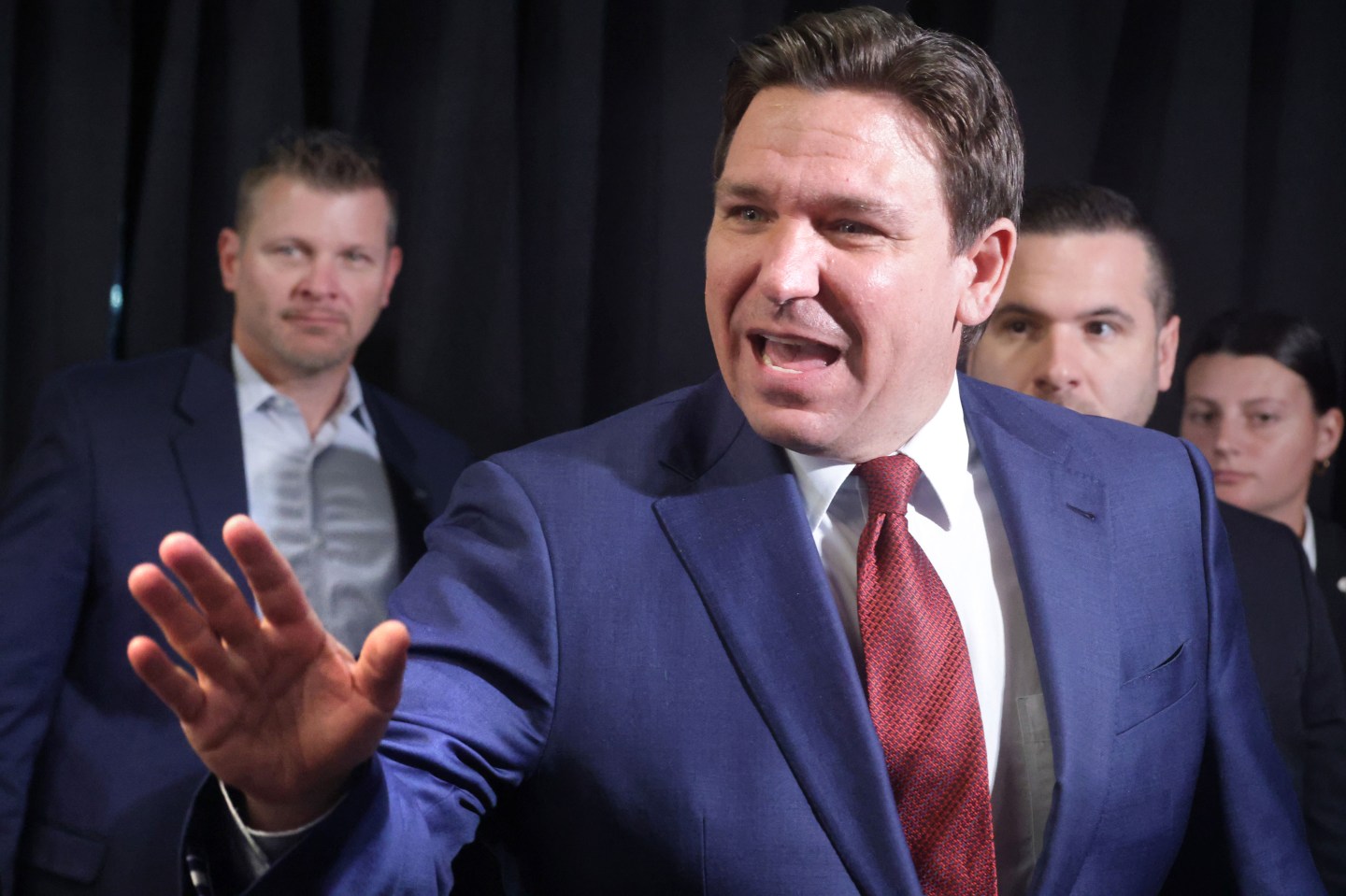
Understanding corporate leaders’ muted Minnesota response: the example of Disney, Florida and conservative retaliation
By Alessandro Piazza and The ConversationFebruary 5, 2026
4 hours ago
grace
CommentaryRobotics
I’m a 25-year-old founder who loves robots but too many humanoids are militant and creepy-looking. Things need to change—just look at Elon Musk
By Grace BrownFebruary 5, 2026
7 hours ago
sam wolf
Commentaryactivist investing
Activist investors are more dangerous to CEOs than ever. Here are 3 ways to safeguard your leadership
By Sam WolfFebruary 5, 2026
8 hours ago
warsh
CommentaryFederal Reserve
Kevin Warsh’s Fed criticisms make sense, but he’s got a ‘cleanest dirty shirt’ problem. Here’s the triple dilemma he faces
By Daniel J. ArbessFebruary 5, 2026
8 hours ago
disney
CommentaryDisney
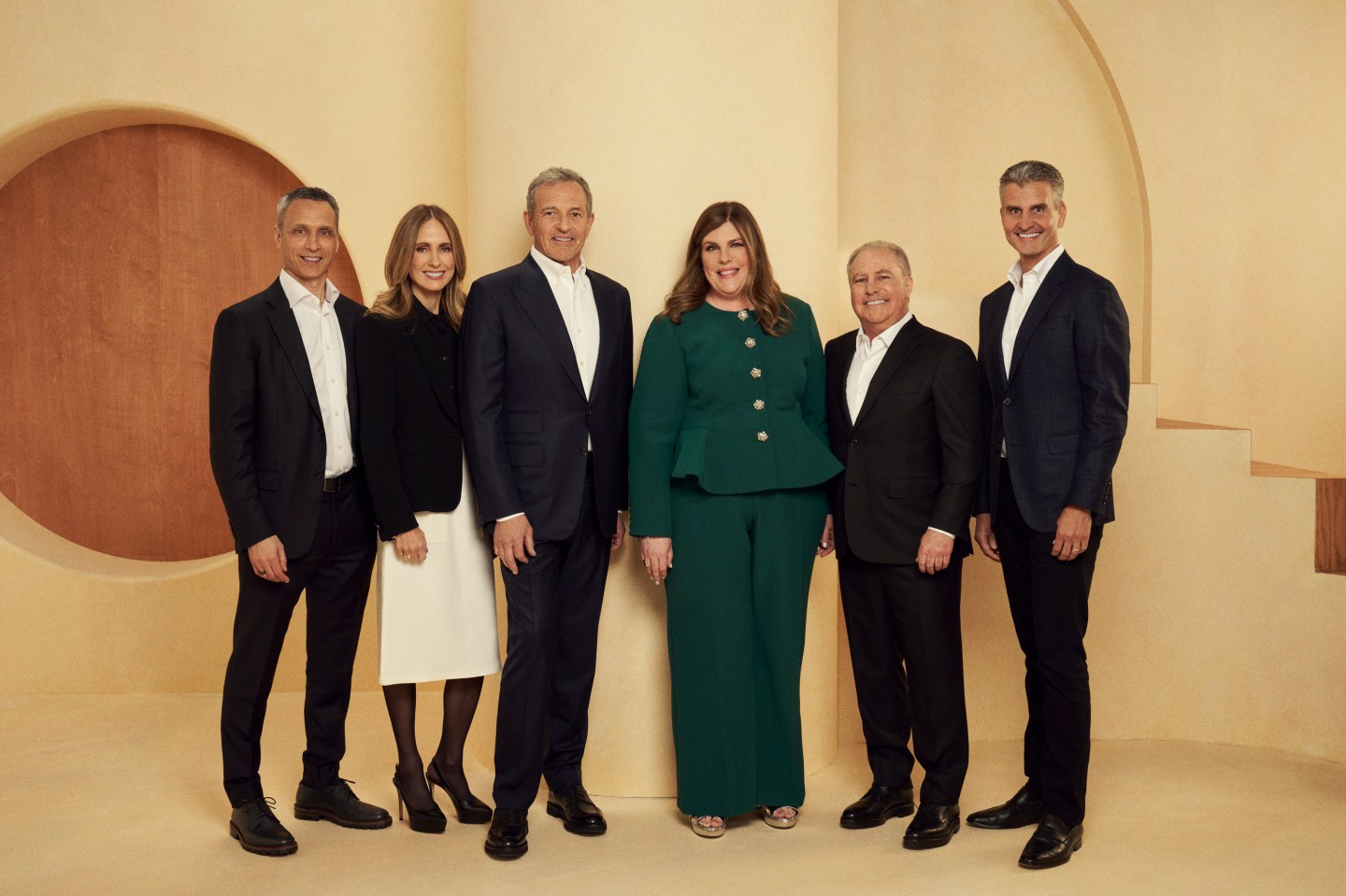
Disney’s new D’Amaro-land:  a dream team succession saga comes to life
By Jeffrey Sonnenfeld and Stephen HenriquesFebruary 4, 2026
1 day ago
minnesota
CommentaryMinnesota
I’ve studied nonviolent resistance in war zones for 20 years and Minnesota reminds me of Colombia, the Philippines and Syria
By Oliver Kaplan and The ConversationFebruary 3, 2026
2 days ago