• Home
  • Latest
  • Fortune 500
  • Finance
  • Tech
  • Leadership
  • Lifestyle
  • Rankings
  • Multimedia
Commentarydiscrimination

It’s time for progressive white women to do more for racial equality

By
Julie Kohler
Julie Kohler
Down Arrow Button Icon
By
Julie Kohler
Julie Kohler
Down Arrow Button Icon
December 20, 2020, 10:00 AM ET
Voting out Donald Trump isn't enough, writes the author; white progressive women most engage in "continuous political action, alongside and led by communities of color."

It is now well-known that a narrow majority of white women, once again, voted for Trump this November. There’s a lot to unpack. 

In my Wonder Media Network podcast, White Picket Fence, I do a deep dive into the topic, exploring the many influences on white women’s identities and politics. What I’ve discovered is that moving our national conversation about race, gender, and politics to something more constructive requires more than “hot takes” on exit polls. We should be concerned by the growth of a base ginned up on misinformation and white grievance. But the overwhelming focus on white women who vote Republican shifts some of the responsibility from where it needs to be: on the shoulders of progressive white women. 

I am one of those progressive white women, And the more I’ve examined white women’s identities and politics, the more I’m convinced that building a more just and equitable nation requires more of us. We must go deeper and re-examine some of our own long-held beliefs about our personal politics.

Growing up in a suburb of Minneapolis/St. Paul, Minnesota, my family’s yard was often littered with election signs. We were a family of volunteers, activists, and all-around political junkies. My dad had spent 13 years in a Catholic religious order, and although he left to marry my mom, social justice remained a strong guiding force. My mother was a biology and women’s studies professor. I was the “nerdy” kid who subscribed to Ms. Magazine and dreamed about running for office.  

My interest in presidential politics was piqued when Walter Mondale—former vice president and U.S. senator from Minnesota—chose Geraldine Ferraro as his running mate in 1984. I was ten years old, and I was ecstatic—certain there was about to be a woman in the White House. Inspired by Ferraro, I launched my own campaign that year: for class student council representative. When I won, my teacher announced it as the “official start” of my political career. 

On Election Day, I ran home from school, proudly informing my parents that the Mondale-Ferraro ticket had won a resounding victory in my class’s mock election. I settled in to watch election returns, confident that I was about to witness history in the making.

I did—but not the kind I was expecting. The 1984 election was a landslide for Ronald Reagan. I remember staring in shock at the blue specks of Minnesota and Washington, D.C., amidst a sea of red. It was the first time I realized that my world wasn’t the world.

It was a crushing disappointment for a young kid. But that election instilled something else in me: a sense of political “specialness.”  The story I told myself was that my state, my community, even my family, was different. We believed in the common good. We invested in things like public schools, a social safety net, a clean environment. We were a welcoming state. Racial injustice? That was something that happened in other parts of the country. In Minnesota, we did things “right.”

I grew up, moved away, and built a career in philanthropy and politics. But even as I developed an understanding of how deep and structural the problems facing our nation are, I retained that sense of “specialness.” That by growing up in the place that I did, in the time that I did, I had some unique insight into what “good” politics looked like. 

There wasn’t one moment that permanently disabused me of that notion. But like many of us, 2016 turned my world upside down.

On Election Day, I went to the polls with my then two-year-old son. After casting my vote, I took a selfie holding my son in my arms. We were both beaming at the camera, wearing “I Voted” stickers. Things had come full circle. That night, I was confident that my son would witness the triumph that had eluded me as a child: a woman in the White House. Hillary Clinton as the first woman president. 

But Trump’s election wasn’t the only event of 2016 that made me seriously question my political story. A few months earlier, Philando Castile was killed by a police officer during a routine traffic stop. His murder happened about a mile away from my childhood home. And the following year, the officer who shot him was acquitted of all charges.

The truth is, the community of my childhood is plagued by the same injustice that exists everywhere. There was nothing special about us—or our politics. The “good” liberal politics of my Minnesota childhood may have produced many favorable outcomes when it comes to education, health, and quality of life, but it masked deep racial inequality that continues to this day. And the self-aggrandizing political story I constructed obscured my own complicity with the status quo. 

As an adult, I purchased a home close to “good” public school for my son, further solidifying segregated housing patterns forged through decades of redlining and predatory lending practices. I availed myself of financial support from my parents that helped me with a down payment, thereby perpetuating racial privilege and giving my family an unearned leg up. My housing choices have meant that my family spends a good deal of time in predominantly white spaces.

None of these were intentionally racist acts. But as Prairie View A&M Endowed Professor of Political Science and New York Times columnist Melanye Price told me on the podcast, “The complement of your privilege is my disadvantage.” White women—white people—cannot retain our privilege while fighting for equity.

It can be tempting for progressive white women to pat ourselves on the back and view those “other” white women as the problem. But let’s be clear: voting Donald Trump out of office was the bare minimum of what it requires to move this country forward. We must also interrogate why it’s hard for so many of us to cede the racial privilege that remains our birthright. Do we work to ensure that our own kids’ public schools are well-funded and supported, while not engaging—or even opposing—efforts to equalize school funding across schools or districts? Do we advocate for or against housing zoning changes that would permit multi-family housing in affluent neighborhoods? Do we engage in fights for racial justice consistently, or only sporadically, like this past summer, when the depths of racial injustice and Black suffering become impossible to ignore?

It’s time to shift the white woman story. To make it less about “them” and more about “all of us.” And to step up in the ways that we must, through this continuous political action, alongside and led by communities of color. For it is through this engagement—this ongoing practice that goes well-beyond any one particular election—that progressive white women can own our stake in building a nation that reflects the values we profess to hold. 

Julie Kohler is a fellow in residence at the National Women’s Law Center, a senior advisor to the Democracy Alliance, and the host of the podcast, White Picket Fence. 

About the Author
By Julie Kohler
See full bioRight Arrow Button Icon

Latest in Commentary

Finance
Lorem ipsum dolor sit amet, consectetur adipiscing elit, sed do eiusmod tempor incididunt ut labore et dolore magna aliqua. Ut enim ad minim veniam
By Fortune Editors
October 20, 2025
Finance
Lorem ipsum dolor sit amet, consectetur adipiscing elit, sed do eiusmod tempor incididunt ut labore et dolore magna aliqua. Ut enim ad minim veniam
By Fortune Editors
October 20, 2025
Finance
Lorem ipsum dolor sit amet, consectetur adipiscing elit, sed do eiusmod tempor incididunt ut labore et dolore magna aliqua. Ut enim ad minim veniam
By Fortune Editors
October 20, 2025
Finance
Lorem ipsum dolor sit amet, consectetur adipiscing elit, sed do eiusmod tempor incididunt ut labore et dolore magna aliqua. Ut enim ad minim veniam
By Fortune Editors
October 20, 2025
Finance
Lorem ipsum dolor sit amet, consectetur adipiscing elit, sed do eiusmod tempor incididunt ut labore et dolore magna aliqua. Ut enim ad minim veniam
By Fortune Editors
October 20, 2025
Finance
Lorem ipsum dolor sit amet, consectetur adipiscing elit, sed do eiusmod tempor incididunt ut labore et dolore magna aliqua. Ut enim ad minim veniam
By Fortune Editors
October 20, 2025

Most Popular

Finance
Lorem ipsum dolor sit amet, consectetur adipiscing elit, sed do eiusmod tempor incididunt ut labore et dolore magna aliqua. Ut enim ad minim veniam
By Fortune Editors
October 20, 2025
Finance
Lorem ipsum dolor sit amet, consectetur adipiscing elit, sed do eiusmod tempor incididunt ut labore et dolore magna aliqua. Ut enim ad minim veniam
By Fortune Editors
October 20, 2025
Finance
Lorem ipsum dolor sit amet, consectetur adipiscing elit, sed do eiusmod tempor incididunt ut labore et dolore magna aliqua. Ut enim ad minim veniam
By Fortune Editors
October 20, 2025
Finance
Lorem ipsum dolor sit amet, consectetur adipiscing elit, sed do eiusmod tempor incididunt ut labore et dolore magna aliqua. Ut enim ad minim veniam
By Fortune Editors
October 20, 2025
Finance
Lorem ipsum dolor sit amet, consectetur adipiscing elit, sed do eiusmod tempor incididunt ut labore et dolore magna aliqua. Ut enim ad minim veniam
By Fortune Editors
October 20, 2025
Finance
Lorem ipsum dolor sit amet, consectetur adipiscing elit, sed do eiusmod tempor incididunt ut labore et dolore magna aliqua. Ut enim ad minim veniam
By Fortune Editors
October 20, 2025
Rankings
  • 100 Best Companies
  • Fortune 500
  • Global 500
  • Fortune 500 Europe
  • Most Powerful Women
  • Future 50
  • World’s Most Admired Companies
  • See All Rankings
Sections
  • Finance
  • Leadership
  • Success
  • Tech
  • Asia
  • Europe
  • Environment
  • Fortune Crypto
  • Health
  • Retail
  • Lifestyle
  • Politics
  • Newsletters
  • Magazine
  • Features
  • Commentary
  • Mpw
  • CEO Initiative
  • Conferences
  • Personal Finance
  • Education
Customer Support
  • Frequently Asked Questions
  • Customer Service Portal
  • Privacy Policy
  • Terms Of Use
  • Single Issues For Purchase
  • International Print
Commercial Services
  • Advertising
  • Fortune Brand Studio
  • Fortune Analytics
  • Fortune Conferences
  • Business Development
About Us
  • About Us
  • Editorial Calendar
  • Press Center
  • Work At Fortune
  • Diversity And Inclusion
  • Terms And Conditions
  • Site Map
  • Facebook icon
  • Twitter icon
  • LinkedIn icon
  • Instagram icon
  • Pinterest icon

Most Popular

placeholder alt text
Politics
Peter Thiel warns the Antichrist and apocalypse are linked to the ‘end of modernity’ currently happening—and cites Greta Thunberg as a driving example
By Nick LichtenbergFebruary 4, 2026
1 day ago
placeholder alt text
Success
After decades in the music industry, Pharrell Williams admits he never stops working: ‘If you do what you love everyday, you’ll get paid for free'
By Emma BurleighFebruary 3, 2026
2 days ago
placeholder alt text
Economy
Trump may have shot himself in the foot at the Fed, as Powell could stay on while Miran resigns from White House post
By Eleanor PringleFebruary 4, 2026
1 day ago
placeholder alt text
Investing
Tech stocks go into free fall as it dawns on traders that AI has the ability to cut revenues across the board
By Jim EdwardsFebruary 4, 2026
1 day ago
placeholder alt text
Commentary
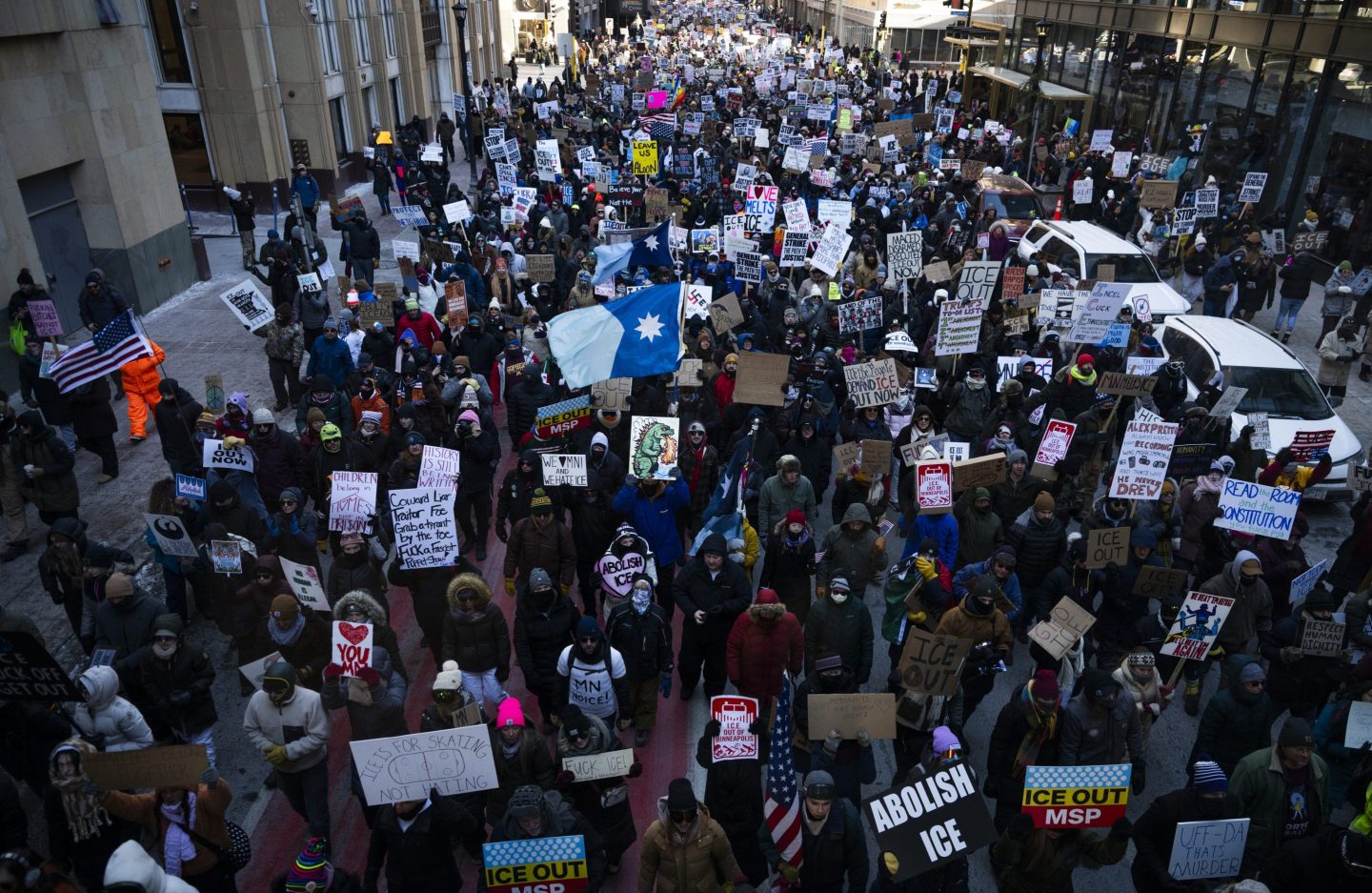
I've studied nonviolent resistance in war zones for 20 years and Minnesota reminds me of Colombia, the Philippines and Syria
By Oliver Kaplan and The ConversationFebruary 3, 2026
2 days ago
placeholder alt text
Investing
Ray Dalio warns the world is ‘on the brink’ of a capital war of weaponizing money—and gold is the best way for people to protect themselves
By Sasha RogelbergFebruary 4, 2026
1 day ago

© 2026 Fortune Media IP Limited. All Rights Reserved. Use of this site constitutes acceptance of our Terms of Use and Privacy Policy | CA Notice at Collection and Privacy Notice | Do Not Sell/Share My Personal Information
FORTUNE is a trademark of Fortune Media IP Limited, registered in the U.S. and other countries. FORTUNE may receive compensation for some links to products and services on this website. Offers may be subject to change without notice.


Latest in Commentary

desantis
CommentaryLeadership
Understanding corporate leaders’ muted Minnesota response: the example of Disney, Florida and conservative retaliation
By Alessandro Piazza and The ConversationFebruary 5, 2026
6 hours ago
grace
CommentaryRobotics
I’m a 25-year-old founder who loves robots but too many humanoids are militant and creepy-looking. Things need to change—just look at Elon Musk
By Grace BrownFebruary 5, 2026
9 hours ago
sam wolf
Commentaryactivist investing
Activist investors are more dangerous to CEOs than ever. Here are 3 ways to safeguard your leadership
By Sam WolfFebruary 5, 2026
10 hours ago
warsh
CommentaryFederal Reserve
Kevin Warsh’s Fed criticisms make sense, but he’s got a ‘cleanest dirty shirt’ problem. Here’s the triple dilemma he faces
By Daniel J. ArbessFebruary 5, 2026
10 hours ago
disney
CommentaryDisney
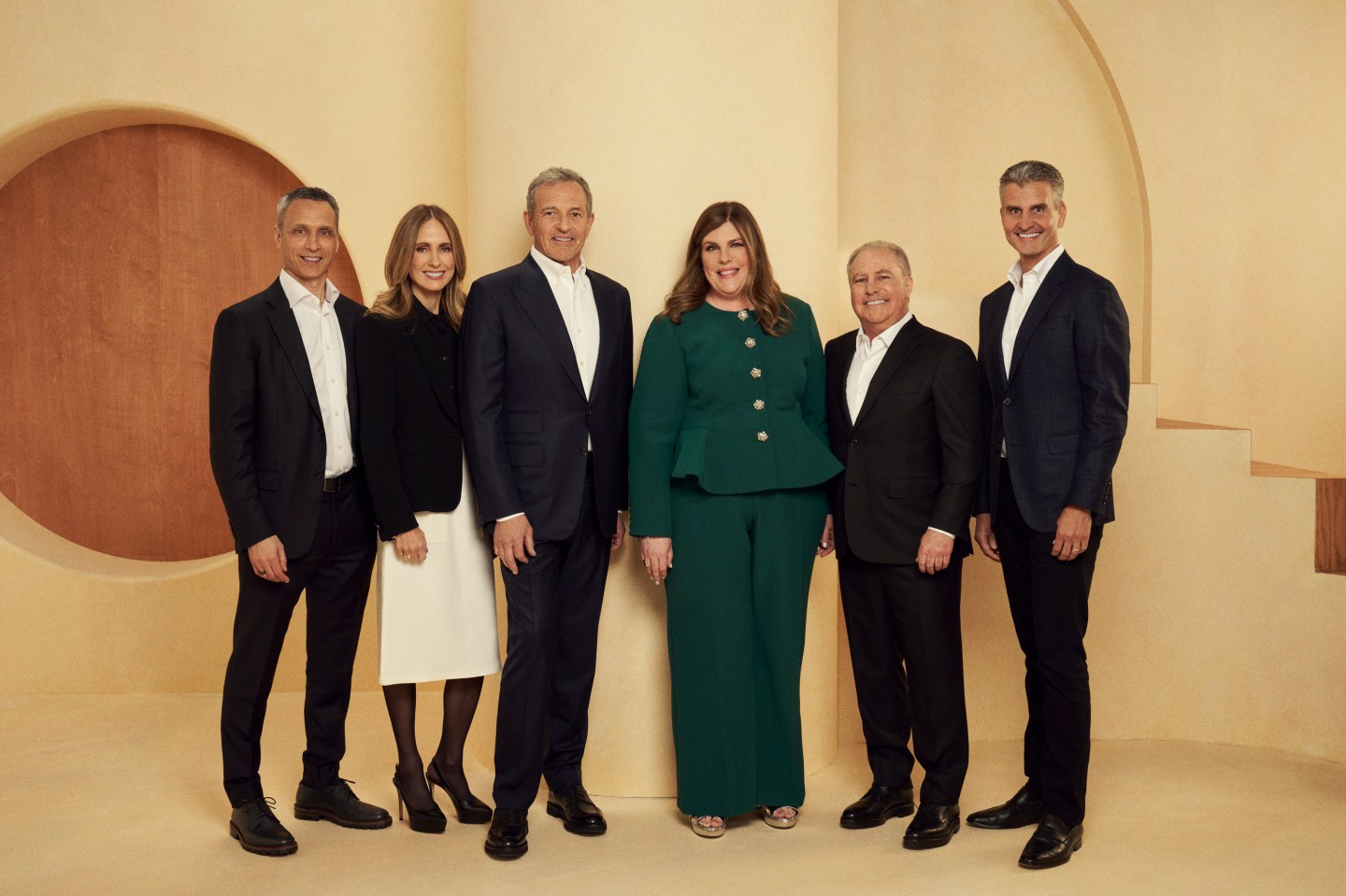
Disney’s new D’Amaro-land:  a dream team succession saga comes to life
By Jeffrey Sonnenfeld and Stephen HenriquesFebruary 4, 2026
1 day ago
minnesota
CommentaryMinnesota
I’ve studied nonviolent resistance in war zones for 20 years and Minnesota reminds me of Colombia, the Philippines and Syria
By Oliver Kaplan and The ConversationFebruary 3, 2026
2 days ago