• Home
  • Latest
  • Fortune 500
  • Finance
  • Tech
  • Leadership
  • Lifestyle
  • Rankings
  • Multimedia

Trendingnow

1

After forcing workers back to the office, Goldman Sachs and JPMorgan Chase are now letting their staff work remotely—but only for the World Cup

2

Markets tumble worldwide as Fed resets expectations: $400 billion wiped off SpaceX stock

3

Former U.S. Secret Service agent says bringing your authentic self to work stifles teamwork: 'You don’t get high performers, you get sloppiness'

1

After forcing workers back to the office, Goldman Sachs and JPMorgan Chase are now letting their staff work remotely—but only for the World Cup

2

Markets tumble worldwide as Fed resets expectations: $400 billion wiped off SpaceX stock

3

Former U.S. Secret Service agent says bringing your authentic self to work stifles teamwork: 'You don’t get high performers, you get sloppiness'
Infrastructure

Turning Waste Into Gold

By
Jennifer Alsever
Jennifer Alsever
Down Arrow Button Icon
By
Jennifer Alsever
Jennifer Alsever
Down Arrow Button Icon
June 12, 2017, 10:00 AM ET
Courtesy of DC Water
Add Fortune on Google for similar content.

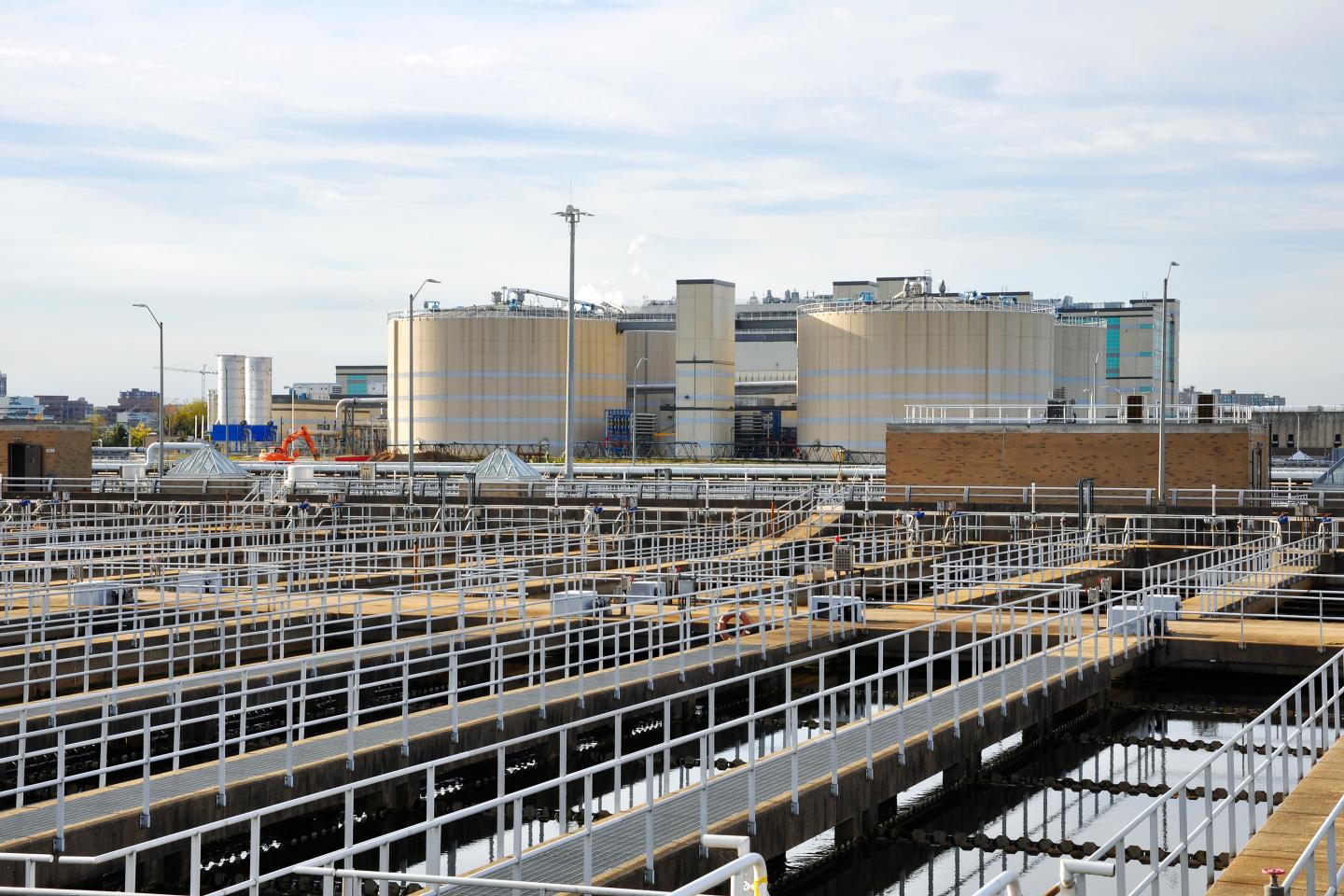
The water authority in Washington, D.C., receives 1,500 wet tons of sewage into its wastewater-treatment facility each day. CEO George Hawkins views it as liquid gold—an ingredient for a moneymaking operation that could help pay for repairs to its aging infrastructure. His agency, DC Water, cooks, sterilizes, and turns that sewage into a soil fertilizer called Bloom, which began shipping this spring to nurseries and garden centers in the region.

Ignore the “ick” ­factor. DC Water is among a handful of utilities that is innovating to save or generate money. Philadelphia’s utility is using the water that washes into the sewers during storms to keep its parks green. And in Portland, Ore., purified wastewater is being used to make beer. (No one says you have to drink it.)

The Washington initiative is ambitious. The process begins with the matter flushed down a toilet, which may travel through any of DC Water’s 1,800 miles of sewer pipes to the wastewater-treatment plant. Oils, fats, sediments, and objects are screened out, and the water is disinfected. The remaining sludge then goes through a three-stage process that cooks it in high heat and pressure, sterilizing and softening it. The clean sludge is then sent to four 80-foot-tall anaerobic digesters, where giant mixers churn the liquid for two weeks while a population of microorganisms called “methanogens” eats the organic matter, producing methane gas for electricity that ultimately powers a third of the water plant’s operations. The solids then travel to a belt-filter press that squeezes out water and delivers the crumbly compost to bunkers that can hold 1,000 tons each.

The result can be used to fertilize gardens and trees. (Bloom fertilizer is in high demand, says Brian Riddle, who bought 1,000 tons of it for his D.C.-area garden centers, Homestead Gardens. He says it’s hard to find affordable fertilizer that’s safe and natural. “Bloom,” he says, “is loaded with valuable nutrients.”)

DC Water spent several years investigating and testing the technology, which was already in use in Europe, before spending $470 million on the equipment two years ago. DC Water would have needed to spend most of that money anyway to treat the biosolids, and this was a way to do that in a sustainable manner and generate revenue to fix aging pipes. More than half of the D.C. pipes are 79 years or older—some date to 1860—and the agency estimates a need for at least $1 billion in repairs in the coming years.

Bloom’s sales are still fledgling, and Hawkins says it may take two or three years to ramp up. But the approach was a necessity. “It’s literally like a startup,” he says. “Our business model was going to fail without fundamental change.”

That could be the case for much of America’s broad array of infrastructure, says Greg DiLoreto, past president of the American Society of Civil Engineers, which produces a report card on the state of the nation’s infrastructure every four years. America’s grade this year: D+. The nation’s 14,748 water-treatment facilities are in particular disrepair, suffering from 240,000 pipe breaks a year. Those facilities will need to serve some 56 million new customers over the next two decades, says DiLoreto.

He praises DC Water’s initiative. “That kind of innovation will make the money go a lot further,” says DiLoreto, “but we still need investment or we’re going to see more pipe breaks and more Flint, Michigans.”

DC Water’s new investment has allowed it to cut its operating budget, as well as its biosolid disposal and energy costs, making it the largest generator of clean energy in the Washington, D.C., area. The utility has even more plans to generate revenue, including selling “sewer-thermal energy,” which uses heat exchangers inside the city’s underground sewage system to heat and cool buildings—much like traditional geothermal energy drawn from the earth’s core. The sewer energy is being tested at several of DC Water’s own buildings before being rolled out to potential customers. Other plans are in the works too. They give new meaning to the old phrase “Waste not, want not.” 


Old Data, New Problem

Can transportation apps help address the nation’s aging roads?

Los Angeles Tops List Of Most Traffic-Congested Cities In The World
Waze is sharing traffic data with the city of Los Angeles.Justin Sullivan—Getty Images
Justin Sullivan—Getty Images

When it comes to fixing the nation’s crumbling roads, the one thing you can count on is that political rhetoric will far outpace spending. That makes information—say, which portions of a decaying highway force drivers to slow down most often—crucial in deciding where to target government dollars. Enter the data-drenched startups of the new economy. Google’s Waze, the mapping app that optimizes routes to avoid traffic, along with ride-sharing company Uber, is helping officials prioritize by delivering data collected from millions of drivers on the road.

Just two years after its start, Waze’s Connected Citizens program delivers free data to 250 cities and half of the nation’s state transportation departments. (In return, Waze receives information from its government partners.) The program helps identify traffic patterns, map potholes, and suggest where to allocate resources.

Rio de Janeiro, beset by complaints about its infrastructure in the run-up to the 2016 Summer Olympics, used Waze’s data to validate locations for two new highways and then to manage traffic and road closings during the games. Boston used Waze data to determine which intersections were most congested and which needed new stoplights. The result: an 18% reduction in congestion at key intersections.

Waze may not be able to fix a road—but it can find the one that needs the most urgent attention.


A version of this article appears in the June 15, 2017 issue of Fortune with the headline “Turning Waste Into Gold (or Copper).”

About the Author
By Jennifer Alsever
See full bioRight Arrow Button Icon
Add Fortune on Google for similar content.

Latest in

Finance
Lorem ipsum dolor sit amet, consectetur adipiscing elit, sed do eiusmod tempor incididunt ut labore et dolore magna aliqua. Ut enim ad minim veniam
By Fortune Editors
October 20, 2025
Finance
Lorem ipsum dolor sit amet, consectetur adipiscing elit, sed do eiusmod tempor incididunt ut labore et dolore magna aliqua. Ut enim ad minim veniam
By Fortune Editors
October 20, 2025
Finance
Lorem ipsum dolor sit amet, consectetur adipiscing elit, sed do eiusmod tempor incididunt ut labore et dolore magna aliqua. Ut enim ad minim veniam
By Fortune Editors
October 20, 2025
Finance
Lorem ipsum dolor sit amet, consectetur adipiscing elit, sed do eiusmod tempor incididunt ut labore et dolore magna aliqua. Ut enim ad minim veniam
By Fortune Editors
October 20, 2025
Finance
Lorem ipsum dolor sit amet, consectetur adipiscing elit, sed do eiusmod tempor incididunt ut labore et dolore magna aliqua. Ut enim ad minim veniam
By Fortune Editors
October 20, 2025
Finance
Lorem ipsum dolor sit amet, consectetur adipiscing elit, sed do eiusmod tempor incididunt ut labore et dolore magna aliqua. Ut enim ad minim veniam
By Fortune Editors
October 20, 2025

Most Popular

Finance
Lorem ipsum dolor sit amet, consectetur adipiscing elit, sed do eiusmod tempor incididunt ut labore et dolore magna aliqua. Ut enim ad minim veniam
By Fortune Editors
October 20, 2025
Finance
Lorem ipsum dolor sit amet, consectetur adipiscing elit, sed do eiusmod tempor incididunt ut labore et dolore magna aliqua. Ut enim ad minim veniam
By Fortune Editors
October 20, 2025
Finance
Lorem ipsum dolor sit amet, consectetur adipiscing elit, sed do eiusmod tempor incididunt ut labore et dolore magna aliqua. Ut enim ad minim veniam
By Fortune Editors
October 20, 2025
Finance
Lorem ipsum dolor sit amet, consectetur adipiscing elit, sed do eiusmod tempor incididunt ut labore et dolore magna aliqua. Ut enim ad minim veniam
By Fortune Editors
October 20, 2025
Finance
Lorem ipsum dolor sit amet, consectetur adipiscing elit, sed do eiusmod tempor incididunt ut labore et dolore magna aliqua. Ut enim ad minim veniam
By Fortune Editors
October 20, 2025
Finance
Lorem ipsum dolor sit amet, consectetur adipiscing elit, sed do eiusmod tempor incididunt ut labore et dolore magna aliqua. Ut enim ad minim veniam
By Fortune Editors
October 20, 2025
Fortune Secondary Logo
Rankings
  • 100 Best Companies
  • Fortune 500
  • Global 500
  • Fortune 500 Europe
  • Most Powerful Women
  • World's Most Admired Companies
  • See All Rankings
  • Lists Calendar
Sections
  • Finance
  • Fortune Crypto
  • Features
  • Leadership
  • Health
  • Commentary
  • Success
  • Retail
  • Mpw
  • Tech
  • Lifestyle
  • CEO Initiative
  • Asia
  • Politics
  • Conferences
  • Europe
  • Newsletters
  • Personal Finance
  • Environment
  • Magazine
  • Education
Customer Support
  • Frequently Asked Questions
  • Customer Service Portal
  • Privacy Policy
  • Terms Of Use
  • Single Issues For Purchase
  • International Print
Commercial Services
  • Advertising
  • Fortune Brand Studio
  • Fortune Analytics
  • Fortune Conferences
  • Business Development
  • Group Subscriptions
About Us
  • About Us
  • Press Center
  • Work At Fortune
  • Terms And Conditions
  • Site Map
  • About Us
  • Press Center
  • Work At Fortune
  • Terms And Conditions
  • Site Map
  • Facebook icon
  • Twitter icon
  • LinkedIn icon
  • Instagram icon
  • Pinterest icon

Latest in

MSCI delays Indonesia’s market status review until November
AsiaIndonesia
MSCI delays Indonesia’s market status review until November
By Prima Wirayani, Bernadette Toh and BloombergJune 23, 2026
2 hours ago
sb
Commentaryclimate change
The climate policy triangle: why leaders can no longer choose between growth, security and sustainability
By Sebastian BuckupJune 23, 2026
7 hours ago
Amazon Prime Day isn’t a midsummer shopping event anymore. Here’s what changed in 2026
RetailAmazon
Amazon Prime Day isn’t a midsummer shopping event anymore. Here’s what changed in 2026
By Vidhi Choudhary and Retail BrewJune 23, 2026
8 hours ago
The hidden cost of your AI rollout: burning out the high performers running it
Workplace Cultureburnout
The hidden cost of your AI rollout: burning out the high performers running it
By Mikaela Cohen and HR BrewJune 23, 2026
8 hours ago
Tom and Diane Peterman pose outside their home at Black Lake on Wednesday, April 29, 2026, in Grant Township, Mich.
EnvironmentNatural disasters
FEMA told these families they weren’t in a flood zone. Then ice came through the windows
By Tammy Webber, M.K. Wildeman and The Associated PressJune 23, 2026
8 hours ago
Olympic rings at the Tesero Cross-Country Skiing Stadium ahead of the Milano Cortina 2026 Winter Olympics on February 03, 2026 in Tesero, Italy.
North AmericaSports
After the Knicks and World Cup, New York is ready for another challenge: the Olympics
By The Associated PressJune 23, 2026
8 hours ago

Most Popular

After forcing workers back to the office, Goldman Sachs and JPMorgan Chase are now letting their staff work remotely—but only for the World Cup
Success
After forcing workers back to the office, Goldman Sachs and JPMorgan Chase are now letting their staff work remotely—but only for the World Cup
By Orianna Rosa RoyleJune 23, 2026
17 hours ago
Markets tumble worldwide as Fed resets expectations: $400 billion wiped off SpaceX stock
Banking
Markets tumble worldwide as Fed resets expectations: $400 billion wiped off SpaceX stock
By Jim EdwardsJune 23, 2026
19 hours ago
Former U.S. Secret Service agent says bringing your authentic self to work stifles teamwork: 'You don’t get high performers, you get sloppiness'
Success
Former U.S. Secret Service agent says bringing your authentic self to work stifles teamwork: 'You don’t get high performers, you get sloppiness'
By Sydney LakeJune 21, 2026
3 days ago
Meet the 2 men putting New York's $300 billion pension fund in play for the first time in 20 years
Investing
Meet the 2 men putting New York's $300 billion pension fund in play for the first time in 20 years
By Nick LichtenbergJune 22, 2026
2 days ago
Current price of oil as of June 22, 2026
Personal Finance
Current price of oil as of June 22, 2026
By Joseph HostetlerJune 22, 2026
2 days ago
Current price of oil as of June 23, 2026
Personal Finance
Current price of oil as of June 23, 2026
By Joseph HostetlerJune 23, 2026
16 hours ago

© 2026 Fortune Media IP Limited. All Rights Reserved. Use of this site constitutes acceptance of our Terms of Use and Privacy Policy | CA Notice at Collection and Privacy Notice | Do Not Sell/Share My Personal Information
FORTUNE is a trademark of Fortune Media IP Limited, registered in the U.S. and other countries. FORTUNE may receive compensation for some links to products and services on this website. Offers may be subject to change without notice.