• Home
  • Latest
  • Fortune 500
  • Finance
  • Tech
  • Leadership
  • Lifestyle
  • Rankings
  • Multimedia

Trendingnow

1

MacKenzie Scott alone accounted for one-third of America's $19.2 billion in megagifts last year

2

Now worth $200 million, Sarah Jessica Parker credits being ‘one of eight kids that struggled financially’ for her hunger, ambition, and work ethic

3

Ray Dalio says the U.S. just had its 'Suez moment'—and history says what comes next could end an empire

1

MacKenzie Scott alone accounted for one-third of America's $19.2 billion in megagifts last year

2

Now worth $200 million, Sarah Jessica Parker credits being ‘one of eight kids that struggled financially’ for her hunger, ambition, and work ethic

3

Ray Dalio says the U.S. just had its 'Suez moment'—and history says what comes next could end an empire
CommentaryTipping

Uber Would Be Wise to Let Passengers Tip

By
Anthony Gill
Anthony Gill
and
Bethany Cianciolo
Bethany Cianciolo
Down Arrow Button Icon
By
Anthony Gill
Anthony Gill
and
Bethany Cianciolo
Bethany Cianciolo
Down Arrow Button Icon
April 24, 2017, 11:02 AM ET
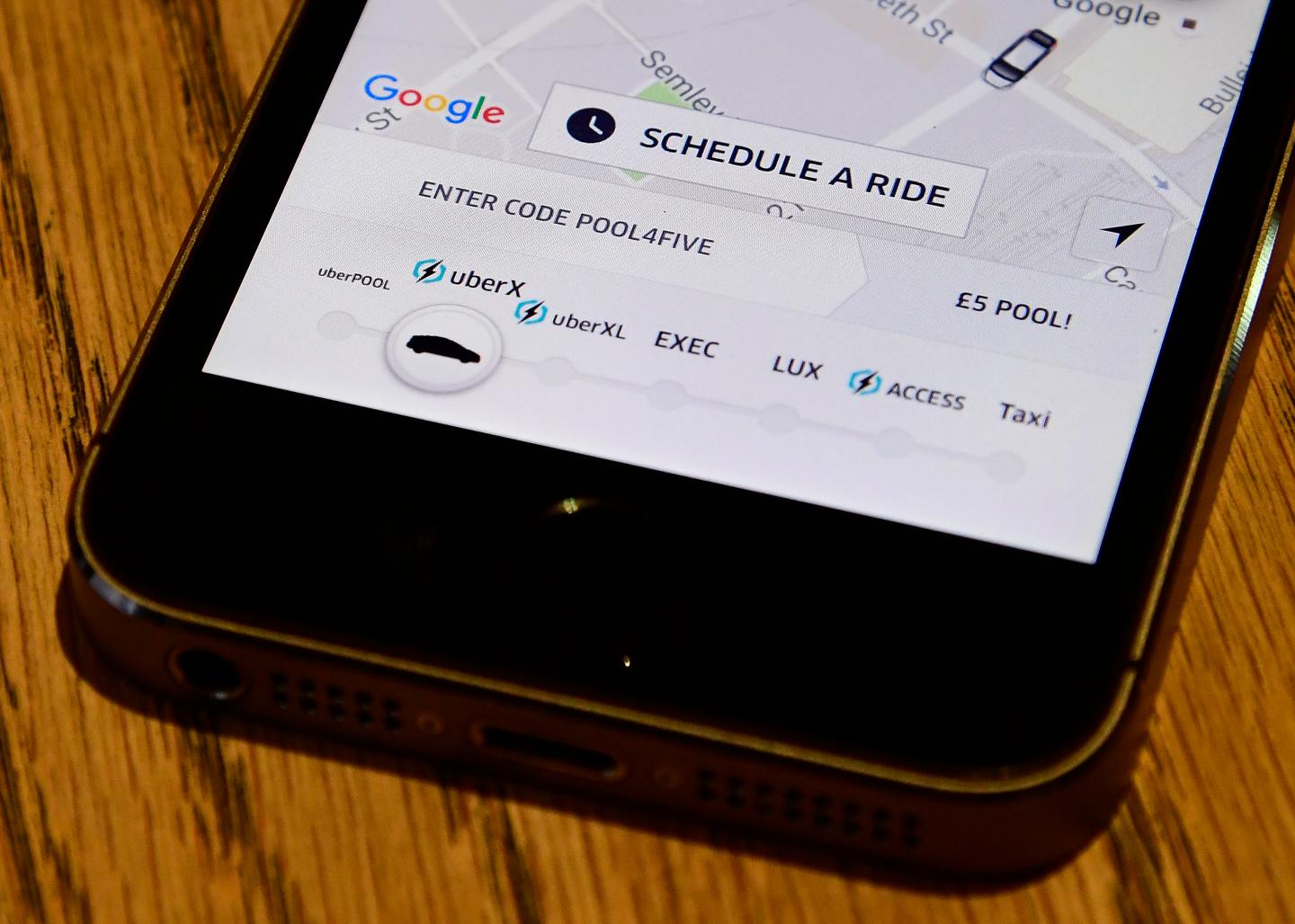
A photo illustration shows the Uber app logo displayed on a mobile telephone, as it is held up for a posed photograph in central London
A photo illustration shows the Uber app logo displayed on a mobile telephone, as it is held up for a posed photograph in central London, Britain October 28, 2016. REUTERS/Toby Melville/Illustration - RTX2QV74Toby Melville—Reuters
Add Fortune on Google for similar content.

Over the past few years, the practice of offering gratuities to service workers has become a source of hot debate both within the service industry and amongst government regulators. Currently, the New York City Taxi and Limousine Commission and the California state legislator are toying with the idea of requiring ride-share companies such as Uber to include an option for tips on their customers’ receipts, a common practice in the regulated cab industry. Although executives at Uber discourage gratuities, drivers’ income aside, the study of economics provides a subtler explanation that executives at Uber should wisely heed as a means of improving their business.

The most general problem that gratuities are designed to overcome is what economists call the “principal-agent problem.” In this situation, a principal (employer) and agent (employee) have slightly diverging interests, and the principal must devise a means of getting the agent to act in her best interests. While both the employer and employee share an interest in the establishment’s overall success, each employee wants to accomplish his tasks with minimal effort (i.e., shirk). The boss must figure out creative means of motivating her workers, while simultaneously reducing the costs of monitoring them directly.

Consider a restaurant wherein an owner wants his wait staff to provide customized and friendly service to diners so they return and/or spread the word of their positive dining experience. A rude waiter, or a waitress who can’t determine the subtle cues of diners (e.g., a desire for speedy service), can often ruin an experience and destroy the reputation of a business. One way to ensure that the wait staff is meeting the needs of diverse customers is for the manager to be constantly walking the floor monitoring the employees, but this incurs huge opportunity costs.

Enter gratuities, an ingenious solution to the principal-agent problem. If part of the employees’ compensation is a gratuity offered by customers based upon how well they are served, the wait staff will have an incentive to “read” customers and deliver the best service possible. The diners become the monitors of the employees’ quality, freeing up the manager to do other things. Customers act as additional principals (i.e., other bosses) in this situation and exercise a means of motivating the level of service they specifically desire. Repeat customers who tip well are often given specialized treatment, and the high-quality wait staff offering them specialized treatment rake in higher levels of income, affirming their skills and effort. Low-quality servers who don’t receive many tips will be given a signal that their talents may be better employed elsewhere. The restaurant benefits in that poor-performing employees tend to opt out of the industry, saving their managers from the process of firing them.

It is interesting to note that gratuities are most common in service jobs that are difficult for an employer to monitor, require some sort of customized service, and often have repeat business. We tip our hair stylists, valets, and the barista who makes our “special order” latte (but not usually the barista who simply pours drip coffee). Taxis are a more challenging case in that we don’t usually use the same cabbie twice, and service seems pretty standard. But if a driver expects a tip, even from a tourist, they will be incentivized to drive safely, not use obvious circuitous routes, and determine if the rider prefers conversation or silence.

The effectiveness of gratuities, though, is contingent on everybody knowing that a tip is expected and that there’s some agreed-upon norm for the proper rate (e.g., 15% of the pre-tax bill), and most everybody agrees to that custom. Waiters (and cabbies) are known to expend slightly less effort to tourists from foreign countries who do not traditionally tip, not because they dislike the person, but rather that their customized attention can be paid to those who are more likely to offer a tip. Restaurants that serve foreign tourists are known to provide information about gratuities, including the expected amount for good service. Cabs also provide information on their receipts regarding how much of a tip to leave.

This may explain why Uber drivers are in favor of regulation requiring a space for tips on credit card receipts; it sends a signal to all riders that tips are appreciated, making the U.S. norm more widely known. Some riders slip the drivers some “extra” cash anyway, even though they’re paying for the ride itself electronically, a norm held over from practices with regulated cabs. However, if the e-payment receipt doesn’t have a line for gratuities, riders may assume that the tipping norm has changed (or is changing), thereby depriving drivers of some extra income.

If people reduce the frequency of tipping in cash, drivers have less of an incentive to be on the road, especially during bad weather or special traffic events, precisely when they are most needed and when customers are most appreciative of getting prompt and reliable service. While Uber uses a “surge pricing” model for such situations, this practice is publicly unpopular; a norm of tipping accomplishes the same task of “surge prices,” but gives the customer more autonomy. If Uber wants to avoid the bad publicity of “surge pricing,” yet still encourage drivers to take difficult routes and times, yielding to the desire of their drivers and allowing tips is an ideal way to solve the principal-agent problem.


Moreover, the use of tipping will help attract better drivers and serve as a signal to poor drivers that they should maybe quit the business, an outcome that benefits Uber’s long-term reputation. If Uber drivers expect payment not only from a fixed fee for the ride, but an extra “gift” for delivering customized service, there is an added incentive to make the ride-share experience all the more pleasant. And if riders know tips are permitted, they have another mechanism of signaling poor service beyond the app’s rating system.

Bad drivers who consistently fail to earn decent gratuities will move on to different lines of employment, saving Uber the headache of having to defend or “fire” these contractors. And if tipping remains a widespread norm as means of compensating service, Uber can keep the price of its rides lower and minimize the need for the unpopular “surge pricing,” allowing them to reach a broader clientele. In short, the use of gratuities is a win-win-win situation for the Uber brand, pleasant drivers, and the paying customer.

Anthony Gill is a professor of political economy at the University of Washington where he uses gratuities to teach basic economics to students. He is also author of The Political Origins of Religious Liberty (Cambridge University Press) and hosts a weekly podcast series called Research on Religion.

About the Authors
By Anthony Gill
See full bioRight Arrow Button Icon
By Bethany Cianciolo
See full bioRight Arrow Button Icon
Add Fortune on Google for similar content.

Latest in Commentary

Finance
Lorem ipsum dolor sit amet, consectetur adipiscing elit, sed do eiusmod tempor incididunt ut labore et dolore magna aliqua. Ut enim ad minim veniam
By Fortune Editors
October 20, 2025
Finance
Lorem ipsum dolor sit amet, consectetur adipiscing elit, sed do eiusmod tempor incididunt ut labore et dolore magna aliqua. Ut enim ad minim veniam
By Fortune Editors
October 20, 2025
Finance
Lorem ipsum dolor sit amet, consectetur adipiscing elit, sed do eiusmod tempor incididunt ut labore et dolore magna aliqua. Ut enim ad minim veniam
By Fortune Editors
October 20, 2025
Finance
Lorem ipsum dolor sit amet, consectetur adipiscing elit, sed do eiusmod tempor incididunt ut labore et dolore magna aliqua. Ut enim ad minim veniam
By Fortune Editors
October 20, 2025
Finance
Lorem ipsum dolor sit amet, consectetur adipiscing elit, sed do eiusmod tempor incididunt ut labore et dolore magna aliqua. Ut enim ad minim veniam
By Fortune Editors
October 20, 2025
Finance
Lorem ipsum dolor sit amet, consectetur adipiscing elit, sed do eiusmod tempor incididunt ut labore et dolore magna aliqua. Ut enim ad minim veniam
By Fortune Editors
October 20, 2025

Most Popular

Finance
Lorem ipsum dolor sit amet, consectetur adipiscing elit, sed do eiusmod tempor incididunt ut labore et dolore magna aliqua. Ut enim ad minim veniam
By Fortune Editors
October 20, 2025
Finance
Lorem ipsum dolor sit amet, consectetur adipiscing elit, sed do eiusmod tempor incididunt ut labore et dolore magna aliqua. Ut enim ad minim veniam
By Fortune Editors
October 20, 2025
Finance
Lorem ipsum dolor sit amet, consectetur adipiscing elit, sed do eiusmod tempor incididunt ut labore et dolore magna aliqua. Ut enim ad minim veniam
By Fortune Editors
October 20, 2025
Finance
Lorem ipsum dolor sit amet, consectetur adipiscing elit, sed do eiusmod tempor incididunt ut labore et dolore magna aliqua. Ut enim ad minim veniam
By Fortune Editors
October 20, 2025
Finance
Lorem ipsum dolor sit amet, consectetur adipiscing elit, sed do eiusmod tempor incididunt ut labore et dolore magna aliqua. Ut enim ad minim veniam
By Fortune Editors
October 20, 2025
Finance
Lorem ipsum dolor sit amet, consectetur adipiscing elit, sed do eiusmod tempor incididunt ut labore et dolore magna aliqua. Ut enim ad minim veniam
By Fortune Editors
October 20, 2025
Fortune Secondary Logo
Rankings
  • 100 Best Companies
  • Fortune 500
  • Global 500
  • Fortune 500 Europe
  • Most Powerful Women
  • World's Most Admired Companies
  • See All Rankings
  • Lists Calendar
Sections
  • Finance
  • Fortune Crypto
  • Features
  • Leadership
  • Health
  • Commentary
  • Success
  • Retail
  • Mpw
  • Tech
  • Lifestyle
  • CEO Initiative
  • Asia
  • Politics
  • Conferences
  • Europe
  • Newsletters
  • Personal Finance
  • Environment
  • Magazine
  • Education
Customer Support
  • Frequently Asked Questions
  • Customer Service Portal
  • Privacy Policy
  • Terms Of Use
  • Single Issues For Purchase
  • International Print
Commercial Services
  • Advertising
  • Fortune Brand Studio
  • Fortune Analytics
  • Fortune Conferences
  • Business Development
  • Group Subscriptions
About Us
  • About Us
  • Press Center
  • Work At Fortune
  • Terms And Conditions
  • Site Map
  • About Us
  • Press Center
  • Work At Fortune
  • Terms And Conditions
  • Site Map
  • Facebook icon
  • Twitter icon
  • LinkedIn icon
  • Instagram icon
  • Pinterest icon

Latest in Commentary

jon
Commentaryphilanthropy
Shell Foundation CEO: climate tech works. Getting it to a billion people who need it is the hard part
By Jonathan BermanJune 26, 2026
18 hours ago
mj
CommentarySuccession
Morgan Stanley on life after selling your business: a roadmap for entrepreneurs
By Mark JansenJune 26, 2026
20 hours ago
nido
Commentary250 Years of Innovation
As an immigrant turned entrepreneur and college president, here is why I celebrate our nation as it turns 250
By Nido R. QubeinJune 25, 2026
2 days ago
Asia’s defense boom is rewiring the global arms supply chain
Commentaryarms, weapons, and defense
Asia’s defense boom is rewiring the global arms supply chain
By Chris OberoiJune 24, 2026
2 days ago
steve
Commentary250 Years of Innovation
Steve Case: America was built by entrepreneurs. Here’s how we keep that edge for the next 250 years
By Steve CaseJune 24, 2026
3 days ago
t
CommentaryWhite House
Trump mistakes the bully pulpit for bullying leadership — history’s villains were never heroes
By Jeffrey Sonnenfeld and Steven TianJune 24, 2026
3 days ago

Most Popular

MacKenzie Scott alone accounted for one-third of America's $19.2 billion in megagifts last year
Success
MacKenzie Scott alone accounted for one-third of America's $19.2 billion in megagifts last year
By Sydney LakeJune 25, 2026
2 days ago
Now worth $200 million, Sarah Jessica Parker credits being ‘one of eight kids that struggled financially’ for her hunger, ambition, and work ethic
Success
Now worth $200 million, Sarah Jessica Parker credits being ‘one of eight kids that struggled financially’ for her hunger, ambition, and work ethic
By Orianna Rosa RoyleJune 24, 2026
3 days ago
Ray Dalio says the U.S. just had its 'Suez moment'—and history says what comes next could end an empire
Economy
Ray Dalio says the U.S. just had its 'Suez moment'—and history says what comes next could end an empire
By Nick LichtenbergJune 26, 2026
1 day ago
The bond market knows something about the $39 trillion national debt that Washington doesn’t
Economy
The bond market knows something about the $39 trillion national debt that Washington doesn’t
By Eva RoytburgJune 25, 2026
1 day ago
Trump turns on Big Oil donors who spent nearly $100 million to get him elected—now he wants the DOJ to investigate them for price gouging
Economy
Trump turns on Big Oil donors who spent nearly $100 million to get him elected—now he wants the DOJ to investigate them for price gouging
By Tristan BoveJune 25, 2026
1 day ago
Current price of oil as of June 26, 2026
Personal Finance
Current price of oil as of June 26, 2026
By Joseph HostetlerJune 26, 2026
18 hours ago

© 2026 Fortune Media IP Limited. All Rights Reserved. Use of this site constitutes acceptance of our Terms of Use and Privacy Policy | CA Notice at Collection and Privacy Notice | Do Not Sell/Share My Personal Information
FORTUNE is a trademark of Fortune Media IP Limited, registered in the U.S. and other countries. FORTUNE may receive compensation for some links to products and services on this website. Offers may be subject to change without notice.