• Home
  • Latest
  • Fortune 500
  • Finance
  • Tech
  • Leadership
  • Lifestyle
  • Rankings
  • Multimedia

Trendingnow

1

'The demographic dividend of the last 40 years is ending': J.P. Morgan says the world is running out of the two things that kept interest rates down

2

Jensen Huang made his $172 billion fortune on AI chips. His family's $75 million gift to Vanderbilt argues art decides what technology is for

3

The millennial generation is split in 2: an older crowd with boomer-style comfort, a younger set going 'back to the early 1900s'

1

'The demographic dividend of the last 40 years is ending': J.P. Morgan says the world is running out of the two things that kept interest rates down

2

Jensen Huang made his $172 billion fortune on AI chips. His family's $75 million gift to Vanderbilt argues art decides what technology is for

3

The millennial generation is split in 2: an older crowd with boomer-style comfort, a younger set going 'back to the early 1900s'
CommentaryChina

Trump Paints an Overly Rosy Picture Of His Meeting With China’s Xi Jinping

By
Minxin Pei
Minxin Pei
Down Arrow Button Icon
By
Minxin Pei
Minxin Pei
Down Arrow Button Icon
April 10, 2017, 11:40 AM ET
Trump US China
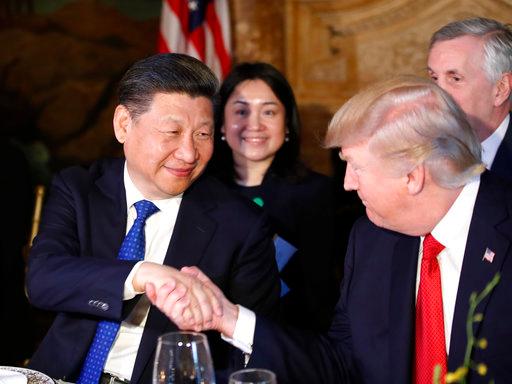
President Donald Trump and Chinese President Xi Jinping shake hands during a dinner at Mar-a-Lago, Thursday, April 6, 2017, in Palm Beach, Fla. (AP Photo/Alex Brandon)AP Photo/Alex Brandon
Add Fortune on Google for similar content.

Among the many U.S.-China summits held in the last four decades, President Trump’s meeting last week with Xi Jinping at Mar-a-Lago was probably the most unusual – if not the strangest – affair.

For one, Trump warned the Twittersphere of a “very difficult” meeting with Xi because of America’s large trade deficit with China. Then he surprised his guest with news that he had just ordered a cruise missile strike on Syria. The ensuing media frenzy completely overshadowed the most important U.S.-China summit in years.

Xi, who is typically obsessed with following protocols and expects others to do the same, was likely caught off guard. But while there was little doubt that Xi and his delegation were not pleased by the unexpected turn of events that ended the summit on the wrong kind of bang, they might nevertheless appreciate their host’s effusive spin of the get-together. As the summit closed on Friday, Trump told reporters that he had made “tremendous progress in our relationship with China” and called the U.S.-China relationship he has developed with Xi “outstanding.” He also predicted that “lots of very potentially bad problems will be going away.”

In reality, though, based on officially disclosed details of the summit, little substantive progress was made on the most serious and divisive issues between the two countries, such as currency manipulation and trade deficits. In fact, even Trump himself implicitly acknowledged this fact when he tweeted, after his guest was safely back in Beijing, that despite the goodwill and friendship between him and Xi, “only time will tell on trade.”

This rather sober assessment on trade is actually not far off the mark. To be sure, China did make two relatively minor concessions at the summit: Beijing will resume imports of banned American beef and allow U.S. financial firms to set up majority-owned subsidiaries in China. But Trump and Xi did not reach any substantive trade deals. What they did agree to do is to start a 100-day process of seeking compromises on trade between the US and China. In other words, the Mar-a-Lago summit bought both sides valuable time, but little else, in averting a potential trade war.

On North Korea, arguably the central national security issue on the summit’s agenda, Trump and Xi did not reach any deal, even though they agreed that Pyongyang poses a serious threat to regional peace. According to White House press secretary Sean Spicer, the U.S. and China would increase cooperation to “convince North Korea … to dismantle its illegal nuclear and missile programs.” But we do not know what such “cooperation” would be. In all likelihood, Washington and Beijing have yet to determine what specific steps China should or can take in containing the North Korean threat.

For those obsessed with score-keeping, determining which leader, Xi or Trump, has improved his bargaining position as the result of the summit is a tricky exercise. In the media commentaries on the outcome of the summit, much attention has been directed to the implications of the U.S. missile strike against Syria. The conventional wisdom is that, with this unexpected shift in policy, Trump has put Xi on notice: if China fails to act on North Korea, the U.S. will take unilateral military action. Fearing the potentially devastating consequences, Beijing might now have greater incentives to cooperate with the U.S.

This could be true. But a brief moment of reflection would show that, on balance, Xi could not have been displeased by Trump’s volte face on Syria. For one thing, striking Russia’s client state has all but ensured that a U.S.-Russian rapprochement, a development greatly feared in Beijing, will not happen any time soon. For another, Trump’s opening salvo of missiles is unlikely to be a one-off shot. Further escalations could drag his young administration deeper into the Middle East’s quagmire, thus distracting his attention away from China.

As far as Trump’s China policy is concerned, the future remains cloudy. The Mar-a-Lago summit has improved the atmospherics of U.S.-China relations and started a process that may reduce trade tensions and stabilize U.S.-China ties. But there is no evidence that the summit has produced concrete agreements that have removed the underlying sources of conflict between the two countries over geopolitical security and trade. Of course, we hope that the time bought by this summit will make it easier for Trump and Xi to keep the U.S.-China relationship on an even keel. Yet, as long as economic nationalists and establishment pragmatists in the White House wage pitched battles over the China policy and Beijing and Washington continue to see each other as potential adversaries, Trump’s prediction that the “lots of very potentially bad problems will be going away” will turn out to be wildly optimistic.

Minxin Pei is a professor of government at Claremont McKenna College and author of the book, China’s Crony Capitalism (2016).

About the Author
By Minxin Pei
See full bioRight Arrow Button Icon
Add Fortune on Google for similar content.

Latest in Commentary

Finance
Lorem ipsum dolor sit amet, consectetur adipiscing elit, sed do eiusmod tempor incididunt ut labore et dolore magna aliqua. Ut enim ad minim veniam
By Fortune Editors
October 20, 2025
Finance
Lorem ipsum dolor sit amet, consectetur adipiscing elit, sed do eiusmod tempor incididunt ut labore et dolore magna aliqua. Ut enim ad minim veniam
By Fortune Editors
October 20, 2025
Finance
Lorem ipsum dolor sit amet, consectetur adipiscing elit, sed do eiusmod tempor incididunt ut labore et dolore magna aliqua. Ut enim ad minim veniam
By Fortune Editors
October 20, 2025
Finance
Lorem ipsum dolor sit amet, consectetur adipiscing elit, sed do eiusmod tempor incididunt ut labore et dolore magna aliqua. Ut enim ad minim veniam
By Fortune Editors
October 20, 2025
Finance
Lorem ipsum dolor sit amet, consectetur adipiscing elit, sed do eiusmod tempor incididunt ut labore et dolore magna aliqua. Ut enim ad minim veniam
By Fortune Editors
October 20, 2025
Finance
Lorem ipsum dolor sit amet, consectetur adipiscing elit, sed do eiusmod tempor incididunt ut labore et dolore magna aliqua. Ut enim ad minim veniam
By Fortune Editors
October 20, 2025

Most Popular

Finance
Lorem ipsum dolor sit amet, consectetur adipiscing elit, sed do eiusmod tempor incididunt ut labore et dolore magna aliqua. Ut enim ad minim veniam
By Fortune Editors
October 20, 2025
Finance
Lorem ipsum dolor sit amet, consectetur adipiscing elit, sed do eiusmod tempor incididunt ut labore et dolore magna aliqua. Ut enim ad minim veniam
By Fortune Editors
October 20, 2025
Finance
Lorem ipsum dolor sit amet, consectetur adipiscing elit, sed do eiusmod tempor incididunt ut labore et dolore magna aliqua. Ut enim ad minim veniam
By Fortune Editors
October 20, 2025
Finance
Lorem ipsum dolor sit amet, consectetur adipiscing elit, sed do eiusmod tempor incididunt ut labore et dolore magna aliqua. Ut enim ad minim veniam
By Fortune Editors
October 20, 2025
Finance
Lorem ipsum dolor sit amet, consectetur adipiscing elit, sed do eiusmod tempor incididunt ut labore et dolore magna aliqua. Ut enim ad minim veniam
By Fortune Editors
October 20, 2025
Finance
Lorem ipsum dolor sit amet, consectetur adipiscing elit, sed do eiusmod tempor incididunt ut labore et dolore magna aliqua. Ut enim ad minim veniam
By Fortune Editors
October 20, 2025
Fortune Secondary Logo
Rankings
  • 100 Best Companies
  • Fortune 500
  • Global 500
  • Fortune 500 Europe
  • Most Powerful Women
  • World's Most Admired Companies
  • See All Rankings
  • Lists Calendar
Sections
  • Finance
  • Fortune Crypto
  • Features
  • Leadership
  • Health
  • Commentary
  • Success
  • Retail
  • Mpw
  • Tech
  • Lifestyle
  • CEO Initiative
  • Asia
  • Politics
  • Conferences
  • Europe
  • Newsletters
  • Personal Finance
  • Environment
  • Magazine
  • Education
Customer Support
  • Frequently Asked Questions
  • Customer Service Portal
  • Privacy Policy
  • Terms Of Use
  • Single Issues For Purchase
  • International Print
Commercial Services
  • Advertising
  • Fortune Brand Studio
  • Fortune Analytics
  • Fortune Conferences
  • Business Development
  • Group Subscriptions
About Us
  • About Us
  • Press Center
  • Work At Fortune
  • Terms And Conditions
  • Site Map
  • About Us
  • Press Center
  • Work At Fortune
  • Terms And Conditions
  • Site Map
  • Facebook icon
  • Twitter icon
  • LinkedIn icon
  • Instagram icon
  • TikTok icon
  • YouTube icon

Latest in Commentary

Roderick Wong, MD is Managing Partner and Chief Investment Officer of RTW Investments
Commentary250 Years of Innovation
When 10,000 doctors stood up and cheered for a cancer drug — America’s innovation machine made it possible
By Roderick WongJuly 25, 2026
7 hours ago
t
CommentaryCommunity
Ronald Reagan center director: How to talk politics with family, friends and neighbors, without losing them
By Frederick J. Ryan, Jr.July 25, 2026
7 hours ago
m
Commentarydisruption
The Messi Test and how the Spaniards messed with it: what the World Cup final taught me about the jobs AI can’t touch
By Bhaskar ChakravortiJuly 25, 2026
7 hours ago
alex
CommentaryEntrepreneurship
I sold my startup for millions without a single dollar in revenue. Here’s why that’s the point
By Alexander Kardos-NyheimJuly 25, 2026
11 hours ago
craig
CommentaryPharmaceutical Industry
Big pharma’s patent cliff meets a new biotech Cold War: We need to outrun China, not outlaw it
By Craig GarthwaiteJuly 24, 2026
1 day ago
tim
Commentarysmartphones and mobile devices
NYU Stern pricing expert: There’s a hidden ‘AI tax’ hitting Apple, Dell — and your next phone
By Srikanth JagabathulaJuly 24, 2026
1 day ago

Most Popular

'The demographic dividend of the last 40 years is ending': J.P. Morgan says the world is running out of the two things that kept interest rates down
Economy
'The demographic dividend of the last 40 years is ending': J.P. Morgan says the world is running out of the two things that kept interest rates down
By Eleanor PringleJuly 24, 2026
1 day ago
Jensen Huang made his $172 billion fortune on AI chips. His family's $75 million gift to Vanderbilt argues art decides what technology is for
Big Tech
Jensen Huang made his $172 billion fortune on AI chips. His family's $75 million gift to Vanderbilt argues art decides what technology is for
By Sydney LakeJuly 23, 2026
2 days ago
The millennial generation is split in 2: an older crowd with boomer-style comfort, a younger set going 'back to the early 1900s'
Real Estate
The millennial generation is split in 2: an older crowd with boomer-style comfort, a younger set going 'back to the early 1900s'
By Nick LichtenbergJuly 25, 2026
7 hours ago
The $39 trillion U.S. national debt isn’t as high as Japan’s and Singapore’s relative to economy size—and yet it's still worse somehow
Economy
The $39 trillion U.S. national debt isn’t as high as Japan’s and Singapore’s relative to economy size—and yet it's still worse somehow
By Sasha RogelbergJuly 23, 2026
2 days ago
An 11-year-old is cleaning his neighbors' trash cans for $10 each—he now has 100K followers as teens face the worst summer job market since 1948
Success
An 11-year-old is cleaning his neighbors' trash cans for $10 each—he now has 100K followers as teens face the worst summer job market since 1948
By Orianna Rosa RoyleJuly 25, 2026
9 hours ago
Current price of oil as of July 24, 2026
Personal Finance
Current price of oil as of July 24, 2026
By Joseph HostetlerJuly 24, 2026
1 day ago

© 2026 Fortune Media IP Limited. All Rights Reserved. Use of this site constitutes acceptance of our Terms of Use and Privacy Policy | CA Notice at Collection and Privacy Notice | Do Not Sell/Share My Personal Information
FORTUNE is a trademark of Fortune Media IP Limited, registered in the U.S. and other countries. FORTUNE may receive compensation for some links to products and services on this website. Offers may be subject to change without notice.