• Home
  • Latest
  • Fortune 500
  • Finance
  • Tech
  • Leadership
  • Lifestyle
  • Rankings
  • Multimedia

Trendingnow

1

After forcing workers back to the office, Goldman Sachs and JPMorgan Chase are now letting their staff work remotely—but only for the World Cup

2

The Pentagon said Iran War costs $29 billion, but the real cost is closer to $200 billion—and counting

3

Markets tumble worldwide as Fed resets expectations: $400 billion wiped off SpaceX stock

1

After forcing workers back to the office, Goldman Sachs and JPMorgan Chase are now letting their staff work remotely—but only for the World Cup

2

The Pentagon said Iran War costs $29 billion, but the real cost is closer to $200 billion—and counting

3

Markets tumble worldwide as Fed resets expectations: $400 billion wiped off SpaceX stock
CommentaryIndia

Why India’s Central Banker Is Really Leaving

By
Mihir Kapadia
Mihir Kapadia
Down Arrow Button Icon
By
Mihir Kapadia
Mihir Kapadia
Down Arrow Button Icon
July 13, 2016, 7:00 PM ET
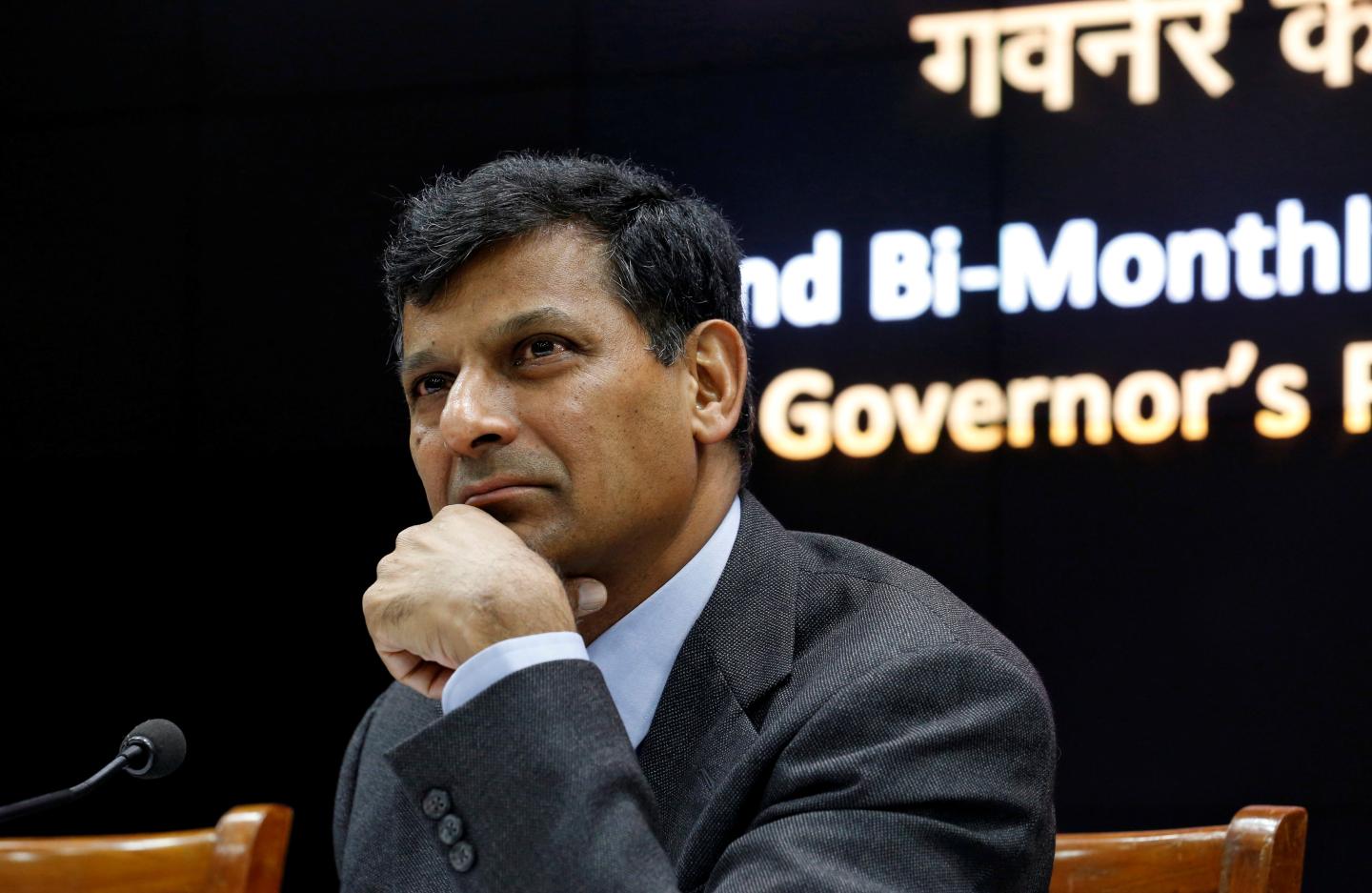
RBI Governor Rajan attends a news conference after their bimonthly monetary policy review in Mumbai
Reserve Bank of India (RBI) Governor Raghuram Rajan attends a news conference after their bimonthly monetary policy review in Mumbai, India, June 7, 2016. REUTERS/Danish Siddiqui/File Photo - RTSGH16Danish Siddiqui — Reuters
Add Fortune on Google for similar content.

Mihir Kapadia is CEO of Sun Global Investments, a London-based advisory firm.

Indian Central Bank Gov. Raghuram Rajan’s recent announcement that he would step down when his term ends in September has unnerved investors around the world. Rajan was widely credited for keeping India’s economy on a stable path; investors worldwide embraced his hawkish policies and greater push for banking reforms.

Judging by the way markets have responded to his exit last month, claims that India will suffer without Rajan is overdone if we look back at the response of Alan Greenspan’s departure from the U.S. Federal Reserve in 2006. During the early years of his 20 years as Fed chairman, Greenspan was just as revered. Both Rajan and Greenspan inherited weak economies; their policies — and those of the government’s — brought a huge improvement to economic conditions. The ex-Fed Chairman lost his halo in 2008 when the U.S. economy fell into a financial crisis, and he had to bear the burden of his policies.

By comparison, Rajan’s performance didn’t appear to please the government under Prime Minister Narendra Modi, as officials and citizens grew frustrated with the lack of credit growth amid a slow growing economy. And while Rajan’s independent views echoed the views of other country’s central banks, they were sometimes accompanied by stern warnings that often infuriated the political elite. Rajan clashed with Modi’s government over interest rates; the governor preferred higher rates to guard against inflation while the government pushed for lower rates to stimulate growth.

So to suggest India will suffer without Rajan has very limited merit. It will be the policies of the government and future governors that will determine whether India finally achieves what it has been dreaming of in recent times: the coveted status of an economic superpower.

Despite frictions between Rajan and Modi’s government, officials had often lauded Rajan for his stewardship at the central bank. Indeed, his exit has come not only as a surprise, but an alarm for many investors. Realistically, as Rajan has suggested, the office of the governor is much bigger than an individual personality. Unlike its neighbors, India has been lauded for its independent institutions where its democracy — the world’s largest — has thrived in a region vulnerable to dynastic politics or authoritarian regimes.

Rajan has been influential. One of his most memorable moves came in October 2013 when he encouraged foreign investments into India at a time when the previous government did little amid various charges of scams and misrule. Rajan brought credibility back to a country that had squandered all its prospects and had gone from one of the world’s best growth-oriented economies to a sick one. If one was to look at his legacy, it would be adding credibility to India’s central bank as an institution the currency will continue to run on its own merit as it has for several decades, albeit with many of the improvements introduced under Rajan.

Under Modi, a lot has changed in India. Even though critics argue that the economic reforms he has promised have been slow to progress, the country thus far has not witnessed any of the corruption scams and inertia in decision-making seen with the previous government. Modi’s government has also not been averse to shaking up many of the unnecessary practices and laws that had burdened the country during the previous regime. They have introduced several new laws to support banks in recovering their dues, whilst simultaneously introducing new bankruptcy laws that will smoothen the procedures.

The government has prided itself on its quick policy making and there has been something of a patriotic zeal in their chest-beating over results – both delivered and hoped for. This is where Rajan has stumbled. His politically incorrect narrative infuriated several politicians who see the new government’s achievements being under-appreciated by both the governor and the world at large. They must certainly not like their successes being attributed solely to Rajan’s tenure as the governor.

Nonetheless, Rajan’s popularity can’t be dismissed. Announcement of his exit came amid the government’s sweeping efforts to reform foreign direct investments. There has been a dramatic FDI overhaul across no fewer than nine key sectors — a move that has surprised some, as government reforms typically take much longer to implement. The more cynical among us could perhaps suggest that the timing of India’s FDI reforms implies a certain desire by the government to deflect attention away from Rajan. However, the nature of the reforms, rather than the timing, is more interesting – they are seismic.

India was the largest foreign direct investment destination in the world last year in terms of investments announced, totaling some $63billion, and these further relaxations that Modi’s government has pushed through could help India consolidate its position. Consolidation is key at the moment, after all. India and its banks are currently lurching under the pressure of bad loans – admittedly, something that all developing markets seemingly must go through – and foreign direct investment is perhaps the only investment engine available to restart the growth cycle.

Corporate investment and exports have both slumped and foreign investment is seen as the solution – for pretty good reason. Modi’s government has been strong on business, strong on external diplomacy and, from the start, strong on opening India’s doors for foreign investment. FDI has brought success to Modi’s India, it would have been a real surprise if it wasn’t a focal point of his long-term plan for sustained economic success.

The flurry of relaxations in FDI is probably at least in part a product of Rajan leaving. However, the decision to relax norms in an attempt to make India the world’s most open economy for FDI is no knee-jerk reaction. Foreign direct investment has benefited the Indian economy massively in the two years since Modi swept into power, and he is now making sure that the positive sentiment between India and foreign investors outlives Rajan’s tenure at India’s central bank.

About the Author
By Mihir Kapadia
See full bioRight Arrow Button Icon
Add Fortune on Google for similar content.

Latest in Commentary

Finance
Lorem ipsum dolor sit amet, consectetur adipiscing elit, sed do eiusmod tempor incididunt ut labore et dolore magna aliqua. Ut enim ad minim veniam
By Fortune Editors
October 20, 2025
Finance
Lorem ipsum dolor sit amet, consectetur adipiscing elit, sed do eiusmod tempor incididunt ut labore et dolore magna aliqua. Ut enim ad minim veniam
By Fortune Editors
October 20, 2025
Finance
Lorem ipsum dolor sit amet, consectetur adipiscing elit, sed do eiusmod tempor incididunt ut labore et dolore magna aliqua. Ut enim ad minim veniam
By Fortune Editors
October 20, 2025
Finance
Lorem ipsum dolor sit amet, consectetur adipiscing elit, sed do eiusmod tempor incididunt ut labore et dolore magna aliqua. Ut enim ad minim veniam
By Fortune Editors
October 20, 2025
Finance
Lorem ipsum dolor sit amet, consectetur adipiscing elit, sed do eiusmod tempor incididunt ut labore et dolore magna aliqua. Ut enim ad minim veniam
By Fortune Editors
October 20, 2025
Finance
Lorem ipsum dolor sit amet, consectetur adipiscing elit, sed do eiusmod tempor incididunt ut labore et dolore magna aliqua. Ut enim ad minim veniam
By Fortune Editors
October 20, 2025

Most Popular

Finance
Lorem ipsum dolor sit amet, consectetur adipiscing elit, sed do eiusmod tempor incididunt ut labore et dolore magna aliqua. Ut enim ad minim veniam
By Fortune Editors
October 20, 2025
Finance
Lorem ipsum dolor sit amet, consectetur adipiscing elit, sed do eiusmod tempor incididunt ut labore et dolore magna aliqua. Ut enim ad minim veniam
By Fortune Editors
October 20, 2025
Finance
Lorem ipsum dolor sit amet, consectetur adipiscing elit, sed do eiusmod tempor incididunt ut labore et dolore magna aliqua. Ut enim ad minim veniam
By Fortune Editors
October 20, 2025
Finance
Lorem ipsum dolor sit amet, consectetur adipiscing elit, sed do eiusmod tempor incididunt ut labore et dolore magna aliqua. Ut enim ad minim veniam
By Fortune Editors
October 20, 2025
Finance
Lorem ipsum dolor sit amet, consectetur adipiscing elit, sed do eiusmod tempor incididunt ut labore et dolore magna aliqua. Ut enim ad minim veniam
By Fortune Editors
October 20, 2025
Finance
Lorem ipsum dolor sit amet, consectetur adipiscing elit, sed do eiusmod tempor incididunt ut labore et dolore magna aliqua. Ut enim ad minim veniam
By Fortune Editors
October 20, 2025
Fortune Secondary Logo
Rankings
  • 100 Best Companies
  • Fortune 500
  • Global 500
  • Fortune 500 Europe
  • Most Powerful Women
  • World's Most Admired Companies
  • See All Rankings
  • Lists Calendar
Sections
  • Finance
  • Fortune Crypto
  • Features
  • Leadership
  • Health
  • Commentary
  • Success
  • Retail
  • Mpw
  • Tech
  • Lifestyle
  • CEO Initiative
  • Asia
  • Politics
  • Conferences
  • Europe
  • Newsletters
  • Personal Finance
  • Environment
  • Magazine
  • Education
Customer Support
  • Frequently Asked Questions
  • Customer Service Portal
  • Privacy Policy
  • Terms Of Use
  • Single Issues For Purchase
  • International Print
Commercial Services
  • Advertising
  • Fortune Brand Studio
  • Fortune Analytics
  • Fortune Conferences
  • Business Development
  • Group Subscriptions
About Us
  • About Us
  • Press Center
  • Work At Fortune
  • Terms And Conditions
  • Site Map
  • About Us
  • Press Center
  • Work At Fortune
  • Terms And Conditions
  • Site Map
  • Facebook icon
  • Twitter icon
  • LinkedIn icon
  • Instagram icon
  • Pinterest icon

Latest in Commentary

steve
Commentary250 Years of Innovation
Steve Case: America was built by entrepreneurs. Here’s how we keep that edge for the next 250 years
By Steve CaseJune 24, 2026
4 hours ago
t
CommentaryWhite House
Trump mistakes the bully pulpit for bullying leadership — history’s villains were never heroes
By Jeffrey Sonnenfeld and Steven TianJune 24, 2026
4 hours ago
mg
CommentaryHealth
The ‘tech neck’ time bomb: why 43 million young Americans could cripple U.S. health care within a generation
By Michael GerlingJune 24, 2026
5 hours ago
sb
Commentaryclimate change
The climate policy triangle: why leaders can no longer choose between growth, security and sustainability
By Sebastian BuckupJune 23, 2026
19 hours ago
brett
CommentaryManagement
Middle managers aren’t going extinct—they’re evolving into something more powerful
By Brett HurtJune 23, 2026
1 day ago
ravi
CommentaryAI agents
Yale School of Management: surveillance pricing is just the beginning. AI agents will be the real test of corporate trust
By Ravi Dhar and Jon IwataJune 23, 2026
1 day ago

Most Popular

After forcing workers back to the office, Goldman Sachs and JPMorgan Chase are now letting their staff work remotely—but only for the World Cup
Success
After forcing workers back to the office, Goldman Sachs and JPMorgan Chase are now letting their staff work remotely—but only for the World Cup
By Orianna Rosa RoyleJune 23, 2026
1 day ago
The Pentagon said Iran War costs $29 billion, but the real cost is closer to $200 billion—and counting
Economy
The Pentagon said Iran War costs $29 billion, but the real cost is closer to $200 billion—and counting
By Jacqueline MunisJune 24, 2026
9 hours ago
Markets tumble worldwide as Fed resets expectations: $400 billion wiped off SpaceX stock
Banking
Markets tumble worldwide as Fed resets expectations: $400 billion wiped off SpaceX stock
By Jim EdwardsJune 23, 2026
1 day ago
Current price of oil as of June 23, 2026
Personal Finance
Current price of oil as of June 23, 2026
By Joseph HostetlerJune 23, 2026
1 day ago
Current price of gold as of June 23, 2026
Personal Finance
Current price of gold as of June 23, 2026
By Danny BakstJune 23, 2026
1 day ago
Texas and Charlotte used to build huge McMansions—now they're copying the California design tricks they once mocked
Real Estate
Texas and Charlotte used to build huge McMansions—now they're copying the California design tricks they once mocked
By Sydney LakeJune 22, 2026
2 days ago

© 2026 Fortune Media IP Limited. All Rights Reserved. Use of this site constitutes acceptance of our Terms of Use and Privacy Policy | CA Notice at Collection and Privacy Notice | Do Not Sell/Share My Personal Information
FORTUNE is a trademark of Fortune Media IP Limited, registered in the U.S. and other countries. FORTUNE may receive compensation for some links to products and services on this website. Offers may be subject to change without notice.