• Home
  • Latest
  • Fortune 500
  • Finance
  • Tech
  • Leadership
  • Lifestyle
  • Rankings
  • Multimedia
CommentaryBen Bernanke

In his new memoir, Ben Bernanke is wrong about the fall of Lehman

By
Peter J. Wallison
Peter J. Wallison
Down Arrow Button Icon
By
Peter J. Wallison
Peter J. Wallison
Down Arrow Button Icon
October 16, 2015, 9:06 AM ET

In his just released memoir, The Courage to Act, former Fed chairman Ben Bernanke is still not willing to disclose the real reason why he and Treasury Secretary Hank Paulson allowed Lehman to fail in September 2008— anact which triggered the financial crisis and the ensuing Great Recession.

Bernanke and Paulson’s original mistake in March 2008 was to rescue Bear Stearns, the smallest of the Wall Street investment banks. This was unnecessary, but led market participants to expect that no other large financial firms would be allowed to fail. When Lehman was not rescued, the market’s expectations were upended and an enormous panic ensued.

Why did Bernanke and Paulson rescue Bear Stearns but not Lehman, which was about 50% larger than Bear Stearns?

The first excuse Bernanke offered when chaos followed Lehman’s bankruptcy was that the Fed did not have the legal authority to make the loan. That was also his position when he testified before the Financial Crisis Inquiry Commission, of which I was a member. There he said, when I questioned him, that the Fed needed collateral to make such a loan and Lehman didn’t have enough. He was vague about what he knew of Lehman’s financial condition, and how he knew it. I was puzzled at the time about why he was not more informed about matters of such importance, especially when Bernanke was on record as having told the FCIC that he knew a catastrophe would ensue if Lehman was not rescued.

Now, in his new book, Bernanke says that after Lehman’s bankruptcy he and Paulson should have been more candid about why they didn’t rescue the investment bank. They couldn’t tell the truth, he suggests, because they didn’t want to spook the market. “We had agreed in advance to be vague,” he says, “because we were intensely concerned that acknowledging our inability to save Lehman would hurt market confidence.” This, he says, allowed people to believe, erroneously, that the government had deliberately allowed Lehman to fail. Yet what has since come to light suggests that Bernanke and Paulson could have rescued Lehman, and possibly averted the catastrophe that followed Lehman’s failure, but failed to act for personal reasons.

On September 29, 2014, a New York Times story by Peter Eavis and James B. Stewart reported that unnamed economists at the New York Fed had analyzed Lehman’s financial condition before that fateful weekend, and believed that, as the article stated, “Lehman might, in fact, be a candidate for rescue.” In other words, these economists had concluded that Lehman had sufficient collateral for a loan from the Fed, but they were never asked for their views. This suggests that neither Bernanke nor anyone else really wanted to know whether Lehman could be rescued.

There is good reason to believe this. Paulson had made it clear, only days before the Lehman failure, that he would not support the use of government funds to rescue Lehman. In his book, Stress Test, former New York Fed president and former Treasury secretary Tim Geithner describes a conference call with Paulson on the evening of September 11 — only four days before Lehman filed for bankruptcy. In that call, which also included Bernanke and SEC chair Chris Cox, Paulson said that “he didn’t want to be known as ‘Mr. Bailout,’ that he could not support another Bear Stearns solution.” Indeed, Bernanke himself reported the same conversation, in an interview that appears in David Wessel’s book, In Fed We Trust.
Regardless of Bernanke’s courage to act, he couldn’t have acted after Paulson’s decision. The Fed could not take responsibility for bailing out Lehman without the Treasury secretary’s support. Instead, carrying out the idea that Lehman couldn’t have been rescued, after the crash Paulson and Bernanke went to Congress for $800 billion in TARP funds—not because the Fed couldn’t rescue Lehman, but because no one wanted to take responsibility for doing so. TARP, then, became a source of fully justified taxpayer rage about bailing out Wall Street, even though it is not clear that any of the largest banks that received TARP funds actually needed a bailout.

The decision of Bernanke and Paulson not to tell the truth about why Lehman was allowed to fail has had major consequences. Most importantly, it reinforced the impression that the government needed even more power than it already had to rescue failing firms. This provided the foundation for the Dodd-Frank Act, and the reason for the additional powers given to the Treasury, the Fed and the other financial regulators. Today, the regulations spawned by Dodd-Frank are responsible for the slow U.S. economic recovery.

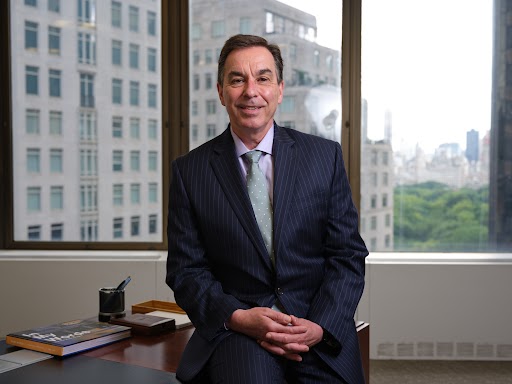
Peter J. Wallison is the Arthur F. Burns fellow in Financial Policy Studies at AEI. He is the author of Hidden in Plain Sight: What Really Caused the World’s Worst Financial Crisis and Why It Could Happen Again. The book describes what really happened in 2008.
About the Author
By Peter J. Wallison
See full bioRight Arrow Button Icon

Latest in Commentary

Finance
Lorem ipsum dolor sit amet, consectetur adipiscing elit, sed do eiusmod tempor incididunt ut labore et dolore magna aliqua. Ut enim ad minim veniam
By Fortune Editors
October 20, 2025
Finance
Lorem ipsum dolor sit amet, consectetur adipiscing elit, sed do eiusmod tempor incididunt ut labore et dolore magna aliqua. Ut enim ad minim veniam
By Fortune Editors
October 20, 2025
Finance
Lorem ipsum dolor sit amet, consectetur adipiscing elit, sed do eiusmod tempor incididunt ut labore et dolore magna aliqua. Ut enim ad minim veniam
By Fortune Editors
October 20, 2025
Finance
Lorem ipsum dolor sit amet, consectetur adipiscing elit, sed do eiusmod tempor incididunt ut labore et dolore magna aliqua. Ut enim ad minim veniam
By Fortune Editors
October 20, 2025
Finance
Lorem ipsum dolor sit amet, consectetur adipiscing elit, sed do eiusmod tempor incididunt ut labore et dolore magna aliqua. Ut enim ad minim veniam
By Fortune Editors
October 20, 2025
Finance
Lorem ipsum dolor sit amet, consectetur adipiscing elit, sed do eiusmod tempor incididunt ut labore et dolore magna aliqua. Ut enim ad minim veniam
By Fortune Editors
October 20, 2025

Most Popular

Finance
Lorem ipsum dolor sit amet, consectetur adipiscing elit, sed do eiusmod tempor incididunt ut labore et dolore magna aliqua. Ut enim ad minim veniam
By Fortune Editors
October 20, 2025
Finance
Lorem ipsum dolor sit amet, consectetur adipiscing elit, sed do eiusmod tempor incididunt ut labore et dolore magna aliqua. Ut enim ad minim veniam
By Fortune Editors
October 20, 2025
Finance
Lorem ipsum dolor sit amet, consectetur adipiscing elit, sed do eiusmod tempor incididunt ut labore et dolore magna aliqua. Ut enim ad minim veniam
By Fortune Editors
October 20, 2025
Finance
Lorem ipsum dolor sit amet, consectetur adipiscing elit, sed do eiusmod tempor incididunt ut labore et dolore magna aliqua. Ut enim ad minim veniam
By Fortune Editors
October 20, 2025
Finance
Lorem ipsum dolor sit amet, consectetur adipiscing elit, sed do eiusmod tempor incididunt ut labore et dolore magna aliqua. Ut enim ad minim veniam
By Fortune Editors
October 20, 2025
Finance
Lorem ipsum dolor sit amet, consectetur adipiscing elit, sed do eiusmod tempor incididunt ut labore et dolore magna aliqua. Ut enim ad minim veniam
By Fortune Editors
October 20, 2025
Rankings
  • 100 Best Companies
  • Fortune 500
  • Global 500
  • Fortune 500 Europe
  • Most Powerful Women
  • Future 50
  • World’s Most Admired Companies
  • See All Rankings
Sections
  • Finance
  • Leadership
  • Success
  • Tech
  • Asia
  • Europe
  • Environment
  • Fortune Crypto
  • Health
  • Retail
  • Lifestyle
  • Politics
  • Newsletters
  • Magazine
  • Features
  • Commentary
  • Mpw
  • CEO Initiative
  • Conferences
  • Personal Finance
  • Education
Customer Support
  • Frequently Asked Questions
  • Customer Service Portal
  • Privacy Policy
  • Terms Of Use
  • Single Issues For Purchase
  • International Print
Commercial Services
  • Advertising
  • Fortune Brand Studio
  • Fortune Analytics
  • Fortune Conferences
  • Business Development
About Us
  • About Us
  • Editorial Calendar
  • Press Center
  • Work At Fortune
  • Diversity And Inclusion
  • Terms And Conditions
  • Site Map
  • Facebook icon
  • Twitter icon
  • LinkedIn icon
  • Instagram icon
  • Pinterest icon

© 2026 Fortune Media IP Limited. All Rights Reserved. Use of this site constitutes acceptance of our Terms of Use and Privacy Policy | CA Notice at Collection and Privacy Notice | Do Not Sell/Share My Personal Information
FORTUNE is a trademark of Fortune Media IP Limited, registered in the U.S. and other countries. FORTUNE may receive compensation for some links to products and services on this website. Offers may be subject to change without notice.


Most Popular

placeholder alt text
Politics
Peter Thiel warns the Antichrist and apocalypse are linked to the ‘end of modernity’ currently happening—and cites Greta Thunberg as a driving example
By Nick LichtenbergFebruary 4, 2026
1 day ago
placeholder alt text
Success
After decades in the music industry, Pharrell Williams admits he never stops working: ‘If you do what you love everyday, you’ll get paid for free'
By Emma BurleighFebruary 3, 2026
2 days ago
placeholder alt text
Economy
Trump may have shot himself in the foot at the Fed, as Powell could stay on while Miran resigns from White House post
By Eleanor PringleFebruary 4, 2026
1 day ago
placeholder alt text
Investing
Tech stocks go into free fall as it dawns on traders that AI has the ability to cut revenues across the board
By Jim EdwardsFebruary 4, 2026
2 days ago
placeholder alt text
Investing
Ray Dalio warns the world is ‘on the brink’ of a capital war of weaponizing money—and gold is the best way for people to protect themselves
By Sasha RogelbergFebruary 4, 2026
1 day ago
placeholder alt text
Commentary
I've studied nonviolent resistance in war zones for 20 years and Minnesota reminds me of Colombia, the Philippines and Syria
By Oliver Kaplan and The ConversationFebruary 3, 2026
2 days ago

Latest in Commentary

desantis
CommentaryLeadership
Understanding corporate leaders’ muted Minnesota response: the example of Disney, Florida and conservative retaliation
By Alessandro Piazza and The ConversationFebruary 5, 2026
6 hours ago
grace
CommentaryRobotics
I’m a 25-year-old founder who loves robots but too many humanoids are militant and creepy-looking. Things need to change—just look at Elon Musk
By Grace BrownFebruary 5, 2026
9 hours ago
sam wolf
Commentaryactivist investing
Activist investors are more dangerous to CEOs than ever. Here are 3 ways to safeguard your leadership
By Sam WolfFebruary 5, 2026
10 hours ago
warsh
CommentaryFederal Reserve
Kevin Warsh’s Fed criticisms make sense, but he’s got a ‘cleanest dirty shirt’ problem. Here’s the triple dilemma he faces
By Daniel J. ArbessFebruary 5, 2026
10 hours ago
disney
CommentaryDisney
Disney’s new D’Amaro-land:  a dream team succession saga comes to life
By Jeffrey Sonnenfeld and Stephen HenriquesFebruary 4, 2026
1 day ago
minnesota
CommentaryMinnesota
I’ve studied nonviolent resistance in war zones for 20 years and Minnesota reminds me of Colombia, the Philippines and Syria
By Oliver Kaplan and The ConversationFebruary 3, 2026
2 days ago