• Home
  • Latest
  • Fortune 500
  • Finance
  • Tech
  • Leadership
  • Lifestyle
  • Rankings
  • Multimedia

Trendingnow

1

After forcing workers back to the office, Goldman Sachs and JPMorgan Chase are now letting their staff work remotely—but only for the World Cup

2

The Pentagon said Iran War costs $29 billion, but the real cost is closer to $200 billion—and counting

3

Current price of oil as of June 23, 2026

1

After forcing workers back to the office, Goldman Sachs and JPMorgan Chase are now letting their staff work remotely—but only for the World Cup

2

The Pentagon said Iran War costs $29 billion, but the real cost is closer to $200 billion—and counting

3

Current price of oil as of June 23, 2026
Commentary

These 4 car trends could mean fewer traffic jams

By
Stefan Knupfer
Stefan Knupfer
and
Bethany Cianciolo
Bethany Cianciolo
Down Arrow Button Icon
By
Stefan Knupfer
Stefan Knupfer
and
Bethany Cianciolo
Bethany Cianciolo
Down Arrow Button Icon
September 23, 2015, 11:30 AM ET
Law Enforcement Officials Unhappy With WAZE GPS Appp
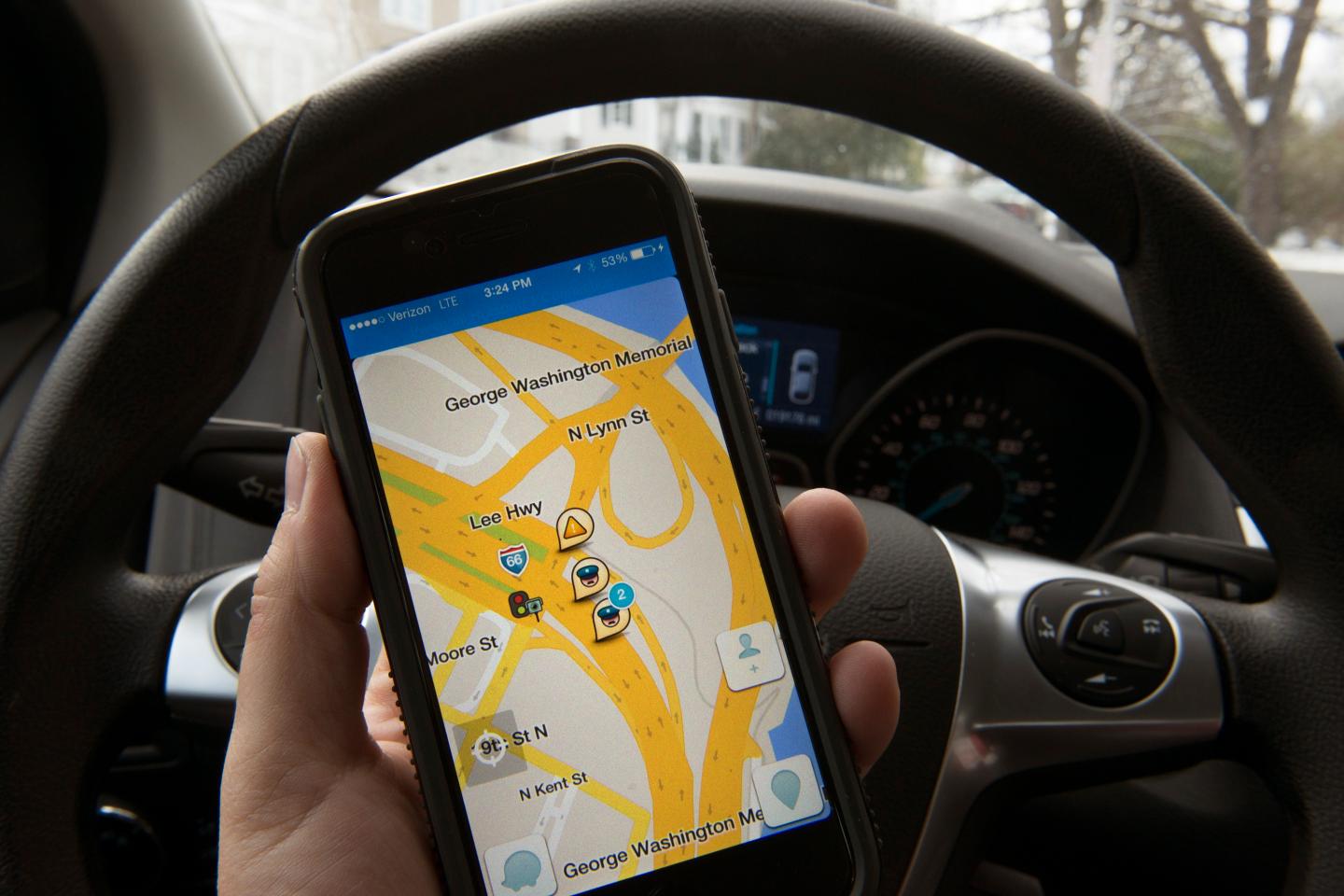
WASHINGTON, DC - JANUARY 27: Screen view of the WAZE traffic gps app on an iphone on January 27, 2015. The application gives users real time traffic gps service, the ability to crowd-source report on road hazards, standstill traffic, police activity and photo traffic cameras. (Photo by Linda Davidson / The Washington Post via Getty Images)Photograph by Linda Davidson — The Washington Post/Getty Images
Add Fortune on Google for similar content.

I am not anti-car. I have worked with the automotive industry for years. I own six cars (two of them classics). And I came of age, in driving terms, on Germany’s autobahns: I know the thrill of driving with the pedal to the metal.

Even so, there are matters that concern me.

⦁ There are about 1.2 billion cars on the road; by 2030, that figure could double, as new members of the global middle class seize the chance to buy cars. Most of those cars will be used, in cities. Already, we hear of massive traffic jams—Sao Paulo once suffered one 192 miles-long. Add a billion-plus more vehicles, and congestion of all kinds could become nearly unbearable.

⦁ Urban areas (of 500,000 people or more) in China, India, and Latin America are likely to more than double their share of world passenger transport emissions by 2050, to 20 percent.

⦁ Outdoor air pollution causes 2.6 million premature deaths a year, and is now the single biggest environmental cause of death, worse than bad sanitation or dirty water. The problem is worse in growing megacities like Jakarta and Sao Paulo.

More and more people are wondering, then, whether there is a way to accommodate the car, with the mobility and independence it brings, with a future where the air is cleaner and traffic is faster. I strongly believe there is, and that this future is in progress. The beginning of a new era of individual mobility is moving faster than many would have expected only a few years ago.

It will not happen overnight, of course, as the existing stock of cars will be on the road for a decade-plus. And the pace of change will be uneven. Some cities will move faster than others, testing ideas so that others can cherry-pick the best ones. But 15 to 20 years down the road, the car culture could look very different; a decade or two later, it could be transformed.

Four trends make me believe this is possible:

Car sharing: This is already big, and getting bigger, as different forms of sharing, such as e-hailing services, private shuttles, or rentals-by-the-hour, continue to gain traction. Most cars sit idle 90 percent or more of the time; car-sharing ensures that each is used more intensively. It may also make it possible for some people to forgo car ownership altogether. The research is still speculative, but it appears that young people (age 20-35) in some developed markets have a distinctively different take on the car. In the United States, according to the consumer group U.S. PIRG, this age group is 16 percent less likely to commute by car to work; use public transit almost three times more often, and are 23 percent less interested in owning a car than the generation that preceded them.

In-vehicle connectivity: This already exists in many forms—GPS is the most obvious example. But it is getting more interesting by the day. Drivers are able to access real-time analytics and data on traffic conditions to avoid congestion. Information increasingly travels in multiple directions, so that traffic-control centers get intelligence from cars to identify bottlenecks, and evaluate accidents and road conditions. Apps are becoming more sophisticated. The Waze app crowd-sources traffic data, for example, and then integrates that information into traffic-control centers in Barcelona, Boston, Jakarta, and Rio de Janeiro. HubCab, created by MIT, is an interactive visualization that looks at how New York’s 170 million annual taxi trips connect the city; such data can help to figure out better ways to get around.

Electrification: Major car companies are already building more electric vehicles (EVs) and electric-hybrids, but the market share of these vehicles is still minuscule—less than one-tenth of one percent at the end of 2014. But EV batteries are getting better and costs are coming down. That will make EVs more economically feasible to more people, and thus encourage the development of charging infrastructure. One policy to keep an eye on; some cities are considering restrictions on private cars in city centers—but with exceptions for EVs. That could also help to boost adoption rates.

Autonomous driving: Of these four trends, this is furthest in the future, but it is no fantasy. Autonomous vehicles (AVs) already exist, in particular in mining and farming, and autonomous features are demonstrating advanced performance in premium vehicles. Fully autonomous cars would be safer because most accidents are caused by human error, and could reduce the 1.2 million road deaths the world suffers every year. Because they calibrate speed, distance, and braking performance, autonomous vehicles optimize space. Therefore, they use roads more efficiently and ease congestion.

Individually, each of these four trends is interesting; together, they will be a force to be reckoned with. Uber, the e-hailing service, for example, is exploring how to integrate self-driving cars for use in its fleets. Electrified AVs with connectivity would zip people around with few emissions, fewer accidents, on less-cluttered streets. A car culture based on these innovations would be clean, convenient, flexible, and safe; it would also reduce the need to build more roads, enabling the preservation of more open space.

Most people are not nomadic, but they do like the freedom to get around. The car culture I am describing works in harmony with this aspect of human nature, not against it. That is why I think it is the road to the future.


Stefan Knupfer is a director at McKinsey & Company. He is a global leader of the Sustainability & Resource Productivity network and the Automotive & Assembly Practice.


About the Authors
By Stefan Knupfer
See full bioRight Arrow Button Icon
By Bethany Cianciolo
See full bioRight Arrow Button Icon
Add Fortune on Google for similar content.

Latest in Commentary

Finance
Lorem ipsum dolor sit amet, consectetur adipiscing elit, sed do eiusmod tempor incididunt ut labore et dolore magna aliqua. Ut enim ad minim veniam
By Fortune Editors
October 20, 2025
Finance
Lorem ipsum dolor sit amet, consectetur adipiscing elit, sed do eiusmod tempor incididunt ut labore et dolore magna aliqua. Ut enim ad minim veniam
By Fortune Editors
October 20, 2025
Finance
Lorem ipsum dolor sit amet, consectetur adipiscing elit, sed do eiusmod tempor incididunt ut labore et dolore magna aliqua. Ut enim ad minim veniam
By Fortune Editors
October 20, 2025
Finance
Lorem ipsum dolor sit amet, consectetur adipiscing elit, sed do eiusmod tempor incididunt ut labore et dolore magna aliqua. Ut enim ad minim veniam
By Fortune Editors
October 20, 2025
Finance
Lorem ipsum dolor sit amet, consectetur adipiscing elit, sed do eiusmod tempor incididunt ut labore et dolore magna aliqua. Ut enim ad minim veniam
By Fortune Editors
October 20, 2025
Finance
Lorem ipsum dolor sit amet, consectetur adipiscing elit, sed do eiusmod tempor incididunt ut labore et dolore magna aliqua. Ut enim ad minim veniam
By Fortune Editors
October 20, 2025

Most Popular

Finance
Lorem ipsum dolor sit amet, consectetur adipiscing elit, sed do eiusmod tempor incididunt ut labore et dolore magna aliqua. Ut enim ad minim veniam
By Fortune Editors
October 20, 2025
Finance
Lorem ipsum dolor sit amet, consectetur adipiscing elit, sed do eiusmod tempor incididunt ut labore et dolore magna aliqua. Ut enim ad minim veniam
By Fortune Editors
October 20, 2025
Finance
Lorem ipsum dolor sit amet, consectetur adipiscing elit, sed do eiusmod tempor incididunt ut labore et dolore magna aliqua. Ut enim ad minim veniam
By Fortune Editors
October 20, 2025
Finance
Lorem ipsum dolor sit amet, consectetur adipiscing elit, sed do eiusmod tempor incididunt ut labore et dolore magna aliqua. Ut enim ad minim veniam
By Fortune Editors
October 20, 2025
Finance
Lorem ipsum dolor sit amet, consectetur adipiscing elit, sed do eiusmod tempor incididunt ut labore et dolore magna aliqua. Ut enim ad minim veniam
By Fortune Editors
October 20, 2025
Finance
Lorem ipsum dolor sit amet, consectetur adipiscing elit, sed do eiusmod tempor incididunt ut labore et dolore magna aliqua. Ut enim ad minim veniam
By Fortune Editors
October 20, 2025
Fortune Secondary Logo
Rankings
  • 100 Best Companies
  • Fortune 500
  • Global 500
  • Fortune 500 Europe
  • Most Powerful Women
  • World's Most Admired Companies
  • See All Rankings
  • Lists Calendar
Sections
  • Finance
  • Fortune Crypto
  • Features
  • Leadership
  • Health
  • Commentary
  • Success
  • Retail
  • Mpw
  • Tech
  • Lifestyle
  • CEO Initiative
  • Asia
  • Politics
  • Conferences
  • Europe
  • Newsletters
  • Personal Finance
  • Environment
  • Magazine
  • Education
Customer Support
  • Frequently Asked Questions
  • Customer Service Portal
  • Privacy Policy
  • Terms Of Use
  • Single Issues For Purchase
  • International Print
Commercial Services
  • Advertising
  • Fortune Brand Studio
  • Fortune Analytics
  • Fortune Conferences
  • Business Development
  • Group Subscriptions
About Us
  • About Us
  • Press Center
  • Work At Fortune
  • Terms And Conditions
  • Site Map
  • About Us
  • Press Center
  • Work At Fortune
  • Terms And Conditions
  • Site Map
  • Facebook icon
  • Twitter icon
  • LinkedIn icon
  • Instagram icon
  • Pinterest icon

Latest in Commentary

steve
Commentary250 Years of Innovation
Steve Case: America was built by entrepreneurs. Here’s how we keep that edge for the next 250 years
By Steve CaseJune 24, 2026
8 hours ago
t
CommentaryWhite House
Trump mistakes the bully pulpit for bullying leadership — history’s villains were never heroes
By Jeffrey Sonnenfeld and Steven TianJune 24, 2026
8 hours ago
mg
CommentaryHealth
The ‘tech neck’ time bomb: why 43 million young Americans could cripple U.S. health care within a generation
By Michael GerlingJune 24, 2026
9 hours ago
sb
Commentaryclimate change
The climate policy triangle: why leaders can no longer choose between growth, security and sustainability
By Sebastian BuckupJune 23, 2026
23 hours ago
brett
CommentaryManagement
Middle managers aren’t going extinct—they’re evolving into something more powerful
By Brett HurtJune 23, 2026
1 day ago
ravi
CommentaryAI agents
Yale School of Management: surveillance pricing is just the beginning. AI agents will be the real test of corporate trust
By Ravi Dhar and Jon IwataJune 23, 2026
1 day ago

Most Popular

After forcing workers back to the office, Goldman Sachs and JPMorgan Chase are now letting their staff work remotely—but only for the World Cup
Success
After forcing workers back to the office, Goldman Sachs and JPMorgan Chase are now letting their staff work remotely—but only for the World Cup
By Orianna Rosa RoyleJune 23, 2026
1 day ago
The Pentagon said Iran War costs $29 billion, but the real cost is closer to $200 billion—and counting
Economy
The Pentagon said Iran War costs $29 billion, but the real cost is closer to $200 billion—and counting
By Jacqueline MunisJune 24, 2026
13 hours ago
Current price of oil as of June 23, 2026
Personal Finance
Current price of oil as of June 23, 2026
By Joseph HostetlerJune 23, 2026
1 day ago
Current price of gold as of June 23, 2026
Personal Finance
Current price of gold as of June 23, 2026
By Danny BakstJune 23, 2026
1 day ago
Texas and Charlotte used to build huge McMansions—now they're copying the California design tricks they once mocked
Real Estate
Texas and Charlotte used to build huge McMansions—now they're copying the California design tricks they once mocked
By Sydney LakeJune 22, 2026
2 days ago
Markets tumble worldwide as Fed resets expectations: $400 billion wiped off SpaceX stock
Banking
Markets tumble worldwide as Fed resets expectations: $400 billion wiped off SpaceX stock
By Jim EdwardsJune 23, 2026
1 day ago

© 2026 Fortune Media IP Limited. All Rights Reserved. Use of this site constitutes acceptance of our Terms of Use and Privacy Policy | CA Notice at Collection and Privacy Notice | Do Not Sell/Share My Personal Information
FORTUNE is a trademark of Fortune Media IP Limited, registered in the U.S. and other countries. FORTUNE may receive compensation for some links to products and services on this website. Offers may be subject to change without notice.