• Home
  • Latest
  • Fortune 500
  • Finance
  • Tech
  • Leadership
  • Lifestyle
  • Rankings
  • Multimedia
Retail

The big business behind the local food

By
Laurie Tarkan
Laurie Tarkan
Down Arrow Button Icon
By
Laurie Tarkan
Laurie Tarkan
Down Arrow Button Icon
August 21, 2015, 6:00 AM ET
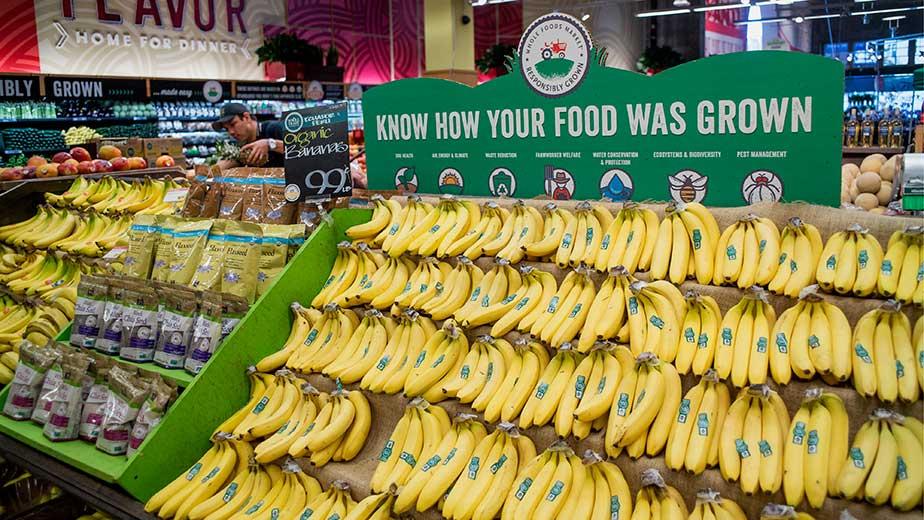
Inside A Whole Foods Market Inc. Store As Earnings Figures Are Released
Produced is displayed at a Whole Foods Market Inc. store in Oakland, California, U.S., on Wednesday, May 6, 2015. Whole Foods Market Inc. released earnings figures following the close of U.S. financial markets today. Photographer: David Paul Morris/Bloomberg via Getty ImagesPhotograph by David Paul Morris — Bloomberg via Getty Images

Consumers’ appetite for local foods is exploding. Overall, local foods generated $11.7 billion in sales in 2014, and will climb to $20.2 billion by 2019, according to Packaged Facts, a market research firm.

Not only has there been huge growth in the number of farm-to-table restaurants and farmers’ markets, but grocery chains and big box retailers, including Wal-Mart, are elbowing their way in, aggressively expanding and marketing their locally grown offerings for sale.

Wal-Mart sells $749.6 million of “locally grown” produce annually, while Supervalu, owner of the Jewel-Osco, Albertsons, and Lucky chains, buys between 25 and 40% of its produce locally, according to AtKearney, a consulting firm.

“We’ve reached a tipping point for local foods,” Packaged Facts research director David Sprinkle said in a release, noting sales of local foods could eclipse organic food sales.

But in the midst of this boom, questions are being raised about what exactly “local” means. Just as controversy has dogged the labels, “all natural” and “organic,” there are real concerns that consumers may not be getting what they think when they “buy local” at the local supermarket. The label “local” is too often part marketing hype, some say.

“Consumers take the term ‘local’ and they infer that it’s from a small farm, they infer it’s organic, even though it may not be,” says Shermain Hardesty, PhD, extension economist at UC Davis’ agricultural and resource economics program.


In fact, the Packaged Facts report notes, nearly half of people surveyed said they are willing to pay up to 10% more for locally grown or produced foods, and almost one in three said they are willing to pay up to 25% more. “Local has become a shorthand descriptor that makes food sound high quality, fresher, more authentic, trustworthy, environmentally friendly, and supportive of the local community,” the report notes.

But is it? Not exactly. There’s no agreed upon definition of “locally-grown,” meaning no consensus on the distance from farm to shelf or whether local means it necessarily comes from small farms — and not a big ag farm. Sometimes there’s clear stretching of the spirit of the term, or even outright fraud (as when a few California restaurants were found to be have falsely claiming to use locally produced food.)

“It’s generally a positive trend,” says Hardesty, “…but there’s not always transparency.”

Why people want to buy local

The trend has been driven, in part, by the idea that produce that has to travel fewer miles between farm and table often will taste better and retain more nutrients. Fruit that can ripen longer on the plant generally tastes better, and small farmers tend to produce varieties that are more favorable, albeit less able to stand travel across the country.

Also, many shoppers want to support local farmers. There also is the belief that local food leaves a smaller carbon footprint and so is better for the environment, though that may not be always the case.

What makes food ‘local’

The biggest gripe of proponents of local food is that there’s no universal standard or legal definition of local. When ATKearny asked a group of millennial consumers what they thought “local” meant, they said food grown no more than 80 miles away.

Yet, the 2008 Farm Act, an agricultural policy law, defines a “locally or regionally produced agricultural food product” as one that is marketed less than 400 miles from its origin. That’s like driving from Rhode Island to Washington D.C. and driving through six states. A few states such as Vermont and Connecticut have established rules that define local as within the borders of the state or within a certain small perimeter of the state.

Two-thirds of shoppers who buy locally grown or locally produced foods do so in supermarket and grocery stores, according to The Packaged Facts market research, and retailers vary in how they meet the spirit of the word “local.” Wal-Mart defines local as grown and sold in the same state, whether the state is teeny Rhode Island or ginormous Texas. For Safeway, it’s an eight-hour drive.

Even Whole Foods states on their locally grown page that “mostly we like to leave it up to our stores” but generally use state lines or regions within large states.

[fortune-brightcove videoid=4433163163001]


Some advocates in the field say that 100 to 150 miles should be the definition. “You take a state like California, and something grown across the border in Nevada could be more local than something hundreds of miles away within the state,” says Jim Prevor, editor of Produce Business, a trade publication.

Local doesn’t mean “small”

Geography aside, most shoppers associate “locally-grown” with small, or maybe midsized, farms. Isn’t that why Walmart and other stores feature photos of local farmers in their stores, not, say, executives of Dole?

But local doesn’t typically refer to the size of the farm. “In Georgia, Vidalia onions are all marketed as local, whether the producer is large scale or small scale. If you’re in California, all California oranges, no matter how big the farm, are marketed as local,” says Prevor.

Still, Prevor and others say that the buying local movement is benefitting many small and midsized farms, and increasingly, consumers are buying foods grown closer to where they live. It’s just not always easy to know for sure what you’re getting when you’re buying “local.”

As a result, people who are hyperpassionate about buying local — self-described locavores—tend to be selective about where they shop. “If they truly want local, they’ll want to shop at the farm or through a CSA,” says Prevor.


About the Author
By Laurie Tarkan
See full bioRight Arrow Button Icon

Latest in Retail

Finance
Lorem ipsum dolor sit amet, consectetur adipiscing elit, sed do eiusmod tempor incididunt ut labore et dolore magna aliqua. Ut enim ad minim veniam
By Fortune Editors
October 20, 2025
Finance
Lorem ipsum dolor sit amet, consectetur adipiscing elit, sed do eiusmod tempor incididunt ut labore et dolore magna aliqua. Ut enim ad minim veniam
By Fortune Editors
October 20, 2025
Finance
Lorem ipsum dolor sit amet, consectetur adipiscing elit, sed do eiusmod tempor incididunt ut labore et dolore magna aliqua. Ut enim ad minim veniam
By Fortune Editors
October 20, 2025
Finance
Lorem ipsum dolor sit amet, consectetur adipiscing elit, sed do eiusmod tempor incididunt ut labore et dolore magna aliqua. Ut enim ad minim veniam
By Fortune Editors
October 20, 2025
Finance
Lorem ipsum dolor sit amet, consectetur adipiscing elit, sed do eiusmod tempor incididunt ut labore et dolore magna aliqua. Ut enim ad minim veniam
By Fortune Editors
October 20, 2025
Finance
Lorem ipsum dolor sit amet, consectetur adipiscing elit, sed do eiusmod tempor incididunt ut labore et dolore magna aliqua. Ut enim ad minim veniam
By Fortune Editors
October 20, 2025

Most Popular

Finance
Lorem ipsum dolor sit amet, consectetur adipiscing elit, sed do eiusmod tempor incididunt ut labore et dolore magna aliqua. Ut enim ad minim veniam
By Fortune Editors
October 20, 2025
Finance
Lorem ipsum dolor sit amet, consectetur adipiscing elit, sed do eiusmod tempor incididunt ut labore et dolore magna aliqua. Ut enim ad minim veniam
By Fortune Editors
October 20, 2025
Finance
Lorem ipsum dolor sit amet, consectetur adipiscing elit, sed do eiusmod tempor incididunt ut labore et dolore magna aliqua. Ut enim ad minim veniam
By Fortune Editors
October 20, 2025
Finance
Lorem ipsum dolor sit amet, consectetur adipiscing elit, sed do eiusmod tempor incididunt ut labore et dolore magna aliqua. Ut enim ad minim veniam
By Fortune Editors
October 20, 2025
Finance
Lorem ipsum dolor sit amet, consectetur adipiscing elit, sed do eiusmod tempor incididunt ut labore et dolore magna aliqua. Ut enim ad minim veniam
By Fortune Editors
October 20, 2025
Finance
Lorem ipsum dolor sit amet, consectetur adipiscing elit, sed do eiusmod tempor incididunt ut labore et dolore magna aliqua. Ut enim ad minim veniam
By Fortune Editors
October 20, 2025
Fortune Secondary Logo
Rankings
  • 100 Best Companies
  • Fortune 500
  • Global 500
  • Fortune 500 Europe
  • Most Powerful Women
  • World's Most Admired Companies
  • See All Rankings
  • Lists Calendar
Sections
  • Finance
  • Fortune Crypto
  • Features
  • Leadership
  • Health
  • Commentary
  • Success
  • Retail
  • Mpw
  • Tech
  • Lifestyle
  • CEO Initiative
  • Asia
  • Politics
  • Conferences
  • Europe
  • Newsletters
  • Personal Finance
  • Environment
  • Magazine
  • Education
Customer Support
  • Frequently Asked Questions
  • Customer Service Portal
  • Privacy Policy
  • Terms Of Use
  • Single Issues For Purchase
  • International Print
Commercial Services
  • Advertising
  • Fortune Brand Studio
  • Fortune Analytics
  • Fortune Conferences
  • Business Development
  • Group Subscriptions
About Us
  • About Us
  • Press Center
  • Work At Fortune
  • Terms And Conditions
  • Site Map
  • About Us
  • Press Center
  • Work At Fortune
  • Terms And Conditions
  • Site Map
  • Facebook icon
  • Twitter icon
  • LinkedIn icon
  • Instagram icon
  • Pinterest icon

Latest in Retail

Investors are betting big on senior housing. There’s just one problem—the baby boomers they’re chasing can’t pay the rent
Real Estatebaby boomers
Investors are betting big on senior housing. There’s just one problem—the baby boomers they’re chasing can’t pay the rent
By Sydney LakeMay 9, 2026
2 hours ago
Vincent Clerc speaks in front of a picture of a port.
EnergyShipping
The CEO of Maersk, which ships 14% of everything you buy, said the Iran war is adding $500 million in monthly costs it’s trying not to pass down
By Sasha RogelbergMay 8, 2026
21 hours ago
Tapestry thinks it’s cracked the code of ‘expressive luxury’ for Gen Z: a ‘Goldilocks’ combo of aspirational and approachable
Investingearnings
Tapestry thinks it’s cracked the code of ‘expressive luxury’ for Gen Z: a ‘Goldilocks’ combo of aspirational and approachable
By Nick LichtenbergMay 7, 2026
2 days ago
eBay bans GameStop CEO’s account after he started listing store signs and old carpets to fund his $56 billion offer to buy the marketplace
C-SuiteGameStop
eBay bans GameStop CEO’s account after he started listing store signs and old carpets to fund his $56 billion offer to buy the marketplace
By Marco Quiroz-GutierrezMay 7, 2026
2 days ago
‘Blue dot fever’ plagues musicians like Post Malone, Meghan Trainor, and Zayn as a growing list of artists cancel tours due to lagging ticket sales
Arts & EntertainmentMusic
‘Blue dot fever’ plagues musicians like Post Malone, Meghan Trainor, and Zayn as a growing list of artists cancel tours due to lagging ticket sales
By Dave Lozo and Morning BrewMay 7, 2026
2 days ago
Two Americas, one drive-thru: Welcome to fast food’s contradictory, split-screen economy
EconomyMcDonald's
Two Americas, one drive-thru: Welcome to fast food’s contradictory, split-screen economy
By Nick LichtenbergMay 7, 2026
2 days ago

Most Popular

California farmers must destroy 420,000 peach trees after Del Monte closes its canneries and cancels more than $550 million in long-term contracts
North America
California farmers must destroy 420,000 peach trees after Del Monte closes its canneries and cancels more than $550 million in long-term contracts
By Sasha RogelbergMay 7, 2026
2 days ago
A Michigan farm town voted down plans for a giant OpenAI-Oracle data center. Weeks later, construction began
Magazine
A Michigan farm town voted down plans for a giant OpenAI-Oracle data center. Weeks later, construction began
By Sharon GoldmanMay 6, 2026
3 days ago
'Blue dot fever' plagues musicians like Post Malone, Meghan Trainor, and Zayn as a growing list of artists cancel tours due to lagging ticket sales
Arts & Entertainment
'Blue dot fever' plagues musicians like Post Malone, Meghan Trainor, and Zayn as a growing list of artists cancel tours due to lagging ticket sales
By Dave Lozo and Morning BrewMay 7, 2026
2 days ago
Current price of oil as of May 8, 2026
Personal Finance
Current price of oil as of May 8, 2026
By Joseph HostetlerMay 8, 2026
1 day ago
The CEO of Maersk, which ships 14% of everything you buy, said the Iran war is adding $500 million in monthly costs it's trying not to pass down
Energy
The CEO of Maersk, which ships 14% of everything you buy, said the Iran war is adding $500 million in monthly costs it's trying not to pass down
By Sasha RogelbergMay 8, 2026
21 hours ago
Airbnb CEO Brian Chesky warns two types of people won’t survive the AI era: ‘pure people managers’ and workers who resist change
Success
Airbnb CEO Brian Chesky warns two types of people won’t survive the AI era: ‘pure people managers’ and workers who resist change
By Emma BurleighMay 7, 2026
2 days ago

© 2026 Fortune Media IP Limited. All Rights Reserved. Use of this site constitutes acceptance of our Terms of Use and Privacy Policy | CA Notice at Collection and Privacy Notice | Do Not Sell/Share My Personal Information
FORTUNE is a trademark of Fortune Media IP Limited, registered in the U.S. and other countries. FORTUNE may receive compensation for some links to products and services on this website. Offers may be subject to change without notice.