• Home
  • Latest
  • Fortune 500
  • Finance
  • Tech
  • Leadership
  • Lifestyle
  • Rankings
  • Multimedia
FinanceBonds

No, regulators did not break the bond market

By
Stephen Gandel
Stephen Gandel
Down Arrow Button Icon
By
Stephen Gandel
Stephen Gandel
Down Arrow Button Icon
October 23, 2014, 9:44 AM ET
Getty Images

Ever since last week—when Treasury yields for 10-year debt fell 20% in about six minutes—bond market watchers have been scratching their heads trying to figure out what happened.

A 20% move would be large even for the stock market, but bonds are prized for their stability, and that is especially the case with Treasury bonds. So, the big drop was a sign to many that something was wrong in the bond market. It didn’t take long for Wall Streeters to point a finger at the thing they have long suspected would take markets down: regulation.

Last Thursday, Michael Cloherty, head of U.S. rate strategy at RBC Capital markets, wrote in a research note that, even to people who have long suspected that the “shock absorbers” in the market have been eroded, the move in the bond market was scary. He titled the report, “Honey I broke the bond market.”

Last Friday, the Financial Times ran a story with the headline, “Bankers blame bond market volatility on tighter regulation.”

The criticism focuses on regulations put in place after the financial crisis. Many of those regulations make it harder for banks to hold onto large amounts of risky bonds or to buy or sell bonds with their own money in order to turn a profit, like a hedge fund would. Those regulations aimed to make banks less risky. And, indeed, the banks seem to own fewer bonds than they used to.

But some have claimed that the regulations would have the opposite effect on the bond market. Unlike the case of the stock market, nearly all bond market trades happen in the so-called over the counter market, not through an exchange. That means all bond trades have to go through one of the big banks. If banks can’t hold a bond, they will be less likely to buy up the bonds that others are selling, or have bonds to offer when people want to buy. The fear for the past year or so is that when bond investors eventually decide it’s time to sell, prices will plunge. Or, put another way, when everyone heads for the exits, the banks will no longer be holding the door, and everyone else will get trapped.

Somehow, the sharp drop in yields last week proved this theory to a bunch of people, though I don’t understand why.

First of all, when bond yields fall, prices rise. So if you want to blame regulation, all you can say is that it made some people more money than they should have.

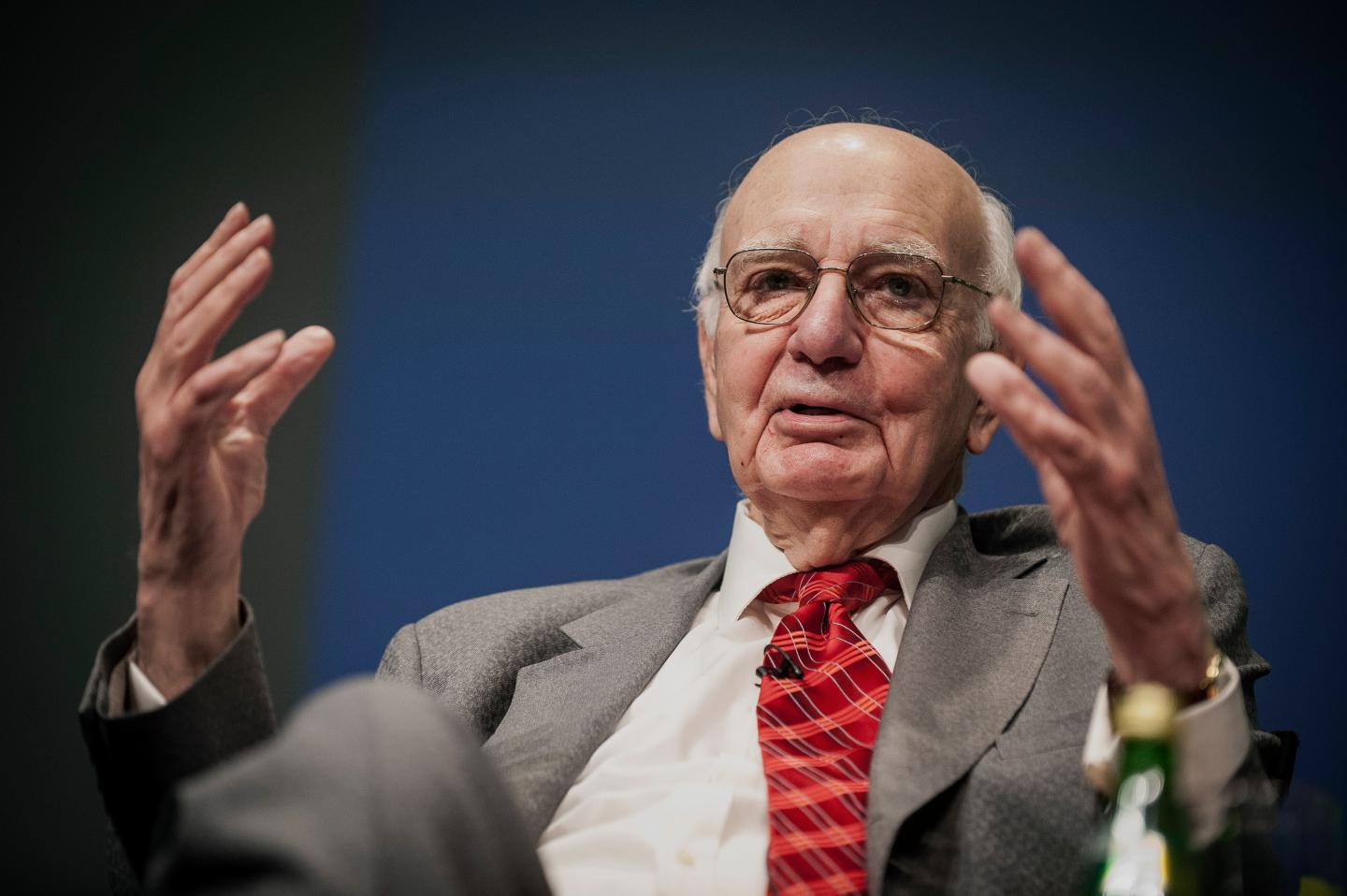
Also, the Treasury market is the most liquid bond market of all. So if you are more likely to see volatility because banks are holding fewer bonds, you are likely to see it in mortgage bonds or other structured credit. And those markets were pretty quiet last week. What’s more, the Volcker Rule, which is meant to limit the trading banks can engage in on its own and is an object of Wall Street’s hatred, specifically exempts government debt. It’s one of the few investment types that is not covered by the rule. The result: banks actually hold more Treasury bonds than they did before Volcker was passed two years ago.

The Merrill Lynch MOVE Index tracks volatility in the bond market. It was up last week to a little over 100. But that’s about what the index has averaged going back to 1995. That index spent most of 2008 and 2009, before the current regulations were put in place, well above 100. The index peaked at 214 in late 2008.

So, what happened last week? Rick Rieder, chief investment officer of fundamental fixed income at BlackRock, says the market had become crowded coming into last week. Lots of hedge funds and other institutional investors were betting on the dollar, and betting against, or short, the euro and short-term bonds. When bad economic news started coming out last week, every one wanted out of those trades and flooded into the safest place they could find, the Treasury bond market.

Treasuries are probably not as safe as they used to be. But that’s because yields are low, not because of regulation. But that’s not how the market sees it. In fact, if anything, last week’s move in bonds should prove that regulations have done very little to hurt the Treasury market or its perceived safety, not the opposite.

About the Author
By Stephen Gandel
See full bioRight Arrow Button Icon

Latest in Finance

Finance
Lorem ipsum dolor sit amet, consectetur adipiscing elit, sed do eiusmod tempor incididunt ut labore et dolore magna aliqua. Ut enim ad minim veniam
By Fortune Editors
October 20, 2025
Finance
Lorem ipsum dolor sit amet, consectetur adipiscing elit, sed do eiusmod tempor incididunt ut labore et dolore magna aliqua. Ut enim ad minim veniam
By Fortune Editors
October 20, 2025
Finance
Lorem ipsum dolor sit amet, consectetur adipiscing elit, sed do eiusmod tempor incididunt ut labore et dolore magna aliqua. Ut enim ad minim veniam
By Fortune Editors
October 20, 2025
Finance
Lorem ipsum dolor sit amet, consectetur adipiscing elit, sed do eiusmod tempor incididunt ut labore et dolore magna aliqua. Ut enim ad minim veniam
By Fortune Editors
October 20, 2025
Finance
Lorem ipsum dolor sit amet, consectetur adipiscing elit, sed do eiusmod tempor incididunt ut labore et dolore magna aliqua. Ut enim ad minim veniam
By Fortune Editors
October 20, 2025
Finance
Lorem ipsum dolor sit amet, consectetur adipiscing elit, sed do eiusmod tempor incididunt ut labore et dolore magna aliqua. Ut enim ad minim veniam
By Fortune Editors
October 20, 2025

Most Popular

Finance
Lorem ipsum dolor sit amet, consectetur adipiscing elit, sed do eiusmod tempor incididunt ut labore et dolore magna aliqua. Ut enim ad minim veniam
By Fortune Editors
October 20, 2025
Finance
Lorem ipsum dolor sit amet, consectetur adipiscing elit, sed do eiusmod tempor incididunt ut labore et dolore magna aliqua. Ut enim ad minim veniam
By Fortune Editors
October 20, 2025
Finance
Lorem ipsum dolor sit amet, consectetur adipiscing elit, sed do eiusmod tempor incididunt ut labore et dolore magna aliqua. Ut enim ad minim veniam
By Fortune Editors
October 20, 2025
Finance
Lorem ipsum dolor sit amet, consectetur adipiscing elit, sed do eiusmod tempor incididunt ut labore et dolore magna aliqua. Ut enim ad minim veniam
By Fortune Editors
October 20, 2025
Finance
Lorem ipsum dolor sit amet, consectetur adipiscing elit, sed do eiusmod tempor incididunt ut labore et dolore magna aliqua. Ut enim ad minim veniam
By Fortune Editors
October 20, 2025
Finance
Lorem ipsum dolor sit amet, consectetur adipiscing elit, sed do eiusmod tempor incididunt ut labore et dolore magna aliqua. Ut enim ad minim veniam
By Fortune Editors
October 20, 2025
Fortune Secondary Logo
Rankings
  • 100 Best Companies
  • Fortune 500
  • Global 500
  • Fortune 500 Europe
  • Most Powerful Women
  • World's Most Admired Companies
  • See All Rankings
  • Lists Calendar
Sections
  • Finance
  • Fortune Crypto
  • Features
  • Leadership
  • Health
  • Commentary
  • Success
  • Retail
  • Mpw
  • Tech
  • Lifestyle
  • CEO Initiative
  • Asia
  • Politics
  • Conferences
  • Europe
  • Newsletters
  • Personal Finance
  • Environment
  • Magazine
  • Education
Customer Support
  • Frequently Asked Questions
  • Customer Service Portal
  • Privacy Policy
  • Terms Of Use
  • Single Issues For Purchase
  • International Print
Commercial Services
  • Advertising
  • Fortune Brand Studio
  • Fortune Analytics
  • Fortune Conferences
  • Business Development
  • Group Subscriptions
About Us
  • About Us
  • Press Center
  • Work At Fortune
  • Terms And Conditions
  • Site Map
  • About Us
  • Press Center
  • Work At Fortune
  • Terms And Conditions
  • Site Map
  • Facebook icon
  • Twitter icon
  • LinkedIn icon
  • Instagram icon
  • Pinterest icon

Latest in Finance

tyler
EconomyRecession
This economist studied 400 years of recessions. His bleak conclusion: stop trying to predict them
By Nick LichtenbergMay 9, 2026
11 minutes ago
‘If he tells you he can beat me, I’ll sue!’: Inside the $9 billion friendship between the CEOs of Amex and Delta
C-SuiteFinance
‘If he tells you he can beat me, I’ll sue!’: Inside the $9 billion friendship between the CEOs of Amex and Delta
By Shawn TullyMay 9, 2026
1 hour ago
Why GameStop’s bid for eBay echoes one of the worst business deals of all time
InvestingFinance
Why GameStop’s bid for eBay echoes one of the worst business deals of all time
By Shawn TullyMay 9, 2026
2 hours ago
These experts made their careers grading travel credit cards and they say you’re being ripped off. It’s a $1.28 trillion crisis
Personal FinancePersonal Finance Evergreen
These experts made their careers grading travel credit cards and they say you’re being ripped off. It’s a $1.28 trillion crisis
By Catherina GioinoMay 9, 2026
2 hours ago
Asia’s ultra-luxury Capella Hotels brand plans to double its portfolio by 2030, starting with Florence and Riyadh
Travel & LeisureHospitality
Asia’s ultra-luxury Capella Hotels brand plans to double its portfolio by 2030, starting with Florence and Riyadh
By Angelica AngMay 8, 2026
9 hours ago
Man driving and looking shocked.
Economygas prices
Driving less, canceling vacations, and tightening budgets: All the ways Americans are coping with soaring gas prices
By Tristan BoveMay 8, 2026
15 hours ago

Most Popular

California farmers must destroy 420,000 peach trees after Del Monte closes its canneries and cancels more than $550 million in long-term contracts
North America
California farmers must destroy 420,000 peach trees after Del Monte closes its canneries and cancels more than $550 million in long-term contracts
By Sasha RogelbergMay 7, 2026
2 days ago
'Blue dot fever' plagues musicians like Post Malone, Meghan Trainor, and Zayn as a growing list of artists cancel tours due to lagging ticket sales
Arts & Entertainment
'Blue dot fever' plagues musicians like Post Malone, Meghan Trainor, and Zayn as a growing list of artists cancel tours due to lagging ticket sales
By Dave Lozo and Morning BrewMay 7, 2026
2 days ago
A Michigan farm town voted down plans for a giant OpenAI-Oracle data center. Weeks later, construction began
Magazine
A Michigan farm town voted down plans for a giant OpenAI-Oracle data center. Weeks later, construction began
By Sharon GoldmanMay 6, 2026
3 days ago
Current price of oil as of May 8, 2026
Personal Finance
Current price of oil as of May 8, 2026
By Joseph HostetlerMay 8, 2026
21 hours ago
U.S. Treasury will have to borrow $2 trillion this year just to continue functioning—more than $166 billion every month
Economy
U.S. Treasury will have to borrow $2 trillion this year just to continue functioning—more than $166 billion every month
By Eleanor PringleMay 7, 2026
2 days ago
Airbnb CEO Brian Chesky warns two types of people won’t survive the AI era: ‘pure people managers’ and workers who resist change
Success
Airbnb CEO Brian Chesky warns two types of people won’t survive the AI era: ‘pure people managers’ and workers who resist change
By Emma BurleighMay 7, 2026
2 days ago

© 2026 Fortune Media IP Limited. All Rights Reserved. Use of this site constitutes acceptance of our Terms of Use and Privacy Policy | CA Notice at Collection and Privacy Notice | Do Not Sell/Share My Personal Information
FORTUNE is a trademark of Fortune Media IP Limited, registered in the U.S. and other countries. FORTUNE may receive compensation for some links to products and services on this website. Offers may be subject to change without notice.