When Anne Poirier was 45, she went to battle with her body: restricting what she ate, and exercising for up to five hours a day.
“You start to disappear as you age,” she tells Fortune. “Your body starts changing. People don’t notice you. Your kids don’t need you as much anymore … My marriage was difficult. And I think I was just searching for something.”
As part of that search, she did something even more extreme to her body, particularly considering her age: She became a surrogate, by way of answering a private ad, and wound up carrying and giving birth to twins. Poirier had loved being pregnant with both of her own children, years before, which was part of her motivation. But there was also more to it.
“Pregnancy,” she explains, “was permission to eat.”
Poirier wasn’t ready to admit it then, despite the drastic move, but she was in the throes of an eating disorder—and it only intensified after the twins were born, as she punished herself to get her body back.
It was a familiar place for her, having struggled with anorexia from ages 12 to 15, when she wound up hospitalized, and again later, from 20 to 28, when she went to the extreme of getting her degree in exercise science “so that I could stay fit,” she says. “I knew that if I was a fitness instructor, I’d have to look a certain way.”
When she began struggling the third time, almost 20 years later, it threw her for a new kind of loop: one weighed down by intense shame for struggling, as a middle-aged woman, with what many think of as a “teenage issue.” It’s why she didn’t seek help right away. And it’s part of why many others in her age group—some of whom are also grappling with recurrences from their youth, others who are dealing with new diagnoses—don’t, either.
Eventually, Poirier did seek treatment. She was among the ever-increasing number of women over 40 dealing with an eating disorder—despite the persistent belief that it is a problem mostly affecting adolescents.
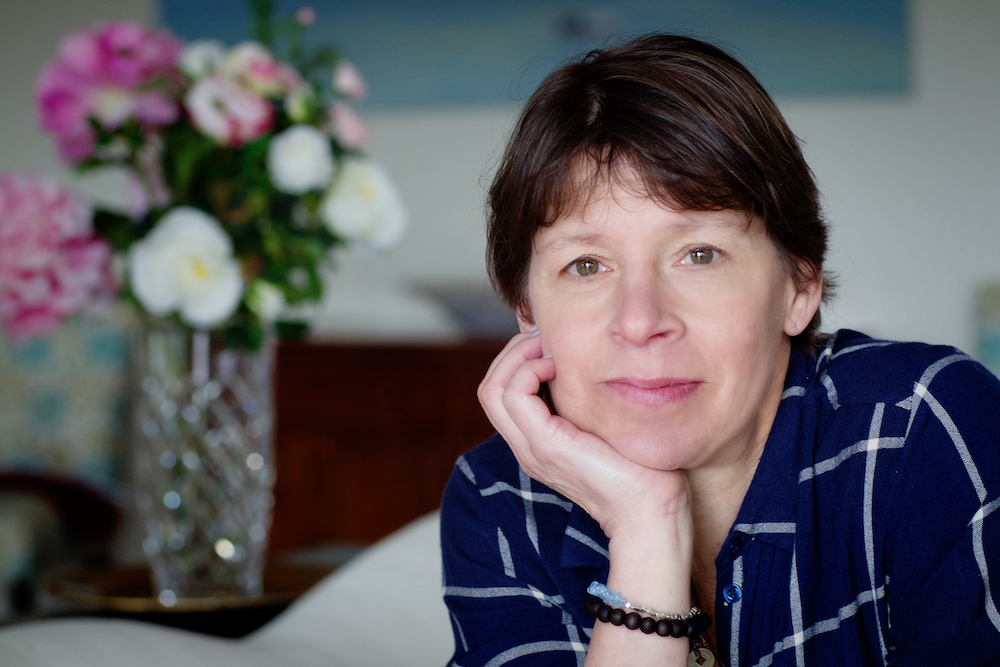
“Anyone 30s and onward who has an eating disorder feels like a real misfit,” says Margo Maine, a clinical psychologist who has specialized in eating disorders for over 35 years and coauthor of: Pursuing Perfection: Eating Disorders, Body Myths, and Women at Midlife and Beyond. “She feels like she shouldn’t have an eating disorder, because they’re the territory of younger women. She should know better. She doesn’t want to admit it to anybody, and she feels very defeated.”
But a recent survey from Equip, a virtual eating disorder treatment center, found that 82% of women in menopause—which can have a profound impact on eating behaviors and body image—reported they often engaged in disordered behaviors (without a formal eating disorder diagnosis) such as meal skipping and overexercising. And while such behaviors are continuations of earlier bouts for many, the survey found that 35% of women had picked up such behaviors in midlife (36-65) for the very first time
When it comes to full-blown eating disorders, studies have shown that up to 7.7% of middle-aged women meet the diagnostic criteria, with 13% having at least one symptom of an eating disorder, according to the National Eating Disorders Association (NEDA).
The Renfrew Center, a nationwide network of residential eating disorder treatment clinics, reports a 42% jump in women over 35 seeking treatment over the past decade.
“It is way more common than people think,” Maine says. “And if anything, it is becoming more common. But it’s been the eating disorder in the closet.”
What’s different about having an eating disorder later in life
Betsy Brenner was in her 40s when she developed anorexia after the “perfect storm” of being diagnosed with asthma just as she, a former Division 1 tennis player, was getting back into the sport. The asthma kept her on the couch, where she developed “an intense fear of gaining weight.” She began restricting her food intake and over-exercising, until a doctor, alarmed at her rapid weight-loss, referred her to a dietician, who diagnosed her with the eating disorder.
“So many people, myself included, had those preconceived notions that this is a disease of young women, so I had a lot to learn,” she recalls. “I was in denial at first: ‘How can I be anorexic if I’m in my 40s?’”
Brenner entered into a treatment program, where she learned that her food restriction was a way for her to cope with unrecognized anxiety. Now 61 and the author of a memoir of her recovery, she believes the “shame and secrecy” surrounding an eating disorder might reach its peak for those in midlife. “People think we should have this all figured out—‘just eat, what’s your problem?’—not understanding that you don’t choose it and it’s not about the food and that it serves a purpose,” she says.
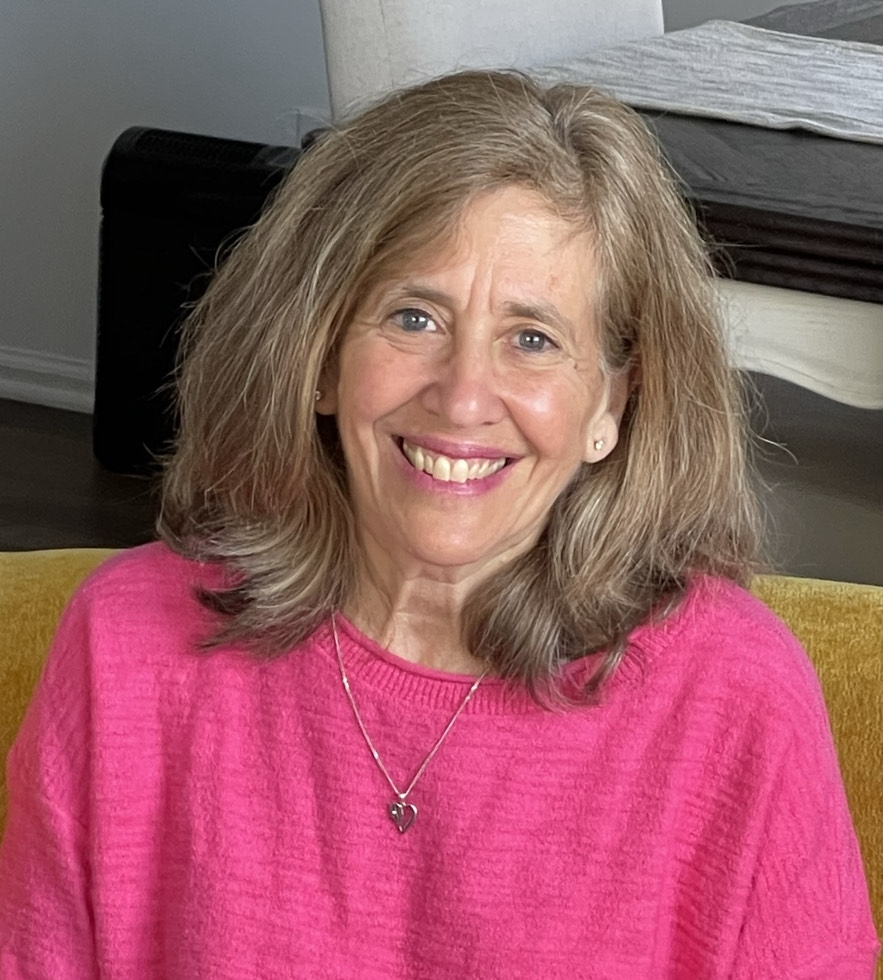
Ashley Moser, clinical education specialist at Renfrew, says that middle-aged women are dealing with unique pressures that can contribute to eating disorders.
“There’s a lot of responsibilities and stressors that occur in midlife that adolescents don’t have the privilege of experiencing just yet,” Moser says. Included in that is what she sees as “the intersection of diet culture and ageism,” which can make midlife a particularly vulnerable time. “There’s this idea that thinness can help you keep your worth, your value, your youth, your vitality, your relevance when you’re experiencing physical aging.”
Poirier, who is now a body-neutrality coach and author of The Body Joyful, says it’s an idea that particularly resonates with her generation, and can intensify once menopause hits. “Weight comes and moves around, our skin starts to sag, and then there’s the belly piece,” she says. “And I think that’s what spins this, well, ‘I have to control this,’ because that’s been ingrained. That’s a belief system that we’ve bought into.”
Whitney Trotter, a registered dietician, nurse, and creator of the BIPOC Eating Disorder Conference, says she’s seen clients experience a “rejuvenation” or “rediscovery” of themselves in midlife, only to realize, ‘my body looks drastically different than it did 20 years ago,” and want to turn back time.
“Just the expectation that women’s bodies never change really sets us up for restriction and weight stigma in society as people go through menopause,” adds Jessica Wilson, clinical dietician and disordered eating specialist.
By the time women are in their 40s, she says, their eating disorder has often taken many forms. If it started as anorexia in their youth, for example, “it oftentimes can morph into Weight Watchers, which provides the same practices as a restrictive eating disorder but is more socially acceptable, so people don’t always recognize it as part of a disorder.”
In that case and others, a late-onset eating disorder can be a recurrence of one from much earlier in life, she says, explaining, “Later on in life there can be a stressful event that takes them back to that place of coping.”
When it’s just the diagnosis that comes late
Sometimes it’s not until a late-in-life diagnosis that some women realize they’ve been battling an eating disorder on and off for decades. This can be the case for those with harder-to-spot atypical disorders—including ARFID (avoidant-restrictive food intake disorder, which often looks like being a picky eater), and OSFED (an umbrella term for disorders that don’t fit into other categories)—and for women of color, whose disorders are often overlooked by the medical establishment.
“Because of the assumption that everyone who has an eating disorder is a thin, white, affluent white woman, it’s led to people not realizing that what they were experiencing was an eating disorder until they were perhaps much older than someone who fits the stereotype,” she says. “With that, people who get diagnosed later are often more medically compromised, as they’ve been starving or restricting for many more years.”
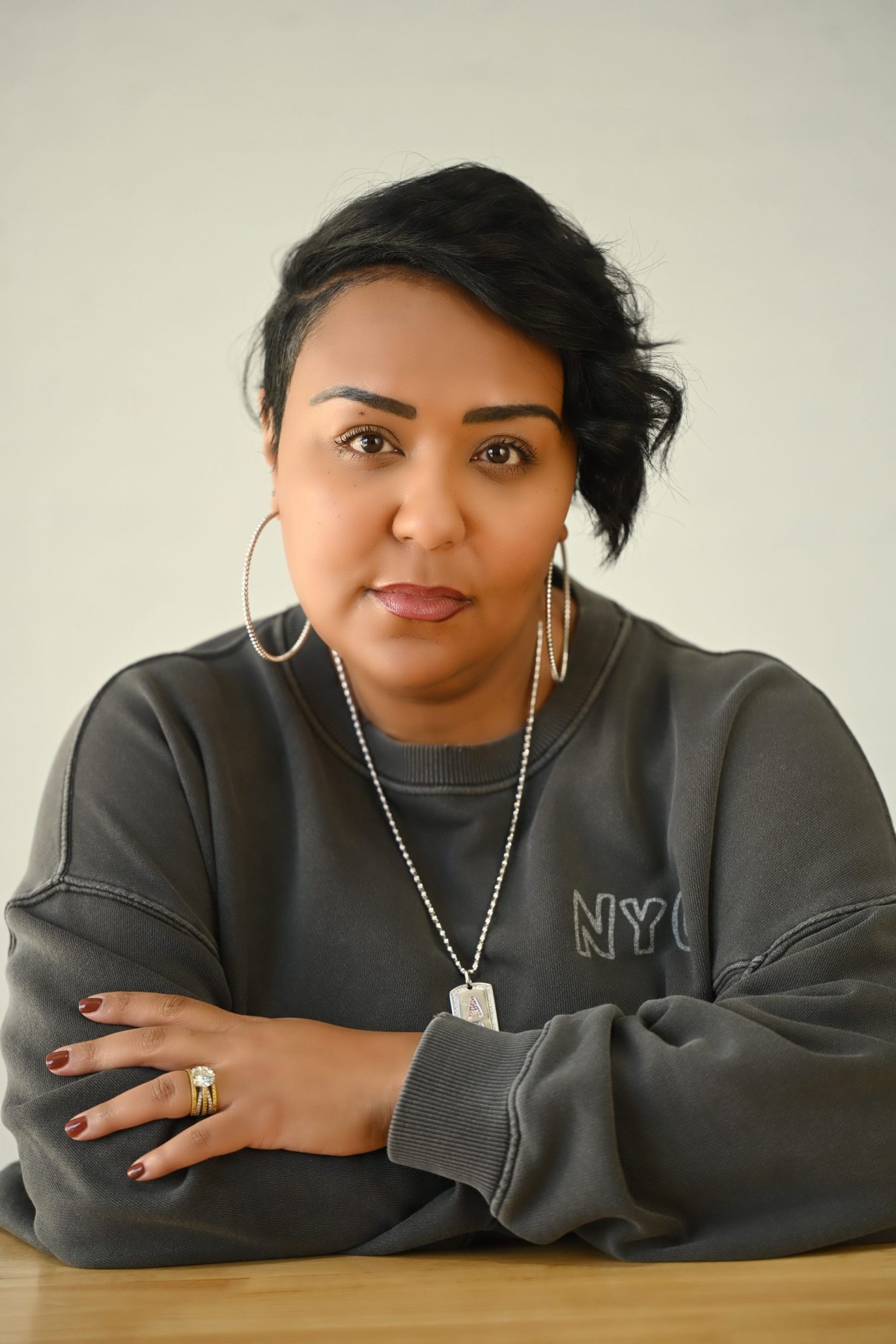
That was the case for Achea Redd, 44, now a mental-health advocate and author (and spouse of NBA legend Michael Redd), who was almost 40 when she was diagnosed with the OSFED atypical anorexia—which is having all symptoms except for being underweight. She soon realized, through therapy, that she’d been battling it since the age of 12.
“There was a bit of a learning curve on my part, just because the way we’re taught about eating disorders and body image issues is that there’s always a picture of a thin or emaciated white female,” she says. “When I was diagnosed with atypical anorexia and not binge eating or bulimia, it was also very shocking for me, because I’m kind of that midrange midsize—I’m not thin, and the doctors would see me as overweight because of that BMI scale BS. I was blown away, and there were so many layers to the discovery.”
Trotter says that Redd’s experience is not so rare.
“We do such a sh**ty job of addressing eating disorders in older women,” she says. “Especially in midlife, I see this all the time: If they go to the doctor and have a BMI over 30, the doctor automatically assumes they are binge eating and need to lose weight.”
How to find support
Moser, of Renfrew, believes it’s really important to cultivate an environment with some shared lived experience.
“I think a lot of women in midlife who struggle with eating disorders may feel very alone—because again, it isn’t that stereotypical, mass-media produced image of what we think eating disorders are,” she says. “So there’s a lot of shame and guilt, embarrassment, and isolation for struggling with this disorder.” Group therapy, for example, helps to form connections.
Read more from Fortune
Trotter agrees, advising her clients to get a group of friends to commit to not body shaming themselves, and to go on walks together—not for weight loss, but for a communal activity. “I think the best thing, in terms of recovery, is community,” she says.
Wilson likes to help people approach food by thinking about what they would feed to a loved one or their child. “I ask, if they were going out to dinner, what would they expect the other person to eat? If someone is eating hummus and carrots and calling it a meal, they are pretty clear that they wouldn’t feed it to someone else.”
Brenner wants women in midlife to know that it is possible to recover, despite hearing from many in her shoes who believe it’s not. “It’s never too late,” she says.
Poirier agrees, sharing an experience she recently had in helping an 82-year-old client shift her diet-culture mindset. “She said to me, ‘I finally get it,’” she says. “She’d been fighting the body-image stuff her whole life.”
If you or someone you know is struggling with an eating disorder, call the ANAD helpline at 888-375-7767.
More on body image:
Subscribe to Well Adjusted, our newsletter full of simple strategies to work smarter and live better, from the Fortune Well team. Sign up for free today.