• Home
  • Latest
  • Fortune 500
  • Finance
  • Tech
  • Leadership
  • Lifestyle
  • Rankings
  • Multimedia

Trendingnow

1

After forcing workers back to the office, Goldman Sachs and JPMorgan Chase are now letting their staff work remotely—but only for the World Cup

2

Markets tumble worldwide as Fed resets expectations: $400 billion wiped off SpaceX stock

3

Meet the 2 men putting New York's $300 billion pension fund in play for the first time in 20 years

1

After forcing workers back to the office, Goldman Sachs and JPMorgan Chase are now letting their staff work remotely—but only for the World Cup

2

Markets tumble worldwide as Fed resets expectations: $400 billion wiped off SpaceX stock

3

Meet the 2 men putting New York's $300 billion pension fund in play for the first time in 20 years
LifestyleCancer

Climate change could be driving up cancer rates in women, study finds

By
Ani Freedman
Ani Freedman
Fellow, Fortune Well
Down Arrow Button Icon
By
Ani Freedman
Ani Freedman
Fellow, Fortune Well
Down Arrow Button Icon
May 27, 2025, 3:08 PM ET
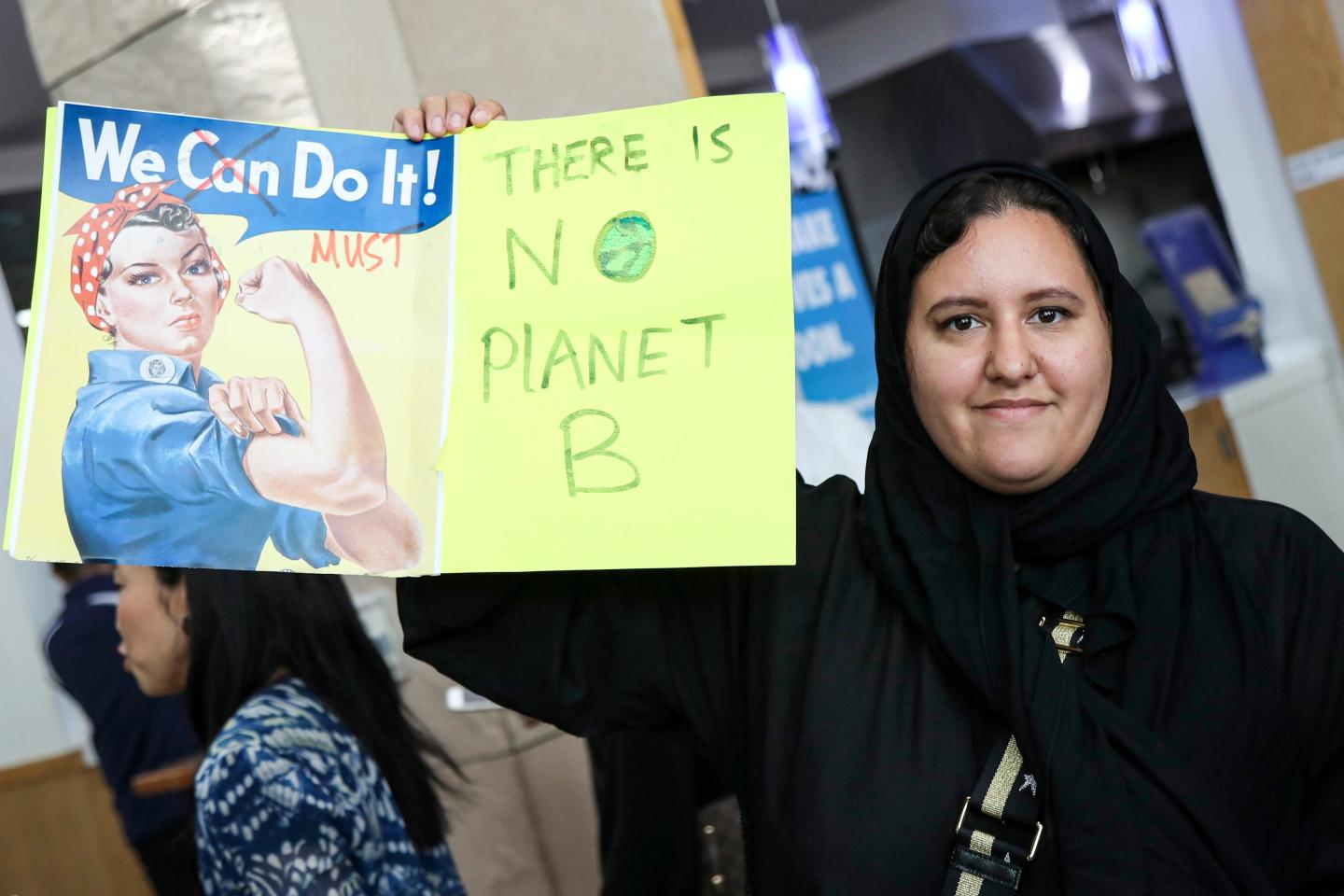
A woman holds up a sign  during a demonstration  in Qatar calling for a stand against climate change.
A woman holds up a sign during a demonstration in Qatar calling for a stand against climate change.Karim Jaafar/AFP via Getty Images
Add Fortune on Google for similar content.

In the U.S., cancer rates are going up—especially for young and middle-aged women, whose cancer diagnoses have surpassed those of men. Women under 50 are now almost twice as likely to develop cancer than men of the same age, according to the American Cancer Society’s latest cancer statistics report—and the gap has been widening since the early 2000s.

Recommended Video

Experts say there are likely multiple factors behind the growing cancer rates in young adults, including childhood bacteria exposure and ultra-processed foods. New research indicates another monumental culprit, especially for women: climate change.

In a new study published in the journal Frontiers in Public Health, researchers discovered that climate change—long-term shifts in temperature and weather patterns primarily driven by the burning of fossil fuels—could be behind increasing cancer rates and deaths among women in the Middle East and North Africa. 

“As temperatures rise, cancer mortality among women also rises—particularly for ovarian and breast cancers,” said lead author Wafa Abuelkheir Mataria of the American University in Cairo in the press release. “Although the increases per degree of temperature rise are modest, their cumulative public health impact is substantial.”

The study, which gathered data from 17 Middle Eastern and North African countries most vulnerable to warming temperatures—including Qatar, Bahrain, Jordan, Saudi Arabia, and the United Arab Emirates—found that climate change is making certain cancers more common and more deadly among women. Researchers looked at the prevalence and mortality of breast, ovarian, cervical, and uterine cancers, and compared the data with changing temperatures between 1998 and 2019.

They found that the prevalence of the different cancers rose from 107 to 280 cases per 100,000 people for every additional degree Celsius, with ovarian cancer cases rising the most and breast cancer the least. Mortality more than doubled, from 160 to 332 deaths per 100,000 people for each degree of temperature rise, with the greatest rise in ovarian cancer and the smallest in cervical cancer.

When the researchers broke the overall data down by country, they found that cancer prevalence and deaths rose in only six countries: Qatar, Bahrain, Jordan, Saudi Arabia, the United Arab Emirates, and Syria, speculating this may be because of particularly extreme summer temperatures in those countries. They also observed that the rise was not uniform between countries—the prevalence of breast cancer rose by 560 cases per 100,000 people for each degree Celsius in Qatar, and 330 in Bahrain. The researchers point out that while the rise in rates is small, it is statistically significant enough to suggest a notable increase in cancer risk and mortality over time.

How does climate change affect cancer rates?

As a result of climate change, Americans are witnessing hotter summers, milder winters, shifting rain and snowfall patterns, and more extreme weather events like record-high heat waves and devastating hurricanes, according to the Environmental Protection Agency.

Moreover, climate change is known to cause and exacerbate health issues globally, according to the World Health Organization (WHO). Polluted air, water, and soil from increased fossil fuel usage and high temperatures caused by global warming directly worsen health, while natural disasters exacerbated by climate change can lead to chronic stress, poor mental health, and decreased social support, while depleting health care infrastructure and access.

Climate change also leaves people more exposed to environmental toxins and less likely to receive a quick diagnosis and treatment, the WHO points out, especially in developing countries disproportionately impacted by rising temperatures and infrastructural issues—leaving those populations more vulnerable to developing cancer.

“Temperature rise likely acts through multiple pathways,” said coauthor Sungsoo Chun of the American University in Cairo. “It increases exposure to known carcinogens, disrupts health care delivery, and may even influence biological processes at the cellular level. Together, these mechanisms could elevate cancer risk over time.”

As Chun pointed out, multiple factors could compound on one another to drive these rates. For example, increased heat could come in tandem with higher levels of carcinogenic air pollution.

And women are left more physiologically vulnerable to climate-related health risks, according to Chun.

“This is compounded by inequalities that limit access to health care,” she explained in the press release. “Marginalized women face a multiplied risk because they are more exposed to environmental hazards and less able to access early screening and treatment services.”

Though some could argue that better cancer screening leads to higher rates of prevalence, the researchers counter by saying improvements in screening should result in fewer deaths, as early-stage cancer is easier to treat. But since both prevalence and death rates rose, the researchers believe climate-change-related risks are the driving factors, and call for considering climate-related risks in public health planning.

“This study cannot establish direct causality,” Mataria said. “While we controlled for GDP per capita, other unmeasured factors could contribute. Nonetheless, the consistent associations observed across multiple countries and cancer types provide compelling grounds for further investigation.”

For more on cancer:

  • The number one diet change to lower your cancer risk, according to experts
  • The truth about CT scans: The common health check could drive 103,000 cancer cases, research warns
  • Can sunscreen give you cancer? What experts want you to know
  • The best diet to lower your risk of prostate cancer, according to experts
About the Author
By Ani FreedmanFellow, Fortune Well
LinkedIn icon

Ani Freedman is a fellow on the Fortune Well team.

See full bioRight Arrow Button Icon
Add Fortune on Google for similar content.

Latest in Lifestyle

Finance
Lorem ipsum dolor sit amet, consectetur adipiscing elit, sed do eiusmod tempor incididunt ut labore et dolore magna aliqua. Ut enim ad minim veniam
By Fortune Editors
October 20, 2025
Finance
Lorem ipsum dolor sit amet, consectetur adipiscing elit, sed do eiusmod tempor incididunt ut labore et dolore magna aliqua. Ut enim ad minim veniam
By Fortune Editors
October 20, 2025
Finance
Lorem ipsum dolor sit amet, consectetur adipiscing elit, sed do eiusmod tempor incididunt ut labore et dolore magna aliqua. Ut enim ad minim veniam
By Fortune Editors
October 20, 2025
Finance
Lorem ipsum dolor sit amet, consectetur adipiscing elit, sed do eiusmod tempor incididunt ut labore et dolore magna aliqua. Ut enim ad minim veniam
By Fortune Editors
October 20, 2025
Finance
Lorem ipsum dolor sit amet, consectetur adipiscing elit, sed do eiusmod tempor incididunt ut labore et dolore magna aliqua. Ut enim ad minim veniam
By Fortune Editors
October 20, 2025
Finance
Lorem ipsum dolor sit amet, consectetur adipiscing elit, sed do eiusmod tempor incididunt ut labore et dolore magna aliqua. Ut enim ad minim veniam
By Fortune Editors
October 20, 2025

Most Popular

Finance
Lorem ipsum dolor sit amet, consectetur adipiscing elit, sed do eiusmod tempor incididunt ut labore et dolore magna aliqua. Ut enim ad minim veniam
By Fortune Editors
October 20, 2025
Finance
Lorem ipsum dolor sit amet, consectetur adipiscing elit, sed do eiusmod tempor incididunt ut labore et dolore magna aliqua. Ut enim ad minim veniam
By Fortune Editors
October 20, 2025
Finance
Lorem ipsum dolor sit amet, consectetur adipiscing elit, sed do eiusmod tempor incididunt ut labore et dolore magna aliqua. Ut enim ad minim veniam
By Fortune Editors
October 20, 2025
Finance
Lorem ipsum dolor sit amet, consectetur adipiscing elit, sed do eiusmod tempor incididunt ut labore et dolore magna aliqua. Ut enim ad minim veniam
By Fortune Editors
October 20, 2025
Finance
Lorem ipsum dolor sit amet, consectetur adipiscing elit, sed do eiusmod tempor incididunt ut labore et dolore magna aliqua. Ut enim ad minim veniam
By Fortune Editors
October 20, 2025
Finance
Lorem ipsum dolor sit amet, consectetur adipiscing elit, sed do eiusmod tempor incididunt ut labore et dolore magna aliqua. Ut enim ad minim veniam
By Fortune Editors
October 20, 2025
Fortune Secondary Logo
Rankings
  • 100 Best Companies
  • Fortune 500
  • Global 500
  • Fortune 500 Europe
  • Most Powerful Women
  • World's Most Admired Companies
  • See All Rankings
  • Lists Calendar
Sections
  • Finance
  • Fortune Crypto
  • Features
  • Leadership
  • Health
  • Commentary
  • Success
  • Retail
  • Mpw
  • Tech
  • Lifestyle
  • CEO Initiative
  • Asia
  • Politics
  • Conferences
  • Europe
  • Newsletters
  • Personal Finance
  • Environment
  • Magazine
  • Education
Customer Support
  • Frequently Asked Questions
  • Customer Service Portal
  • Privacy Policy
  • Terms Of Use
  • Single Issues For Purchase
  • International Print
Commercial Services
  • Advertising
  • Fortune Brand Studio
  • Fortune Analytics
  • Fortune Conferences
  • Business Development
  • Group Subscriptions
About Us
  • About Us
  • Press Center
  • Work At Fortune
  • Terms And Conditions
  • Site Map
  • About Us
  • Press Center
  • Work At Fortune
  • Terms And Conditions
  • Site Map
  • Facebook icon
  • Twitter icon
  • LinkedIn icon
  • Instagram icon
  • Pinterest icon

Latest in Lifestyle

UPS workers process boxes in a sorting facility.
North AmericaUPS
UPS is shelling out nearly $50 million on temperature-controlled facilities to meet the booming demand for GLP-1 deliveries
By Sasha RogelbergJune 23, 2026
10 hours ago
dr
HealthCancer
The U.S. cut cancer deaths by 34% since 1991—but not in 458 rural counties
By Arthur Cosby and The ConversationJune 23, 2026
12 hours ago
Woman hides from the sun in front of Big Ben in London
EconomyEurope
‘London isn’t just calling—it’s cooking.’ Europe’s largest economies face over $600 billion in heat-driven losses by 2030
By Tristan BoveJune 23, 2026
13 hours ago
Doctor giving patient injection in volunteer clinic
HealthHealth
For the first time ever, no young women in England died of cervical cancer. In the U.S., RFK Jr.’s vaccine skepticism stalls HPV progress
By Catherina GioinoJune 23, 2026
14 hours ago
Matt Freese stopping a soccer ball entering the goal
SuccessCareers
Team USA’s goalkeeper passed on Manchester United, the club that helped shape David Beckham’s career, for Harvard—and has zero regrets
By Preston ForeJune 23, 2026
14 hours ago
mex
North AmericaWorld Cup
After FIFA priced them out of their own World Cup, many Mexicans take their TVs to the street
By Megan Janetsky and The Associated PressJune 23, 2026
16 hours ago

Most Popular

After forcing workers back to the office, Goldman Sachs and JPMorgan Chase are now letting their staff work remotely—but only for the World Cup
Success
After forcing workers back to the office, Goldman Sachs and JPMorgan Chase are now letting their staff work remotely—but only for the World Cup
By Orianna Rosa RoyleJune 23, 2026
18 hours ago
Markets tumble worldwide as Fed resets expectations: $400 billion wiped off SpaceX stock
Banking
Markets tumble worldwide as Fed resets expectations: $400 billion wiped off SpaceX stock
By Jim EdwardsJune 23, 2026
20 hours ago
Meet the 2 men putting New York's $300 billion pension fund in play for the first time in 20 years
Investing
Meet the 2 men putting New York's $300 billion pension fund in play for the first time in 20 years
By Nick LichtenbergJune 22, 2026
2 days ago
Current price of oil as of June 23, 2026
Personal Finance
Current price of oil as of June 23, 2026
By Joseph HostetlerJune 23, 2026
17 hours ago
Former U.S. Secret Service agent says bringing your authentic self to work stifles teamwork: 'You don’t get high performers, you get sloppiness'
Success
Former U.S. Secret Service agent says bringing your authentic self to work stifles teamwork: 'You don’t get high performers, you get sloppiness'
By Sydney LakeJune 21, 2026
3 days ago
Current price of oil as of June 22, 2026
Personal Finance
Current price of oil as of June 22, 2026
By Joseph HostetlerJune 22, 2026
2 days ago

© 2026 Fortune Media IP Limited. All Rights Reserved. Use of this site constitutes acceptance of our Terms of Use and Privacy Policy | CA Notice at Collection and Privacy Notice | Do Not Sell/Share My Personal Information
FORTUNE is a trademark of Fortune Media IP Limited, registered in the U.S. and other countries. FORTUNE may receive compensation for some links to products and services on this website. Offers may be subject to change without notice.