• Home
  • Latest
  • Fortune 500
  • Finance
  • Tech
  • Leadership
  • Lifestyle
  • Rankings
  • Multimedia

Trendingnow

1

After forcing workers back to the office, Goldman Sachs and JPMorgan Chase are now letting their staff work remotely—but only for the World Cup

2

Markets tumble worldwide as Fed resets expectations: $400 billion wiped off SpaceX stock

3

Current price of oil as of June 23, 2026

1

After forcing workers back to the office, Goldman Sachs and JPMorgan Chase are now letting their staff work remotely—but only for the World Cup

2

Markets tumble worldwide as Fed resets expectations: $400 billion wiped off SpaceX stock

3

Current price of oil as of June 23, 2026
HealthFood and drink

Bugs, beets, and Barbie pink: How scientists are mixing up natural solutions to comply with RFK Jr.’s crackdown on artificial colors

By
Jonel Aleccia
Jonel Aleccia
and
The Associated Press
Down Arrow Button Icon
By
Jonel Aleccia
Jonel Aleccia
and
The Associated Press
Down Arrow Button Icon
April 28, 2025, 10:48 AM ET
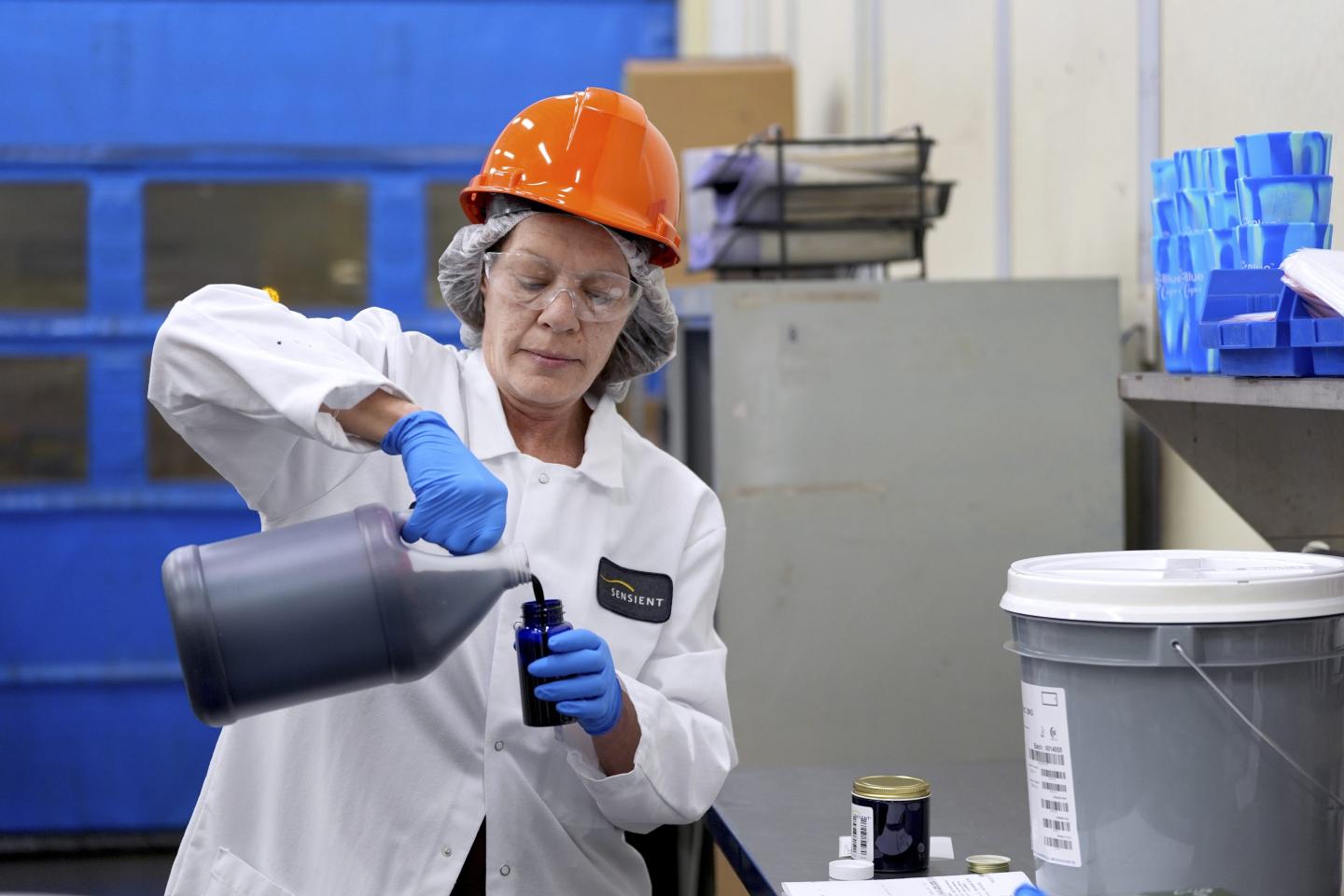
A scientist pours liquid out of a big bottle into a small container
Technician Heather Browning pours a liquid color sample into a smaller container to be shipped to a customer at Sensient Technologies Corp., a color additive manufacturing company, in St. Louis., on Wednesday, April 2, 2025.Jeff Roberson—AP Photo
Add Fortune on Google for similar content.

ST. LOUIS (AP) — As pressure grows to get artificial colors out of the U.S. food supply, the shift may well start at Abby Tampow’s laboratory desk.

Recommended Video

On an April afternoon, the scientist hovered over tiny dishes of red dye, each a slightly different ruby hue. Her task? To match the synthetic shade used for years in a commercial bottled raspberry vinaigrette — but by using only natural ingredients.

“With this red, it needs a little more orange,” Tampow said, mixing a slurry of purplish black carrot juice with a bit of beta-carotene, an orange-red color made from algae.

Tampow is part of the team at Sensient Technologies Corp., one of the world’s largest dyemakers, that is rushing to help the salad dressing manufacturer — along with thousands of other American businesses — meet demands to overhaul colors used to brighten products from cereals to sports drinks.

“Most of our customers have decided that this is finally the time when they’re going to make that switch to a natural color,” said Dave Gebhardt, Sensient’s senior technical director. He joined a recent tour of the Sensient Colors factory in a north St. Louis neighborhood.

Last week, U.S. health officials announced plans to persuade food companies to voluntarily eliminate petroleum-based artificial dyes by the end of 2026.

Health Secretary Robert F. Kennedy Jr. called them “poisonous compounds” that endanger children’s health and development, citing limited evidence of potential health risks.

The federal push follows a flurry of state laws and a January decision to ban the artificial dye known as Red 3 — found in cakes, candies and some medications — because of cancer risks in lab animals. Social media influencers and ordinary consumers have ramped up calls for artificial colors to be removed from foods.

A change to natural colors may not be fast

The FDA allows about three dozen color additives, including eight remaining synthetic dyes. But making the change from the petroleum-based dyes to colors derived from vegetables, fruits, flowers and even insects won’t be easy, fast or cheap, said Monica Giusti, an Ohio State University food color expert.

“Study after study has shown that if all companies were to remove synthetic colors from their formulations, the supply of the natural alternatives would not be enough,” Giusti said. “We are not really ready.”

It can take six months to a year to convert a single product from a synthetic dye to a natural one. And it could require three to four years to build up the supply of botanical products necessary for an industrywide shift, Sensient officials said.

“It’s not like there’s 150 million pounds of beet juice sitting around waiting on the off chance the whole market may convert,” said Paul Manning, the company’s chief executive. “Tens of millions of pounds of these products need to be grown, pulled out of the ground, extracted.”

To make natural dyes, Sensient works with farmers and producers around the world to harvest the raw materials, which typically arrive at the plant as bulk concentrates. They’re processed and blended into liquids, granules or powders and then sent to food companies to be added to final products.

Natural dyes are harder to make and use than artificial colors. They are less consistent in color, less stable and subject to changes related to acidity, heat and light, Manning said. Blue is especially difficult. There aren’t many natural sources of the color and those that exist can be hard to maintain during processing.

Also, a natural color costs about 10 times more to make than the synthetic version, Manning estimated.

“How do you get that same vividness, that same performance, that same level of safety in that product as you would in a synthetic product?” he said. “There’s a lot of complexity associated with that.”

The insects that could make ‘Barbie pink’ naturally

Companies have long used the Red 3 synthetic dye to create what Sensient officials describe as “the Barbie pink.”

To create that color with a natural source might require the use of cochineal, an insect about the size of a peppercorn.

The female insects release a vibrant red pigment, carminic acid, in their bodies and eggs. The bugs live only on prickly pear cactuses in Peru and elsewhere. About 70,000 cochineal insects are needed to produce 1 kilogram, about 2.2 pounds, of dye.

“It’s interesting how the most exotic colors are found in the most exotic places,” said Norb Norbrega, who travels the world scouting new hues for Sensient.

Artificial dyes are used widely in U.S. foods. About 1 in 5 food products in the U.S. contains added colors, whether natural or synthetic, Manning estimated. Many contain multiple colors.

FDA requires a sample of each batch of synthetic colors to be submitted for testing and certification. Color additives derived from plant, animal or mineral sources are exempt, but have been evaluated by the agency.

Health advocates have long called for the removal of artificial dyes from foods, citing mixed studies indicating they can cause neurobehavioral problems, including hyperactivity and attention issues, in some children.

The U.S. Food and Drug Administration says that the approved dyes are safe when used according to regulations and that “most children have no adverse effects when consuming foods containing color additives.”

But critics note that added colors are a key component of ultraprocessed foods, which account for more than 70% of the U.S. diet and have been associated with a host of chronic health problems, including heart disease, diabetes and obesity.

“I am all for getting artificial food dyes out of the food supply,” said Marion Nestle, a food policy expert. “They are strictly cosmetic, have no health or safety purpose, are markers of ultraprocessed foods and may be harmful to some children.”

The cautionary tale of Trix cereal

Color is powerful driver of consumer behavior and changes can backfire, Giusti noted. In 2016, food giant General Mills removed artificial dyes from Trix cereal after requests from consumers, switching to natural sources including turmeric, strawberries and radishes.

But the cereal lost its neon colors, resulting in more muted hues — and a consumer backlash. Trix fans said they missed the bright colors and familiar taste of the cereal. In 2017, the company switched back.

“When it’s a product you already love, that you’re used to consuming, and it changes slightly, then it may not really be the same experience,” Giusti said. “Announcing a regulatory change is one step, but then the implementation is another thing.”

Kennedy, the health secretary, said U.S. officials have an “understanding” with food companies to phase out artificial colors. Industry officials told The Associated Press that there is no formal agreement.

However, several companies have said they plan to accelerate a shift to natural colors in some of their products.

PepsiCo CEO Ramon Laguarta said most of its products are already free of artificial colors, and that its Lays and Tostitos brands will phase them out by the end of this year. He said the company plans to phase out artificial colors — or at least offer consumers a natural alternative — over the next few years.

Representatives for General Mills said they’re “committed to continuing the conversation” with the administration. WK Kellogg officials said they are reformulating cereals used in the nation’s school lunch programs to eliminate the artificial dyes and will halt any new products containing them starting next January.

Sensient officials wouldn’t confirm which companies are seeking help making the switch, but they said they’re ready for the surge.

“Now that there’s a date, there’s the timeline,” Manning said. “It certainly requires action.”

The Fortune 500 Innovation Forum will convene Fortune 500 executives, U.S. policy officials, top founders, and thought leaders to help define what’s next for the American economy, Nov. 16-17 in Detroit. Apply here.
About the Authors
By Jonel Aleccia
See full bioRight Arrow Button Icon
By The Associated Press
See full bioRight Arrow Button Icon
Add Fortune on Google for similar content.

Latest in Health

Finance
Lorem ipsum dolor sit amet, consectetur adipiscing elit, sed do eiusmod tempor incididunt ut labore et dolore magna aliqua. Ut enim ad minim veniam
By Fortune Editors
October 20, 2025
Finance
Lorem ipsum dolor sit amet, consectetur adipiscing elit, sed do eiusmod tempor incididunt ut labore et dolore magna aliqua. Ut enim ad minim veniam
By Fortune Editors
October 20, 2025
Finance
Lorem ipsum dolor sit amet, consectetur adipiscing elit, sed do eiusmod tempor incididunt ut labore et dolore magna aliqua. Ut enim ad minim veniam
By Fortune Editors
October 20, 2025
Finance
Lorem ipsum dolor sit amet, consectetur adipiscing elit, sed do eiusmod tempor incididunt ut labore et dolore magna aliqua. Ut enim ad minim veniam
By Fortune Editors
October 20, 2025
Finance
Lorem ipsum dolor sit amet, consectetur adipiscing elit, sed do eiusmod tempor incididunt ut labore et dolore magna aliqua. Ut enim ad minim veniam
By Fortune Editors
October 20, 2025
Finance
Lorem ipsum dolor sit amet, consectetur adipiscing elit, sed do eiusmod tempor incididunt ut labore et dolore magna aliqua. Ut enim ad minim veniam
By Fortune Editors
October 20, 2025

Most Popular

Finance
Lorem ipsum dolor sit amet, consectetur adipiscing elit, sed do eiusmod tempor incididunt ut labore et dolore magna aliqua. Ut enim ad minim veniam
By Fortune Editors
October 20, 2025
Finance
Lorem ipsum dolor sit amet, consectetur adipiscing elit, sed do eiusmod tempor incididunt ut labore et dolore magna aliqua. Ut enim ad minim veniam
By Fortune Editors
October 20, 2025
Finance
Lorem ipsum dolor sit amet, consectetur adipiscing elit, sed do eiusmod tempor incididunt ut labore et dolore magna aliqua. Ut enim ad minim veniam
By Fortune Editors
October 20, 2025
Finance
Lorem ipsum dolor sit amet, consectetur adipiscing elit, sed do eiusmod tempor incididunt ut labore et dolore magna aliqua. Ut enim ad minim veniam
By Fortune Editors
October 20, 2025
Finance
Lorem ipsum dolor sit amet, consectetur adipiscing elit, sed do eiusmod tempor incididunt ut labore et dolore magna aliqua. Ut enim ad minim veniam
By Fortune Editors
October 20, 2025
Finance
Lorem ipsum dolor sit amet, consectetur adipiscing elit, sed do eiusmod tempor incididunt ut labore et dolore magna aliqua. Ut enim ad minim veniam
By Fortune Editors
October 20, 2025
Fortune Secondary Logo
Rankings
  • 100 Best Companies
  • Fortune 500
  • Global 500
  • Fortune 500 Europe
  • Most Powerful Women
  • World's Most Admired Companies
  • See All Rankings
  • Lists Calendar
Sections
  • Finance
  • Fortune Crypto
  • Features
  • Leadership
  • Health
  • Commentary
  • Success
  • Retail
  • Mpw
  • Tech
  • Lifestyle
  • CEO Initiative
  • Asia
  • Politics
  • Conferences
  • Europe
  • Newsletters
  • Personal Finance
  • Environment
  • Magazine
  • Education
Customer Support
  • Frequently Asked Questions
  • Customer Service Portal
  • Privacy Policy
  • Terms Of Use
  • Single Issues For Purchase
  • International Print
Commercial Services
  • Advertising
  • Fortune Brand Studio
  • Fortune Analytics
  • Fortune Conferences
  • Business Development
  • Group Subscriptions
About Us
  • About Us
  • Press Center
  • Work At Fortune
  • Terms And Conditions
  • Site Map
  • About Us
  • Press Center
  • Work At Fortune
  • Terms And Conditions
  • Site Map
  • Facebook icon
  • Twitter icon
  • LinkedIn icon
  • Instagram icon
  • Pinterest icon

Latest in Health

UPS workers process boxes in a sorting facility.
North AmericaUPS
UPS is shelling out nearly $50 million on temperature-controlled facilities to meet the booming demand for GLP-1 deliveries
By Sasha RogelbergJune 23, 2026
15 hours ago
dr
HealthCancer
The U.S. cut cancer deaths by 34% since 1991—but not in 458 rural counties
By Arthur Cosby and The ConversationJune 23, 2026
17 hours ago
Woman hides from the sun in front of Big Ben in London
EconomyEurope
‘London isn’t just calling—it’s cooking.’ Europe’s largest economies face over $600 billion in heat-driven losses by 2030
By Tristan BoveJune 23, 2026
18 hours ago
Doctor giving patient injection in volunteer clinic
HealthHealth
For the first time ever, no young women in England died of cervical cancer. In the U.S., RFK Jr.’s vaccine skepticism stalls HPV progress
By Catherina GioinoJune 23, 2026
18 hours ago
heat
Environmentclimate change
Planet’s heat bill comes due as one billion more people face extreme heat stress than in the 1970s
By Alexa St. John and The Associated PressJune 22, 2026
2 days ago
A man watching a straw hat hands a woman with gray hair a hat.
EnvironmentFrance
Europe’s current heat wave is so bad the French are considering banning outdoor drinking and adopting AC ‘if necessary’
By Oleg Cetinic, Angela Charlton and The Associated PressJune 22, 2026
2 days ago

Most Popular

After forcing workers back to the office, Goldman Sachs and JPMorgan Chase are now letting their staff work remotely—but only for the World Cup
Success
After forcing workers back to the office, Goldman Sachs and JPMorgan Chase are now letting their staff work remotely—but only for the World Cup
By Orianna Rosa RoyleJune 23, 2026
23 hours ago
Markets tumble worldwide as Fed resets expectations: $400 billion wiped off SpaceX stock
Banking
Markets tumble worldwide as Fed resets expectations: $400 billion wiped off SpaceX stock
By Jim EdwardsJune 23, 2026
1 day ago
Current price of oil as of June 23, 2026
Personal Finance
Current price of oil as of June 23, 2026
By Joseph HostetlerJune 23, 2026
22 hours ago
Meet the 2 men putting New York's $300 billion pension fund in play for the first time in 20 years
Investing
Meet the 2 men putting New York's $300 billion pension fund in play for the first time in 20 years
By Nick LichtenbergJune 22, 2026
2 days ago
Former U.S. Secret Service agent says bringing your authentic self to work stifles teamwork: 'You don’t get high performers, you get sloppiness'
Success
Former U.S. Secret Service agent says bringing your authentic self to work stifles teamwork: 'You don’t get high performers, you get sloppiness'
By Sydney LakeJune 21, 2026
3 days ago
Texas and Charlotte used to build huge McMansions—now they're copying the California design tricks they once mocked
Real Estate
Texas and Charlotte used to build huge McMansions—now they're copying the California design tricks they once mocked
By Sydney LakeJune 22, 2026
2 days ago

© 2026 Fortune Media IP Limited. All Rights Reserved. Use of this site constitutes acceptance of our Terms of Use and Privacy Policy | CA Notice at Collection and Privacy Notice | Do Not Sell/Share My Personal Information
FORTUNE is a trademark of Fortune Media IP Limited, registered in the U.S. and other countries. FORTUNE may receive compensation for some links to products and services on this website. Offers may be subject to change without notice.