• Home
  • Latest
  • Fortune 500
  • Finance
  • Tech
  • Leadership
  • Lifestyle
  • Rankings
  • Multimedia
Healthbreast cancer

The doctor who caught actress Olivia Munn’s breast cancer also diagnosed her own: ‘I don’t want another woman to go through what I went through’

By
Lindsey Leake
Lindsey Leake
Down Arrow Button Icon
By
Lindsey Leake
Lindsey Leake
Down Arrow Button Icon
March 28, 2024, 7:56 PM ET
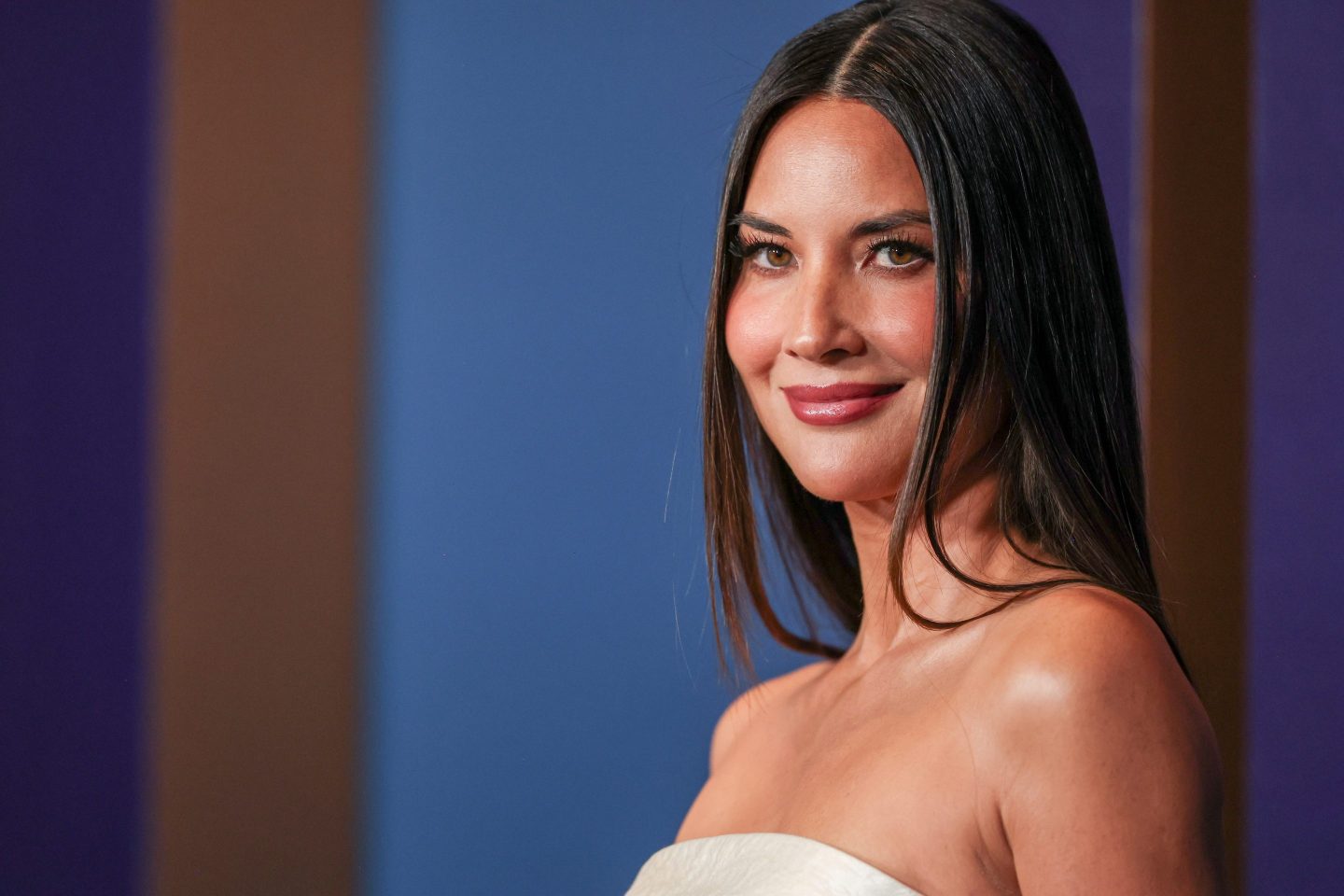
Actress Olivia Munn announced in a March 13, 2024, Instagram post that she had been diagnosed with breast cancer in 2023, and credited Dr. Thaïs Aliabadi with calculating her disease risk and saving her life. “It would be my dream to have every single woman on the planet know their lifetime risk of breast cancer,” Aliabadi tells Fortune.
Actress Olivia Munn announced in a March 13, 2024, Instagram post that she had been diagnosed with breast cancer in 2023, and credited Dr. Thaïs Aliabadi with calculating her disease risk and saving her life. “It would be my dream to have every single woman on the planet know their lifetime risk of breast cancer,” Aliabadi tells Fortune.Christopher Polk/WWD via Getty Images

What are the odds you’ll develop breast cancer in your lifetime? Not a woman’s average risk—13%, according to the American Cancer Society—but your personal risk based on your age, genetics, family history, and other risk factors?

Recommended Video

That’s a statistic you should know off the top of your head, Dr. Thaïs Aliabadi, an OB/GYN in Beverly Hills, California, and cohost of the new podcast SHE MD, tells Fortune.

“I was diagnosed with breast cancer myself, so it’s a condition that’s near and dear to my heart,” she says. “I don’t want another woman to go through what I went through.”

According to Aliabadi, at 49 she had no genetic mutations, no family history of breast cancer, and her mammograms, ultrasounds, and MRIs were benign. However, she says a breast biopsy seven months earlier had shown precancerous cells. She knew other components of her medical history—such as having dense breasts and giving birth for the first time after age 30—heightened her risk. She determined her lifetime risk of developing breast cancer was 37%; the American College of Radiology considers women with a lifetime risk at or above 20% to be high-risk. Aliabadi asked her doctor for a prophylactic double mastectomy, a surgery in which both breasts are removed to lower chances of getting breast cancer.

“Someone with 37% lifetime risk, they need regular imaging every six months and I didn’t want to go through all that; I was too busy,” says Aliabadi, now 53. “I didn’t want to get diagnosed with breast cancer, I just didn’t want to deal with it. To me, that number was high, and it’s a very personal decision.”

Her doctors insisted a double mastectomy was unnecessary. Still, Aliabadi went through with the procedure. A week later, she was notified cancer had been present.

“Do you know how many doctors at my hospital approached me the following month—’cause I’d made a post on Instagram—and asked me, ‘How did you calculate your lifetime risk?’ And these were gynecologists,” Aliabadi tells Fortune. “I realized I got breast cancer so I can change this in the world.”

How do you calculate lifetime breast cancer risk?

Aliabadi says her dream is for every woman to know her lifetime risk of breast cancer—information that could potentially save her life.

Earlier this month, actress Olivia Munn announced on Instagram that she’d been diagnosed with luminal B breast cancer in 2023. The 43-year-old had tested negative for BRCA1 and BRCA2 gene mutations, and her imaging results were normal. In spite of this, Munn’s doctor, Aliabadi, assessed her breast cancer risk, which was also 37%. Further testing revealed cancer and Munn, too, opted for a double mastectomy.

“I wouldn’t have found my cancer for another year—at my next scheduled mammogram—except that my OB/GYN, Dr. Thaïs Aliabadi, decided to calculate my Breast Cancer Risk Assessment Score,” Munn wrote in a March 13 Instagram post. “The fact that she did saved my life.”

Aliabadi will soon offer a risk calculator of her own on the SHE MD website and declined to tell Fortune which algorithm she used on Munn. Several free variations are accessible online, including the Breast Cancer Risk Assessment Tool (BCRAT), the IBIS/Tyrer-Cuzick Risk Assessment Calculator, the Breast Cancer Surveillance Consortium (BCSC) Advanced Breast Cancer Risk Calculator, and the Black Women’s Health Study Breast Cancer Risk Calculator.

Each has advantages and limitations. The BCRAT, for example, is simple but based on limited biomedical data for nonwhite women. The IBIS/Tyrer-Cuzick tool eliminates race but incorporates more of your reproductive history, and the BCSC calculator doesn’t apply to women under 40. Collectively, they analyze factors such as:

  • Age
  • Age at time of first menstrual period
  • Age at time of first childbirth
  • BRCA1 and/or BRCA2 gene mutations
  • Breast biopsy history
  • Breast density
  • Breastfeeding history
  • Family history of breast and prostate cancer
  • Height and weight
  • Hormone replacement therapy history
  • Menopausal status
  • Oral contraceptive use
  • Ovarian cancer history
  • Race and ethnicity

Depending on the tool, you’ll be given your short-term risk of developing breast cancer within five to 10 years and/or your lifetime risk. A number of calculators are publicly accessible but intended for use by medical professionals. Women should not only know their risk, Aliabadi says, but also discuss it with their health care team.

“This needs to be done at the primary care office, at the gynecologist’s office, at the family practitioner’s office, at the plastic surgeon’s office—offices that basically deal with women directly,” she tells Fortune. “I want this to be standard of care.”

The upcoming SHE MD risk assessment will include a printer-friendly action plan women can bring to their next medical appointment “and if their doctor refuses to do something about it, I want them to be empowered to be their own breast advocate and go find a doctor that would do the right thing for them,” Aliabadi says.
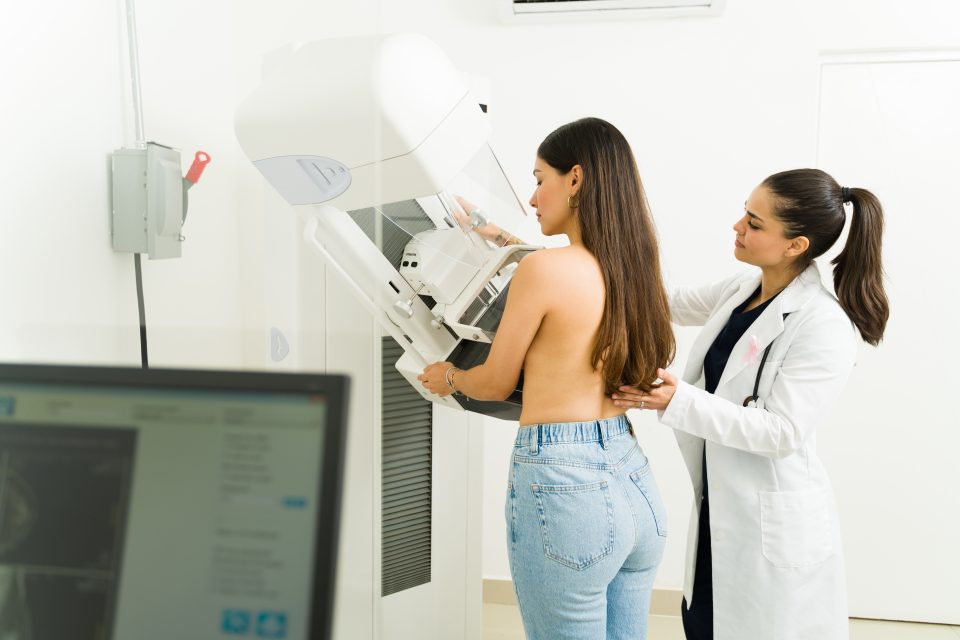
Rear view of an hispanic young woman getting a mammogram to check for breast cancer with the help of a female doctor at the imaging diagnostic center
The American Cancer Society recommends annual mammograms for women as young as 40. Depending on your lifetime risk of developing breast cancer, however, you may need earlier and additional screening, says Dr. Rebecca Kaltman, an oncologist at the Inova Saville Cancer Screening and Prevention Center in Fairfax, Virginia.
Antonio Diaz—Getty Images

What does my lifetime breast cancer risk mean?

No tool is perfect, with some underestimating risk among certain populations. A woman at low risk may develop breast cancer, while a woman at high risk may not. Your doctor can help you choose which assessment may give you the best estimate and determine whether additional screenings are necessary.

Don’t wait until you approach middle age to have these nuanced discussions with your doctor, says Dr. Rebecca Kaltman, an oncologist at the Inova Saville Cancer Screening and Prevention Center in Fairfax, Virginia, who tends to use the IBIS/Tyrer-Cuzick tool for her patients. 

“We are working [to] educate primary physicians on quick models and tools that they can use to risk assess, so that we’re capturing people early on,” Kaltman tells Fortune. “For those that might be at risk from a hereditary perspective, screening would start a lot earlier. So instead of waiting until 40, when the guidelines say to start screening, we need to be thinking about women at a much younger age, in their 20s and 30s.”

The American Cancer Society recommends breast imaging for women in these age groups:

  • 40–44: Annual mammograms optional
  • 45–54: Annual mammograms
  • 55+: Biannual mammograms, annual optional

Patient education is critical, particularly for women of color, Kaltman says, noting that while breast cancer is more common among white women, it occurs earlier and more aggressively among Black women. Early disease detection is a promising solution.

“I think that our obligation as providers is to make sure that we’re getting out into every community and educating women,” Kaltman says. “The more that we can empower patients to know what their risk is and bring this to their primary providers, be it an OB/GYN or an internist, the more likely they are to get risk stratified and appropriate screening going forward.”

For more on breast cancer risk and prevention:

  • A 5-minute test can estimate your odds of developing breast cancer—but not if you’re biracial
  • You should start getting mammograms at age 40, not 50, according to new guidelines
  • People with breast cancer won’t always notice a lump. 5 lesser-known symptoms both men and women should watch for
  • Scientists discover evidence of 4 more breast cancer genes—and potentially many others: ‘The risks can be significant for women who carry them’

Subscribe to Well Adjusted, our newsletter full of simple strategies to work smarter and live better, from the Fortune Well team. Sign up for free today.


About the Author
By Lindsey Leake
LinkedIn iconTwitter icon
See full bioRight Arrow Button Icon

Latest in Health

Finance
Lorem ipsum dolor sit amet, consectetur adipiscing elit, sed do eiusmod tempor incididunt ut labore et dolore magna aliqua. Ut enim ad minim veniam
By Fortune Editors
October 20, 2025
Finance
Lorem ipsum dolor sit amet, consectetur adipiscing elit, sed do eiusmod tempor incididunt ut labore et dolore magna aliqua. Ut enim ad minim veniam
By Fortune Editors
October 20, 2025
Finance
Lorem ipsum dolor sit amet, consectetur adipiscing elit, sed do eiusmod tempor incididunt ut labore et dolore magna aliqua. Ut enim ad minim veniam
By Fortune Editors
October 20, 2025
Finance
Lorem ipsum dolor sit amet, consectetur adipiscing elit, sed do eiusmod tempor incididunt ut labore et dolore magna aliqua. Ut enim ad minim veniam
By Fortune Editors
October 20, 2025
Finance
Lorem ipsum dolor sit amet, consectetur adipiscing elit, sed do eiusmod tempor incididunt ut labore et dolore magna aliqua. Ut enim ad minim veniam
By Fortune Editors
October 20, 2025
Finance
Lorem ipsum dolor sit amet, consectetur adipiscing elit, sed do eiusmod tempor incididunt ut labore et dolore magna aliqua. Ut enim ad minim veniam
By Fortune Editors
October 20, 2025

Most Popular

Finance
Lorem ipsum dolor sit amet, consectetur adipiscing elit, sed do eiusmod tempor incididunt ut labore et dolore magna aliqua. Ut enim ad minim veniam
By Fortune Editors
October 20, 2025
Finance
Lorem ipsum dolor sit amet, consectetur adipiscing elit, sed do eiusmod tempor incididunt ut labore et dolore magna aliqua. Ut enim ad minim veniam
By Fortune Editors
October 20, 2025
Finance
Lorem ipsum dolor sit amet, consectetur adipiscing elit, sed do eiusmod tempor incididunt ut labore et dolore magna aliqua. Ut enim ad minim veniam
By Fortune Editors
October 20, 2025
Finance
Lorem ipsum dolor sit amet, consectetur adipiscing elit, sed do eiusmod tempor incididunt ut labore et dolore magna aliqua. Ut enim ad minim veniam
By Fortune Editors
October 20, 2025
Finance
Lorem ipsum dolor sit amet, consectetur adipiscing elit, sed do eiusmod tempor incididunt ut labore et dolore magna aliqua. Ut enim ad minim veniam
By Fortune Editors
October 20, 2025
Finance
Lorem ipsum dolor sit amet, consectetur adipiscing elit, sed do eiusmod tempor incididunt ut labore et dolore magna aliqua. Ut enim ad minim veniam
By Fortune Editors
October 20, 2025
Fortune Secondary Logo
Rankings
  • 100 Best Companies
  • Fortune 500
  • Global 500
  • Fortune 500 Europe
  • Most Powerful Women
  • Future 50
  • World’s Most Admired Companies
  • See All Rankings
Sections
  • Finance
  • Fortune Crypto
  • Features
  • Leadership
  • Health
  • Commentary
  • Success
  • Retail
  • Mpw
  • Tech
  • Lifestyle
  • CEO Initiative
  • Asia
  • Politics
  • Conferences
  • Europe
  • Newsletters
  • Personal Finance
  • Environment
  • Magazine
  • Education
Customer Support
  • Frequently Asked Questions
  • Customer Service Portal
  • Privacy Policy
  • Terms Of Use
  • Single Issues For Purchase
  • International Print
Commercial Services
  • Advertising
  • Fortune Brand Studio
  • Fortune Analytics
  • Fortune Conferences
  • Business Development
  • Group Subscriptions
About Us
  • About Us
  • Editorial Calendar
  • Press Center
  • Work At Fortune
  • Diversity And Inclusion
  • Terms And Conditions
  • Site Map
  • About Us
  • Editorial Calendar
  • Press Center
  • Work At Fortune
  • Diversity And Inclusion
  • Terms And Conditions
  • Site Map
  • Facebook icon
  • Twitter icon
  • LinkedIn icon
  • Instagram icon
  • Pinterest icon

© 2026 Fortune Media IP Limited. All Rights Reserved. Use of this site constitutes acceptance of our Terms of Use and Privacy Policy | CA Notice at Collection and Privacy Notice | Do Not Sell/Share My Personal Information
FORTUNE is a trademark of Fortune Media IP Limited, registered in the U.S. and other countries. FORTUNE may receive compensation for some links to products and services on this website. Offers may be subject to change without notice.


Latest in Health

HealthDietary Supplements
The Best Colostrum Supplements 2026: Tested and Approved
By Emily PharesMarch 24, 2026
1 day ago
Personal FinanceTaxes
Americans spend $146 billion and 11.6 billion hours doing their taxes, and most of it is just filling out paperwork
By Catherina GioinoMarch 24, 2026
1 day ago
fauci
CommentaryCOVID-19 vaccines
How COVID turned America against science — and what it will take to win it back
By David Blumenthal and James A. MoroneMarch 24, 2026
2 days ago
MagazineSocial Media
Inside the Seattle clinic that treats tech addiction like heroin, and clients detox for up to 16 weeks
By Kristin StollerMarch 24, 2026
2 days ago
US President Donald Trump speaks to reporters before boarding Air Force One at Palm Beach International Airport in West Palm Beach, Florida, on March 23, 2026.
HealthIran
Trump has TACO’d again, this time in Iran, sparking a $1.7 trillion stock market rally in minutes, even as peace talks are in question
By Eva RoytburgMarch 23, 2026
2 days ago
HealthHealth
Forest ‘bathing’ can reduce stress, improve mood, lower blood pressure and boost the immune system. Here’s how it’s done
By Allen Breed and The Associated PressMarch 22, 2026
3 days ago

Most Popular

Magazine
The youngest-ever female CEO of a Fortune 500 company is fighting Trump's cuts to keep Medicaid strong
By Fortune EditorsMarch 24, 2026
2 days ago
Commentary
The Treasury just declared the U.S. insolvent. The media missed it
By Fortune EditorsMarch 23, 2026
2 days ago
Success
Palantir’s billionaire CEO says only two kinds of people will succeed in the AI era: trade workers — ‘or you’re neurodivergent’
By Fortune EditorsMarch 24, 2026
1 day ago
Success
The job market is so bad that ‘reverse recruiters’ are charging $1,500 a month just to help people look for jobs
By Fortune EditorsMarch 25, 2026
19 hours ago
Success
JPMorgan’s Jamie Dimon says remote work breeds ‘rope-a-dope politics’ and stunts young workers’ growth
By Fortune EditorsMarch 25, 2026
11 hours ago
Success
JPMorgan has started monitoring the keystrokes, video calls, and meetings of its junior investment bankers—and they say it's for employee well-being
By Fortune EditorsMarch 24, 2026
1 day ago