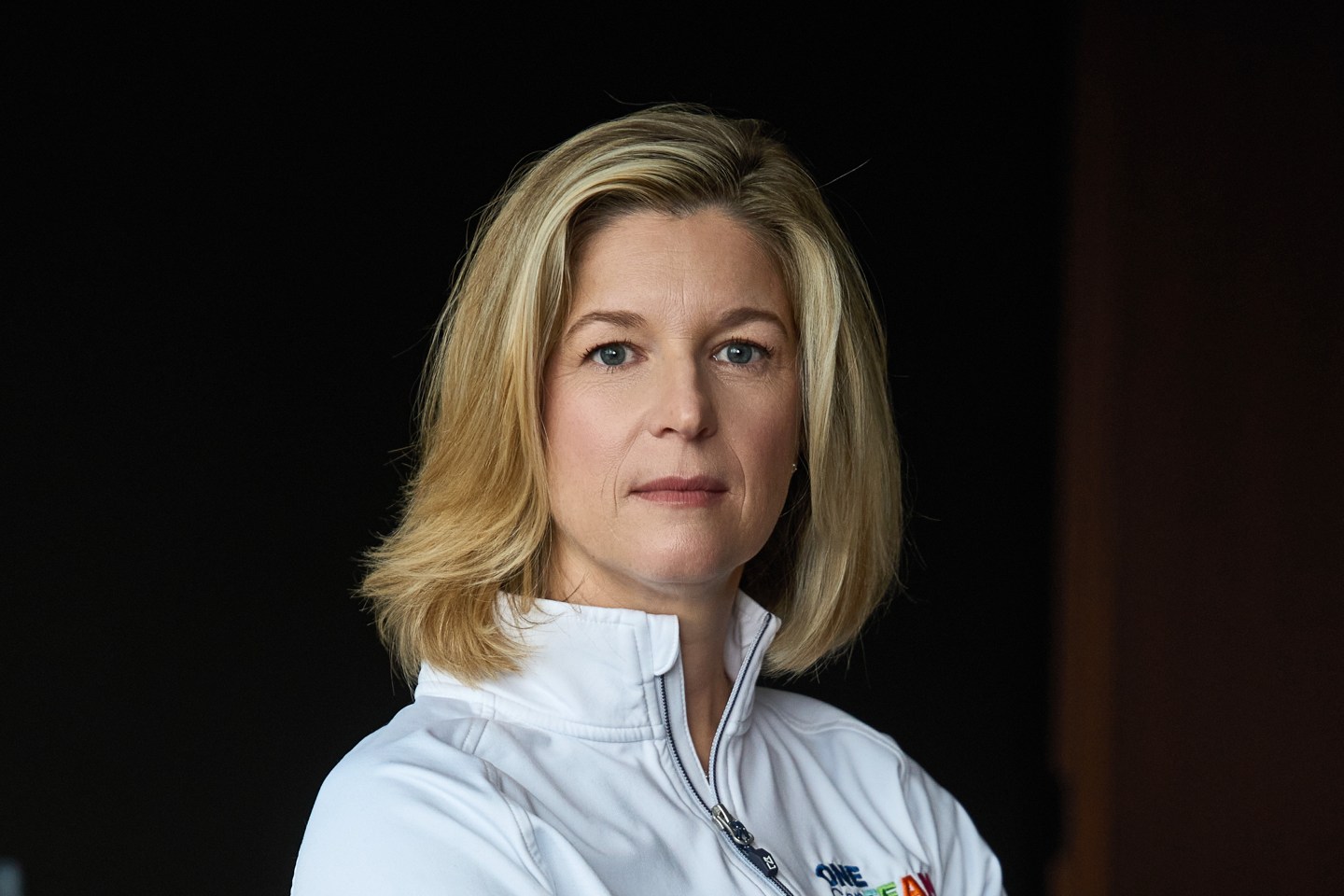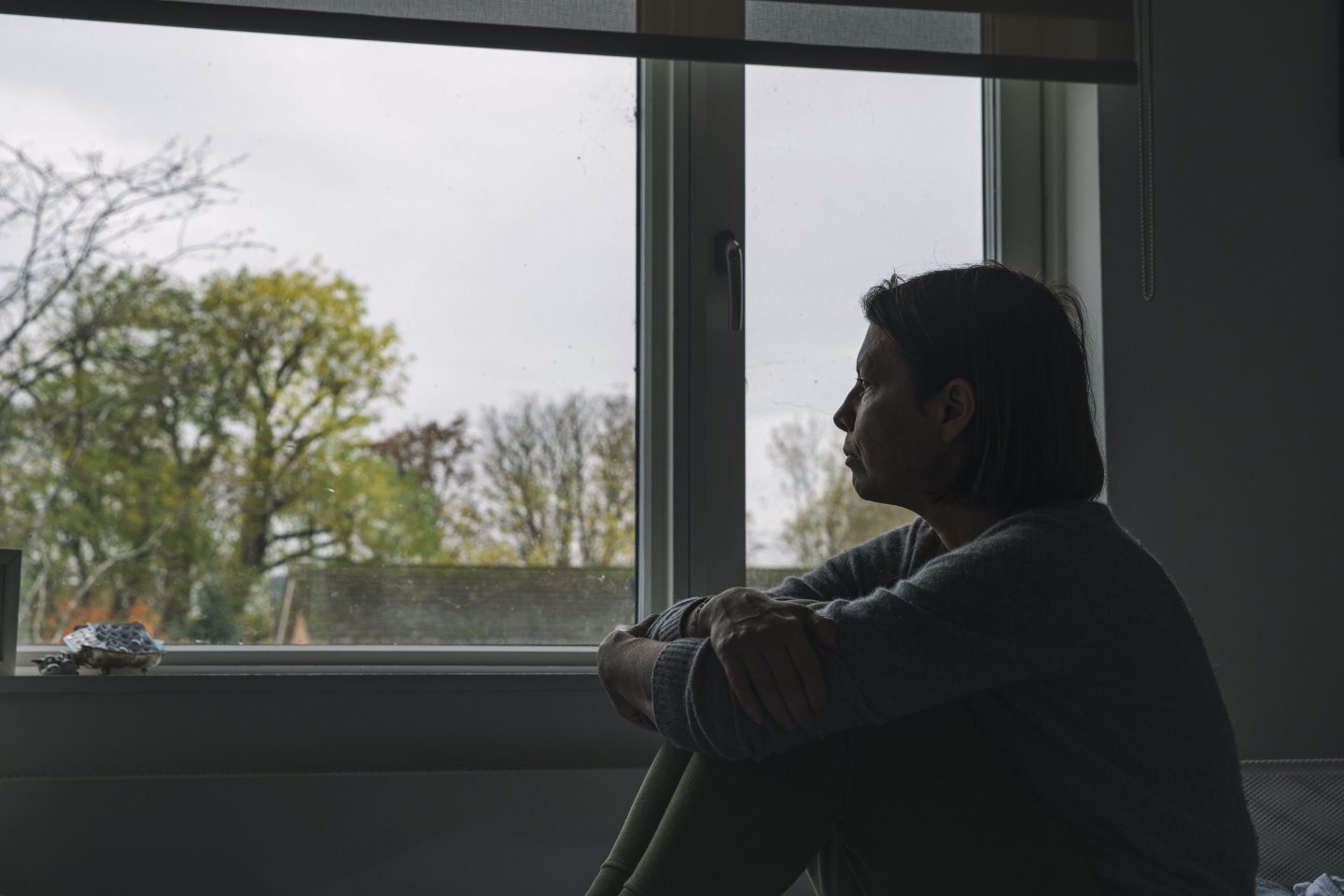
Emily Hollenbeck lived with a deep, recurring depression she likened to a black hole, where gravity felt so strong and her limbs so heavy she could barely move. She knew the illness could kill her. Both of her parents had taken their lives.
She was willing to try something extreme: Having electrodes implanted in her brain as part of an experimental therapy.
Researchers say the treatment — called deep brain stimulation, or DBS — could eventually help many of the nearly 3 million Americans like her with depression that resists other treatments. It’s approved for conditions such as Parkinson’s disease and epilepsy, and many doctors and patients hope it will become more widely available for depression soon.
The treatment gives patients targeted electrical impulses, much like a pacemaker for the brain. A growing body of recent research is promising, with more underway — although two large studies that showed no advantage to using DBS for depression temporarily halted progress, and some scientists continue to raise concerns.
Meanwhile, the Food and Drug Administration has agreed to speed up its review of Abbott Laboratories’ request to use its DBS devices for treatment-resistant depression.
“At first I was blown away because the concept of it seems so intense. Like, it’s brain surgery. You have wires embedded in your brain,” said Hollenbeck, who is part of ongoing research at Mount Sinai West. “But I also felt like at that point I tried everything, and I was desperate for an answer.”
“Nothing else was working”
Hollenbeck suffered from depression symptoms as a child growing up in poverty and occasional homelessness. But her first major bout happened in college, after her father’s suicide in 2009. Another hit during a Teach for America stint, leaving her almost immobilized and worried she’d lose her classroom job and sink into poverty again. She landed in the hospital.
“I ended up having sort of an on-and-off pattern,” she said. After responding to medication for a while, she’d relapse.
She managed to earn a doctorate in psychology, even after losing her mom in her last year of grad school. But the black hole always returned to pull her in. At times, she said, she thought about ending her life.
She said she’d exhausted all options, including electroconvulsive therapy, when a doctor told her about DBS three years ago.
“Nothing else was working,” she said.
She became one of only a few hundred treated with DBS for depression.
Hollenbeck had the brain surgery while sedated but awake. Dr. Brian Kopell, who directs Mount Sinai’s Center for Neuromodulation, placed thin metal electrodes in a region of her brain called the subcallosal cingulate cortex, which regulates emotional behavior and is involved in feelings of sadness.
The electrodes are connected by an internal wire to a device placed under the skin in her chest, which controls the amount of electrical stimulation and delivers constant low-voltage pulses. Hollenbeck calls it “continous Prozac.”
Doctors say the stimulation helps because electricity speaks the brain’s language. Neurons communicate using electrical and chemical signals.
In normal brains, Kopell said, electrical activity reverberates unimpeded in all areas, in a sort of dance. In depression, the dancers get stuck within the brain’s emotional circuitry. DBS seems to “unstick the circuit,” he said, allowing the brain to do what it normally would.
Hollenbeck said the effect was almost immediate.
“The first day after surgery, she started feeling a lifting of that negative mood, of the heaviness,” said her psychiatrist, Dr. Martijn Figee. “I remember her telling me that she was able to enjoy Vietnamese takeout for the first time in years and really taste the food. She started to decorate her home, which had been completely empty since she moved to New York.”
For Hollenbeck, the most profound change was finding pleasure in music again.
“When I was depressed, I couldn’t listen to music. It sounded and felt like I was listening to radio static,” she said. “Then on a sunny day in the summer, I was walking down the street listening to a song. I just felt this buoyancy, this, ‘Oh, I want to walk more, I want to go and do things!’ And I realized I’m getting better.”
She only wishes the therapy had been there for her parents.
The treatment’s history
The road to this treatment stretches back two decades, when neurologist Dr. Helen Mayberg led promising early research.
But setbacks followed. Large studies launched more than a dozen years ago showed no significant difference in response rates for treated and untreated groups. Dr. Katherine Scangos, a psychiatrist at the University of California, San Francisco, also researching DBS and depression, cited a couple of reasons: The treatment wasn’t personalized, and researchers looked at outcomes over a matter of weeks.
Some later research showed depression patients had stable, long-term relief from DBS when observed over years. Overall, across different brain targets, DBS for depression is associated with average response rates of 60%, one 2022 study said.
Treatments being tested by various teams are much more tailored to individuals today. Mount Sinai’s team is one of the most prominent researching DBS for depression in the U.S. There, a neuroimaging expert uses brain images to locate the exact spot for Kopell to place electrodes.
“We have a template, a blueprint of exactly where we’re going to go,” said Mayberg, a pioneer in DBS research and founding director of The Nash Family Center for Advanced Circuit Therapeutics at Mount Sinai. “Everybody’s brain is a little different, just like people’s eyes are a little further apart or a nose is a little bigger or smaller.”
Other research teams also tailor treatment to patients, although their methods are slightly different. Scangos and her colleagues are studying various targets in the brain and delivering stimulation only when needed for severe symptoms. She said the best therapy may end up being a combination of approaches.
As teams keep working, Abbott is launching a big clinical trial this year, ahead of a potential FDA decision.
“The field is advancing quite quickly,” Scangos said. “I’m hoping we will have approval within a short time.”
But some doctors are skeptical, pointing to potential complications such as bleeding, stroke or infection after surgery.
Dr. Stanley Caroff, an emeritus professor of psychiatry at the University of Pennsylvania, said scientists still don’t know the exact pathways or mechanisms in the brain that produce depression, which is why it’s hard to pick a site to stimulate. It’s also tough to select the right patients for DBS, he said, and approved, successful treatments for depression are available.
“I believe from a psychiatric point of view, the science is not there,” he said of DBS for depression.
Moving forward
Hollenbeck acknowledges DBS hasn’t been a cure-all; she still takes medicines for depression and needs ongoing care.
She recently visited Mayberg in her office and discussed recovery. “It’s not about being happy all the time,” the doctor told her. “It’s about making progress.”
That’s what researchers are studying now — how to track progress.
Recent research by Mayberg and others in the journal Nature showed it’s possible to provide a “readout” of how someone is doing at any given time. Analyzing the brain activity of DBS patients, researchers found a unique pattern that reflects the recovery process. This gives them an objective way to observe how people get better and distinguish between impending depression and typical mood fluctuations.
Scientists are confirming those findings using newer DBS devices in a group of patients that includes Hollenbeck.
She and other participants do their part largely at home. She gives researchers regular brain recordings by logging onto a tablet, putting a remote above the pacemaker-like device in her chest and sending the data. She answers questions that pop up about how she feels. Then she records a video that will be analyzed for things such as facial expression and speech.
Occasionally, she goes into Mount Sinai’s “Q-Lab,” an immersive environment where scientists do quantitative research collecting all sorts of data, including how she moves in a virtual forest or makes circles in the air with her arms. Like many other patients, she moves her arms faster now that she’s doing better.
Data from recordings and visits are combined with other information, such as life events, to chart how she’s doing. This helps guide doctors’ decisions, such as whether to increase her dose of electricity – which they did once.
On a recent morning, Hollenbeck moved her collar and brushed her hair aside to reveal scars on her chest and head from her DBS surgery. To her, they’re signs of how far she’s come.
She makes her way around the city, taking walks in the park and going to libraries, which were a refuge in childhood. She no longer worries that normal life challenges will trigger a crushing depression.
“The stress is pretty extreme at times, but I’m able to see and remember, even on a bodily level, that I’m going to be OK,” she said.
“If I hadn’t had DBS, I’m pretty sure I would not be alive today.”
___
The Associated Press Health and Science Department receives support from the Howard Hughes Medical Institute’s Science and Educational Media Group. The AP is solely responsible for all content.