• Home
  • Latest
  • Fortune 500
  • Finance
  • Tech
  • Leadership
  • Lifestyle
  • Rankings
  • Multimedia

The Shrinking Middle Class: By the Numbers

By
Nicolas Rapp
Nicolas Rapp
and
Matthew Heimer
Matthew Heimer
Down Arrow Button Icon
By
Nicolas Rapp
Nicolas Rapp
and
Matthew Heimer
Matthew Heimer
Down Arrow Button Icon
December 20, 2018, 6:30 AM ET
By
Nicolas Rapp
Nicolas Rapp
and
Matthew Heimer
Matthew Heimer
Down Arrow Button Icon
By
Nicolas Rapp
Nicolas Rapp
and
Matthew Heimer
Matthew Heimer
Down Arrow Button Icon
December 20, 2018, 6:30 AM ET
The Shrinking Middle Class: By the Numbers
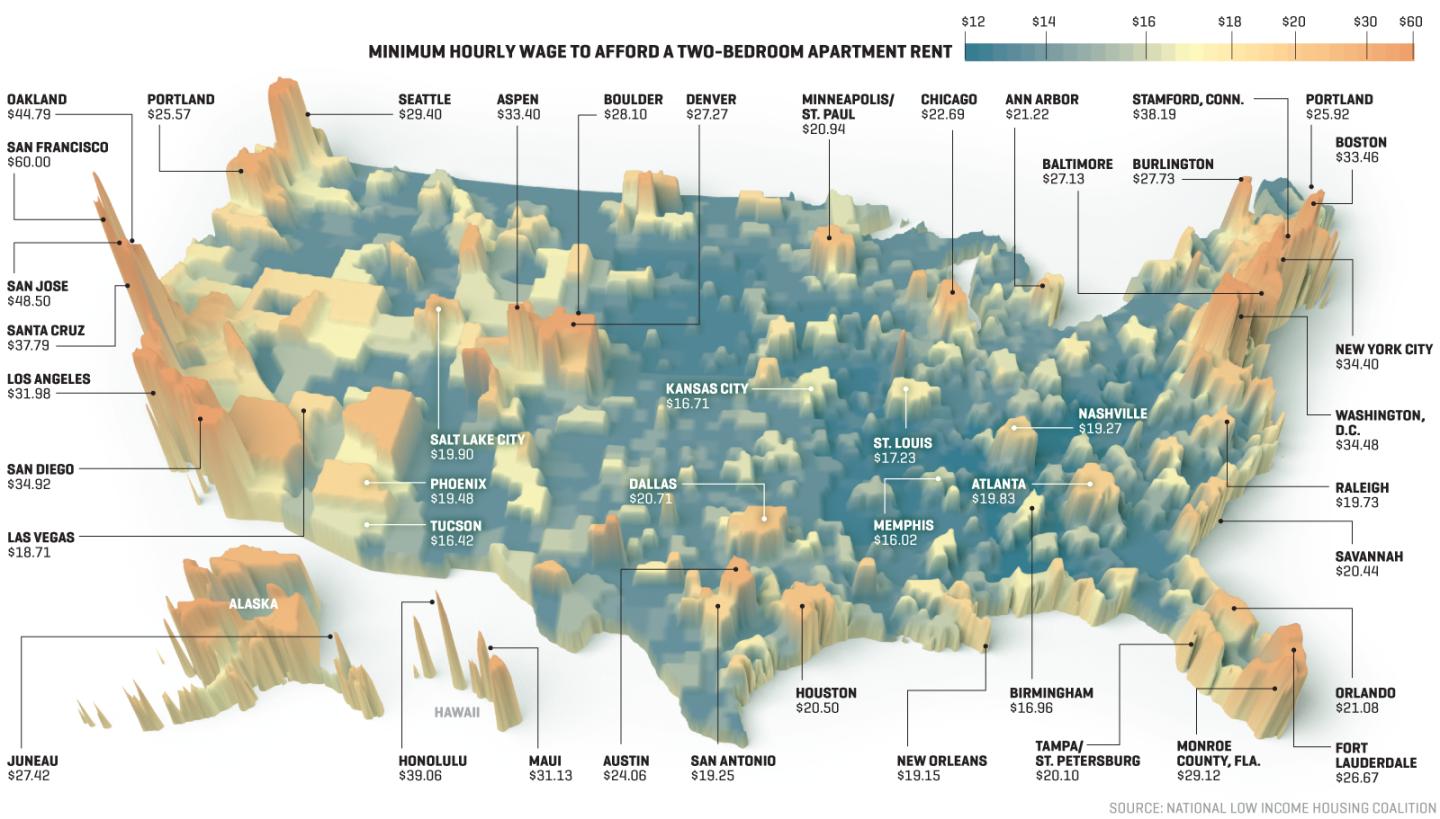
Map shows the minimum hourly wage needed to afford a two-bedroom apartment rent.

The Tightening Squeeze of City Living

The information revolution has increased the concentration of jobs in certain U.S. cities, especially in a few hotly competitive coastal metro areas. That dynamic has driven housing costs beyond what many middle-class earners can afford, making it harder for them to save for home ownership or other financial goals. (The median U.S. hourly wage was $27.35 in November; it’s lower in most of the Midwest and South.)

Methodology info (PDF)

To The Victors Go The Spoils

Tax breaks for investors and property owners have helped concentrate wealth among the top 10%. The growing impact of higher education on earnings has had a similar effect. Since 1995, average income for graduate degree holders has risen 28%; for those with only a high-school diploma, that figure is 5%.

In Awkward Global Company

The bottom 90% of U.S. earners take home a smaller share of income than do their counterparts in most industrial economies—including in far less free societies like China’s.
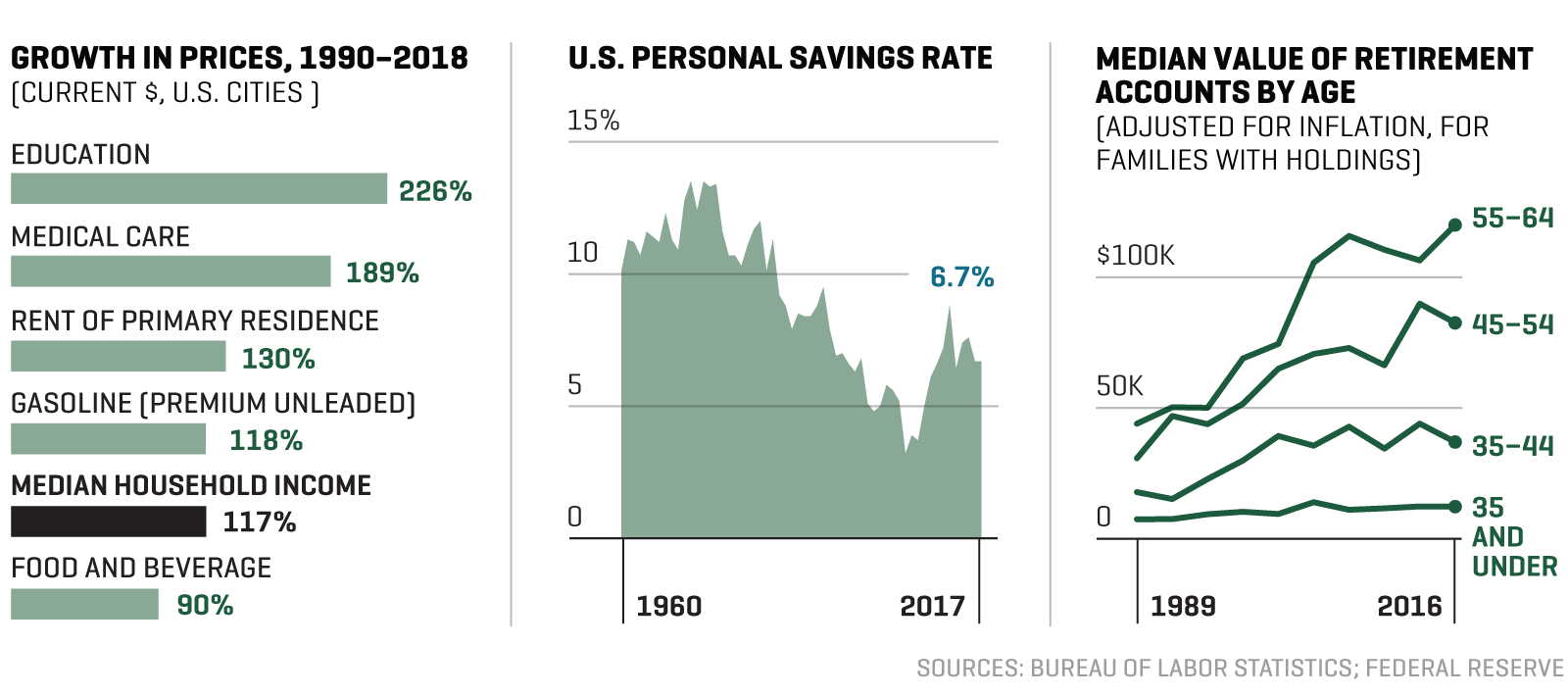
Purchasing Power And Savings Wane

Incomes haven’t risen as fast as rent, medical costs, or tuition—three of the biggest burdens for U.S. households. As a result, savings rates have declined, leaving middle-class earners more vulnerable to being bankrupted by an emergency or a job loss—and less able to put away money for retirement or for future generations.

A version of this article appears in the January 2019 issue of Fortune as part of the special report, “The Shrinking Middle Class.”

About the Authors
Nicolas Rapp
By Nicolas RappInformation Graphics Director
LinkedIn icon

Nicolas Rapp is the former information graphics director at Fortune.

See full bioRight Arrow Button Icon
Matthew Heimer
By Matthew HeimerExecutive Editor, Features
Instagram iconTwitter icon

Matt Heimer oversees Fortune's longform storytelling in digital and print and is the editorial coordinator of Fortune magazine. He is also a co-chair of the Fortune Global Forum and the lead editor of Fortune's annual Change the World list.

See full bioRight Arrow Button Icon
Fortune Secondary Logo
Rankings
  • 100 Best Companies
  • Fortune 500
  • Global 500
  • Fortune 500 Europe
  • Most Powerful Women
  • World's Most Admired Companies
  • See All Rankings
  • Lists Calendar
Sections
  • Finance
  • Fortune Crypto
  • Features
  • Leadership
  • Health
  • Commentary
  • Success
  • Retail
  • Mpw
  • Tech
  • Lifestyle
  • CEO Initiative
  • Asia
  • Politics
  • Conferences
  • Europe
  • Newsletters
  • Personal Finance
  • Environment
  • Magazine
  • Education
Customer Support
  • Frequently Asked Questions
  • Customer Service Portal
  • Privacy Policy
  • Terms Of Use
  • Single Issues For Purchase
  • International Print
Commercial Services
  • Advertising
  • Fortune Brand Studio
  • Fortune Analytics
  • Fortune Conferences
  • Business Development
  • Group Subscriptions
About Us
  • About Us
  • Press Center
  • Work At Fortune
  • Terms And Conditions
  • Site Map
  • About Us
  • Press Center
  • Work At Fortune
  • Terms And Conditions
  • Site Map
  • Facebook icon
  • Twitter icon
  • LinkedIn icon
  • Instagram icon
  • Pinterest icon
The American middle-class ideal was forged in the decades after World War II, when economic growth and wage increases climbed in lockstep for nearly 30 years. That pairing dissolved abruptly in the 1970s. Between 1973 and 2017, according to the Economic Policy Institute, the productivity of the economy grew 77%—but average compensation rose only 12.4%, adjusted for inflation. This divergence coincided with a shift in economic gravity, away from manufacturing and toward services and “knowledge industries.” That shift weakened the labor unions that had helped rank-and-file workers in many professions claim a bigger share of the bounty. Just as important were tax reforms that favored investment and real estate earnings over wage income. The upshot: an economic order in which the capital-owning class enjoys great advantages—and the costs of admission to and exclusion from that class grow ever higher.

© 2026 Fortune Media IP Limited. All Rights Reserved. Use of this site constitutes acceptance of our Terms of Use and Privacy Policy | CA Notice at Collection and Privacy Notice | Do Not Sell/Share My Personal Information
FORTUNE is a trademark of Fortune Media IP Limited, registered in the U.S. and other countries. FORTUNE may receive compensation for some links to products and services on this website. Offers may be subject to change without notice.