• Home
  • Latest
  • Fortune 500
  • Finance
  • Tech
  • Leadership
  • Lifestyle
  • Rankings
  • Multimedia

Trendingnow

1

After forcing workers back to the office, Goldman Sachs and JPMorgan Chase are now letting their staff work remotely—but only for the World Cup

2

Markets tumble worldwide as Fed resets expectations: $400 billion wiped off SpaceX stock

3

Current price of oil as of June 23, 2026

1

After forcing workers back to the office, Goldman Sachs and JPMorgan Chase are now letting their staff work remotely—but only for the World Cup

2

Markets tumble worldwide as Fed resets expectations: $400 billion wiped off SpaceX stock

3

Current price of oil as of June 23, 2026
Economy
Europe

The world’s top inequality researcher breaks down his surprising findings that we really are all becoming more equal

By
Rachel Shin
Rachel Shin
Down Arrow Button Icon
By
Rachel Shin
Rachel Shin
Down Arrow Button Icon
June 16, 2023, 12:23 PM ET
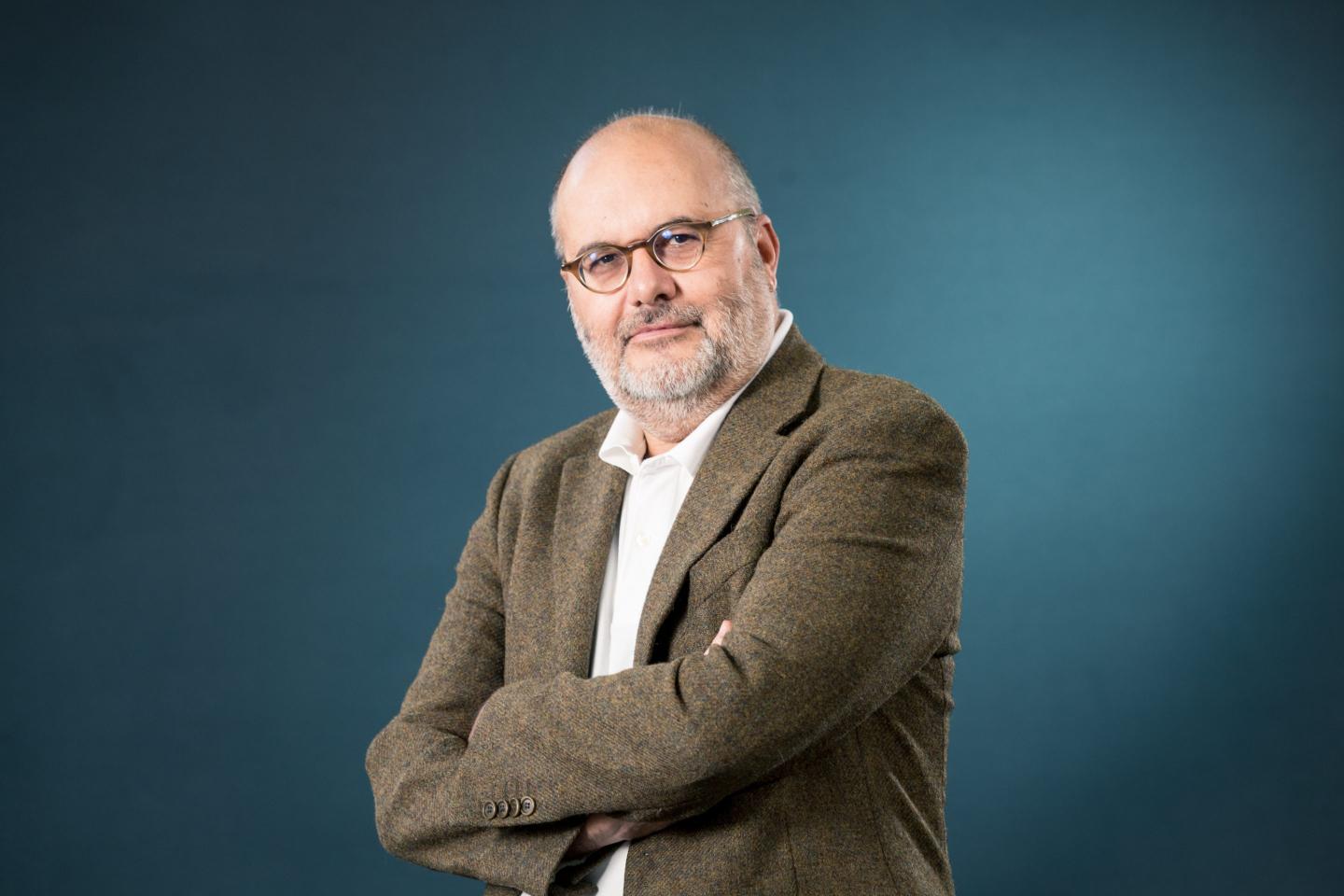
American-Serbian economist Branko Milanovic at the Edinburgh International Book Festival at Charlotte Square Gardens on August 22, 2017 in Edinburgh, Scotland.
American-Serbian economist Branko Milanovic at the Edinburgh International Book Festival at Charlotte Square Gardens on August 22, 2017 in Edinburgh, Scotland. Roberto Ricciuti—Getty Images
Add Fortune on Google for similar content.

For Americans, a report saying inequality has dramatically fallen seems absurd. In the West, the gap between the rich and poor has been widening, and the middle class is gradually vanishing. But on a global scale, economic equality has improved to the highest level since the late 19th century, according to new research by one of the world’s foremost experts on the topic. “It’s very good news,” he told Fortune.

Recommended Video

“Inequality in individual countries has been generally, in the last 30 years, up,” economist Branko Milanović said in an interview with Fortune about his findings. “But global inequality at the same time has been going down. So these two things are not contradictory. Simply, global inequality depends on rates of growth of different countries.”

Milanović is one of the world’s foremost experts on global inequality, having previously served as the World Bank’s lead research economist and authored several books on the topic, including Worlds Apart (2005) and The Haves and the Have-Nots (2011). Currently a professor at the City University of New York, Milanović has been a visiting scholar at several universities including Oxford, the London School of Economics, and Johns Hopkins. He published his findings in a large essay for Foreign Affairs titled “The Great Convergence.”

Milanović measures inequality using the Gini coefficient, in which zero is perfect equality and 100 is total inequality. The world’s score was 60.1 in 2018, the most recent year for which data is available, down from 61.8 five years prior in 2013. The global Gini coefficient for each year is usually only calculated a few years later, because it requires over 130 countries’ individual income distributions. 

As with so many features of the modern global economy, he says, you have to look at China to really understand it.

A story decades in the making

Global inequality began to fall two decades ago, when China’s economy started to boom, Milanović writes. China’s explosive growth has been a main driver of the global inequality decline, partly because it’s home to over 1 billion humans, nearly one-fifth of the world population. Its meteoric rise on the world stage has closed the chasm between the West and the rest of the world, according to Milanović. 

There are now more rich people in Asia than there were two decades ago. For the rich or middle class in North America and Europe, this means less purchasing power on a global scale. Especially for the Western middle class, luxuries like international travel or state-of-the-art tech will become increasingly unaffordable.

In his essay, Milanović gives the example of a worker in Germany no longer being able to take a luxurious four-week tour of Thailand, and instead opting for a shorter or cheaper vacation. This is because as more people become wealthy globally, some people are displaced from the global middle or upper-middle class. The wealthiest Westerners will remain the world’s richest, but the middle earners will feel the squeeze of the changing global income distribution. A global economic balancing of the scales is finally eroding the Western hegemony, Milanović said.

“It’s very good news. There is no reason why for two centuries, people from the West should’ve been at the top,” he said. “Now they will not be at the top, and I don’t see that as a catastrophic outcome. I see it as a rather good outcome.”

The current shuffling of the global wealth pyramid is the most significant since the Industrial Revolution, according to Milanović’s research. Because the U.S. is the world’s largest economy, it would be “very difficult” if not impossible for it to match the rate of growth by Asian giants like China, India, and Indonesia. Even China is now so developed that it cannot maintain its previous pace. 

All eyes turn to Africa

Of course, global equality does not benefit the populations of each country. In fact, the increasingly even distribution of wealth globally comes as inequality increases in certain Western societies, because now people of neighboring classes (like upper middle class and upper class) in the West belong to hugely different classes in the worldwide hierarchy. Several decades ago, the upper, upper middle, and middle classes in the U.S. were among the world’s richest, but that’s no longer the case.

“What’s interesting is that actually [falling global inequality] would reduce the real income of people in lower deciles in the West,” Milanović said. “Even if nothing changes domestically, real incomes will become more polarized.”

The impact of the COVID-19 pandemic, the state of U.S.-China relations, and Russia’s invasion of Ukraine make it difficult to forecast the future of global inequality, Milanović said. However, the spotlight will likely shift from Asia to Africa. Because China’s GDP has already significantly improved, it cannot continue to dramatically drive global inequality down, as such movement requires rapid economic growth.

Africa has the advantage of high birth rates, and thus a growing population and an expanding workforce, unlike the rest of the world, where birth rates are falling below replacement levels. Most African countries are also poor, meaning they have the potential to increase their wealth considerably and eclipse the growth rate of richer countries. However, Milanović does not have much optimism for that scenario, considering that only six African countries have maintained a 5% growth rate for at least five years since 1950.

“What is new is the discussion of the role of Africa, because Africa is the only continent with an increasing population,” Milanović told Fortune. “In order to actually continue with the decrease in inequality, it will have to grow fast, but that’s fairly unlikely.”

About the Author
By Rachel Shin
LinkedIn iconTwitter icon
See full bioRight Arrow Button Icon
Add Fortune on Google for similar content.

Latest in

Finance
Lorem ipsum dolor sit amet, consectetur adipiscing elit, sed do eiusmod tempor incididunt ut labore et dolore magna aliqua. Ut enim ad minim veniam
By Fortune Editors
October 20, 2025
Finance
Lorem ipsum dolor sit amet, consectetur adipiscing elit, sed do eiusmod tempor incididunt ut labore et dolore magna aliqua. Ut enim ad minim veniam
By Fortune Editors
October 20, 2025
Finance
Lorem ipsum dolor sit amet, consectetur adipiscing elit, sed do eiusmod tempor incididunt ut labore et dolore magna aliqua. Ut enim ad minim veniam
By Fortune Editors
October 20, 2025
Finance
Lorem ipsum dolor sit amet, consectetur adipiscing elit, sed do eiusmod tempor incididunt ut labore et dolore magna aliqua. Ut enim ad minim veniam
By Fortune Editors
October 20, 2025
Finance
Lorem ipsum dolor sit amet, consectetur adipiscing elit, sed do eiusmod tempor incididunt ut labore et dolore magna aliqua. Ut enim ad minim veniam
By Fortune Editors
October 20, 2025
Finance
Lorem ipsum dolor sit amet, consectetur adipiscing elit, sed do eiusmod tempor incididunt ut labore et dolore magna aliqua. Ut enim ad minim veniam
By Fortune Editors
October 20, 2025

Most Popular

Finance
Lorem ipsum dolor sit amet, consectetur adipiscing elit, sed do eiusmod tempor incididunt ut labore et dolore magna aliqua. Ut enim ad minim veniam
By Fortune Editors
October 20, 2025
Finance
Lorem ipsum dolor sit amet, consectetur adipiscing elit, sed do eiusmod tempor incididunt ut labore et dolore magna aliqua. Ut enim ad minim veniam
By Fortune Editors
October 20, 2025
Finance
Lorem ipsum dolor sit amet, consectetur adipiscing elit, sed do eiusmod tempor incididunt ut labore et dolore magna aliqua. Ut enim ad minim veniam
By Fortune Editors
October 20, 2025
Finance
Lorem ipsum dolor sit amet, consectetur adipiscing elit, sed do eiusmod tempor incididunt ut labore et dolore magna aliqua. Ut enim ad minim veniam
By Fortune Editors
October 20, 2025
Finance
Lorem ipsum dolor sit amet, consectetur adipiscing elit, sed do eiusmod tempor incididunt ut labore et dolore magna aliqua. Ut enim ad minim veniam
By Fortune Editors
October 20, 2025
Finance
Lorem ipsum dolor sit amet, consectetur adipiscing elit, sed do eiusmod tempor incididunt ut labore et dolore magna aliqua. Ut enim ad minim veniam
By Fortune Editors
October 20, 2025
Fortune Secondary Logo
Rankings
  • 100 Best Companies
  • Fortune 500
  • Global 500
  • Fortune 500 Europe
  • Most Powerful Women
  • World's Most Admired Companies
  • See All Rankings
  • Lists Calendar
Sections
  • Finance
  • Fortune Crypto
  • Features
  • Leadership
  • Health
  • Commentary
  • Success
  • Retail
  • Mpw
  • Tech
  • Lifestyle
  • CEO Initiative
  • Asia
  • Politics
  • Conferences
  • Europe
  • Newsletters
  • Personal Finance
  • Environment
  • Magazine
  • Education
Customer Support
  • Frequently Asked Questions
  • Customer Service Portal
  • Privacy Policy
  • Terms Of Use
  • Single Issues For Purchase
  • International Print
Commercial Services
  • Advertising
  • Fortune Brand Studio
  • Fortune Analytics
  • Fortune Conferences
  • Business Development
  • Group Subscriptions
About Us
  • About Us
  • Press Center
  • Work At Fortune
  • Terms And Conditions
  • Site Map
  • About Us
  • Press Center
  • Work At Fortune
  • Terms And Conditions
  • Site Map
  • Facebook icon
  • Twitter icon
  • LinkedIn icon
  • Instagram icon
  • Pinterest icon

Latest in

The founding team at Seltz, a startup trying to reinvent web search for AI agents, pose for a group photo with San Francisco's Golden Gate Bridge in the background.
Startups & VentureVenture Capital
Exclusive: Seltz, a startup rebuilding web search for AI agents, raises $12.5 million in seed funding
By Jeremy KahnJune 24, 2026
17 minutes ago
U.S. President Donald Trump winks during an executive order signing event in the Oval Office of the White House on June 22, 2026 in Washington, DC.
EconomyOil
Trump claims consumers are being ‘gouged’ by gas companies and orders DOJ price probe, as Bessent warns U.S. must avoid ‘foreign chokepoints’
By Eleanor PringleJune 24, 2026
33 minutes ago
Sarah Youngwood, EVP and CFO at Nasdaq.
C-SuiteFinance
Inside Nasdaq CFO Sarah Youngwood’s AI playbook
By Sheryl EstradaJune 24, 2026
47 minutes ago
Top CD rates today, June 24, 2026: Lock in up to up to 4.40%
Personal FinanceCertificates of Deposit (CDs)
Top CD rates today, June 24, 2026: Lock in up to up to 4.40%
By Glen Luke FlanaganJune 24, 2026
1 hour ago
Today’s top high-yield savings rates: Up to 5.00% on June 24, 2026
Personal FinanceSavings accounts
Today’s top high-yield savings rates: Up to 5.00% on June 24, 2026
By Glen Luke FlanaganJune 24, 2026
1 hour ago
As mega-funds grab 72% of all capital raised, the gap between VC’s haves and have-nots keeps widening
NewslettersTerm Sheet
As mega-funds grab 72% of all capital raised, the gap between VC’s haves and have-nots keeps widening
By Allie GarfinkleJune 24, 2026
1 hour ago

Most Popular

After forcing workers back to the office, Goldman Sachs and JPMorgan Chase are now letting their staff work remotely—but only for the World Cup
Success
After forcing workers back to the office, Goldman Sachs and JPMorgan Chase are now letting their staff work remotely—but only for the World Cup
By Orianna Rosa RoyleJune 23, 2026
23 hours ago
Markets tumble worldwide as Fed resets expectations: $400 billion wiped off SpaceX stock
Banking
Markets tumble worldwide as Fed resets expectations: $400 billion wiped off SpaceX stock
By Jim EdwardsJune 23, 2026
1 day ago
Current price of oil as of June 23, 2026
Personal Finance
Current price of oil as of June 23, 2026
By Joseph HostetlerJune 23, 2026
22 hours ago
Meet the 2 men putting New York's $300 billion pension fund in play for the first time in 20 years
Investing
Meet the 2 men putting New York's $300 billion pension fund in play for the first time in 20 years
By Nick LichtenbergJune 22, 2026
2 days ago
Texas and Charlotte used to build huge McMansions—now they're copying the California design tricks they once mocked
Real Estate
Texas and Charlotte used to build huge McMansions—now they're copying the California design tricks they once mocked
By Sydney LakeJune 22, 2026
2 days ago
Former U.S. Secret Service agent says bringing your authentic self to work stifles teamwork: 'You don’t get high performers, you get sloppiness'
Success
Former U.S. Secret Service agent says bringing your authentic self to work stifles teamwork: 'You don’t get high performers, you get sloppiness'
By Sydney LakeJune 21, 2026
3 days ago

© 2026 Fortune Media IP Limited. All Rights Reserved. Use of this site constitutes acceptance of our Terms of Use and Privacy Policy | CA Notice at Collection and Privacy Notice | Do Not Sell/Share My Personal Information
FORTUNE is a trademark of Fortune Media IP Limited, registered in the U.S. and other countries. FORTUNE may receive compensation for some links to products and services on this website. Offers may be subject to change without notice.