• Home
  • Latest
  • Fortune 500
  • Finance
  • Tech
  • Leadership
  • Lifestyle
  • Rankings
  • Multimedia

Trendingnow

1

After forcing workers back to the office, Goldman Sachs and JPMorgan Chase are now letting their staff work remotely—but only for the World Cup

2

Markets tumble worldwide as Fed resets expectations: $400 billion wiped off SpaceX stock

3

Current price of oil as of June 23, 2026

1

After forcing workers back to the office, Goldman Sachs and JPMorgan Chase are now letting their staff work remotely—but only for the World Cup

2

Markets tumble worldwide as Fed resets expectations: $400 billion wiped off SpaceX stock

3

Current price of oil as of June 23, 2026
Commentarysolar power
Asia

Southeast Asia doesn’t need fossil fuels to power its data center boom. Renewable energy will get the job done—and more cheaply too

By
Oliver Tan
Oliver Tan
Down Arrow Button Icon
By
Oliver Tan
Oliver Tan
Down Arrow Button Icon
April 24, 2025, 8:00 PM ET

Oliver Tan is the CEO of Citicore Renewable Energy Corporation.

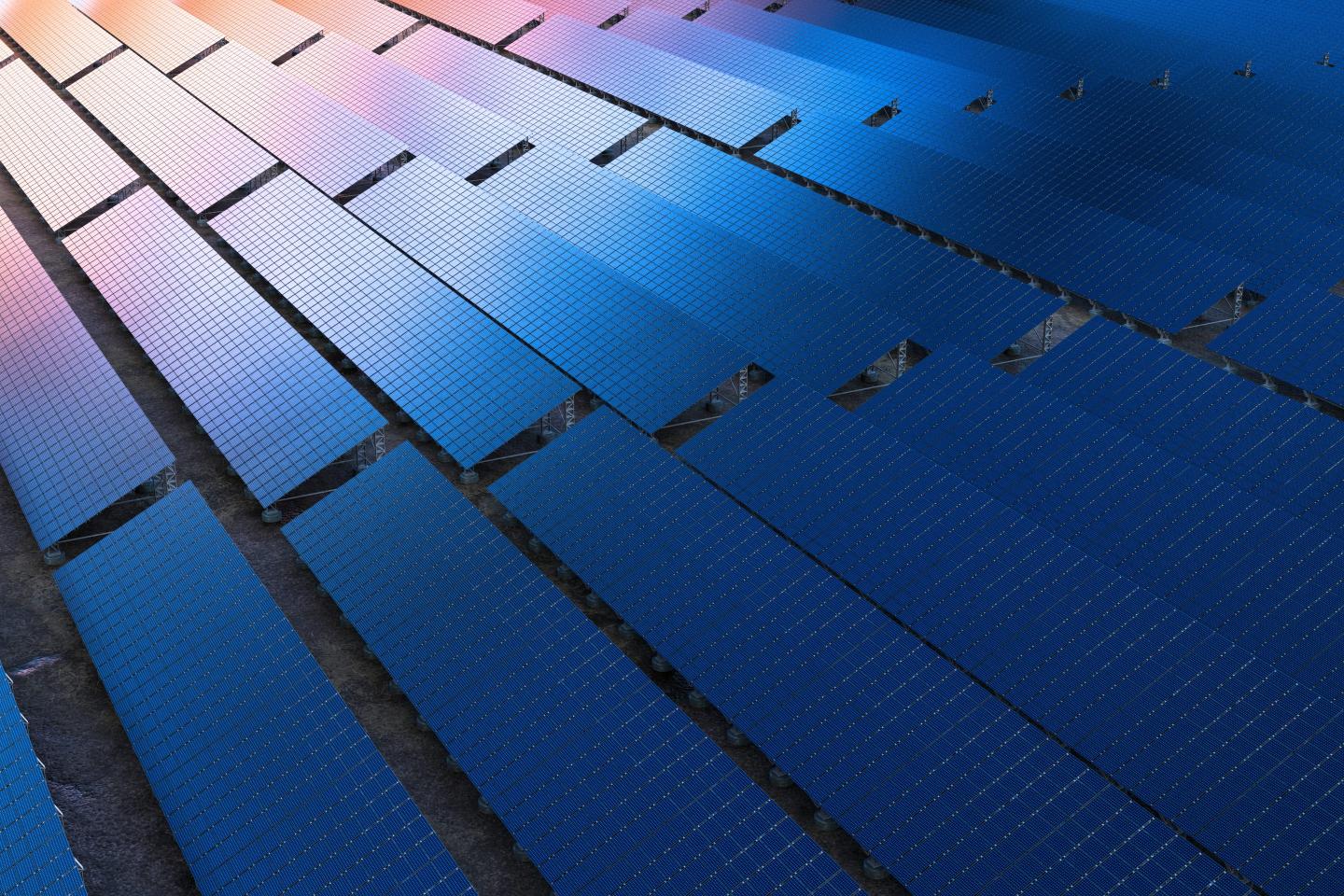
Even before AI went mainstream, Southeast Asia was embracing renewable energy.
Even before AI went mainstream, Southeast Asia was embracing renewable energy.Getty Images
Add Fortune on Google for similar content.

The server that powers your AI application has a good chance of being based in Southeast Asia. The rise of AI has led to a simultaneous boom in data centers in markets like Malaysia, Singapore and the Philippines.

Even if projections of massive growth in data centers end up being too bullish, AI isn’t going away. Over time, demand for energy from AI applications will only grow. The International Energy Agency already projects that India and Southeast Asia will have the biggest increase in energy demand through to 2035.

Even DeepSeek, which showed that AI can be done efficiently and affordably, could boost demand for computing power across Southeast Asia, as local companies and consumers can now join the generative AI revolution at lower cost.

Planners may think that fossil fuels—traditionally the quick and dirty option to get a lot of power quickly—is the only way to get the energy needed to power the AI boom. They’d be seriously mistaken.

Renewable energy will meet increased demand without exposure to the volatile cost of imported fossil fuels—and making the push towards net zero more challenging than it already is. Indeed, the region’s success in adopting AI will be closely linked to growth in renewable energy capacity over the years ahead.

Data center boom

Even before ChatGPT, the IEA estimated that data centres were consuming 1% to 1.5% of global electricity. That share is surging thanks to AI.

Asking generative AI a question requires up to five times more power than a traditional web search, while applications use nearly 33 times more energy than their conventional counterparts.

Southeast Asia has around three times less data center capacity per capita than markets like the U.S., Japan and Korea, according to Maybank estimates. Tech giants are racing to fill this gap, with hyperscalers like Amazon, Google and Microsoft promising at least $38 billion of investment in the region last year. Alibaba, which plans to invest at least $53 billion in AI and cloud computing over the next three years, is working with local partners in markets like Indonesia and Thailand.

Renewable energy can help maximize the return on investments from building out digital infrastructure. About three-quarters of Southeast Asia’s energy comes from fossil fuels, but these are now becoming the more expensive option. Analysis from Wood Mackenzie shows that the cost of renewable energy in Asia-Pacific was 13% cheaper than conventional coal in 2023 and set to be 32% cheaper by 2030. Utility-scale solar energy was already the least expensive source of energy in 11 out of the 15 economies covered.

Renewable energy will only get cheaper as prices for photovoltaic panel and wind turbines continue to fall. For economies that want to succeed in AI era, doubling down on energy from the sun, wind and sea is the natural choice.

Data centres need a constant and reliable power supply. Previously, that could only have come from, say, a coal or hydro plant. But now, a solar farm can provide more than 90% of what a data center needs, up from 20% in the past.

My home base of the Philippines, for example, has some distinct advantages in delivering renewable energy, such as access to stable geothermal and hydro power and an open energy market. Our country hopes to leverage these strengths to generate at least 35% of its power from renewable energy by 2035, and 50% by 2040.

Investments are being scaled up. My own company, Citicore, hopes to energize the first gigawatt towards a 5GW target over five years. Another project, the Meralco Terra Solar Project, claims to being the world’s largest solar and battery storage facility.

Vietnam and Thailand also recently announced programs to pilot direct power purchase agreement (PPA) regimes for renewable energy. In Malaysia, utility company Tenaga Nasional Berhad is bringing 60 megawatts (MW) of solar into the grid through a PPA. Indonesia is considering a policy change that will allow consumers to buy power directly from renewable producers through state-owned transmission lines.

AI-ready data centers are already being developed with sustainability in mind. Singapore’s Evolution Data Centres (EDC), for example, focus on powering facilities with renewable energy. These centers also make sustainability, independently verified by third parties, a key pillar of construction. (Disclosure: Citicore has agreed to provide 100MW of renewable energy to EDC).

Cheap, abundant and connected

Even before AI went mainstream, Southeast Asia was embracing renewable energy. Although the region produces plenty of coal, it spends some $130 billion a year on oil imports. The group of economies that the Asian Development Bank refers to as emerging Asia—which includes China and India—provided $600 billion of public financial support for fossil fuels in 2022.

With energy demand in the Association of South East Asian Nations (ASEAN) expected to double by 2040, relying on fossil fuels will unnecessarily strain public finances.

AI could potentially provide a $1 trillion boost to the ASEAN economy. The good news is that we won’t need to rely on expensive, carbon-emitting fossil fuels to capture that. Renewable energy is cheap, abundant and connected to the grid; it’s up to policymakers, investors, and importantly developers to put that energy capacity to work.

The opinions expressed in Fortune.com commentary pieces are solely the views of their authors and do not necessarily reflect the opinions and beliefs of Fortune.

About the Author
By Oliver Tan
See full bioRight Arrow Button Icon
Add Fortune on Google for similar content.

Latest in Commentary

Finance
Lorem ipsum dolor sit amet, consectetur adipiscing elit, sed do eiusmod tempor incididunt ut labore et dolore magna aliqua. Ut enim ad minim veniam
By Fortune Editors
October 20, 2025
Finance
Lorem ipsum dolor sit amet, consectetur adipiscing elit, sed do eiusmod tempor incididunt ut labore et dolore magna aliqua. Ut enim ad minim veniam
By Fortune Editors
October 20, 2025
Finance
Lorem ipsum dolor sit amet, consectetur adipiscing elit, sed do eiusmod tempor incididunt ut labore et dolore magna aliqua. Ut enim ad minim veniam
By Fortune Editors
October 20, 2025
Finance
Lorem ipsum dolor sit amet, consectetur adipiscing elit, sed do eiusmod tempor incididunt ut labore et dolore magna aliqua. Ut enim ad minim veniam
By Fortune Editors
October 20, 2025
Finance
Lorem ipsum dolor sit amet, consectetur adipiscing elit, sed do eiusmod tempor incididunt ut labore et dolore magna aliqua. Ut enim ad minim veniam
By Fortune Editors
October 20, 2025
Finance
Lorem ipsum dolor sit amet, consectetur adipiscing elit, sed do eiusmod tempor incididunt ut labore et dolore magna aliqua. Ut enim ad minim veniam
By Fortune Editors
October 20, 2025

Most Popular

Finance
Lorem ipsum dolor sit amet, consectetur adipiscing elit, sed do eiusmod tempor incididunt ut labore et dolore magna aliqua. Ut enim ad minim veniam
By Fortune Editors
October 20, 2025
Finance
Lorem ipsum dolor sit amet, consectetur adipiscing elit, sed do eiusmod tempor incididunt ut labore et dolore magna aliqua. Ut enim ad minim veniam
By Fortune Editors
October 20, 2025
Finance
Lorem ipsum dolor sit amet, consectetur adipiscing elit, sed do eiusmod tempor incididunt ut labore et dolore magna aliqua. Ut enim ad minim veniam
By Fortune Editors
October 20, 2025
Finance
Lorem ipsum dolor sit amet, consectetur adipiscing elit, sed do eiusmod tempor incididunt ut labore et dolore magna aliqua. Ut enim ad minim veniam
By Fortune Editors
October 20, 2025
Finance
Lorem ipsum dolor sit amet, consectetur adipiscing elit, sed do eiusmod tempor incididunt ut labore et dolore magna aliqua. Ut enim ad minim veniam
By Fortune Editors
October 20, 2025
Finance
Lorem ipsum dolor sit amet, consectetur adipiscing elit, sed do eiusmod tempor incididunt ut labore et dolore magna aliqua. Ut enim ad minim veniam
By Fortune Editors
October 20, 2025
Fortune Secondary Logo
Rankings
  • 100 Best Companies
  • Fortune 500
  • Global 500
  • Fortune 500 Europe
  • Most Powerful Women
  • World's Most Admired Companies
  • See All Rankings
  • Lists Calendar
Sections
  • Finance
  • Fortune Crypto
  • Features
  • Leadership
  • Health
  • Commentary
  • Success
  • Retail
  • Mpw
  • Tech
  • Lifestyle
  • CEO Initiative
  • Asia
  • Politics
  • Conferences
  • Europe
  • Newsletters
  • Personal Finance
  • Environment
  • Magazine
  • Education
Customer Support
  • Frequently Asked Questions
  • Customer Service Portal
  • Privacy Policy
  • Terms Of Use
  • Single Issues For Purchase
  • International Print
Commercial Services
  • Advertising
  • Fortune Brand Studio
  • Fortune Analytics
  • Fortune Conferences
  • Business Development
  • Group Subscriptions
About Us
  • About Us
  • Press Center
  • Work At Fortune
  • Terms And Conditions
  • Site Map
  • About Us
  • Press Center
  • Work At Fortune
  • Terms And Conditions
  • Site Map
  • Facebook icon
  • Twitter icon
  • LinkedIn icon
  • Instagram icon
  • Pinterest icon

Latest in Commentary

sb
Commentaryclimate change
The climate policy triangle: why leaders can no longer choose between growth, security and sustainability
By Sebastian BuckupJune 23, 2026
10 hours ago
brett
CommentaryManagement
Middle managers aren’t going extinct—they’re evolving into something more powerful
By Brett HurtJune 23, 2026
19 hours ago
ravi
CommentaryAI agents
Yale School of Management: surveillance pricing is just the beginning. AI agents will be the real test of corporate trust
By Ravi Dhar and Jon IwataJune 23, 2026
20 hours ago
elon
CommentaryElon Musk
Elon Musk’s trillion dollars aren’t real — and that’s the point
By Douglas P. McCormickJune 23, 2026
20 hours ago
gen z
CommentaryCareers
Gen Z: if you want to succeed at work, you need to start friction-maxxing
By Michelle SobelJune 23, 2026
21 hours ago
rp
CommentaryLaw
Cooley CEO: Big Law won’t survive if it treats AI as just an efficiency tool
By Rachel ProffittJune 23, 2026
21 hours ago

Most Popular

After forcing workers back to the office, Goldman Sachs and JPMorgan Chase are now letting their staff work remotely—but only for the World Cup
Success
After forcing workers back to the office, Goldman Sachs and JPMorgan Chase are now letting their staff work remotely—but only for the World Cup
By Orianna Rosa RoyleJune 23, 2026
19 hours ago
Markets tumble worldwide as Fed resets expectations: $400 billion wiped off SpaceX stock
Banking
Markets tumble worldwide as Fed resets expectations: $400 billion wiped off SpaceX stock
By Jim EdwardsJune 23, 2026
22 hours ago
Current price of oil as of June 23, 2026
Personal Finance
Current price of oil as of June 23, 2026
By Joseph HostetlerJune 23, 2026
19 hours ago
Meet the 2 men putting New York's $300 billion pension fund in play for the first time in 20 years
Investing
Meet the 2 men putting New York's $300 billion pension fund in play for the first time in 20 years
By Nick LichtenbergJune 22, 2026
2 days ago
Former U.S. Secret Service agent says bringing your authentic self to work stifles teamwork: 'You don’t get high performers, you get sloppiness'
Success
Former U.S. Secret Service agent says bringing your authentic self to work stifles teamwork: 'You don’t get high performers, you get sloppiness'
By Sydney LakeJune 21, 2026
3 days ago
Texas and Charlotte used to build huge McMansions—now they're copying the California design tricks they once mocked
Real Estate
Texas and Charlotte used to build huge McMansions—now they're copying the California design tricks they once mocked
By Sydney LakeJune 22, 2026
2 days ago

© 2026 Fortune Media IP Limited. All Rights Reserved. Use of this site constitutes acceptance of our Terms of Use and Privacy Policy | CA Notice at Collection and Privacy Notice | Do Not Sell/Share My Personal Information
FORTUNE is a trademark of Fortune Media IP Limited, registered in the U.S. and other countries. FORTUNE may receive compensation for some links to products and services on this website. Offers may be subject to change without notice.