Last month, the Trump administration launched a trade war of unprecedented magnitude against China by announcing a staggering 145% tariff on Chinese imports. China responded by playing hardball. It imposed a 125% reciprocal tariff on U.S. goods. While previous escalations had seen China urging for dialogue and cooperation, this time Beijing’s response was defiant. The Chinese Ministry of Commerce declared it was “prepared to fight till the end.”
Last weekend, the optics changed dramatically. The U.S. and China agreed to a 90-day pause on their trade war in which the punitive, reciprocal tariffs were rolled back to 30% by the U.S. and 10% by China. This outcome did not surprise us. As it turns out, Beijing has an ace up its sleeve. The ace is China’s global dominance in critical materials.
China’s strategic ace wasn’t built overnight. It began with a heavy investment in human capital, which is underscored by China’s emergence as a global leader in science, technology, engineering, and mathematics (STEM). Just two decades ago, China led in only three of 64 critical technology fields, while the United States dominated in 60, according to the Australian Strategic Policy Institute’s (ASPI) Critical Technology Tracker. Since then, the tables have turned. Today, China has taken the lead in 57 of these fields, with the U.S. now leading in just seven.
China’s newfound STEM supremacy is fueled not only by state-driven policies but also by China’s economic elites, a young and dynamic group often rural-born and globally educated. According to the World Elite Database, 34% of China’s economic elites studied engineering, gaining expertise in fields like material science, robotics, and aerospace.
While China has only recently become dominant in the STEM fields, it has long dominated in what one of us (Hanke) has dubbed the Three Ms: Mining and Mineral Engineering, Metallurgical Engineering, and Materials Science and Engineering. China’s dominance in the Three Ms is crucial because it underpins the extraction, processing, and application of critical minerals that power modern technology and national security.
China’s commitment to STEM and, more specifically, to the Three Ms allows it to exercise near-monopoly power over rare earth elements and critical materials. Today, China controls approximately 70% of rare earth mining and more than 90% of the processing capacity worldwide. This matters because rare earth elements (REEs), a group of 17 minerals, are essential to many technologies, from consumer electronics to military technology. Neodymium magnets drive offshore wind turbines and electric vehicles, while europium and terbium illuminate LED displays and smartphone screens.
When it comes to defense, the stakes are even higher. Indeed, an F-35 fighter jet requires over 900 pounds of rare earths, an Arleigh Burke DDG-51 destroyer needs 5,200 pounds, and a Virginia-class submarine consumes more than 9,200 pounds. It is not surprising that 23 retired four-star U.S. generals and admirals have lobbied the U.S. House Ways and Means Committee to protect tax breaks for critical mineral projects.
If the U.S. and the West’s vulnerability to China’s dominance of rare earths isn’t bad enough, the U.S. Geological Survey said in March that of the 44 critical minerals, such as antimony, chromium, graphite, lithium, titanium, and vanadium, China led in the production of 30.
China’s rise has been more than 70 years in the making. It traces back to 1950, when Chinese geologists discovered the Bayan Obo deposit in Inner Mongolia, one of the world’s largest light rare earth reserves. In 1972, Peking University professor Xu Guangxian, a Columbia University trained chemist, made a major breakthrough when he developed the “cascade extraction theory.” This was dubbed the “China shock” by Western observers. It allowed China to extract rare earths at a quarter the cost of the West.
In 1975, China institutionalized its ambitions by establishing the National Rare Earth Development and Application Leading Group, laying the groundwork for long-term strategic planning. By 1991, four rare earth elements were designated as protected minerals, restricting foreign ownership and investments. In 2001, China’s Tenth Five-Year Plan solidified this approach by listing rare earths as a national development goal. This strategic focus was further sharpened on Oct. 1, 2024, when the State Council implemented sweeping “Rare Earth Management Regulations.” These new rules consolidated government control over the exploration, mining, processing, and export of rare earth minerals. This delivered yet another signal that China views rare earths not just as economic assets, but as geopolitical tools.
China’s critical material advantage is a one-two punch that extends far beyond its borders. For one thing, nearly anyone who wants to process rare earth materials must send them to China. In addition, over the past two decades, Beijing has strategically invested in critical material projects worldwide. For example, in Brazil, Chinese firms have secured offtake agreements for nearly all of the Serra Verde project’s output, which includes neodymium, praseodymium, terbium, and dysprosium. In Greenland, China’s partially state-owned Shenghe Resources holds a minority stake in the Kvanefjeld mine, which contains 1.5 million metric tons of rare earth oxides. In Africa, Chinese companies control 70% of mines in the Democratic Republic of Congo and have offtake agreements for the Ngualla rare earths project in Tanzania. Even in the U.S., Shenghe Resources owns a 7.7% stake in MP Materials’ Mountain Pass mine, a mine which has ironically been advertised as the U.S.’s best hope for overcoming China’s stranglehold on rare earths.
China is well aware of its strategic ace in the Trump administration’s trade war. For example, in 1992, Chinese leader Deng Xiaoping famously declared, “The Middle East has oil; China has rare earth.” Moreover, China knows how to wield its dominance. In 2010, amid a dispute over the Diaoyu/Senkaku Islands, China abruptly cut off rare earth exports to Japan for two months. The impact was profound: Japan, which relied on China for over 80% of its rare earth imports, faced severe disruptions. The price of cerium oxide, a key rare earth compound, surged by 660%. Japan’s electronics sector, including companies like Sony and Panasonic, reported up to a 30% increase in component costs due to the embargo. Then, in 2023, Beijing restricted exports of gallium and germanium—critical for semiconductors and missile systems—in response to U.S. restrictions on Chinese access to advanced chip technology. In 2024, China escalated further, imposing export controls on seven additional rare earth elements. This tightened the screws on global supply chains. Most recently, in December 2024, China implemented a complete ban on antimony exports, driving up its price by over 134%.
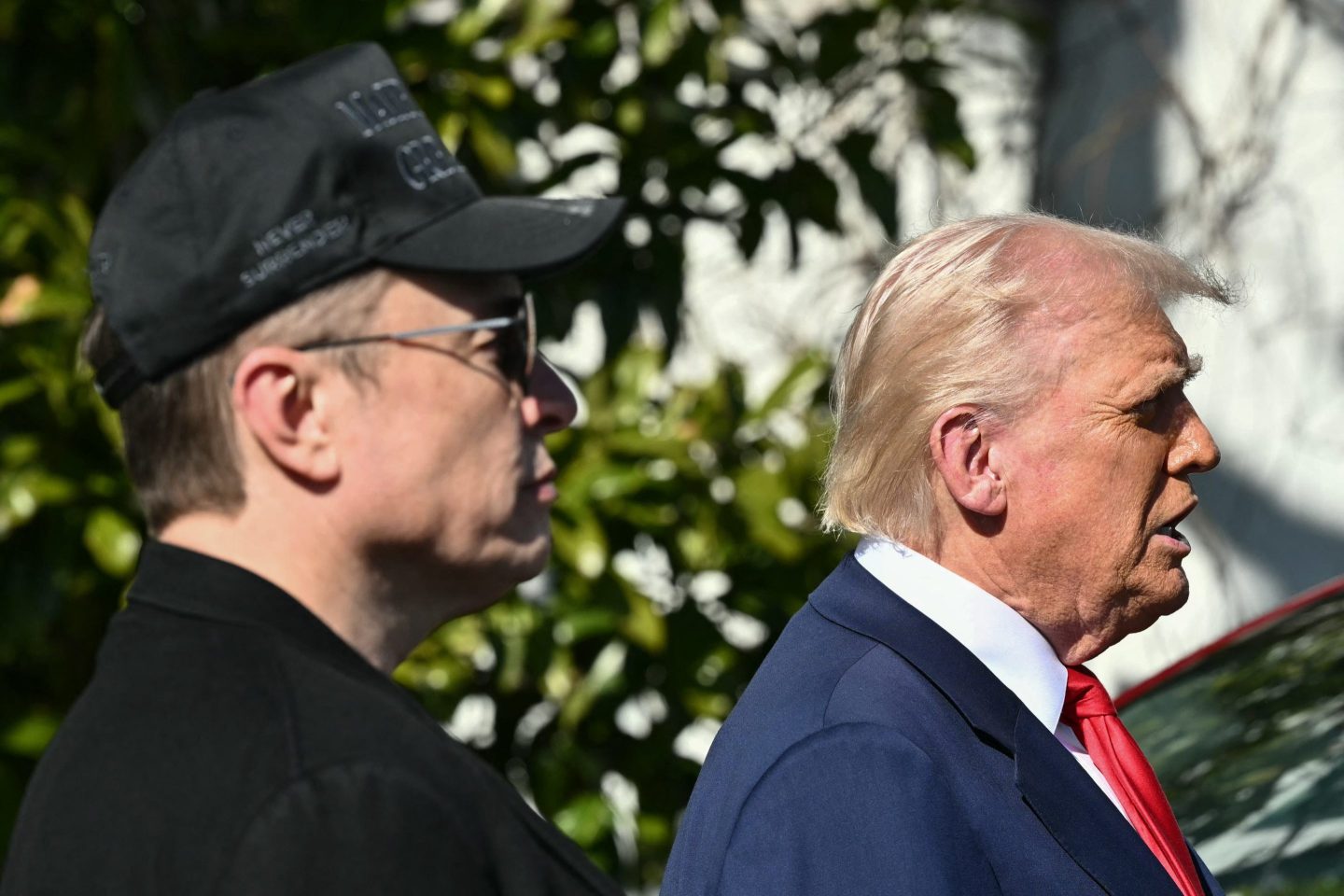
Just last month, in response to President Trump, China used its rare earths lever to go after U.S. automakers. China did this by restricting exports of rare earths such as dysprosium, which is used in electric vehicle magnets, and by requiring U.S. companies to apply for export licenses in a months-long process. This action sparked panic among automakers. Indeed, as Elon Musk noted last month, China’s export halt on magnets containing heavy rare earths disrupted Tesla’s plans to manufacture Optimus robots, highlighting the strategic importance of these magnets in cutting-edge technology. These moves demonstrate China’s willingness to weaponize its near monopoly to counter U.S. trade aggression, with the potential to disrupt American industries from electric vehicles to defense manufacturing.
China’s dominance in critical materials has rendered them no longer just commodities. They are a strategic lever. It is clear that President Trump and the United States are playing with fire.
The opinions expressed in Fortune.com commentary pieces are solely the views of their authors and do not necessarily reflect the opinions and beliefs of Fortune.
Read more:
- It’s time to invoke the U.S. Defense Production Act to support a new battery technology revolution
- How America can fast-track critical metals production—and disrupt China’s leverage
- China has stopped exporting rare earths to everyone, not just the U.S., cutting off critical materials for tech, autos, aerospace, and defense
- Critical minerals processing will be the equivalent of 19th-century oil refineries—at a Rockefeller moment