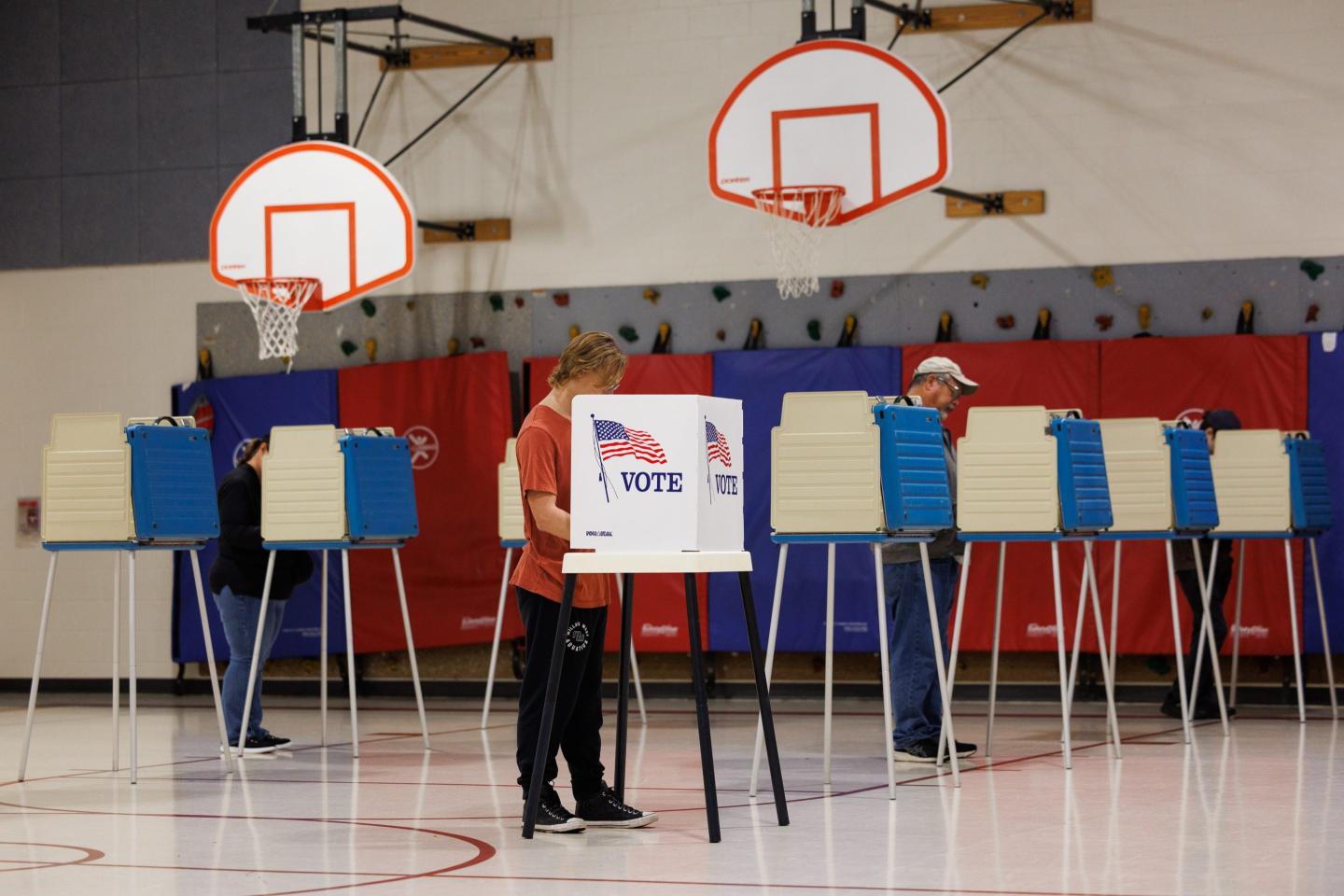
Nebraska voters rejected two ballot measures that would have legalized online sports betting across the state, dealing a setback to gambling companies that spent $22.5 million campaigning for the expansion and promising voters a new source of property tax relief.
According to the Nebraska Secretary of State, voters rejected Measure 440, which would legalize online sports betting, by approximately 55% to 45%, while Measure 441, which would regulate the business if passed, lost by approximately 54% to 46%. Both measures needed to pass for mobile sports betting to become legal in Nebraska.
The defeat came as scrutiny grew across the sports betting industry, which has expanded rapidly across the U.S. since the Supreme Court opened the door to state-level legalization in 2018.
The initiatives
The two initiatives were designed to work together, but they addressed different parts of the legalization process. Initiative 440 was a proposed constitutional amendment. It would have amended the state’s constitution to authorize legislation allowing people to place sports wagers through internet-based platforms operated by authorized gaming operators connected to licensed racetrack casinos.
Initiative 441 was the accompanying statutory initiative. It would have established the legal framework for online sports wagering and authorized the Nebraska Racing and Gaming Commission to regulate operators and adopt rules governing the industry.
Under the proposals, sports betting companies could have offered mobile betting platforms in partnership with Nebraska’s licensed racetrack casinos. The platforms would also have been required to operate gaming servers within the state. DraftKings and FanDuel each gave $10.4 million to the campaign.
The property tax relief promise
And property tax relief was one of the central selling points of the campaign. Supporters of the measures wrote in the Nebraska secretary of state’s informational pamphlet that Nebraska was missing out on millions of dollars in tax revenue by allowing residents to place mobile wagers in neighboring states instead. The initiatives would have directed 70% of the state’s tax proceeds from sports betting into the Nebraska Property Tax Credit Cash Fund, following the same allocation used for revenue from existing casino gambling.
But the amount of relief projected by supporters is relatively modest compared with the state’s property tax burden. A report commissioned by Tax Relief Nebraska—the committee that backed the measures—estimated that legalizing online sports betting could generate nearly $87 million in additional state tax revenue over five years, and $166 million in direct property tax relief over the next 10.
But that would represent a small fraction of the state’s approximately $25 billion property tax burden over the next five years, according to Nebraska Family Alliance—a nonprofit policy research organization. State senator Brad von Gillern, who opposed the expansion, argued the additional revenue wouldn’t meaningfully change property tax bills.
“If people are voting for the online gambling initiative believing that it’s going to substantially change their property tax bill, they’re going to be sadly disappointed,” von Gillern said, according to the Nebraska Examiner.
No bets on the phone for Nebraska
And for Nebraska voters, the central question was whether the potential tax revenue from online sports betting justified making gambling more accessible—especially as research found that sports betting is an overall losing game for bettors.
A 2024 working paper from the National Bureau of Economic Research found that legalization led to increased sports betting participation and frequency, but also significantly reduced household savings. The effects were particularly pronounced among financially constrained households—where researchers observed increases in credit card debt, reductions in available credit and more frequent overdrafts.
And a September Bank of America Institute study found that one in five Americans view sports betting as an investment—with the number doubling to four in five for Gen Z respondents. The study also found that customers recover less than 75 cents for every dollar they send to betting platforms—and even Gen Z, the best-performing generation, falls short of breaking even.
Taking it physical
But Nebraska already permits in-person sports wagering at its five licensed racetrack casinos, following voters’ approval of casino gambling in 2020—the caveat being that mobile betting remains prohibited, meaning residents had to be at the physical casino or cross state lines to place legal wagers through an app.
And cross state lines Nebraska residents did. According to cybersecurity and geolocation compliance software company GeoComply, there were approximately 3.4 million attempts to access regulated sportsbook applications from Nebraska during the 2024-25 NFL regular season—which involved nearly 76,000 accounts. The company also recorded more than 326,000 geolocation checks at a single cornfield just across the border in Iowa.
“Thousands of bettors from Omaha cross the border into Iowa to place wagers this NFL season, driven by Iowa’s legal sports betting framework,” a GeoComply press release read. “This phenomenon has earned the nickname ‘The Busiest Cornfield in Iowa’ due to the sheer volume of geolocation checks observed in this rural area just over the state line.”
A version of this story was published on Fortune.com on November 3, 2026.