• Home
  • Latest
  • Fortune 500
  • Finance
  • Tech
  • Leadership
  • Lifestyle
  • Rankings
  • Multimedia
We have independently evaluated the products and services below. We may earn affiliate revenue from links in the content.
Personal FinanceSavings accounts

How the Federal Reserve can impact your savings account’s interest rate

By
Glen Luke Flanagan
Glen Luke Flanagan
and
Cassie Bottorff
Cassie Bottorff
Down Arrow Button Icon
By
Glen Luke Flanagan
Glen Luke Flanagan
and
Cassie Bottorff
Cassie Bottorff
Down Arrow Button Icon
January 28, 2026, 2:23 PM ET
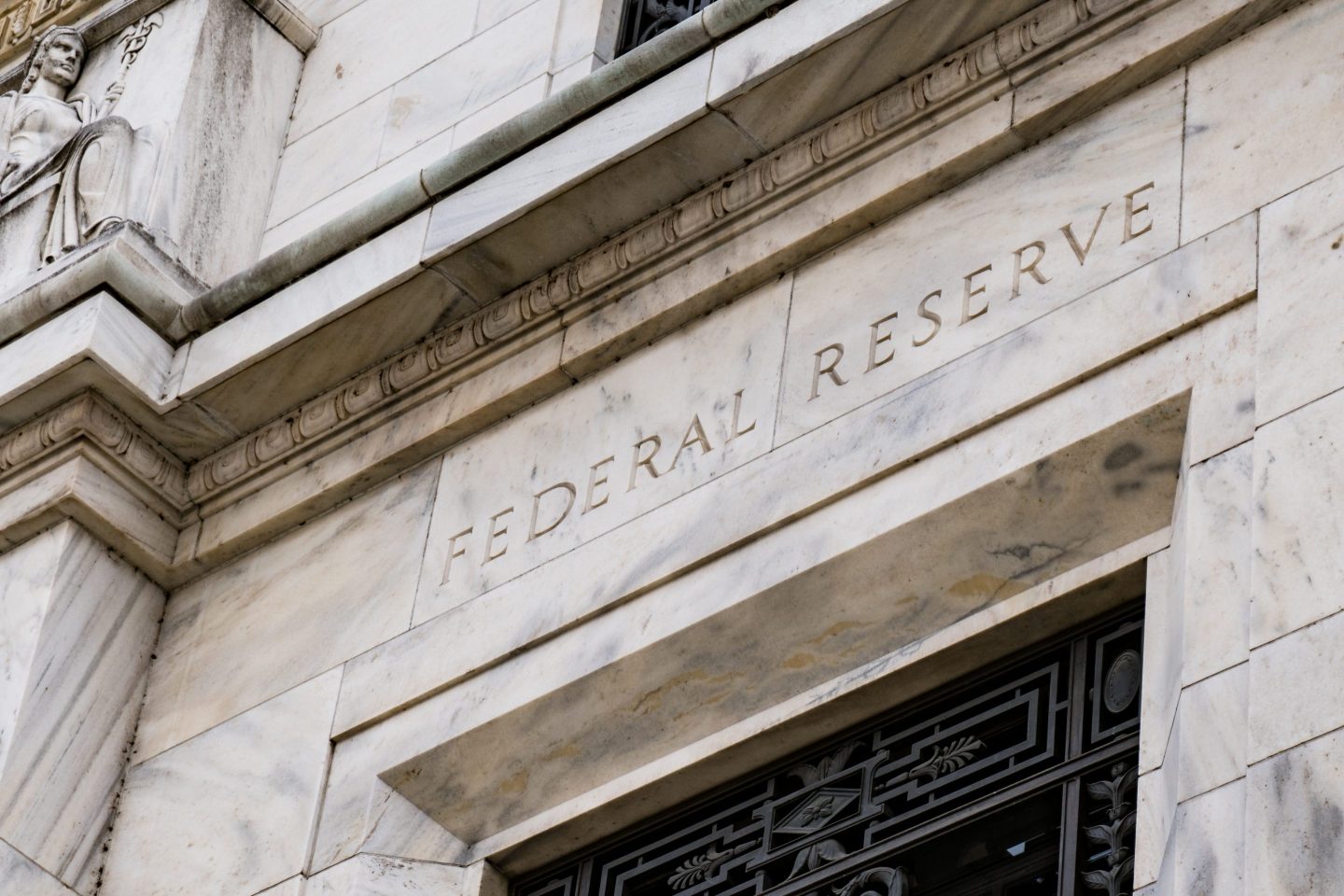
Federal Reserve building
Getty Images

On January 28, 2026, The Federal Reserve announced its decision to keep the federal funds rate of 3.50%-3.75% untouched.

When the Federal Reserve hikes or cuts the federal funds rate, interest rates on many types of financial products tend to increase or decrease accordingly. This includes savings accounts, where a higher federal funds rate often means consumers can expect to earn a higher annual percentage yield (APY) on their savings. But, the Fed does not directly set savings account rates. Read on and we’ll explain how what the Fed does can impact your bank accounts.

Are high-yield savings rates expected to change?

The interest rates offered on high-yield savings accounts—or any savings account—can change at any time, as these rates are at the discretion of the financial institutions. Still, as of this writing, it’s possible to find HYSAs offering APYs over 4.00%. If the Fed makes cuts to the federal funds rate later in 2026 (as it’s done a few times in the second half of 2025), it’s possible that savings account rates will also see a decline.

Learn more: What APY means and how it works. 

Consumers looking for a guaranteed rate of return that won’t be impacted by Fed decisions may wish to open CD accounts sooner rather than later. More on that later in the article.


What is the federal funds rate?

As explained by the Fed itself, the federal funds rate is what banks charge each other when they need to borrow money overnight. The Federal Open Market Committee (FOMC) holds eight meetings per year and has the authority to raise, lower, or hold steady on the federal funds rate at these meetings.

At the most recent FOMC meeting on January 28, 2026, the Fed maintained the federal funds rate of 3.50%-3.75%, writing in a statement, “Available indicators suggest that economic activity has been expanding at a solid pace. Job gains have remained low, and the unemployment rate has shown some signs of stabilization. Inflation remains somewhat elevated.”

Dropping the federal funds rate is one of the Fed’s tools to stimulate the economy when there’s fear of a recession. For example, the Fed cut this rate to effectively zero during the coronavirus pandemic. In contrast, hiking the rate is one of the Fed’s tools for combating inflation.

Post-pandemic, the central bank hiked the federal funds rate 11 times in 2022 and 2023, then paused and held steady for more than a year before finally making three rate cuts in the last quarter of 2024.

The fact that the Fed decided not to tweak the rate means it believes the economy is roughly on track.

How Fed rate cuts and hikes can impact your savings rate

Even though the Federal Reserve does not set APYs on savings accounts, it’s true that banks and credit unions may increase or decrease the rates they offer when the Fed adjusts the federal funds rate. For that reason, a higher federal funds rate may benefit your savings account, and conversely, a lower federal funds rate is likely better for those who need to borrow money through products such as mortgages.

Below, you can see how the Fed rate cuts in 2024 led many institutions to lower their rates on savings accounts. These levels are likely to stay fairly steady until we see further interest rate changes, but there are no guarantees on how long the rates will last. Savings account rates can change any time, at the discretion of the bank.

How to maximize the interest you earn on your savings

The average savings account yields 0.39% as of January 2026, according to the FDIC—down slightly from 0.40% in Q4 of 2025. That’s less than ideal, but it’s important to understand the average is weighed down by the majority of accounts that offer little to no return on your deposits.

You can get a much better rate by shopping around for a high-yield savings account. In general, you’ll often be able to find higher interest rates for online-only savings accounts as opposed to savings accounts at institutions with brick-and-mortar branches.

The business scoop

When the Federal Reserve hikes the federal funds rate, businesses as well as individuals feel the squeeze. Not only does it tend to get more expensive to borrow with loans and on small business credit cards, but consumers may pull back on discretionary spending as more of their budget goes toward paying off debt.

What about CDs and other bank accounts?

The federal funds rate can have an indirect effect on your certificates of deposit (CDs) and other types of financial accounts in much the same way it can impact your savings. Here’s what you need to know.

Certificates of deposit

This type of deposit account is probably where we’ve seen the most impact so far. Top rates on certificates of deposit dropped from nearly 6% in the summer of 2024, to below 5% in January 2025. If the Fed declines to make further cuts in 2026, those rates will likely stay relatively the same.

The upside of a CD, though, is that you’re locked into that interest rate for the full length of the term. That means if you get a 4.50% CD now that lasts two years, you’re guaranteed that rate of return for the whole two years regardless of what happens to the fed funds rate in the meantime.


Money market accounts

These types of deposit accounts function similarly to checking accounts, with much higher yields but lower rates than HYSAs. They’re good for stashing large amounts of cash you don’t use often but would want to be able to access quickly in case of emergency. Much like savings accounts, you’ll almost certainly see an impact on these rates that correlates with shifts in the market.

Read more: The best money market accounts of January 2026

Checking accounts

Reality check: Considering how low most rates are, any interest you might earn on a checking account is icing on the cake and not the sole focus. Fed policy changes have a negligible impact on checking accounts but considering how low the APYs are already, it’s not a significant concern.

Check Out Our Daily Rates Reports

  • Discover the highest high-yield savings rates, up to 5% for January 28, 2026.
  • Discover the highest CD rates, up to 4.18% for January 28, 2026.
  • Discover the best personal loan rates for January 28, 2026.
  • Discover the current mortgage rates for January 28, 2026.
  • Discover current refi mortgage rates report for January 28, 2026.
  • Discover current ARM mortgage rates report for January 28, 2026.
  • Discover the current price of gold for January 28, 2026.
  • Discover the current price of silver for January 28, 2026.
  • Discover the current price of platinum for January 28, 2026.

The takeaway

The Federal Reserve doesn’t directly set the interest rate you earn on your savings account or other bank accounts, but the central bank’s actions can still influence your APY. That’s because rates on financial products often rise and fall in tandem with the Fed hiking or cutting its benchmark federal funds rate. In short, the Fed cutting rates can mean a lower yield for your savings. 

Stashing your money in CDs can be a smart way to get ahead of expected Fed rate cuts, as once you open a CD, you’re guaranteed a set interest rate for the life of the account. Just know your money isn’t very liquid when saved this way, as you’re required to leave CD funds untouched for an agreed-upon period of time—often ranging from three months to five years.

Purchasing government bonds is another alternative to keeping your money in a savings account. Sean Snaith, director of the University of Central Florida’s Institute for Economic Forecasting, notes that consumers may appreciate bonds for the stability they provide.

“In terms of safety and security, U.S. Treasury bills and bonds are going to offer you safety, and you don’t have to worry about defaulting,” Snaith says. “But make sure to shop around at different financial institutions, banks, or credit unions for your best options.”

Join us at the Fortune Workplace Innovation Summit May 19–20, 2026, in Atlanta. The next era of workplace innovation is here—and the old playbook is being rewritten. At this exclusive, high-energy event, the world’s most innovative leaders will convene to explore how AI, humanity, and strategy converge to redefine, again, the future of work. Register now.
About the Authors
Glen Luke Flanagan
By Glen Luke FlanaganStaff Editor, Personal Finance
LinkedIn icon

Glen is an editor on the Fortune personal finance team covering housing, mortgages, and credit. He’s been immersed in the world of personal finance since 2019, holding editor and writer roles at USA TODAY Blueprint, Forbes Advisor, and LendingTree before he joined Fortune. Glen loves getting a chance to dig into complicated topics and break them down into manageable pieces of information that folks can easily digest and use in their daily lives.

See full bioRight Arrow Button Icon
Cassie Bottorff
By Cassie BottorffStaff Editor, Personal Finance
LinkedIn iconTwitter icon

Cassie was a staff editor at Fortune covering personal finance. She obtained her undergraduate degree from Northern Kentucky University and is a certified SCRUM master—and few things bring her more joy than tinkering with a spreadsheet and bending it to her will.

See full bioRight Arrow Button Icon

Latest in Personal Finance

Finance
Lorem ipsum dolor sit amet, consectetur adipiscing elit, sed do eiusmod tempor incididunt ut labore et dolore magna aliqua. Ut enim ad minim veniam
By Fortune Editors
October 20, 2025
Finance
Lorem ipsum dolor sit amet, consectetur adipiscing elit, sed do eiusmod tempor incididunt ut labore et dolore magna aliqua. Ut enim ad minim veniam
By Fortune Editors
October 20, 2025
Finance
Lorem ipsum dolor sit amet, consectetur adipiscing elit, sed do eiusmod tempor incididunt ut labore et dolore magna aliqua. Ut enim ad minim veniam
By Fortune Editors
October 20, 2025
Finance
Lorem ipsum dolor sit amet, consectetur adipiscing elit, sed do eiusmod tempor incididunt ut labore et dolore magna aliqua. Ut enim ad minim veniam
By Fortune Editors
October 20, 2025
Finance
Lorem ipsum dolor sit amet, consectetur adipiscing elit, sed do eiusmod tempor incididunt ut labore et dolore magna aliqua. Ut enim ad minim veniam
By Fortune Editors
October 20, 2025
Finance
Lorem ipsum dolor sit amet, consectetur adipiscing elit, sed do eiusmod tempor incididunt ut labore et dolore magna aliqua. Ut enim ad minim veniam
By Fortune Editors
October 20, 2025

Most Popular

Finance
Lorem ipsum dolor sit amet, consectetur adipiscing elit, sed do eiusmod tempor incididunt ut labore et dolore magna aliqua. Ut enim ad minim veniam
By Fortune Editors
October 20, 2025
Finance
Lorem ipsum dolor sit amet, consectetur adipiscing elit, sed do eiusmod tempor incididunt ut labore et dolore magna aliqua. Ut enim ad minim veniam
By Fortune Editors
October 20, 2025
Finance
Lorem ipsum dolor sit amet, consectetur adipiscing elit, sed do eiusmod tempor incididunt ut labore et dolore magna aliqua. Ut enim ad minim veniam
By Fortune Editors
October 20, 2025
Finance
Lorem ipsum dolor sit amet, consectetur adipiscing elit, sed do eiusmod tempor incididunt ut labore et dolore magna aliqua. Ut enim ad minim veniam
By Fortune Editors
October 20, 2025
Finance
Lorem ipsum dolor sit amet, consectetur adipiscing elit, sed do eiusmod tempor incididunt ut labore et dolore magna aliqua. Ut enim ad minim veniam
By Fortune Editors
October 20, 2025
Finance
Lorem ipsum dolor sit amet, consectetur adipiscing elit, sed do eiusmod tempor incididunt ut labore et dolore magna aliqua. Ut enim ad minim veniam
By Fortune Editors
October 20, 2025
Rankings
  • 100 Best Companies
  • Fortune 500
  • Global 500
  • Fortune 500 Europe
  • Most Powerful Women
  • Future 50
  • World’s Most Admired Companies
  • See All Rankings
Sections
  • Finance
  • Leadership
  • Success
  • Tech
  • Asia
  • Europe
  • Environment
  • Fortune Crypto
  • Health
  • Retail
  • Lifestyle
  • Politics
  • Newsletters
  • Magazine
  • Features
  • Commentary
  • Mpw
  • CEO Initiative
  • Conferences
  • Personal Finance
  • Education
Customer Support
  • Frequently Asked Questions
  • Customer Service Portal
  • Privacy Policy
  • Terms Of Use
  • Single Issues For Purchase
  • International Print
Commercial Services
  • Advertising
  • Fortune Brand Studio
  • Fortune Analytics
  • Fortune Conferences
  • Business Development
About Us
  • About Us
  • Editorial Calendar
  • Press Center
  • Work At Fortune
  • Diversity And Inclusion
  • Terms And Conditions
  • Site Map
  • Facebook icon
  • Twitter icon
  • LinkedIn icon
  • Instagram icon
  • Pinterest icon

Latest in Personal Finance

Lebron James holds the U.S. flag and waves on a boat.
SuccessOlympics
Every U.S. Olympian is going home with $200,000, whether they medal or not, thanks to a billionaire’s $100 million gift
By Jacqueline MunisJanuary 28, 2026
16 minutes ago
ServiceNow CEO Bill McDermott
InvestingServiceNow
ServiceNow stock falls despite earnings beat as CEO Bill McDermott tries to get investors to stop thinking of it as a SaaS company
By Jeremy KahnJanuary 28, 2026
33 minutes ago
Personal FinanceCertificates of Deposit (CDs)
Best certificates of deposit (CDs) for January 2026
By Glen Luke FlanaganJanuary 28, 2026
2 hours ago
Personal Financemortgages
Best mortgage lenders of January 2026
By Glen Luke FlanaganJanuary 28, 2026
2 hours ago
A drawing of a piggy bank on a rocket ship.
Personal FinanceSavings
Best high-yield savings accounts of January 2026
By Glen Luke FlanaganJanuary 28, 2026
2 hours ago
Personal FinanceSavings
Best savings account bonuses for January 2026
By Glen Luke FlanaganJanuary 28, 2026
2 hours ago

Most Popular

placeholder alt text
Commentary
Yes, you're getting a bigger tax refund. Your kids won't thank you for the $3 trillion it's adding to the deficit
By Daniel BunnJanuary 26, 2026
2 days ago
placeholder alt text
North America
'I meant what I said in Davos': Carney says he really is planning a Canada split with the U.S. along with 12 new trade deals
By Rob Gillies and The Associated PressJanuary 28, 2026
7 hours ago
placeholder alt text
Personal Finance
Current price of silver as of Tuesday, January 27, 2026
By Joseph HostetlerJanuary 27, 2026
1 day ago
placeholder alt text
Success
As AI wipes out desk jobs, Citigroup CEO Jane Fraser says the company is training 175,000 employees to ‘reinvent themselves’ before their roles change forever
By Emma BurleighJanuary 27, 2026
1 day ago
placeholder alt text
Personal Finance
Current price of silver as of Monday, January 26, 2026
By Joseph HostetlerJanuary 26, 2026
2 days ago
placeholder alt text
Economy
An unusual Fed ‘rate check’ triggered a free fall in the U.S. dollar and investors are fleeing into gold
By Jim EdwardsJanuary 26, 2026
2 days ago

© 2026 Fortune Media IP Limited. All Rights Reserved. Use of this site constitutes acceptance of our Terms of Use and Privacy Policy | CA Notice at Collection and Privacy Notice | Do Not Sell/Share My Personal Information
FORTUNE is a trademark of Fortune Media IP Limited, registered in the U.S. and other countries. FORTUNE may receive compensation for some links to products and services on this website. Offers may be subject to change without notice.