• Home
  • Latest
  • Fortune 500
  • Finance
  • Tech
  • Leadership
  • Lifestyle
  • Rankings
  • Multimedia

Trendingnow

1

After forcing workers back to the office, Goldman Sachs and JPMorgan Chase are now letting their staff work remotely—but only for the World Cup

2

Markets tumble worldwide as Fed resets expectations: $400 billion wiped off SpaceX stock

3

Current price of oil as of June 23, 2026

1

After forcing workers back to the office, Goldman Sachs and JPMorgan Chase are now letting their staff work remotely—but only for the World Cup

2

Markets tumble worldwide as Fed resets expectations: $400 billion wiped off SpaceX stock

3

Current price of oil as of June 23, 2026
SuccessAmazon

Amazon’s humble history: Jeff Bezos used a rented garage as an office and held team meetings at a local Barnes & Noble

Nick Lichtenberg
By
Nick Lichtenberg
Nick Lichtenberg
Business Editor
Down Arrow Button Icon
Nick Lichtenberg
By
Nick Lichtenberg
Nick Lichtenberg
Business Editor
Down Arrow Button Icon
February 19, 2026, 2:21 PM ET
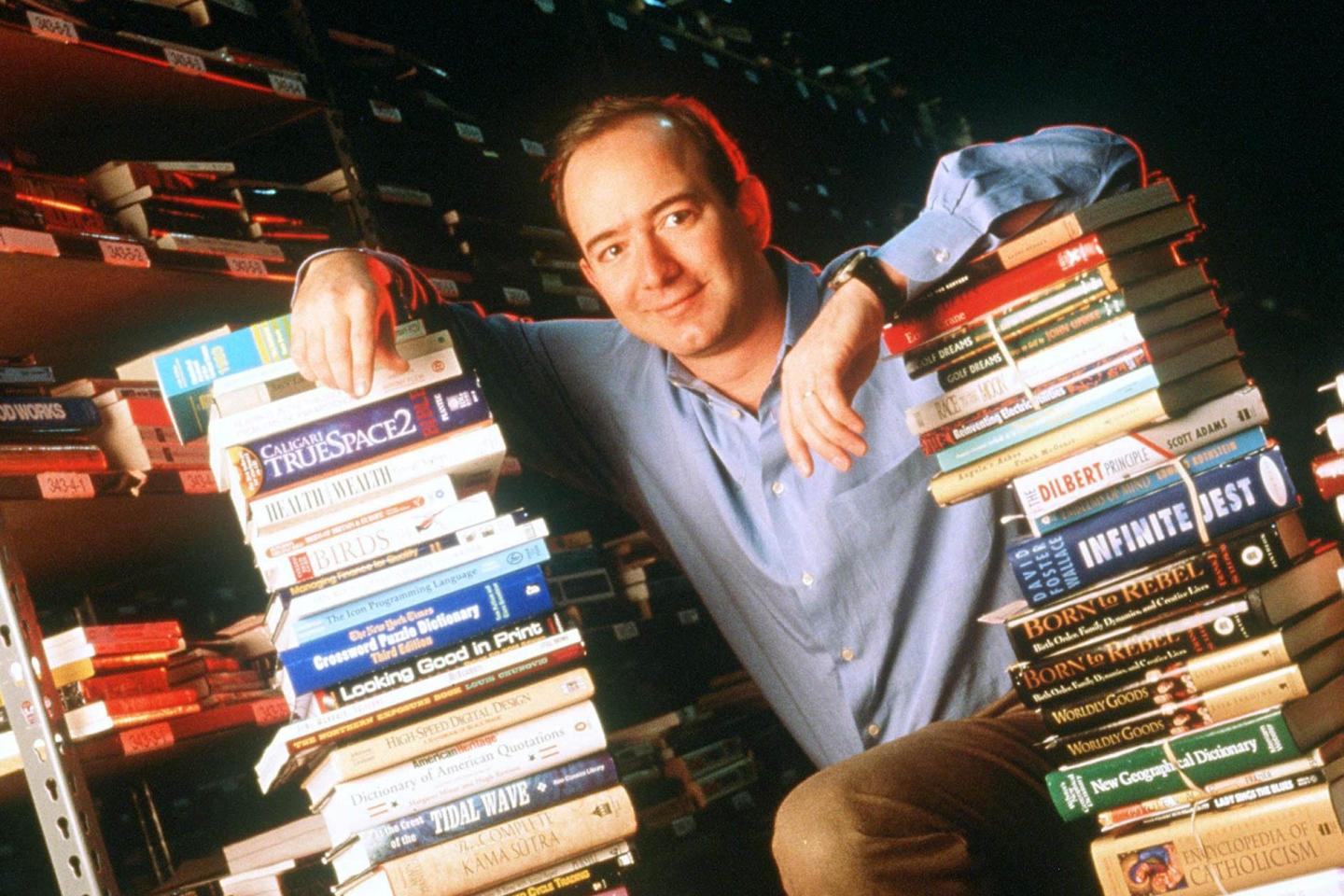
Jeff Bezos, founder and CEO of Amazon.com, poses with a stack of books in an Amazon warehouse in Seattle on Jan. 1, 1997.
Jeff Bezos, founder and CEO of Amazon.com, poses with a stack of books in an Amazon warehouse in Seattle on Jan. 1, 1997.Paul Souders—Getty Images
Add Fortune on Google for similar content.

Jeff Bezos’ trajectory from a rented Bellevue garage to the helm of a $2.4 trillion enterprise is now business legend, crowned by Amazon taking the top spot on the Fortune 500 in 2026, ending Walmart’s 13-year reign.

Recommended Video

That’s why it’s worth rewinding to the summer of 1994, when Bezos left a fledgling Wall Street career and moved to Bellevue, Wash., with a vision: to build an online bookstore that could one day sell everything. The first headquarters of Amazon was a modest rented house, and he and his then-wife, MacKenzie Scott, worked side by side, packing books and driving them to the post office. The garage, with its concrete floor and humming servers, became the birthplace of what would soon be known as “the everything store.”

It also gave birth to Bezos’ mentality as Amazon’s founder, one that he would later embed in his much larger company as “Day 1,” as in, every day of your job should be tackled as if the company was one day old and you were still in the garage. Success or failure could be just around the corner. Bezos worked from his own day one to institutionalize innovation, risk-taking, and data-driven iteration.

But looking beyond the garage mythology and the familiar narrative of entrepreneurial grit, Amazon’s ascent can also be understood as a product of uncanny anticipation of network effects, strategic long-term thinking, and relentless customer obsession. In fact, Bezos at one time wanted to name the company “relentless” and relentless.com still directs back to Amazon, the long river from which it all flows.
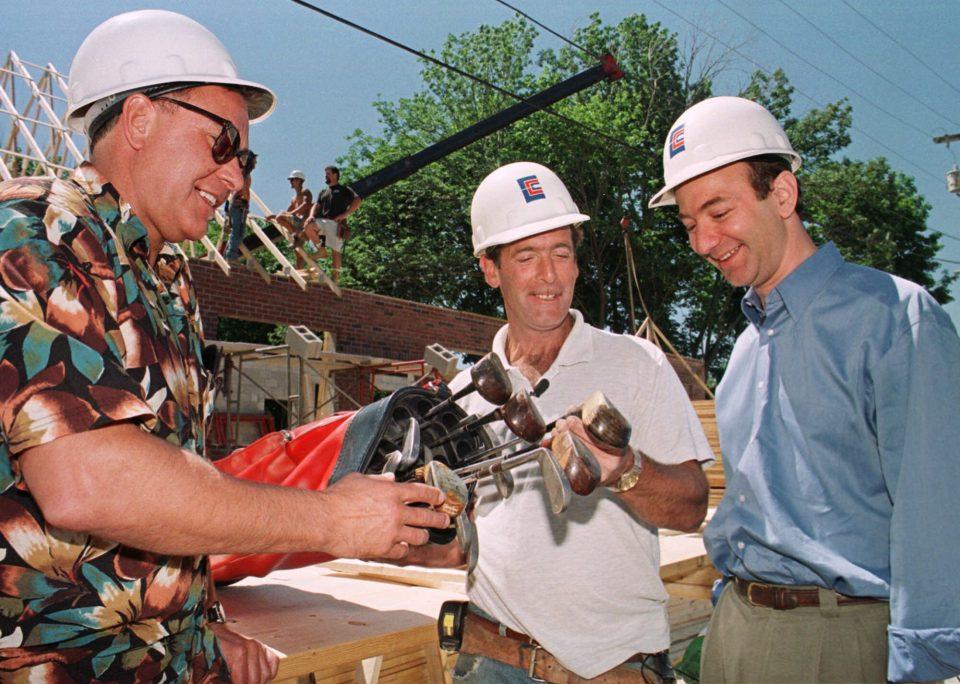
Bezos, right, and seller Gregory Nixon, left, deliver a set of antique golf clubs Nixon sold via Amazon.com Auctions to David Robichaud, center—Amazon’s 10 millionth customer—in 1999. Amazon.com was the first electronic commerce store to serve 10 million customers.
Paul Conors—AP Photo
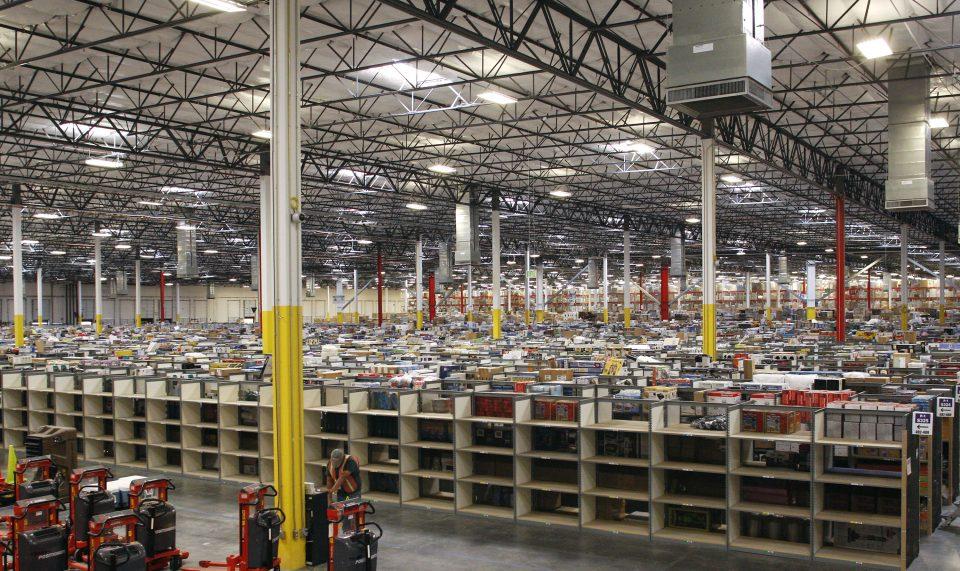
Merchandise sits on a shelving unit at the Amazon.com Phoenix Fulfillment Center in Goodyear, Ariz., on Nov. 16, 2009.
Joshua Lott—Bloomberg/Getty Images

Barnes & Noble meetings: the scrappy early days of Amazon

In the early days, resources were scarce, and office space was at a premium. In those months, Bezos and his tiny team often held meetings at a local Barnes & Noble. The irony was not lost on them: the upstart online bookseller strategizing in the aisles of the nation’s largest brick-and-mortar book chain.

In 1996, as Amazon’s profile grew, Barnes & Noble’s founders, the Riggio brothers, took notice. They met with Bezos, expressing admiration but also warning their own online venture would soon eclipse Amazon. Undeterred, Bezos doubled down on his vision, coining the motto “Get Big Fast” and setting his sights on rapid expansion.

By the time Amazon moved into official office space, Bezos leaned into the scrappiness, using recycled doors as desks for himself and his staff. He wanted to communicate that no resource goes unused or un-recycled. Amazon would be as thrifty as the deals that it gave to its consumers. It was also another way to bring the garage into the office space, another way to stress being relentless.
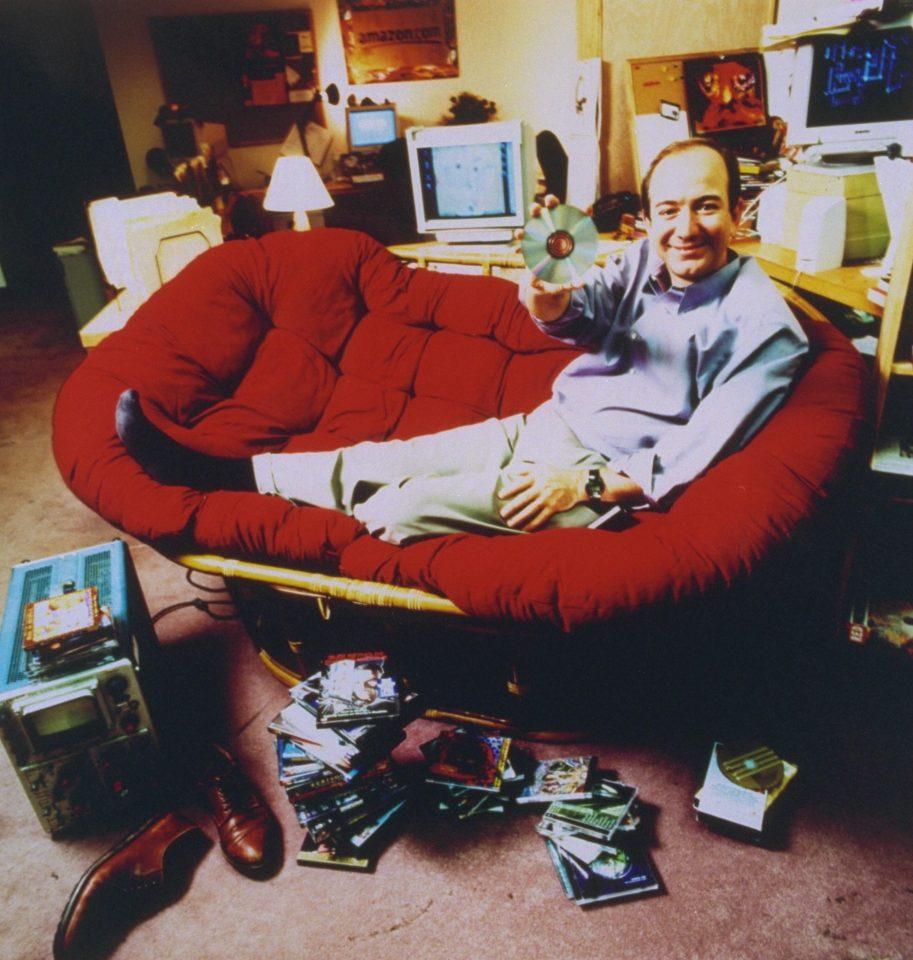
Bezos poses for a portrait in 1999, around the time Amazon began selling music, DVDs, video games, and gifts in addition to books.
Photo Nomad Ventures, Inc.—Corbis/Getty Images
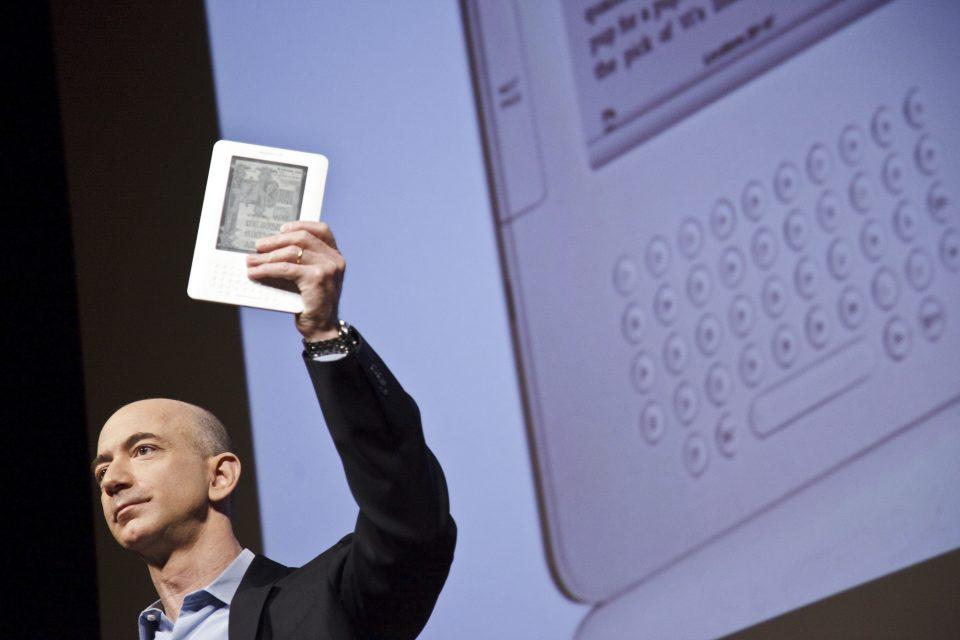
Bezos unveils the Kindle 2, the latest version of Amazon’s electronic book reader, in 2009. Amazon’s Kindle first launched two years earlier in 2007 as a way to make digital reading a more “appealing” and “comfortable” experience, according to Amazon.
James Leynse—Corbis/Getty Images

‘Get Big Fast’: Amazon’s aggressive growth strategy in the 1990s

Bezos raised capital from family, friends, and a handful of investors, giving up a significant stake in exchange for the funds needed to scale. The company’s first product was used books, chosen for their universal demand and ease of shipping. But Bezos’ ambitions were always bigger: He envisioned a store that could sell anything to anyone, anywhere.

Unlike many dot-com era founders, Bezos eschewed the lure of quick profits, instead prioritizing scale at the expense of short-term returns. His now-famous “regret minimization framework”—a decision-making process that emphasized acting now to avoid future regret—drove bold risks: forgoing personal profit, convincing early investors to back negative earnings, and building a fulfillment infrastructure whose costs initially seemed irrational. But this disciplined reinvestment cultivated one of the world’s most advanced logistics networks and primed Amazon to dominate not just books, but any commerce vertical it pursued.
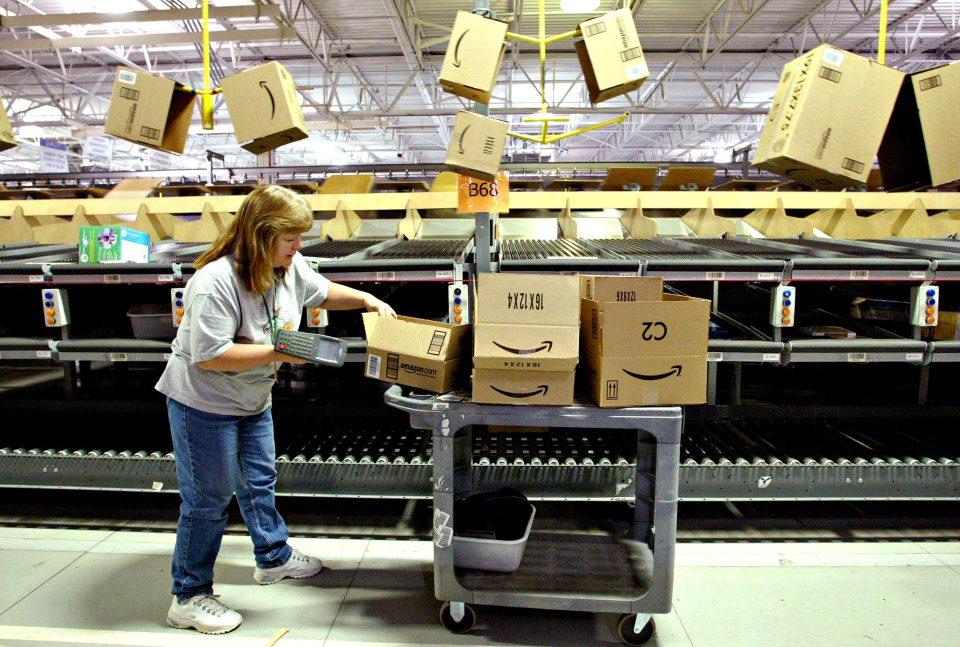
An employee packs products into boxes for shipping at Amazon’s fulfillment Center in Fernley, Nev., on Dec. 13, 2005. The Fernley Center expected to process approximately 2 million orders between Thanksgiving and Christmas of that year.
Ken James—Bloomberg/Getty Images
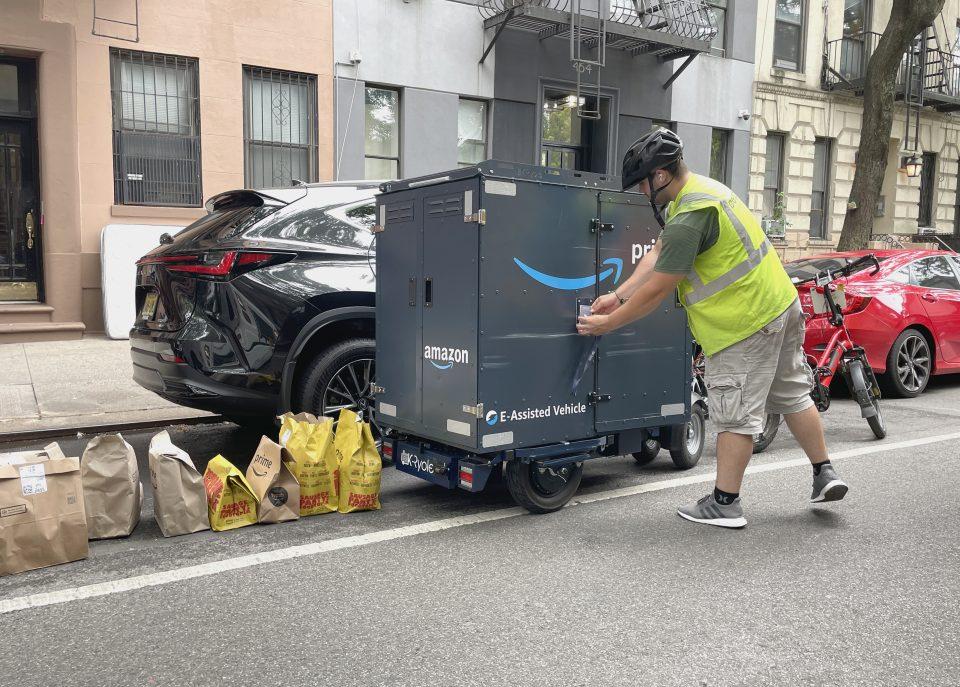
An employee uses a cargo trailer towed by an electric bicycle to deliver Amazon Fresh food orders purchased online by Prime customers in 2024. This electric vehicle system was launched to reduce emissions from Amazon trucks, alleviate traffic in New York City, and speed up delivery times.
Deb Cohn-Orbach—UCG/Universal Images Group/Getty Images
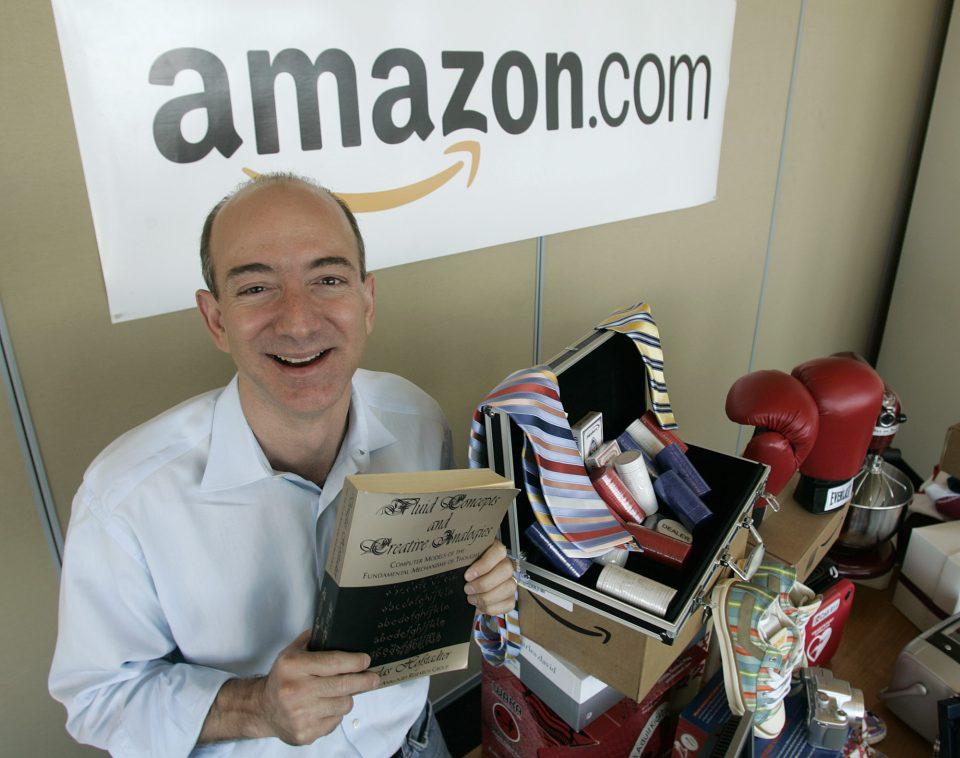
Bezos holds a copy of “Fluid Concepts and Creative Analogies” by Douglas Hofstadter—the first book sold online by Amazon.com—as he stands at the company’s headquarters in 2005 next to a table showing only a small sampling of non-book items currently available on Amazon.com including boxing gloves, a heart defibrillator, kitchen and electronics equipment, and clothing items.
Ted S. Warren—AP Photo

From online bookstore to global e-commerce giant

By the late 1990s, Amazon had expanded beyond books, adding music, movies, and eventually a dizzying array of products. The company’s relentless focus on customer experience—fast shipping, low prices, and an ever-expanding selection—set it apart from competitors. Amazon weathered the dot-com crash, outlasted rivals, and continued to innovate, launching services such as Amazon Prime, Kindle, and Amazon Web Services (AWS), reflecting Amazon’s shift from single-product retailer to platform.

By opening the site to third-party sellers and launching AWS, Amazon became not merely a merchant, but an infrastructure for global commerce and cloud computing. AWS, in particular, is a case study in internal capabilities repurposed into external market offerings—a move that helped reshaped the economics of the internet itself. Amazon’s relentless drive turned it into something approaching a utility.

Amazon’s $2.2 trillion empire and market dominance

Today, Amazon is a global powerhouse, its reach extending from e-commerce and cloud computing to entertainment and artificial intelligence. As of July 2025, Amazon’s market capitalization stands at a staggering $2.2 trillion, making it the world’s fifth most valuable company.

Amazon’s impact transcends balance sheets, though. It has redefined supply chain expectations, influenced labor markets, and raised pressing questions around antitrust. Critics argue that the same mechanisms that fueled its rise—aggressive reinvestment, platform dominance, and data leverage—have also created structural dependencies with profound implications for competition, privacy, and labor.

Amazon’s true moat may be neither retail nor cloud computing per se—but its ability to seamlessly integrate physical and digital services into a single, adaptive operating system. It is working under Bezos’ successor Andy Jassy to add AI-driven services to the portfolio. It is relentless.

For this story, Fortune used generative AI to help with an initial draft. An editor verified the accuracy of the information before publishing. 

A version of this story was published on Fortune.com on July 16, 2025.

More on Amazon:

  • Amazon founder Jeff Bezos reveals his formula for running the perfect meetings to weed out those ‘who pretend to have done the reading’
  • ‘I had to take 60 meetings’: Jeff Bezos says ‘the hardest thing I’ve ever done’ was raising the first million dollars of seed capital for Amazon
  • Amazon takes the No. 1 spot on the Fortune 500, ending Walmart’s 13-year run

The Fortune 500 Innovation Forum will convene Fortune 500 executives, U.S. policy officials, top founders, and thought leaders to help define what’s next for the American economy, Nov. 16-17 in Detroit. Apply here.
About the Author
Nick Lichtenberg
By Nick LichtenbergBusiness Editor
LinkedIn icon

Nick Lichtenberg is business editor and was formerly Fortune's executive editor of global news.

See full bioRight Arrow Button Icon
Add Fortune on Google for similar content.

Latest in Success

Finance
Lorem ipsum dolor sit amet, consectetur adipiscing elit, sed do eiusmod tempor incididunt ut labore et dolore magna aliqua. Ut enim ad minim veniam
By Fortune Editors
October 20, 2025
Finance
Lorem ipsum dolor sit amet, consectetur adipiscing elit, sed do eiusmod tempor incididunt ut labore et dolore magna aliqua. Ut enim ad minim veniam
By Fortune Editors
October 20, 2025
Finance
Lorem ipsum dolor sit amet, consectetur adipiscing elit, sed do eiusmod tempor incididunt ut labore et dolore magna aliqua. Ut enim ad minim veniam
By Fortune Editors
October 20, 2025
Finance
Lorem ipsum dolor sit amet, consectetur adipiscing elit, sed do eiusmod tempor incididunt ut labore et dolore magna aliqua. Ut enim ad minim veniam
By Fortune Editors
October 20, 2025
Finance
Lorem ipsum dolor sit amet, consectetur adipiscing elit, sed do eiusmod tempor incididunt ut labore et dolore magna aliqua. Ut enim ad minim veniam
By Fortune Editors
October 20, 2025
Finance
Lorem ipsum dolor sit amet, consectetur adipiscing elit, sed do eiusmod tempor incididunt ut labore et dolore magna aliqua. Ut enim ad minim veniam
By Fortune Editors
October 20, 2025

Most Popular

Finance
Lorem ipsum dolor sit amet, consectetur adipiscing elit, sed do eiusmod tempor incididunt ut labore et dolore magna aliqua. Ut enim ad minim veniam
By Fortune Editors
October 20, 2025
Finance
Lorem ipsum dolor sit amet, consectetur adipiscing elit, sed do eiusmod tempor incididunt ut labore et dolore magna aliqua. Ut enim ad minim veniam
By Fortune Editors
October 20, 2025
Finance
Lorem ipsum dolor sit amet, consectetur adipiscing elit, sed do eiusmod tempor incididunt ut labore et dolore magna aliqua. Ut enim ad minim veniam
By Fortune Editors
October 20, 2025
Finance
Lorem ipsum dolor sit amet, consectetur adipiscing elit, sed do eiusmod tempor incididunt ut labore et dolore magna aliqua. Ut enim ad minim veniam
By Fortune Editors
October 20, 2025
Finance
Lorem ipsum dolor sit amet, consectetur adipiscing elit, sed do eiusmod tempor incididunt ut labore et dolore magna aliqua. Ut enim ad minim veniam
By Fortune Editors
October 20, 2025
Finance
Lorem ipsum dolor sit amet, consectetur adipiscing elit, sed do eiusmod tempor incididunt ut labore et dolore magna aliqua. Ut enim ad minim veniam
By Fortune Editors
October 20, 2025
Fortune Secondary Logo
Rankings
  • 100 Best Companies
  • Fortune 500
  • Global 500
  • Fortune 500 Europe
  • Most Powerful Women
  • World's Most Admired Companies
  • See All Rankings
  • Lists Calendar
Sections
  • Finance
  • Fortune Crypto
  • Features
  • Leadership
  • Health
  • Commentary
  • Success
  • Retail
  • Mpw
  • Tech
  • Lifestyle
  • CEO Initiative
  • Asia
  • Politics
  • Conferences
  • Europe
  • Newsletters
  • Personal Finance
  • Environment
  • Magazine
  • Education
Customer Support
  • Frequently Asked Questions
  • Customer Service Portal
  • Privacy Policy
  • Terms Of Use
  • Single Issues For Purchase
  • International Print
Commercial Services
  • Advertising
  • Fortune Brand Studio
  • Fortune Analytics
  • Fortune Conferences
  • Business Development
  • Group Subscriptions
About Us
  • About Us
  • Press Center
  • Work At Fortune
  • Terms And Conditions
  • Site Map
  • About Us
  • Press Center
  • Work At Fortune
  • Terms And Conditions
  • Site Map
  • Facebook icon
  • Twitter icon
  • LinkedIn icon
  • Instagram icon
  • Pinterest icon

Latest in Success

Now she’s worth $200 million. But Sarah Jessica Parker says being ‘one of eight kids that struggled financially’ growing up created her work ethic
SuccessCareer Advice
Now she’s worth $200 million. But Sarah Jessica Parker says being ‘one of eight kids that struggled financially’ growing up created her work ethic
By Orianna Rosa RoyleJune 24, 2026
35 minutes ago
Tesla cofounder JB Straubel’s first pitch to Elon Musk failed. Then he turned his ‘hobby’ into a $1.3 trillion success
SuccessBrainstorm Tech
Tesla cofounder JB Straubel’s first pitch to Elon Musk failed. Then he turned his ‘hobby’ into a $1.3 trillion success
By Rachel VentrescaJune 24, 2026
36 minutes ago
The hidden cost of your AI rollout: burning out the high performers running it
Workplace Cultureburnout
The hidden cost of your AI rollout: burning out the high performers running it
By Mikaela Cohen and HR BrewJune 23, 2026
11 hours ago
dr
HealthCancer
The U.S. cut cancer deaths by 34% since 1991—but not in 458 rural counties
By Arthur Cosby and The ConversationJune 23, 2026
13 hours ago
college
SuccessEducation
47% of Harvard seniors admit to cheating — and the problem existed long before ChatGPT
By Austin Sarat and The ConversationJune 23, 2026
14 hours ago
work
Workplace Culturework culture
Worker engagement just hit a decade low — and new data from 88 million employees shows why managers are the problem
By Bob Batchelor and The ConversationJune 23, 2026
14 hours ago

Most Popular

After forcing workers back to the office, Goldman Sachs and JPMorgan Chase are now letting their staff work remotely—but only for the World Cup
Success
After forcing workers back to the office, Goldman Sachs and JPMorgan Chase are now letting their staff work remotely—but only for the World Cup
By Orianna Rosa RoyleJune 23, 2026
19 hours ago
Markets tumble worldwide as Fed resets expectations: $400 billion wiped off SpaceX stock
Banking
Markets tumble worldwide as Fed resets expectations: $400 billion wiped off SpaceX stock
By Jim EdwardsJune 23, 2026
21 hours ago
Current price of oil as of June 23, 2026
Personal Finance
Current price of oil as of June 23, 2026
By Joseph HostetlerJune 23, 2026
19 hours ago
Meet the 2 men putting New York's $300 billion pension fund in play for the first time in 20 years
Investing
Meet the 2 men putting New York's $300 billion pension fund in play for the first time in 20 years
By Nick LichtenbergJune 22, 2026
2 days ago
Former U.S. Secret Service agent says bringing your authentic self to work stifles teamwork: 'You don’t get high performers, you get sloppiness'
Success
Former U.S. Secret Service agent says bringing your authentic self to work stifles teamwork: 'You don’t get high performers, you get sloppiness'
By Sydney LakeJune 21, 2026
3 days ago
Texas and Charlotte used to build huge McMansions—now they're copying the California design tricks they once mocked
Real Estate
Texas and Charlotte used to build huge McMansions—now they're copying the California design tricks they once mocked
By Sydney LakeJune 22, 2026
2 days ago

© 2026 Fortune Media IP Limited. All Rights Reserved. Use of this site constitutes acceptance of our Terms of Use and Privacy Policy | CA Notice at Collection and Privacy Notice | Do Not Sell/Share My Personal Information
FORTUNE is a trademark of Fortune Media IP Limited, registered in the U.S. and other countries. FORTUNE may receive compensation for some links to products and services on this website. Offers may be subject to change without notice.