

At their core, FHA and conventional loans do the same thing: They get you into a home of your very own. But they’re built for different financial profiles, and choosing between them affects more than what you pay at closing. It can also affect what you’ll pay every month for as long as you keep the mortgage.
The right choice for your situation typically comes down to three things: your credit score, your down payment, and the length of time you expect to keep the loan.
Here’s what to know about conventional vs FHA loans.
What is the difference between a conventional and FHA loan?
FHA loans are insured by the federal government. Government backing means the Federal Housing Administration protects the mortgage lender against certain losses if you default. This protection reduces the financial institution’s risk, which allows FHA lenders to extend financing to some borrowers with lower credit scores than conventional financing typically permits.
Conventional loans aren’t government-backed, so approval standards tend to be tighter. But they may offer better terms for well-qualified borrowers.
One practical difference worth knowing is how each loan handles the appraisal:
- FHA appraisals look at both the home’s value and its condition, checking it against minimum safety and property standards. If the home needs a lot of work, the lender may require repairs before closing, which can delay or complicate the purchase.
- Conventional appraisals generally have fewer property-condition requirements. For some eligible loans, lenders can also accept the property’s submitted value without requiring an appraisal, which may speed up the process.
The table below covers the key differences at a glance.
How your credit score affects which loan is better
Credit score below 620
If your credit score is under 620, you may have a hard time qualifying for a conventional loan. Fannie Mae removed its hard 620 cutoff for loans evaluated through automated underwriting in late 2025, and Freddie Mac’s automated underwriting system doesn’t require a minimum score for loans that receive an “Accept” recommendation. But getting approved below that level still usually requires a strong overall financial profile, and lenders may set higher minimum requirements.
FHA loans, on the other hand, allow credit scores as low as 580 with 3.5% down, or as low as 500 with 10% down. As a result, FHA loans tend to be a more realistic option for many borrowers in this range.
It’s also worth noting that improving your score before you apply may expand your loan options and help you qualify for a lower interest rate, potentially saving you money over the life of your mortgage.
Credit score between 620 and 679
If you’ve got a credit score between 620 and 679, both FHA and conventional loans may be on the table. However, the comparison becomes more nuanced in this range. An FHA loan may offer a lower interest rate, but it also requires mandatory mortgage insurance, which may offset some or all of those savings.
To decide whether an FHA or a conventional loan makes the most sense, it may help to compare the estimated monthly payment for a borrower in this range. For this example, we’ll include principal, interest, and mortgage insurance, based on:
- $350,000 loan
- 30-year term
- 5% down
- A 660-679 credit score
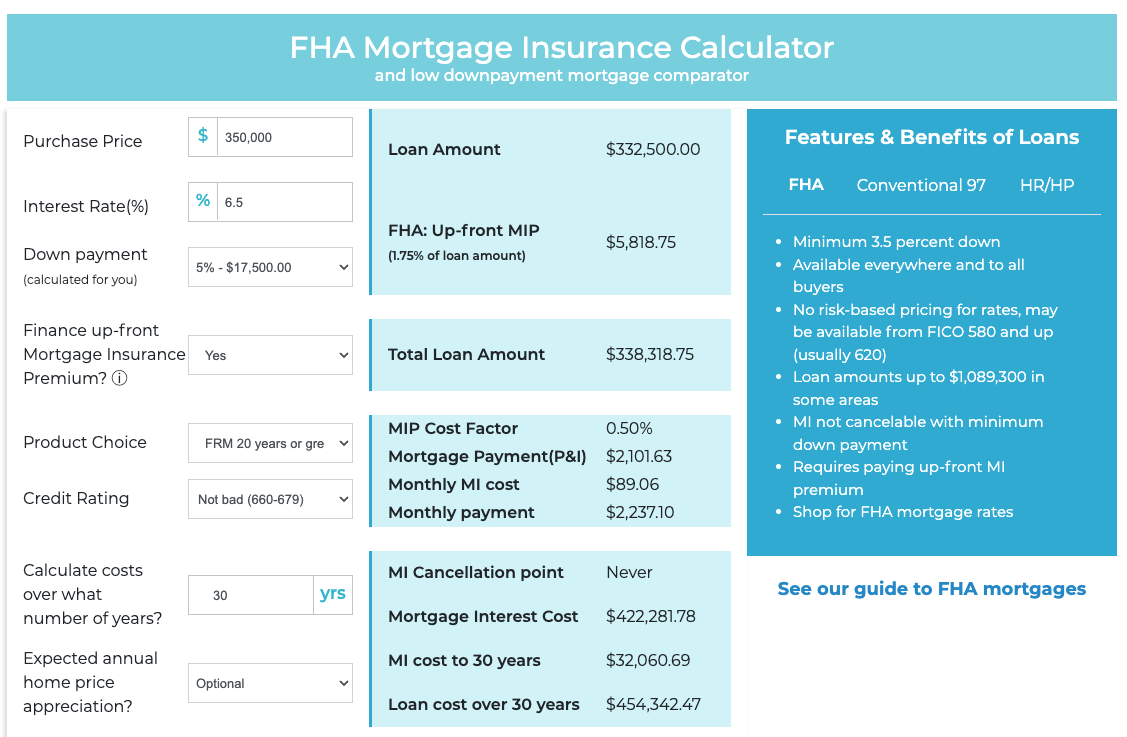
Assuming an FHA loan interest rate of 6.50%, you’ll pay $2,237.10 per month in principal, interest, and mortgage insurance premium (assuming an annual MIP rate of 0.50% for an LTV between 90% and 95%). Note this figure doesn’t factor in property taxes. When you put less than 10% down on an FHA loan, your mortgage insurance premium will typically stick with you for the life of the loan.
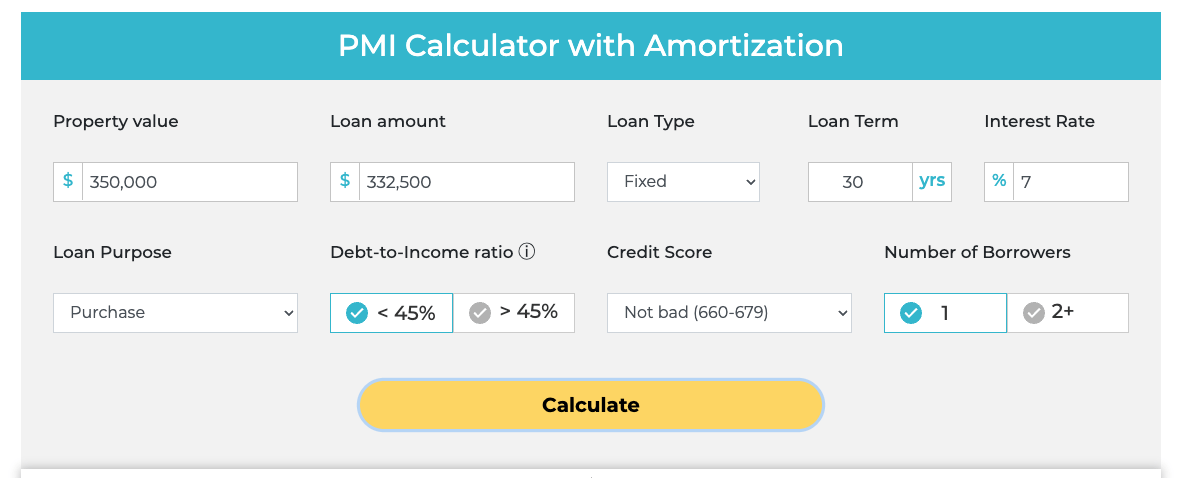
With a slightly higher conventional loan interest rate of 7.00%, you can expect to pay $2,580.66 per month, including principal, interest, and private mortgage insurance (assuming an annual PMI rate of 1.50%). Again, this doesn’t include property taxes.
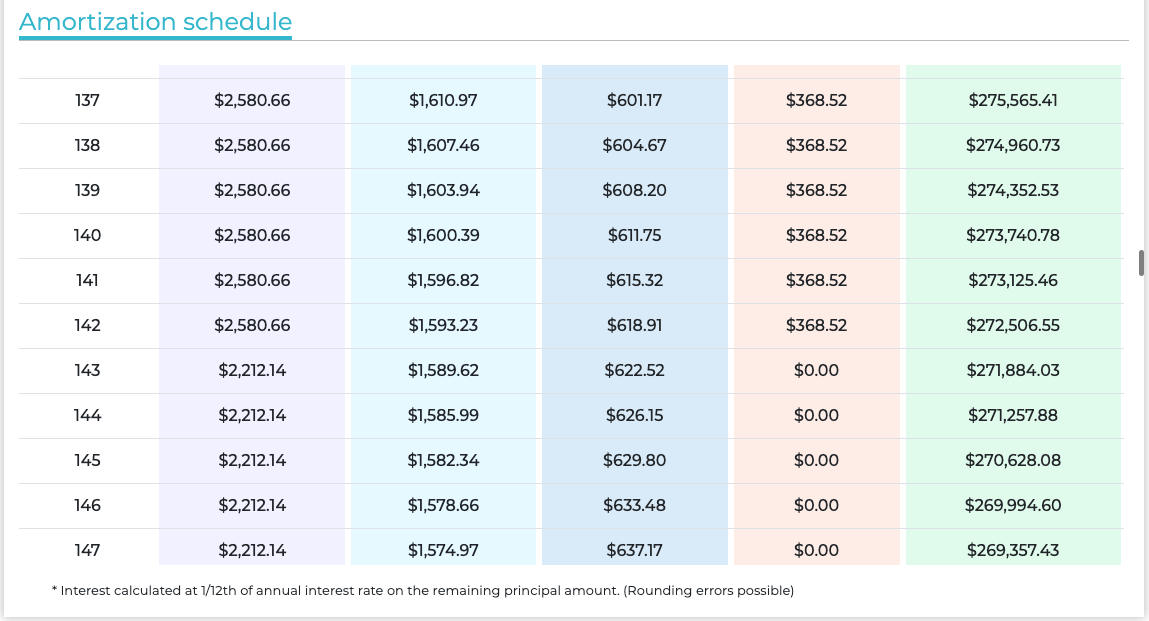
However, you may eventually qualify to cancel PMI on the conventional loan once your loan reaches certain thresholds, which would lower your monthly payment by hundreds of dollars—even below what you’d pay for an FHA. Again, MIP generally lasts for the life of the loan when you put down less than 10%.
All of this is to say, the interest rate alone shouldn’t be the only factor you consider when choosing a loan program. Comparing the total monthly payments, including mortgage insurance, can help you determine which loan is the better fit for your budget.
Credit score of 680 and above
As your credit score increases, conventional loans become more competitive. A higher score may help you qualify for less expensive PMI, and you can avoid PMI altogether by putting at least 20% down. With a smaller down payment, you may eventually qualify to cancel PMI once your loan balance reaches 80% of the home’s original value. FHA MIP, by comparison, generally lasts for the life of the loan if you put less than 10% down. These differences can make a conventional loan more affordable over time for certain borrowers.
If you have a bankruptcy, foreclosure, or short sale on your record
If you have a major negative credit event, such as bankruptcy, foreclosure, or a short sale, an FHA loan may allow you to qualify for a mortgage sooner than a conventional loan. Standard Fannie Mae and FHA waiting periods are as follows:
- Chapter 7 bankruptcy: Four years for a Fannie Mae conventional loan and two years for an FHA loan
- Foreclosure: Seven years for a Fannie Mae conventional loan and three years for an FHA loan
- Short sale: Four years for a Fannie Mae conventional loan and three years for an FHA loan
Certain qualifying situations, with relevant documentation, may shorten the waiting periods for both loan types, but FHA guidelines are usually more lenient.
How your down payment affects the decision
The amount you put down when taking out your loan affects which loans you qualify for—and how much they’ll cost you over time.
Putting down less than 5%
If you’re putting down less than 5%, both FHA and certain conventional programs may be options for you.
Conventional loan programs like Fannie Mae HomeReady allow you to put down as little as 3%. However, HomeReady has income limits and other eligibility requirements. FHA loans allow down payments as low as 3.5% down with a credit score of at least 580.
Just remember one big caveat with an FHA loan. If you put down less than 10%, you’ll keep paying mortgage insurance for the life of the loan unless you refinance into a conventional loan later.
Putting down 5% to 19%
When you put down between 5% and 19%, conventional loans may become more competitive. This is especially true if you’ve got a stronger credit profile (think mid- to upper-700s).
As an example, with around 10% down and a 700‑plus credit score, you may pay less for PMI on a conventional loan than you’d pay for FHA mortgage insurance. Once you build up 20% equity, you may qualify to cancel PMI.
By contrast, an FHA loan’s annual MIP rate depends on the loan amount, term, and down payment. If you put down less than 10%, MIP remains for the life of the loan. If you put 10% or more down, it lasts 11 years.
Putting down 20% or more
If you’ve got the means to put down at least 20%, a conventional loan is often the better choice. With 20% down, you won’t have to pay PMI, and a conventional loan may offer lower costs and greater flexibility than an FHA loan.
How long you plan to stay in the home
The amount of time you plan to stay in your home plays a big role in deciding whether an FHA or conventional loan is a better fit.
Staying for a shorter period
If you plan to sell or refinance within a few years, the long‑term cost of FHA’s mortgage insurance matters less. That’s because you won’t pay that added insurance expense for as long. In this case, the easier qualification standards and potentially lower interest rate can be worthwhile—if they’re what get you into a home now—even if a conventional loan might look better over a longer period.
Staying long-term or unsure
If you expect to stay put long term—or you’re simply unsure—FHA mortgage insurance may become a much bigger consideration. That’s especially true if you put down less than 10%, since you’ll generally pay MIP for the life of the loan.
This is also where the FHA‑to‑conventional refinance strategy is worth considering. Some folks with lower credit scores and smaller down payments use an FHA loan to get into the market, then refinance into a conventional loan once they’ve improved their credit profile and built some equity. It can be a great idea, but it’s not a slam dunk in every situation.
Refinancing comes with closing costs and fees of its own. You should run the numbers to make sure the long‑term savings from eliminating MIP will outweigh the added costs of refinancing later.
FHA vs. conventional: Which is right for you?
When deciding between FHA and conventional loans, the right choice comes down to your credit, the down payment you can afford, and the amount of time you plan to keep the mortgage.
An FHA loan may be the better fit if:
- Your credit makes it difficult to qualify for competitive conventional loan terms.
- You need more flexibility on loan eligibility requirements.
- You have a smaller down payment and FHA offers the more affordable overall payment.
- You plan to sell or refinance within a few years, making the long-term cost of FHA MIP less of a concern.
Conventional is often the better fit if:
- You have a stronger credit profile.
- You want the option to avoid or eventually cancel mortgage insurance.
- You have a larger down payment or plan to keep the mortgage long enough for the mortgage insurance savings to matter.
In competitive markets, the loan type you choose could also affect how a seller perceives your offer. The stricter property standards associated with FHA appraisals can make some sellers and listing agents view FHA offers as more likely to run into appraisal problems or delays. Meanwhile, sellers may consider a conventional offer a cleaner, more straightforward path to closing.
The takeaway
With the right program, conventional and FHA loans can both help borrowers who may struggle to make a sizable down payment. The loan you choose can also affect the type of home you can buy. The better option may become clearer based on your credit profile, the size of your down payment, and how long you expect to keep the mortgage.
Frequently asked questions
Are there property condition differences between homes that qualify for FHA vs. conventional loans?
Yes. FHA loans must meet HUD’s minimum property standards for safety, security, and soundness. Conventional loans generally have less stringent property requirements, though the home must meet the lender’s and loan program’s standards.
How do loan limits differ between FHA and conventional mortgages?
FHA loan limits are determined by county and are often lower than the maximum conforming loan limits for conventional mortgages, which the Federal Housing Finance Agency sets every year.
Should I choose an FHA or conventional loan if my credit score is under 620?
If your credit score is below 620, an FHA loan is often the more realistic option. With a lower credit score, a conventional loan may be tougher to qualify for, though approval is possible. FHA loans allow credit scores as low as 500, depending on the size of your down payment and the lender’s requirements.
Is FHA or conventional better if I plan to keep the home for 30 years?
A conventional loan may be your better option if you plan to keep your home for 30 years. That’s because you can avoid PMI with a down payment of at least 20%, or you may qualify to cancel it later once your loan balance reaches certain thresholds. FHA loans require MIP for 11 years if you put at least 10% down and for the life of the loan if you put down less.
Does FHA or conventional make more sense if I have a past bankruptcy or foreclosure?
If you’ve got a serious blemish on your credit history, such as bankruptcy or foreclosure, an FHA loan may allow you to buy a home sooner than a conventional loan. That’s because standard waiting periods after these events are often shorter for FHA loans, although the requirements depend on the event and your circumstances.