The average interest rate for a 30-year, fixed-rate conforming mortgage loan in the U.S. is 6.165%, a drop of about 4 basis points from the day before, according to data from mortgage data company Optimal Blue.
Meanwhile, the average rate for a 15-year, fixed-rate conforming mortgage loan is 5.477%, down about 3 basis points for the same period.
Rates current as of March 18, 2026. Fortune publishes a daily mortgage rates post each weekday that data is available.
Check Out Our Daily Rates Reports
- Discover the highest high-yield savings rates, up to 5% for March 24, 2026.
- Discover the highest CD rates, up to 4.20% for March 24, 2026.
- Discover the top CD rates from major banks on March 24, 2026.
- Discover the current mortgage rates for March 24, 2026.
- Discover current refi mortgage rates report for March 24, 2026.
- Discover current ARM mortgage rates report for March 24, 2026.
- Discover the current price of gold for March 24, 2026.
- Discover the current price of silver for March 24, 2026.
Compare mortgage rates for March 18, 2026
Here’s a quick look at week-over-week rate changes.
Fortune reviewed the latest Optimal Blue data available on March 17, reflecting rates for loans locked in as of March 16.
What you’d pay in interest with where rates are at on March 18, 2026
We ran the numbers through the mortgage calculator provided by the federal government’s Office of Financial Readiness. At the current rate of 6.165%, on a 30-year mortgage where you borrow $300,000, you’d pay roughly $359,014.64 in interest over the life of the loan.
On a 15-year mortgage with the same loan amount used for the estimate, you’d pay roughly $140,566.41 in interest over the life of the loan at the current rate of 5.477%.
Read on to see how mortgage rates have changed day by day.
30-year conventional mortgage: Down about 4 basis points
This may be the most popular mortgage type in the United States.
The current average 30-year mortgage rate is 6.165%. That’s down from 6.214% on the last day’s report.
15-year conventional mortgage: Down about 3 basis points
This type of mortgage is popular with homeowners seeking to minimize interest payments over the life of their loan.
The current average 15-year mortgage rate is 5.477%. That’s down from 5.507% on the last day’s report.
30-year jumbo mortgage: Down about 13 basis points
A jumbo mortgage is one that exceeds the conforming loan limits set by the Federal Housing Finance Agency. While the limit can vary in certain high-cost-of-living-areas, in most of the U.S., it’s $832,750 for 2026.
The current average rate on a 30-year jumbo loan is 6.323%. That’s down from 6.454% on the last day’s report.
30-year FHA mortgage: Down about 5 basis points
This type of mortgage is oftentimes more accessible to borrowers with slightly lower credit scores than conventional mortgages. Lenders are protected because these loans are insured by the Federal Housing Administration.
The current average rate on a 30-year FHA home loan is 5.958%. That’s down from 6.014% on the last day’s report.
30-year VA mortgage: Down about 2 basis points
These loans are, in general, available to U.S. military members and veterans and surviving spouses. One attractive feature is that they have no minimum down payment requirement, unlike most other mortgage types.
The current average rate on a 30-year VA home loan is 5.808%. That’s down from 5.830% on the last day’s report.
30-year USDA mortgage: Down about 10 basis points
A USDA loan is meant to help low- to moderate-income borrowers purchase a home in an eligible rural area. Like VA loans, USDA loans have no minimum down payment requirement.
The current average rate on a 30-year USDA home loan is 5.865%. That’s down from 5.968% on the last day’s report.
What the Federal Reserve is doing in 2026
Market observers know that mortgage interest rates often move in tandem with the federal funds rate, which is set by the Federal Reserve (and is what banks charge each other to borrow money overnight).
When the Fed hikes its benchmark rate, mortgage rates often rise accordingly. And when the Fed decreases the federal funds rate, mortgage rates often dip.
At its previous meeting Jan. 27-28, the Federal Open Market Committee left the federal funds rate at 3.50% – 3.75%. The FOMC is currently meeting March 17-18.
In 2020, the Fed cut its benchmark rate to effectively zero, trying to prevent a recession as the coronavirus wreaked havoc. In that environment, mortgage rates hit historical lows, bottoming out with an average rate of 2.65% in January 2021.
However, experts agree mortgage rates that low are unlikely to happen again in the foreseeable future, barring a disaster of pandemic-level proportions.
Trends with mortgage applications
Mortgage applications are up recently, according to the Mortgage Bankers Association. Specifically, applications were up 3.2% for the week ending March 6, 2026, compared to one week earlier.
“Financial markets were volatile last week amid the ongoing turmoil in the Middle East,” said Mike Fratantoni, MBA’s senior vice president of research and business development and chief economist. “Mortgage rates increased on net over the week, while refinance volume was roughly flat.”
Though refinance activity did not increase much, purchase applications were up 7.8% week over week. In particular, Fratantoni highlighted that applications for FHA loans were up in the most recent numbers.
Recent reporting on the housing market from Fortune
Stay informed on what’s happening with housing in the U.S. as well as trends in the economy, with reporting from the Fortune newsroom:
- Banning institutional investors from buying homes will backfire for many Americans, experts say
- The ultrawealthy don’t house hunt anymore. They subscribe
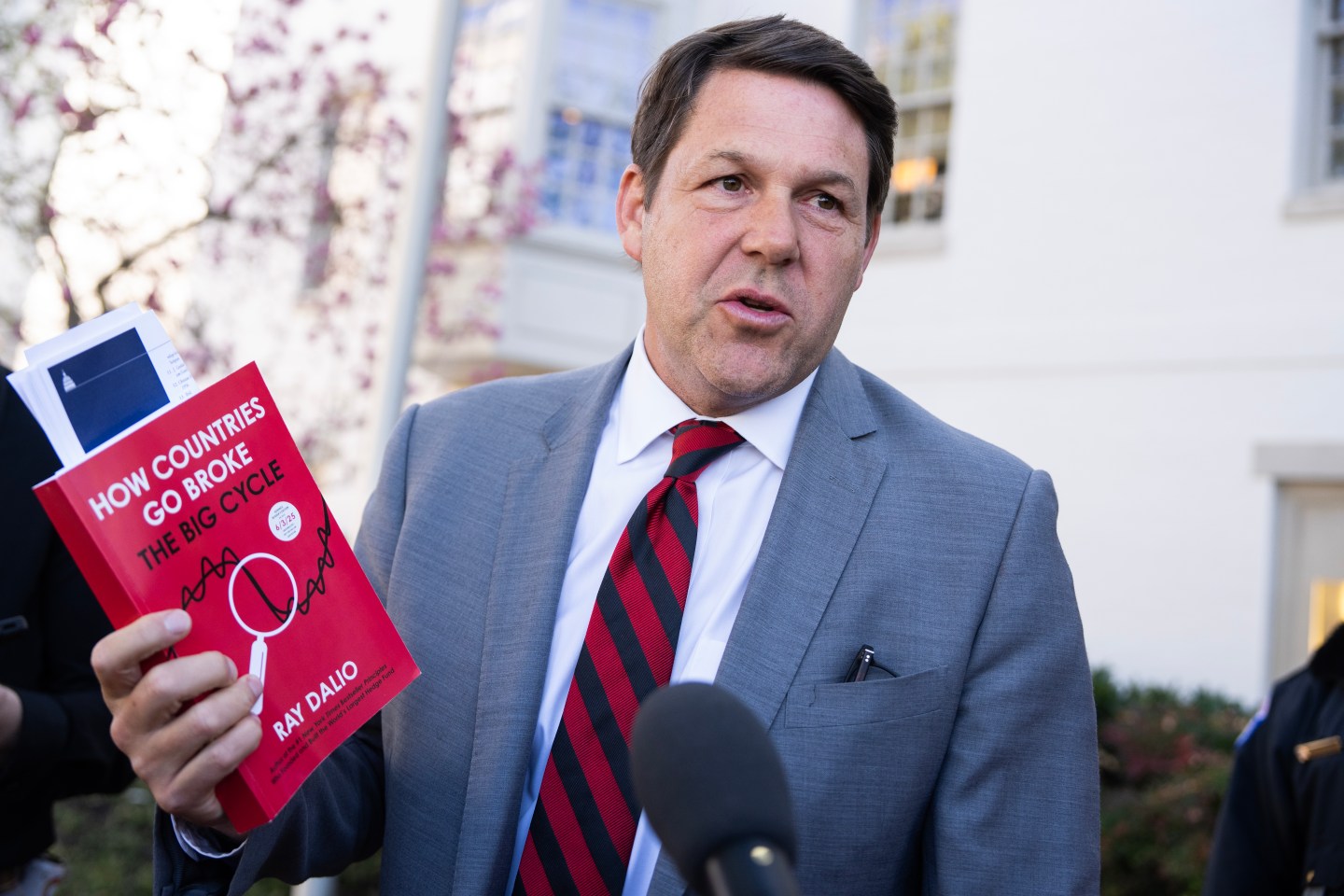
- The $38.9 trillion national debt is costing you thousands of extra dollars per year on your mortgage
- Billionaires Elon Musk and Mark Zuckerberg used mortgages to buy multimillion-dollar mansions. Here’s why that’s a savvy financial decision
- Even most six-figure earners say buying a house is unattainable—half of Americans can’t afford to dine out or vacation in a cost of living crisis
Why you should comparison shop
It’s worth applying with multiple lenders to find which will offer the lowest rate and which seems like it can provide the service you’ll expect going forward.
On the savings front, Freddie Mac notes that when interest rates are high, homebuyers who apply with multiple lenders might save $600 to $1,200 per year compared to those who do not.
It’s also smart to shop around and consider different loan types to find the one that serves your situation the best. For example, if your credit score is nearly perfect, you might get a great deal on a conventional mortgage. But if your credit score is under 600, you might be denied for a conventional mortgage but still have a chance at approval for an FHA home loan.
Frequently asked questions
Are a mortgage’s interest rate and APR the same?
They’re related, but not the same. Your APR includes the interest you’ll pay and any fees factored in as well.
What’s a good mortgage rate in March 2026?
We’ve been seeing the average rate for a 30-year, conventional home loan hovering somewhat above 6.00% recently. If you get a rate just above 6.00%, that’s pretty good. And if you happen to get a rate below 6.00%, that’s a big win in the market.
Will mortgage rates go down?
Nothing is set in stone. Mortgage rates might go down if the Fed decides on a cut to the federal funds rate in 2026. But additional factors impacting mortgage rates include inflation, the national debt, and demand for home loans.