
Strength training is considered a foundational element of any fitness routine, as experts increasingly tout the benefits of maintaining or even increasing muscle mass. But unlike cardio, where you can essentially step outside and run, jump rope, or walk—options abound, and many require little to no instruction—it can be difficult to figure out what exactly you need to do when lifting weights. Even high-achieving professionals who are used to being experts in their fields may struggle to put together an effective strength-training routine, adding unnecessary decision fatigue to already-demanding workdays.
Boostcamp is a strength training and weightlifting app that offers thousands of free workout routines, with the option to upgrade to a paid version that includes advanced analytics. While there are a lot of workout apps available today, often focused on things like weight loss, cardio routines, and more, we were curious to explore Boostcamp because it has a robust free version that offers access to an enormous library of workouts designed by experts. It sounds too good to be true, so we asked our testing team to investigate. Here’s what they loved about Boostcamp, along with a couple of things they thought could be improved.
Boostcamp
| Fortune score | 4.5/5 |

at Boostcamp
- Our thoughts: We loved how easy it was to use Boostcamp and the wide variety of workouts available—especially useful for professionals who want structured strength training without spending time programming workouts
- Who it’s for: Busy professionals looking for results-oriented weightlifting and strength-training routines that require virtually no planning or tracking
- What makes it different: A huge library of free workouts, some designed by expert and high-profile coaches, plus a built-in workout-tracking system
Pros
- Easy to set up and use
- Lots of workout variety
- 7-day free trial
Cons
- No strong accountability features
- Instructions not extremely clear
- App seems geared toward more experienced weightlifters
Boostcamp Specs
Our Experience with Boostcamp
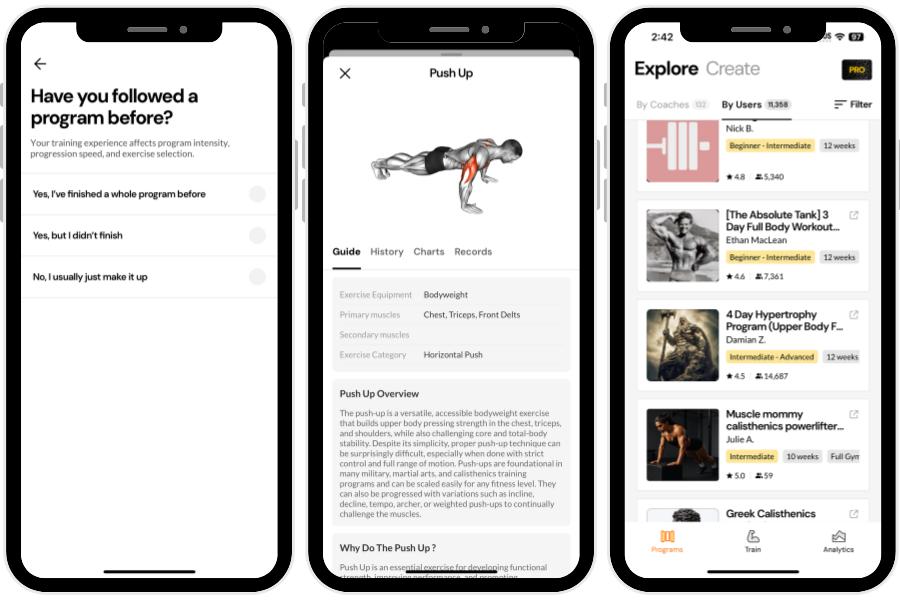
Boostcamp bills itself as “the only app with the world’s most popular strength-training programs built right in,” saying users can simply choose a program and follow it, without having to rely on guesswork or complicated spreadsheets. Boostcamp features a “library of programs” with over 11,000 workouts, plus a workout tracker, plate calculator, and more. The app also has filters that allow you to narrow your workout search based on things like experience level and fitness goals.
In addition, Boostcamp recently introduced a new social feature called Community. It allows access to a social feed so users can follow friends or share completed workouts, helping people stay motivated. Note: This feature was released after our testing period concluded, so our tester did not use or share feedback about Community.
A member of our testing team, Charlotte, tried Boostcamp Pro—the paid version—and found it an overall positive experience, with only a couple of slight drawbacks.
What We Liked
Here’s what Charlotte especially liked about Boostcamp.
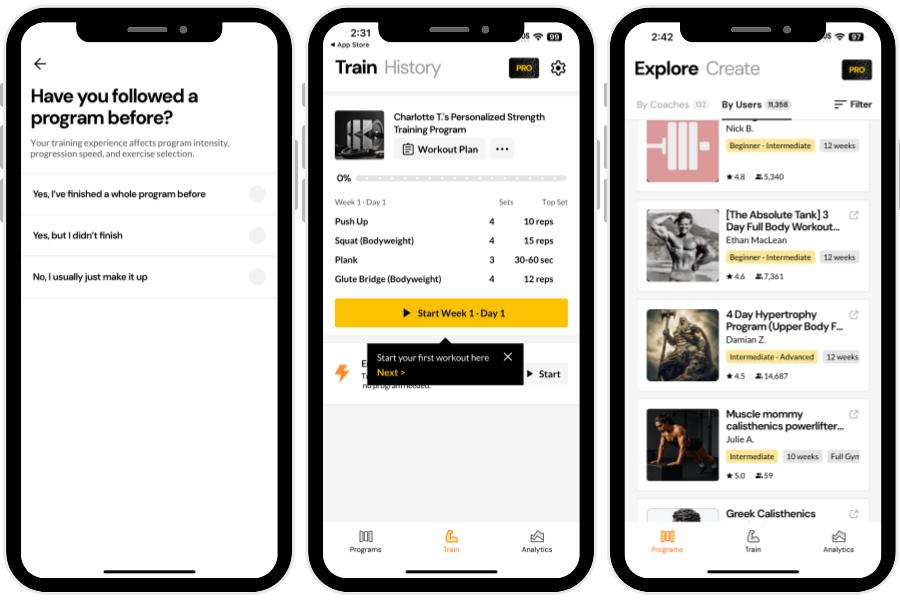
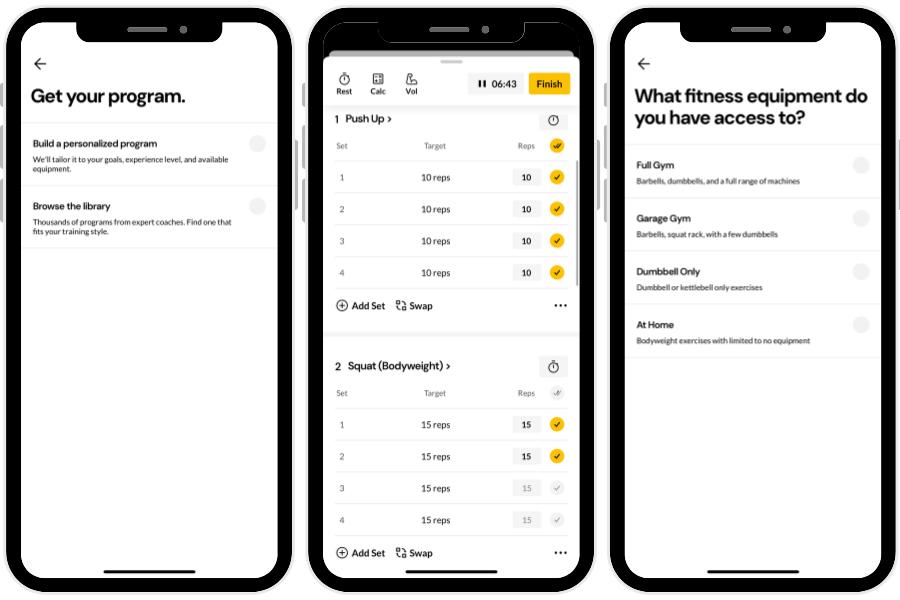
- Setup (4 out of 5): “This was pretty easy to set up,” said Charlotte, noting that the app asks a handful of questions to create a personalized plan. She also said, “If you don’t feel like doing your personalized workout, you can choose from some preselected ones.” For busy professionals, that kind of simple, guided setup allows you to start training immediately instead of wasting time with an extensive onboarding questionnaire or building a routine from scratch.
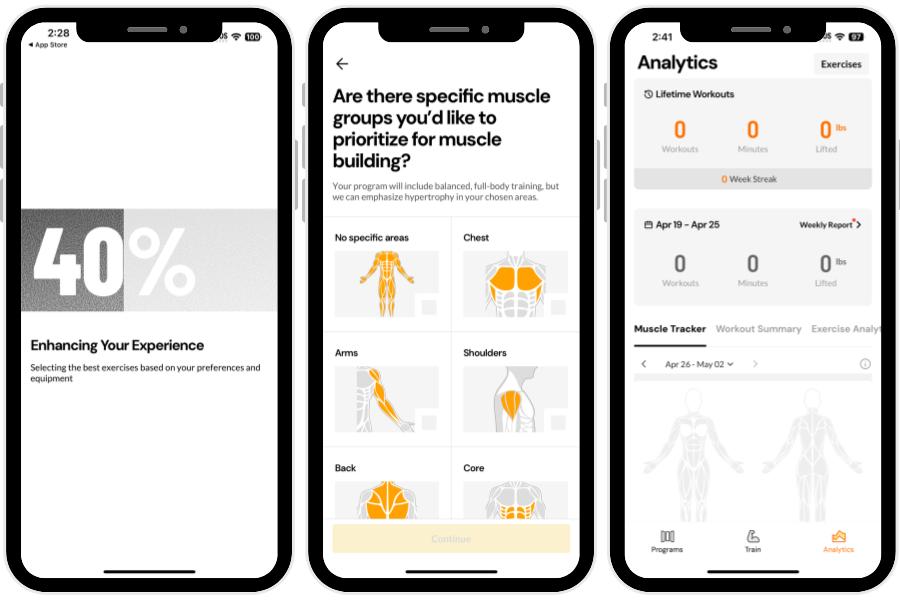
- Ease of use (5 out of 5): Charlotte said, “This app is super easy to use. It has a whole program lined up for you and split up into the number of days per week you want to work out, so you don’t have to go searching through a workout library.” She also noted that for the Pro version there’s an analytics function on the bottom where you can see a muscle tracker, workout summary, and exercise analysis, and “You can even add up how many pounds you lifted throughout the week!” This may be especially appealing to data‑minded users who like to analyze their workout routines the same way they track business metrics.
- Workout variety (5 out of 5): “There are so many different workouts you can do regarding weightlifting on this app,” said Charlotte. She explained, “You can do anything from no-equipment workouts to garage-gym level to a full-blown gym with all the equipment you can imagine.” Charlotte also said she liked being able to join multiple programs, so that if you don’t like one assigned workout, you can use another program’s workout. The variety of workout types makes Boostcamp ideal for people who travel often and may have limited access to equipment, or those who often stay in hotels and want a routine they can do in the on-site gym.
- Interactive features (4 out of 5): Charlotte, who used the Pro version with advanced analytics features, said, “There are some really cool features on this app, especially when it comes to the personal analysis of your workouts. You have a muscle tracker, a workout summary, and exercise analysis based on which movements you performed last. It also has a weekly report and a lifetime report. You can see how many workouts, how many minutes, and even how many pounds you have lifted over time.”
What We Would Change
Charlotte said a couple of things could have been improved.
- Accountability (3 out of 5): “It’s as accountable as you make it,” said Charlotte, explaining, “There is no live coach, so there isn’t someone messaging you or checking in. And there aren’t any competitions or leaderboards for you to compete with other users.” She did say there are notifications and calendar invites that may help with accountability, but “The app isn’t watching you do the movements and clocking them via camera or live stream like some other programs will.” The lack of built-in accountability measures may be perfectly fine for self‑motivated executives, but those who rely on external accountability might prefer an app with stronger accountability features.
- Instructions (3 out of 5): According to Charlotte, “There isn’t a ton of visual instruction, but they will explain the workouts and movements on the app before you start.” She says Boostcamp seems designed for more experienced gym-goers, but that “You can go into each exercise and search the guide to see how exactly to perform the movement, read about what parts of the body it is hitting, and why it is helpful in your journey.”
Who It’s For & Who It’s Not For
Boostcamp’s impressive workout library includes many different types of workouts. That said, the app itself may not be the best fit for everyone. Here’s who might want to consider trying it.
For: People focused on weightlifting and strength training
While there are some HIIT workouts available on Boostcamp, the focus is really on weightlifting and strength training. So, it’s ideal for people who want to focus on building muscle, rather than people who want a new cardio routine.
For: Those who need help finding a structured routine
Boostcamp excels at providing a wide variety of workouts, so users can choose the program that best suits their goals. There’s no guesswork, as users can pick a structured program that tells them exactly what to do. This may be useful for professionals who want workout choices to feel easy and effortless during a busy workday.
Not for: Folks seeking cardio workouts
This app is primarily designed for weightlifting and strength training, with less focus on cardio workouts. People looking for those types of exercise routines may want to consider other apps.
Not for: Those looking for live coaching
Boostcamp doesn’t offer online personal training like some workout apps. Instead, it’s best for folks who want a clear, structured workout they can follow on their own.
Not for: People who need help with accountability
Because the app’s accountability features aren’t particularly robust, Boostcamp is best for people with strong motivation and focus.
Comparing Boostcamp App to Other Weightlifting Apps
Why The Right Fitness App Matters to Professionals
High achievers often focus on efficiency and results, and workout apps offer both—depending on the app, that is. Rather than spending time piecing together your own custom weightlifting workout, apps like Boostcamp provide workouts for you. And because they’re designed by experts, you can trust that the workouts are reliable and designed to produce results.
Fortune’s Final Thoughts
Our tester was thoroughly impressed by Boostcamp, noting it was extremely easy to sign up for and use. The workout library is enormous, free, and includes mostly weightlifting and strength training workouts. Overall, it’s an excellent tool for helping people find an expertly crafted strength-training routine, making a potentially complicated task much easier—and shortening any busy professional’s to-do list. As a bonus, there’s even a built-in workout tracker to further simplify things.
Frequently asked questions
Does the Boostcamp app cost money?
There’s a free version with a lot of excellent features, but if you want additional analytics and other features, you might want to upgrade to Boostcamp Pro for $14.99 per month or $59.99 per year.
Is Boostcamp suitable for beginners?
Yes, the app is suitable for both beginners and experienced users, though our tester noted that some of the instructions could have included more visual elements to help beginner-level users.
What resources does Boostcamp provide?
Boostcamp’s key features include an impressive—and free—program library, a plate calculator, rest timers, and more advanced analytics, which are available if you upgrade to Boostcamp Pro.